The distance between the two images of Prince Andrew is the story of his entire public life. He rose as high as a second son can rise within the British monarchy, a decorated Falklands War veteran and a favorite child of Queen Elizabeth II, only to fall as far as any member of the family has ever fallen, watched by a nation that once adored him. The arc of his life, from national hero to disgraced pariah, was traveled entirely in public, and the only variable that changed was which man held the crown at the time of his greatest reckoning. At the start, the promise was immense.
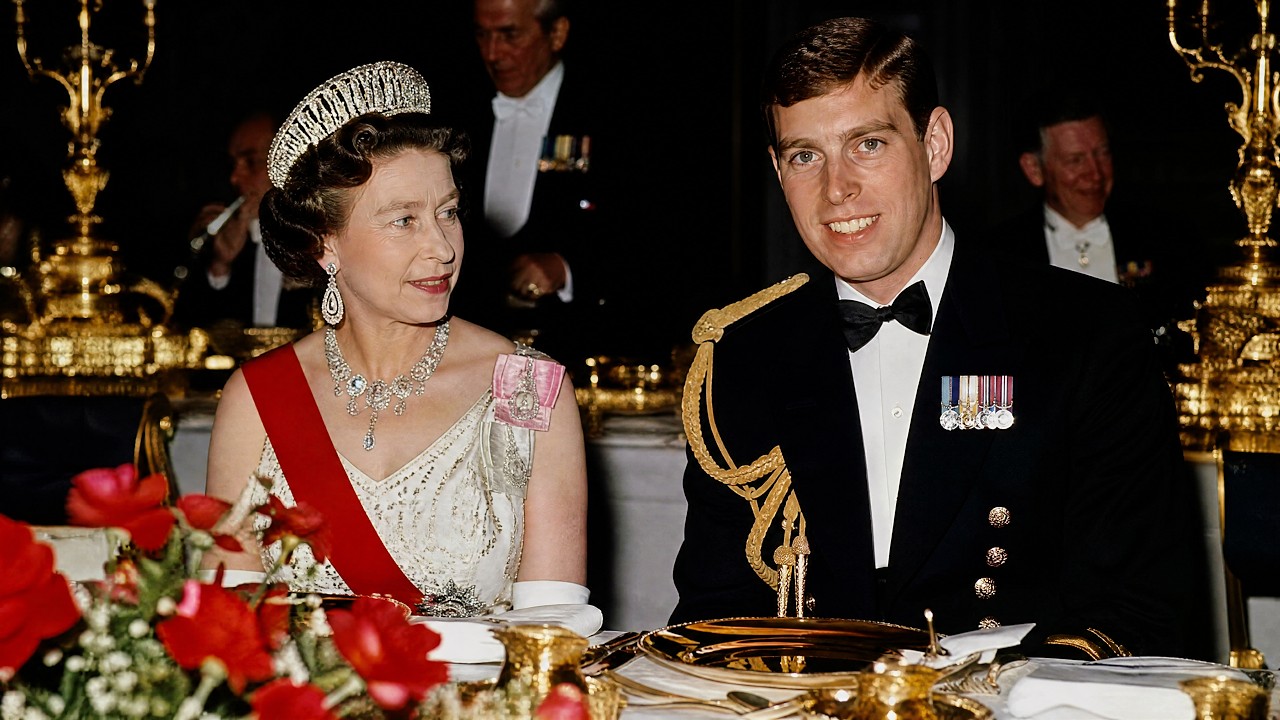
Andrew was the Queen’s second son, a man who might have risen to command a fleet but instead became a husband who walked two steps behind his wife for the rest of his life, according to the many books written about the family. He served in the Royal Navy for more than two decades, and that role was the one he had genuinely earned, the part of his story he returned to with the most pride. For the first and almost the only time in his life, Andrew was somewhere that did not bend to him, and he rose to the challenge of active military service. He was barely into his twenties when he reached the highest point of public regard he would ever occupy, serving as a helicopter pilot during the Falklands War.
But Andrew was a prince, and princes do not get to simply be officers. His marriage to Sarah Ferguson in 1986 was a great summit, a day when the whole country smiled at him, and the two large personalities seemed delighted with each other. Two daughters soon followed, and the young family at first seemed to promise exactly the kind of steady, cheerful continuity the institution prized, especially in an age when the marriage of the heir was already curdling into public misery. The Yorks seemed to offer the reassurance the crown badly needed, that a royal marriage could still be warm.
Yet the marriage ended in 1996, dissolved in the flat legal language of separation after 10 years. Unusually, Andrew and Sarah went on living under the same roof, sharing a home, raising their daughters side by side, and defending each other in public with a loyalty that never wavered across the decades. Were they simply two people who had discovered they preferred each other’s company to anyone else’s, certificate or no certificate? It is tempting to see in all this only the softer side of Andrew, and that side is genuinely there.
But the accounts written later describe a man with a reputation inside royal circles for arrogance, for grandeur, and for a short, sudden temper with the staff who served him. The fatal turn came through his friendship with Jeffrey Epstein. Andrew accepted the lavish hospitality of men whose only real interest lay in the doors his royal blood could open, and he seems never once to have paused to ask himself what they expected in return. He knew, or should have known, that nothing in the circles he moved in was ever truly free, that the powerful do not lavish jets and villas on a man without expecting a return.
That was the fatal habit of the favored son, carried into the most dangerous company of his life. His decade as a trade envoy was not only a story of luxury and flattery but a story of the particular people he chose to spend that decade among, a pattern that should have alarmed someone long before it did. Each man was using the other, though it is doubtful Andrew ever framed it to himself in such cold terms. Any one of these choices might have been survivable.
But Andrew had never needed to develop the instincts of self-preservation, so he did not have them when his life depended on them. A wiser man, or simply a man with any instinct for self-preservation, would have severed the connection with Epstein completely. The single fact of the friendship, once it reached the public, was the beginning of the end. In 2019, the allegations returned all at once, and the public fury was immense.
The palace could not simply hope this storm would pass because this storm was not passing. Queen Elizabeth was in her nineties, in the last years of her long reign, and the son in the eye of the storm was still her favorite. Andrew believed with unshakable confidence that if he could only explain himself directly in his own words, the public would understand. He did not grasp that the world had already made up its mind.
He believed a television interview would draw a line under it all, but it became the most catastrophic hour of his life, remembered now as perhaps the most disastrous interview ever given by a public figure. He was the man who had never learned to read a room, failing to read the most important room of his life while the cameras rolled. In a single evening, he made himself the most damaging liability the monarchy had faced in a generation. It is important to state with care that the difference between allegation and proven fact is not a technicality.
Andrew has never been charged with any criminal offense arising from these claims, and the allegations were never proven anywhere because they were never tested in a criminal trial. However, the larger judgment has already been passed, not by any court but by events. He had given up the use of his title, he said, not because he had done wrong, but because the noise around him had become a burden the family could no longer carry. The difference between giving up a title and having it stripped away is the difference between a retreat and a defeat.
The precise nature of the reported settlement with Virginia Giuffre matters because it has been so often misunderstood. If that reporting is true, and it has never been established as fact, then it represents the most extraordinary act of protection in the whole long story of a mother shielding this son. Andrew had made himself in a single evening the most damaging liability the monarchy had faced in a generation. The friendship, the interview, the settlement, all of it had happened while the Queen still reigned.
And when she died, all of it died with her because it had never belonged to Andrew at all. He was for a few minutes not the disgraced Duke of York but simply a son supporting his elderly mother, restored to a kind of dignity by the only power that could still confer it. The same man, one life. Andrew rose as high as a second son can rise, and he fell as far as a member of that family has ever fallen, and he did both inside a single lifetime.
The distance between those two images is the whole of this story, and Andrew traveled every inch of it himself. Only a man and the memory of a mother who could not stop loving him remain, and the ruin that her love, for all its warmth, could not prevent and may in the end have helped to make. The scandal that had seemed, if not resolved, at least quieted by the settlement of 2022 roared back into full and terrible life, and now Andrew may be charged or he may not.
Whatever comes, the great ark of his life is complete.