A bitter inheritance dispute had already settled the matter more definitively than any will ever could. It was a question of how much the victors despised the vanquished, and the Spencer family settled it in a bedroom at Althorp on March 31, 1992. Two days earlier, the 8th Earl Spencer had died of a heart attack, and his will had asked his children to give his widow six months to arrange her affairs and leave. She was given only 48 hours instead.
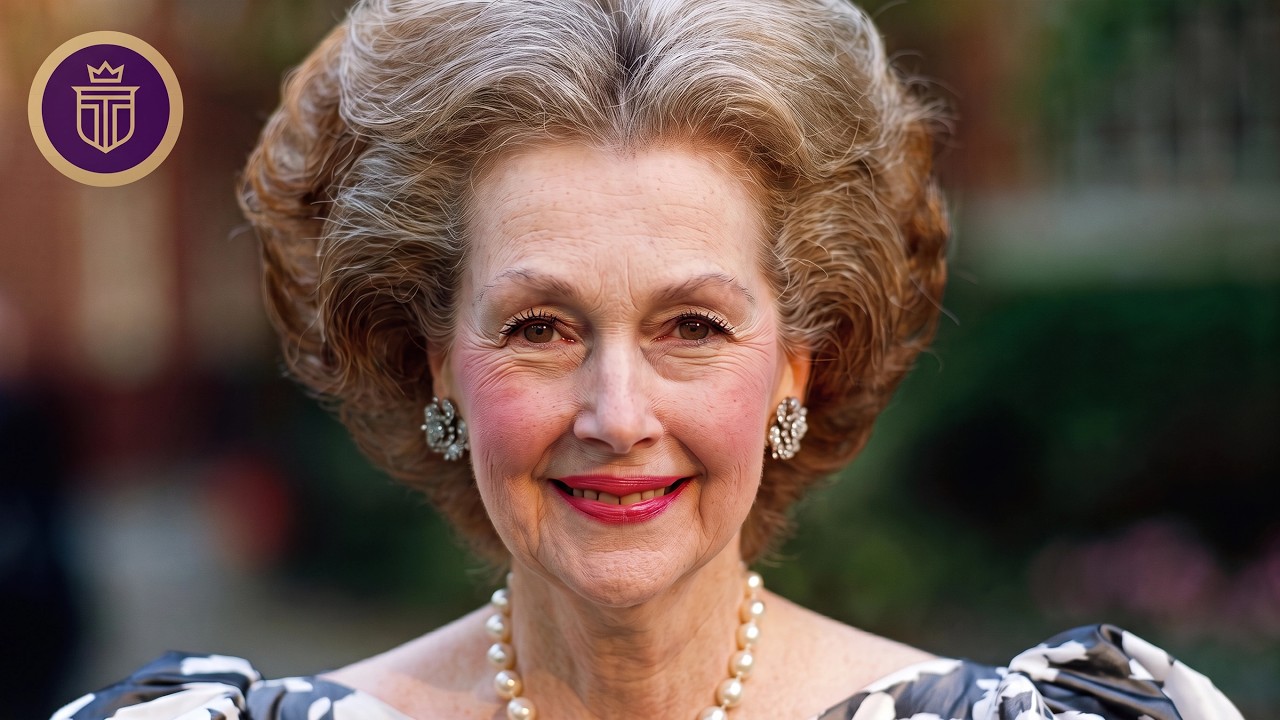
A maid named Pauline Shaw knelt, folding the Countess’s clothes into four open Louis Vuitton suitcases, while Diana, Princess of Wales, stood guard at the door. When Diana noticed the embossed “S” on the luggage clasps, she decided the trunks themselves belonged to the Spencer family and could not leave the house. So the clothes came back out, the furs and the haute couture and the ball gowns, and were stuffed instead into black plastic garbage bags. Then the new 9th Earl, Diana’s younger brother Charles, gathered the bags and kicked them down the grand salon stairs, the same stairs down which he had watched Diana push the same woman three years earlier.
The woman at the bottom of those stairs was not destitute, nor was she defeated. There was a house in Mayfair waiting for her, and £4 million from her late husband’s estate. She would go on to marry a French count, serve on the board of Harrods, and outlive her stepdaughter-in-law by 19 years. She was, by most accounts, the one who had saved the very house she was now being thrown out of.
She had nursed the Earl through a coma the doctors said he would not survive. She had opened the house to the public, managed the accounts, funded the roof repairs, and taken the blame for every painting ripped off the walls to pay for it all. In the end, all she got for it was the garbage bags. Her name was Raine, Countess Spencer, born Raine McCorquodale in 1929, the only daughter of romantic novelist Barbara Cartland.
For nearly 17 years, she was the most hated stepmother in England. The children called her “Acid Rain. ” They sang nursery rhymes about her that they never finished. Then, in one of the strangest reversals in the modern Spencer family story, it was the very daughter who hated her most who described her as the mother she never had.
Born Raine McCorquodale on September 9, 1929, on Carlos Place in Mayfair, she was the only child of Captain Alexander McCorquodale, heir to a printing fortune, and Barbara Cartland, who married him in 1927 after reportedly turning down 49 other proposals. The marriage did not last. Alexander and Barbara divorced when Raine was a small child, amid mutual accusations of infidelity splashed across the newspapers, and by the age of seven, Raine was already collateral damage in a scandal she had nothing to do with. Cartland then married Alexander’s cousin, Hugh McCorquodale, and turned her fierce attention to the daughter she had once wished was a boy.
She told the BBC in 1991 that she was disappointed to have a daughter, that she would have preferred twelve sons, and that she did not like women very much, finding men wonderful because they were the heroes of her novels. The daughter she got, she decided, she would shape as she saw fit. To understand Raine, you have to understand what her mother did for a living, which was inventing perfect women who married well and were rewarded for it. Raine’s childhood was treated as another manuscript to be edited until it was flawless.
She grew up beautiful, clever, and relentlessly pushed by her mother toward the only goal that mattered: a title. Raine was presented at court, debuted into society, and in 1948, at the age of 19, she married Gerald Legge, the son of a wealthy businessman. It was not a love match, but it was a good one. She had two children, and she worked to make herself indispensable to her husband’s family, even as her mother-in-law dismissed her as a social climber.
When Gerald inherited the title of Earl of Dartmouth in 1962, Raine became a Countess for the first time. She threw herself into the role, hosting grand parties, charming the right people, and managing the family’s sprawling estate. She was, by all accounts, brilliant at it. But the marriage had gone cold, and by the late 1960s, Raine had met the man who would change everything: the 8th Earl Spencer.
John Spencer was a quiet, private man, deeply damaged by his own childhood, and married to a woman named Frances Roche, whom he had once loved deeply. But Frances had left him, and the divorce was bitter, fought in the courts and in the tabloids. Raine saw something in John, a vulnerability, a sadness that she recognized from her own childhood. She pursued him with the same single-minded focus her mother had once used on her.
They married in 1976, and Raine moved into Althorp, the Spencer family seat. The children, especially Diana, then just a teenager, hated her on sight. Raine was the interloper, the gold-digger, the one who had stolen their father away. She was also, they said, a cold and demanding stepmother, more interested in the chandeliers than in them.
Diana, in particular, felt an instant, visceral dislike for the woman her father had brought into their home. The hostility was mutual. Raine later claimed that the children were spoiled and cruel, that they resented her for trying to bring order to a chaotic household. She told friends that she had no time for the “pampered” Spencer children, especially the “gawky” Diana.
She saw them as obstacles, not family. And she was determined to win. She set about renovating Althorp, turning it from a dusty old mausoleum into a modern, profitable estate. She opened the house to the public, something the Spencers had resisted for years, and she personally curated the tours, greeting visitors with a dazzling smile that never quite reached her eyes.
She managed the books, cut costs, and raised money. She told the BBC that she had dragged the estate “screaming into the 20th century. ”
But the children never forgave her. They saw her as a tyrant, a woman who had reduced their father to a shadow of himself, who had thrown her weight around their ancestral home, and who had, in their eyes, tried to erase their mother.
The hatred simmered for years, boiling over whenever the family gathered. Then, in 1990, John Spencer suffered a massive stroke and fell into a coma. The doctors gave him no hope. Raine was told to prepare for the end.
She refused. She moved a bed into his hospital room and spent the next six months at his side, feeding him, bathing him, talking to him, willing him back to life. When he finally woke up, the medical staff called it a miracle. Raine called it a triumph of will.
But the strain had taken its toll. John was never the same, physically or mentally. He was an invalid, dependent on nurses, and Raine became his full-time carer. She was the one who changed his bandages, who held his hand when he cried, who had to watch the man she loved fade away inch by inch.
And still, the children hated her. They accused her of keeping him prisoner, of turning him against them. They accused her of stealing the family silver. They accused her of everything except, perhaps, the one thing that was true: that she was the only one willing to do the dirty work.
When John Spencer died on March 29, 1992, the will was read, and it was a bombshell. He left everything to Raine: the estate, the house, the money. He asked his children to allow her to stay for six months to arrange her affairs. He had been clear about his wishes.
But the new Earl, Charles, saw it differently. He saw a woman who had manipulated his father, who had wormed her way into the will, and who had no right to a single penny. He gave her 48 hours to get out. He sent the maids in to pack her clothes, and when they were done, he had them dumped into black garbage bags and kicked them down the stairs.
Raine was devastated. She had given up everything for that house, for that man, for that family. She had nursed him through his worst moments, had sacrificed her own health and happiness to care for him. And this was her reward: humiliation, exile, and a pile of garbage bags at the bottom of a grand staircase.
But Raine was a survivor. She had been one her whole life. She left Althorp without a fight, walked out with her head held high, and went to live in the Mayfair house John had left her. She had her money, her memories, and her freedom.
And she had something else, something that would prove far more valuable in the years to come: time. She outlived Diana by nearly two decades. She watched as the “People’s Princess” became a global icon, and she watched as the Spencer children, who had so cruelly cast her out, fell apart without their father’s steadying influence. Charles’s first marriage collapsed, and he was forced to fight for custody of his own children.
The twins, Louis and Laura, had a series of scandals and breakdowns. The family that had rejected her, the family that had treated her like a servant, was falling apart. And Raine, from her elegant sitting room in Mayfair, must have felt a certain grim satisfaction. Then, in 2004, something unexpected happened.
Charles Spencer reached out to her. He had been writing a book about the family history, and he had discovered some things that had changed his mind about his stepmother. He had seen the letters his father had written to her, the ones where he called her “my darling Raine” and thanked her for saving his life. He had seen the accounts she had kept, the ones where she had poured her own money into the estate to keep it afloat.
He had realized, too late, that she had been the only one who had ever truly loved his father. Charles invited Raine back to Althorp for the first time in over a decade. He showed her around the house, and he saw her eyes well up with tears. He apologized for the way he had treated her, for the garbage bags, for the years of bitterness.
She accepted his apology with grace, and they began a tentative reconciliation. She spent the rest of her life as a beloved member of the Spencer family, a guest at weddings and christenings, a doting step-grandmother to Charles’s children. She died in 2016, at the age of 87, having lived long enough to see the family that had once rejected her embrace her as one of their own. And in a final, poignant twist, it was Diana’s son, Prince William, who sent a wreath to her funeral, with a card that read: “In loving memory of a remarkable woman.
”
The woman who had been pushed down the stairs had the last laugh after all. The “acid rain” had fallen for so long that it had worn down the stone, and in its place, there was only a garden.