The Walton family, founders of Walmart, is the richest family in modern American history, yet they produced exactly one significant building, and it was not a home. The distance between Sam Walton’s modest fieldstone house in small-town Arkansas and his daughter Alice’s $800 million museum reveals more about the family’s trajectory than any financial report could. The museum, the Crystal Bridges American Art Museum, was built not in a cultural capital like New York or Washington, but in Bentonville, Arkansas, a decision that broke every pattern typically associated with immense wealth. The story begins not with a stroke of genius but with a hard lesson in 1950 when Sam Walton was 32.
After building a successful Ben Franklin franchise in Newport, Arkansas, his landlord refused to renew the lease, a mistake Walton later called the lowest point of his professional life because the original agreement lacked a renewal clause. He was forced to start over in Bentonville, a town of just 3,000 people, where he opened his first “five and dime” store on May 9, 1950. He reportedly carried a yellow legal pad everywhere, jotting down observations about how fast checkout lines moved and what customers were buying, and he drove an old pickup truck long after he could afford anything else. Walmart’s founding in 1962 was not a flash of inspiration but the product of two decades of retail experience.
While Kmart opened its first store the same year, Walmart’s edge came from a ruthless focus on distribution. Walton built a hub-and-spoke network of regional warehouses, each within a single day’s drive of its stores, and later invested in a private satellite network that linked every outlet and distribution center into a single data loop, making inventory move in near real-time—a technological leap that rivaled what some governments operated. The company went public in 1970, offering 300,000 shares at $16. 50 each, a price that would split so many times that a single original share would eventually be worth more than most houses.
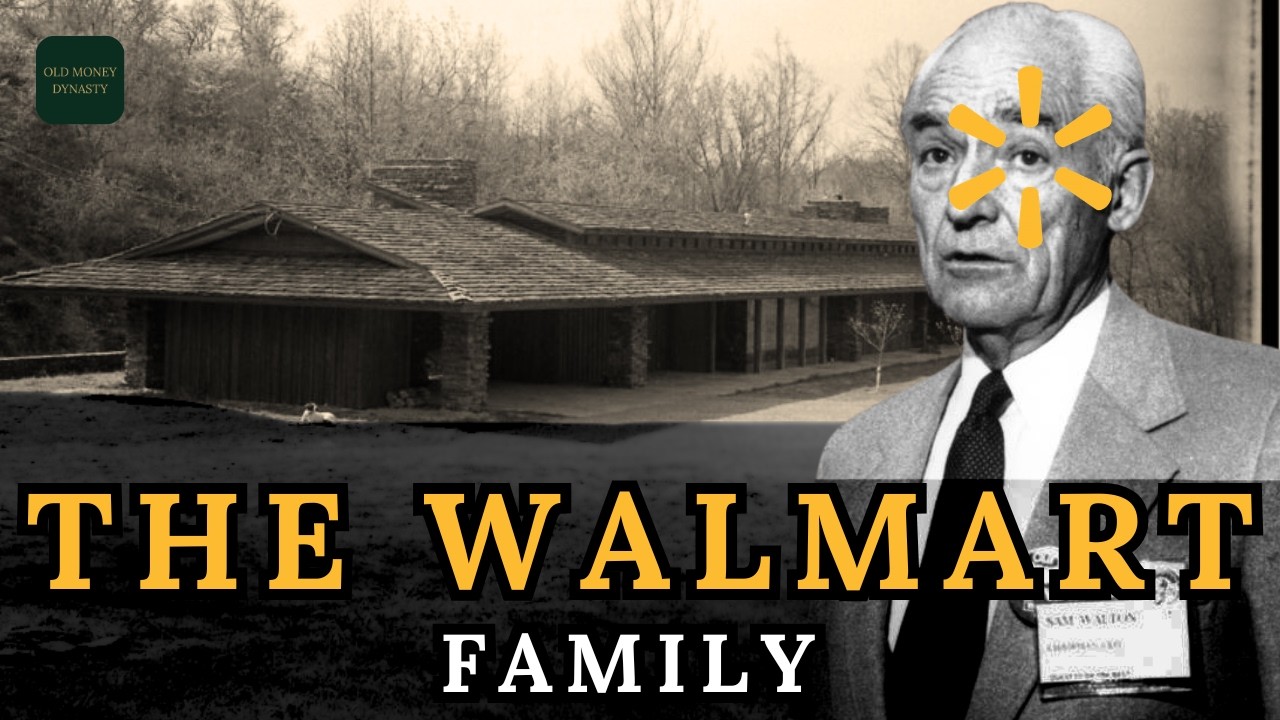
The personal side of this empire was defined by Sam Walton’s wife, Helen. When their first home in Bentonville burned down under unclear circumstances, the family lived in a double-wide trailer on the property while it was being rebuilt. The new house, designed by a young architect from the University of Arkansas, was built around a dammed spring that created a reflecting pond and waterfall. Visitors still photograph the property, where the dog cages remain in the back, and the house has no plaque on the door.
A stream still runs through the land, a reminder of the modest design that predated Walmart’s global ascent. Years later, after Sam Walton received the Presidential Medal of Freedom from George H. W. Bush and the news went out by satellite to every store, Alice Walton revealed her own connection to the region’s culture.
In the late 1980s, she purchased two Winslow Homer watercolors, which she later described not for their value but because it was the first time she remembered choosing something purely for what it made her feel. That purchase planted the seed for the Crystal Bridges museum, which architect Moshe Safdie designed as eight interconnected pavilions totaling 200,000 square feet, set into a ravine with the buildings appearing to grow from the terrain. The impact on Bentonville has been profound and complicated. The museum drew a wave of development, but so did Walmart’s own expansion, with median apartment rents climbing nearly 50% in recent years.
Longtime residents have mixed feelings, remembering when they never had to wait in traffic, while the town is now home to corporate offices for companies like Gamble, Paramount, and Monster Energy wanting to stay close to their largest customer. Both things are true at once, which is usually how it goes when a small town grows up faster than anyone planned. The Walmart story is not really about a single store or a single decision, but three decades of infrastructure choices that compounded, turning a man who started over in a town of 3,000 into the head of a retail empire built on the simple belief that if you brought the store to the people, they would come.