At 6:00 in the evening on February 19, 1986, a heavy-set man in a white Cadillac pulled into the parking lot of a Salvation Army halfway house in Baton Rouge, Louisiana. He did this every single night—same time, same car, same parking spot. He did not know that two Colombians in a nearby car had been watching him for 11 straight nights. In the next four seconds, a submachine gun emptied six rounds into his head and chest at point-blank range.
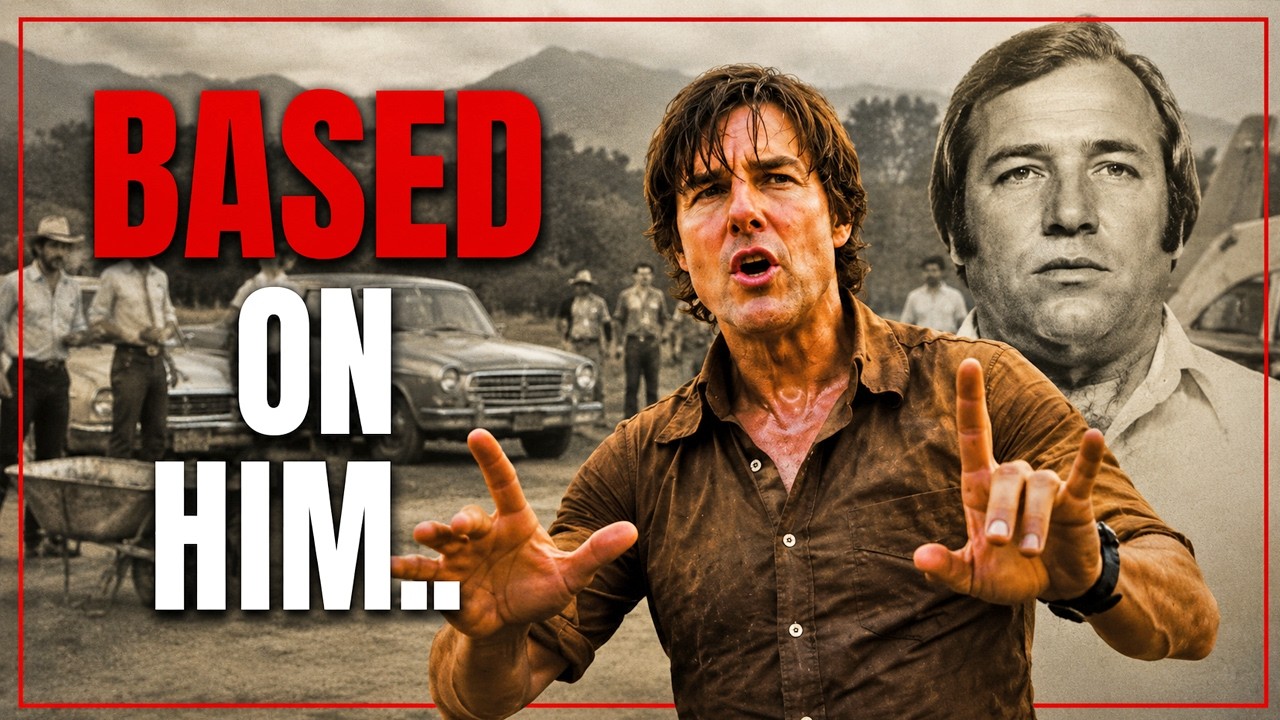
The man was Barry Seal, a decorated commercial airline captain who once flew Boeing 747s across the Atlantic. By the time of his death, he had become the highest-paid drug smuggler in American history, flying cocaine into Louisiana swamps for one of the most feared cartels on Earth. How he got there is a story that the United States federal court system did not just fail to prevent—it helped make possible. Barry Seal was not a typical criminal.
He was an exceptional pilot who wanted more than a pension. According to his own accounts, his drug career began with small loads of marijuana flown north out of Central America in the same aircraft he had flown for Trans World Airlines. The men he flew for were not the mustachioed villains of American movies. They were the leaders of the Medellín cartel, and by the early 1980s, they were moving an estimated 15 tons of cocaine into the United States every month.
In 1982, Seal made a decision that would end his life. Sitting across a table from cartel leaders, he was offered wealth beyond calculation—and warned that if he ever spoke to the Americans, they would kill him and everyone he loved. He accepted the deal. Within 18 months, by federal estimates, Barry Seal was personally responsible for smuggling between three and five billion dollars’ worth of cocaine into the United States.
But here is what should stop you cold: while Barry Seal was flying cocaine into the country, the same aircraft and the same pilot were being used by United States intelligence for other purposes. By 1982 and into 1983, Seal was operating at a scale no smuggler before him had ever matched. He kept a personal aircraft in a hangar with a private bedroom inside. He was not just one of the most successful smugglers in history—he was the most successful.
That was about to change. In October 1983, Barry Seal made his first real mistake in nine years of smuggling, and for the first time, he was in handcuffs. Federal agents did not yet understand that the heavy-set man in the interview room was the linchpin of the Medellín cartel’s North American logistics. In March 1984, after being turned down by Florida prosecutors, Barry Seal walked into the Washington, D.
C. , offices of the Vice President’s Task Force on Drugs. In that moment, he was both the largest drug smuggler in America and the most valuable informant federal agents had ever run. Same man, same plane, same runway—but a different flag on the paperwork.
Seal reportedly told his handler upon returning, “I got them. I got all of them. ” The contract on Barry Seal’s life was signed within 48 hours. The order was clear: dead only, no wounded, no prisoners.
Barry Seal appeared before a United States Senate subcommittee. His attorney warned the judge that following the order would result in his client’s death. The transcript of that warning still exists. The judge did not modify the sentence.
Instead, the court order effectively published a delivery schedule for the Medellín cartel’s most wanted target—in the public record, in English, months in advance. Seal refused witness protection because it would have meant giving up his identity, his home, and control of his own life. Barry Seal was, above all else, a man who insisted on control. He asked the Salvation Army for permission to arrive at different times each night.
He was refused. He had in his possession cassette tapes and documents that he had told federal agents might implicate American officials in operations that were never supposed to become public. The judge’s sentence was extraordinary. Barry Seal was ordered to serve his sentence not in prison but by reporting every night, unarmed and unaccompanied, to a Salvation Army halfway house in Baton Rouge between 6:00 in the evening and 6:00 in the morning.
When Seal’s attorney protested, the judge replied, “That’s not my concern. ” That was the moment Barry Seal was, in effect, sentenced to death by the American legal system. On the night of the murder, Seal got into his white Cadillac. The first burst hit him in the head.
The two men who fired drove away at normal speed, obeying traffic laws, taking care not to attract attention. Barry Seal’s body was still slumped in the driver’s seat when the first police officer arrived. It took just minutes from the sound of the first burst for the Baton Rouge Police Department to reach a scene the cartel had watched for 11 days. The car door was still closed.
The engine was still running. The radio was still on. And this is where the story enters territory the United States government has never fully addressed. Those cassette tapes and documents Seal had mentioned have never surfaced.
In the weeks following his death, Deborah Seal gave a series of interviews that formed the foundation of nearly everything the public would ever know about Barry Seal’s private life. She testified about the threats, described the sleepless nights, and refused to let his story be softened by anyone. Barry Seal was not the only person killed in connection with his story. His attorney died years later, having given several interviews but never producing the materials he claimed to have.
Congressional investigations into Iran-Contra brushed against Seal’s operations in Mena, Arkansas, but never fully mapped what had happened there. Three men were convicted in Seal’s murder. All received life sentences without the possibility of parole. But the triggermen were never the real story.
The cartel that ordered the hit fragmented, absorbed first by the Cali cartel, then by smaller Mexican organizations. Seal never stood trial for his own crimes. He was killed before he could testify. The pilot from Baton Rouge did not just help build the world’s most powerful drug organization.
He flew for it, informed on it, and then was killed for trying to walk away. The enabling infrastructure—the predictable schedule, the fixed address, the mandatory disarmament, the refused protection—was constructed entirely by the American legal system. Each retelling of Barry Seal’s story has softened him a little more, each portrayal further from the truth than the last. The real Barry Seal was not haunted.
He was in exactly the place he had chosen to be. He knew the risk. He read the warning. He went anyway.
His attorney warned the judge that following the order would result in his client’s death. The judge did not modify the sentence. That is not a story of justice. It is a story of institutional failure with a body count.
According to the Louisiana coroner, Barry Seal had time in the last seconds of his life to lift his right hand toward the driver’s side window, as if to block the gun. The car door was still closed. The engine was still running. The radio was still on.
Six shots, two bursts, head and chest. And then, silence.