In 1972, the United Nations appointed its fourth secretary-general. He was Austrian, a seasoned diplomat who had spent decades building a reputation as one of the most capable international statesmen of his generation. His name was Kurt Waldheim, and for the next decade he led the most powerful international institution on earth.
What the United Nations did not know, or did not ask, was what Waldheim had been doing decades earlier. Thirty years before, he had been a very different man: an intelligence officer in the German Army in the Balkans, present during operations that sent thousands of Greek Jews to Nazi death camps. He built his entire postwar career on a lie he had been telling since 1945. For forty years, that lie held, until it finally collapsed. What followed did not merely destroy one man's reputation. It forced an entire country to reassess what it had chosen to forget.
Kurt Waldheim was born on December 21, 1918, in Sankt Andrä-Wördern, a small village near Vienna. His father was a teacher of Czech origin who changed the family name from Watzlawick to Waldheim when the Austro-Hungarian Empire collapsed at the end of World War I. The family was Catholic and politically conservative. Waldheim grew up in Austria after the empire's fall. He studied at the Consular Academy in Vienna, then began studying law at the University of Vienna. By all accounts he was a serious and ambitious young man, and it is said he realized early that diplomacy was what he wanted.
Then came 1938, and everything changed. When Hitler annexed Austria in the Anschluss in March 1938, Waldheim made choices he would try to justify for the rest of his life. He joined the National Socialist German Students' League. He later became a registered member of the SA cavalry corps, the paramilitary force known as the Brownshirts that had built Hitler's popular base. He denied joining voluntarily, but documents indicate otherwise.
In early 1941, he was drafted into the Wehrmacht and sent to the Eastern Front as a platoon commander. He was wounded in December of that year. Here, what Waldheim told the world diverges from the account in the documents. In two separate autobiographies, and repeated to journalists over the following decades, Waldheim claimed his injury ended his military service. He said he returned to Vienna and spent the rest of the war completing his law studies as a quiet civilian student, nothing more.
The truth, as documents discovered in 1986 would make clear, was that he returned to active duty in 1942 and served as an intelligence officer in the German Army in the Balkans until the war's end in 1945. During that period, Waldheim worked as an officer and interpreter in German Army units operating in Yugoslavia and Greece. These were not quiet assignments. German forces in the Balkans during that period carried out brutal reprisal operations against Yugoslav partisans and civilians suspected of supporting them. Villages were burned, hostages were executed, and mass killings were documented and reported up the chain of command, in the same reports that passed through the offices where Waldheim worked.
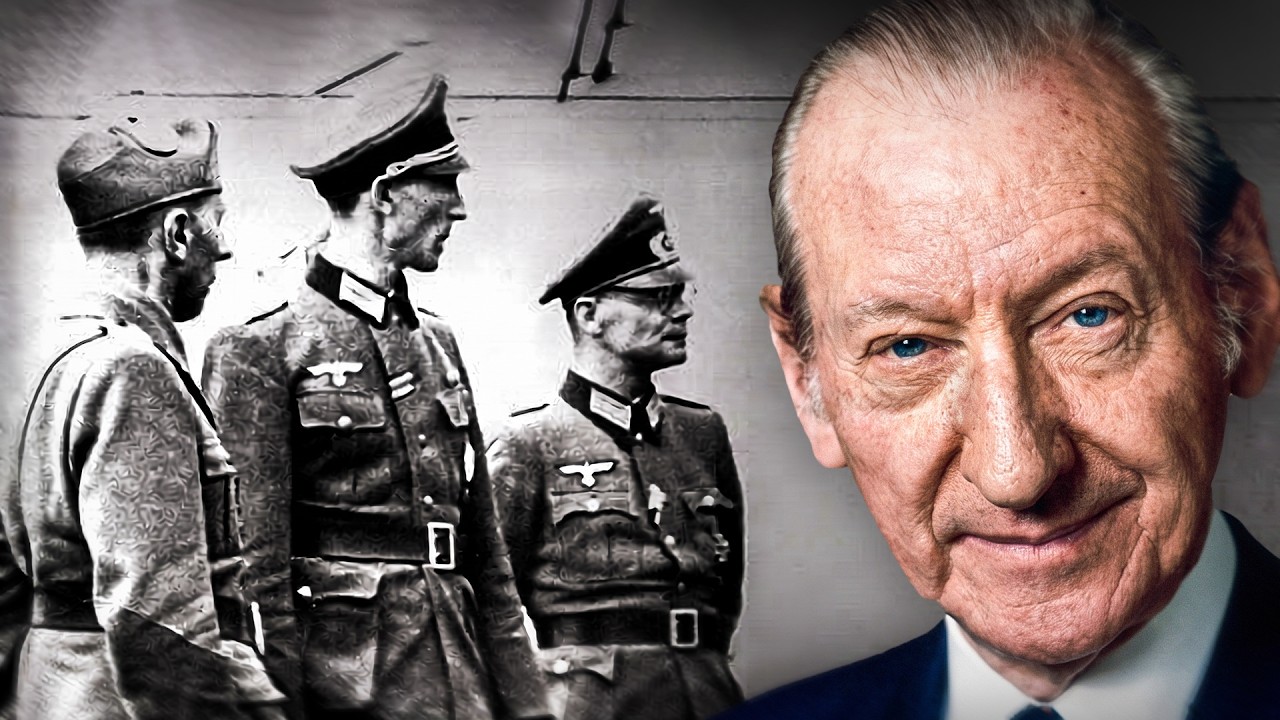
In 1943, the German Army unit associated with Waldheim's position took part in the deportation of Jewish residents from the city of Thessaloniki, then known as Salonika, in northern Greece. Around 46,000 Jews from that city were transported to Auschwitz, and few survived. Intelligence reports describing the deportations were later found in U.S. National Archives records, some bearing markings that pointed to Waldheim's unit and his role in it.
Waldheim was never personally accused of issuing orders for these atrocities. He was accused, and an international commission of historians confirmed in 1988, of having been present, well informed, and aware of what was happening around him, and of doing nothing to stop it. Worse still, he lied about it for forty years.
After the war ended, Waldheim did what he apparently intended to do. He completed his law studies at the University of Vienna and joined the Austrian diplomatic service in 1945. In 1944, in the midst of the war, he had married Elisabeth Ritschel, a law student he met at the university. Their marriage lasted sixty-three years, and they had three children: a daughter named Lieselotte, a son named Gerhard, and a second daughter named Christa. Lieselotte later worked at the United Nations. Christa went into art and married Othmar Karas, who later became an Austrian member of the European Parliament. Gerhard went into investment banking.
The family lived a quiet and outwardly prosperous life as Waldheim's career advanced over the decades after the war. He served in France, became Austria's first delegate to the United Nations in 1955, served as Austria's ambassador to Canada, and was Austrian foreign minister from 1968 to 1970. None of this was controversial, and none of it invited special scrutiny. He was regarded as a competent and trustworthy diplomat in positions of power.
In 1971, he ran for secretary-general of the United Nations, was appointed by acclamation, and began his term on January 1, 1972. Waldheim served as secretary-general for two five-year terms, from 1972 to 1981. Most observers described his tenure as efficient and highly professional. He oversaw relief efforts in Bangladesh after the 1970 war and its aftermath, coordinated international responses to famine in Sudan and the African Sahel, managed peacekeeping operations, and organized major international conferences. He also won praise for helping facilitate talks during the 1973 war.
His tenure was not without failures and controversy. He faced sharp criticism from American Jewish groups in 1976 when he condemned Israel's raid on Entebbe airport in Uganda, where Israeli forces rescued hostages from a hijacked Air France plane. In his second term, he confronted crises at the United Nations and found no effective solutions to Israel's operations in southern Lebanon, the Soviet invasion of Afghanistan, the Iran-Iraq war, and the holding of American hostages in Tehran.

In 1981, Waldheim sought an unprecedented third term. China, however, used its veto against his candidacy in the Security Council, preferring a candidate from the developing world. China backed Tanzanian candidate Salim Ahmed Salim, while the United States opposed him. This led to a prolonged veto deadlock between the United States and China. China vetoed Waldheim repeatedly, while the United States blocked Salim. After 16 rounds, Waldheim withdrew, and Javier Pérez de Cuéllar eventually emerged as a consensus candidate.
Afterward, he left the United Nations and spent two years as a visiting professor of diplomacy at Georgetown University in Washington. Then, in 1986, he ran for president of Austria. That decision changed everything.
Before the 1986 Austrian presidential campaign was fully under way, the Austrian magazine Profil published a facsimile of Waldheim's 1939 military record. The record showed his membership in the SA and the Nazi students' league. Waldheim had mentioned none of it in his autobiography. Then the World Jewish Congress began publishing documents from American and Yugoslav archives. A picture emerged of a man who had been an active German Army officer in the Balkans between 1942 and 1945, present in areas that saw mass killings and forced deportations. He served in a unit whose activities were among the most documented war crimes of the Balkan campaign.
A blurry photograph circulated widely, showing a young, tall Waldheim in military uniform among German officers. Intelligence reports surfaced that matched his role and unit. Yugoslav war crimes files, compiled after the war, also listed Waldheim as a war crimes suspect.
Waldheim's response was consistent throughout. He acknowledged he had not been truthful about his past, and he acknowledged he had continued in military service after his 1941 injury, but he denied any personal knowledge of or involvement in the atrocities. He said he did what was necessary to survive the war and claimed he was being unfairly targeted.
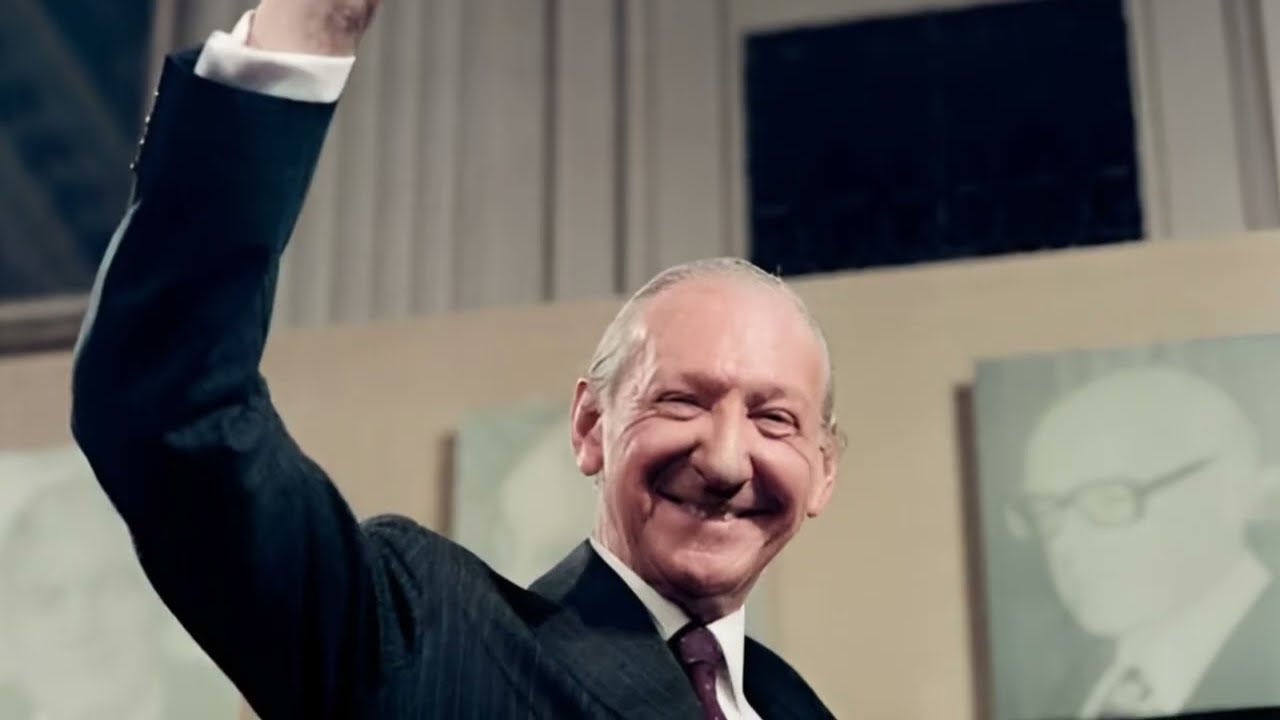
Nevertheless, he won the presidential election. Austrians elected him in June 1986, and he served as president until 1992. International reaction was different. On April 27, 1987, the United States placed Waldheim on a watch list and barred him from entering the country. His wife Elisabeth was placed on the same list. During his six years as president, he visited the Middle East and the Vatican, but was effectively barred from entering most Western countries. Foreign heads of state came close to avoiding meeting him officially.
In February 1988, an international commission of six historians, appointed to study the evidence, issued its findings. The commission concluded that Waldheim had known about preparations for war crimes and had failed to prevent them. The commission could not prove direct personal participation. That distinction, legally significant, did not improve his reputation.
Waldheim rejected all calls to resign, completed his full term, and did not run for re-election in 1992. After his presidency ended, he largely withdrew from public life. He then wrote another autobiography in 1996 titled "The Answer," in which he described his wartime conduct: "I did what was necessary to survive that day, under that regime, and in war. No more and no less." The statement satisfied almost no one.
Elisabeth, who stood by him through every stage of the scandal, outlived him by about ten years. She had been a member of the League of German Girls, a women's organization equivalent to the Hitler Youth, before the war, and had applied to join the Nazi Party, with differing accounts of whether she was formally accepted. Regardless of her wartime affiliations, she remained loyal to her husband to the end and defended him publicly throughout decades of international isolation. She died in Vienna on February 28, 2017, at the age of 94.
Their three children carried on with their lives. Lieselotte worked at the United Nations, the same institution her father had led. Gerhard went into finance. Christa married into the world of Austrian politics through her husband's work in the European Parliament. None of them spoke at length publicly about the scandal.
Waldheim died in Vienna on June 14, 2007, of heart failure at the age of 88. At his funeral at Vienna's Central Cemetery, Austrian President Heinz Fischer described him as a great Austrian. The then-UN secretary-general, Ban Ki-moon, sent a message of condolence. Waldheim had requested that no foreign leaders attend except the prince of Liechtenstein. After his death, a letter he wrote was published in which he admitted making mistakes and asked for forgiveness. It was the closest thing to genuine remorse.
The question raised by the Waldheim case is not really about him personally. He was a man. What he did was what men in his position did all over postwar Europe: he built a new identity on a wartime record he knew would not withstand scrutiny, moved quickly into institutions that did not ask hard questions, and relied on the silence and interests of those around him.
The more important question is how a man with such a record could hold the office of head of the United Nations for ten years, while intelligence agencies in several countries were fully aware of what he had been. The watch list on which the United States placed him in 1987 was built from files the CIA had kept for years. The Yugoslav war crimes commission, which had listed him, had submitted its list to Allied forces at the end of the war in 1945. The information existed, but no one acted on it during his time in power. That is the part of the story with a definite ending.