World War II hero Richard “Dick” Winters, whose leadership of Easy Company inspired the acclaimed HBO miniseries “Band of Brothers,” harbored a deep and lasting contempt for one of the show’s most emotionally charged sequences, describing the Paris flashback scene as “stupid” and expressing frustration that he was never given the opportunity to review the scripts before they were filmed.
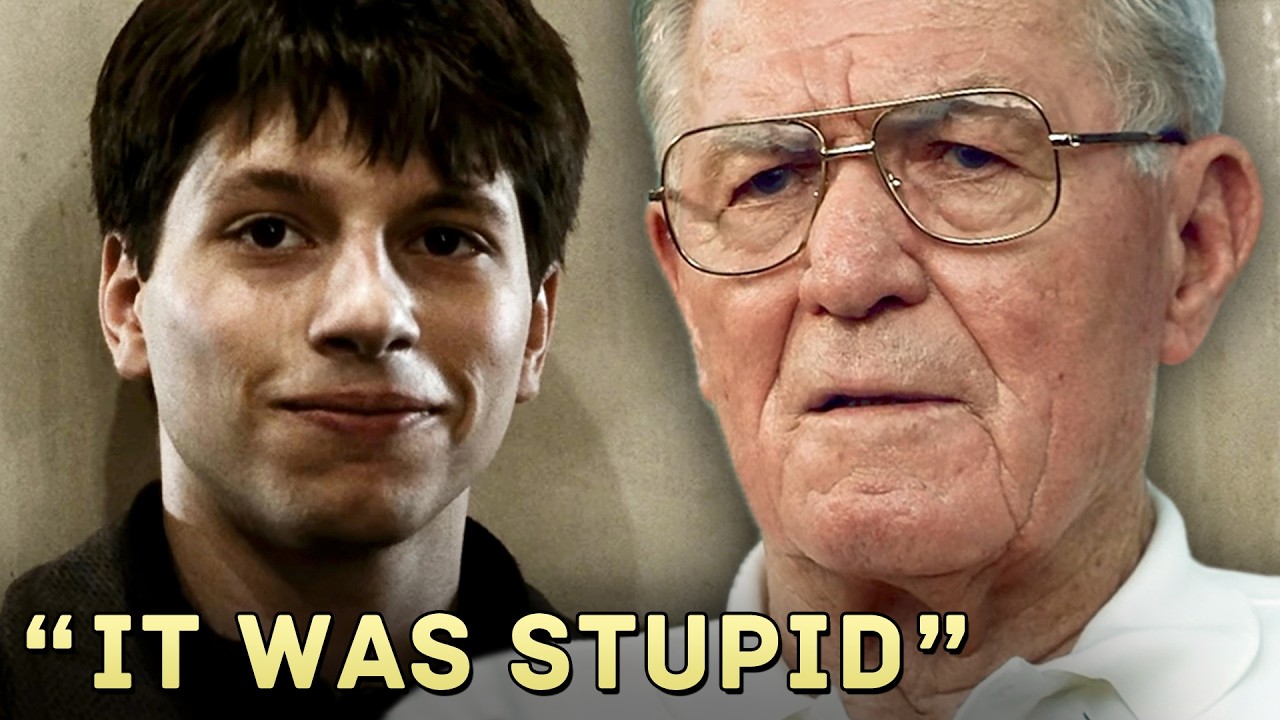
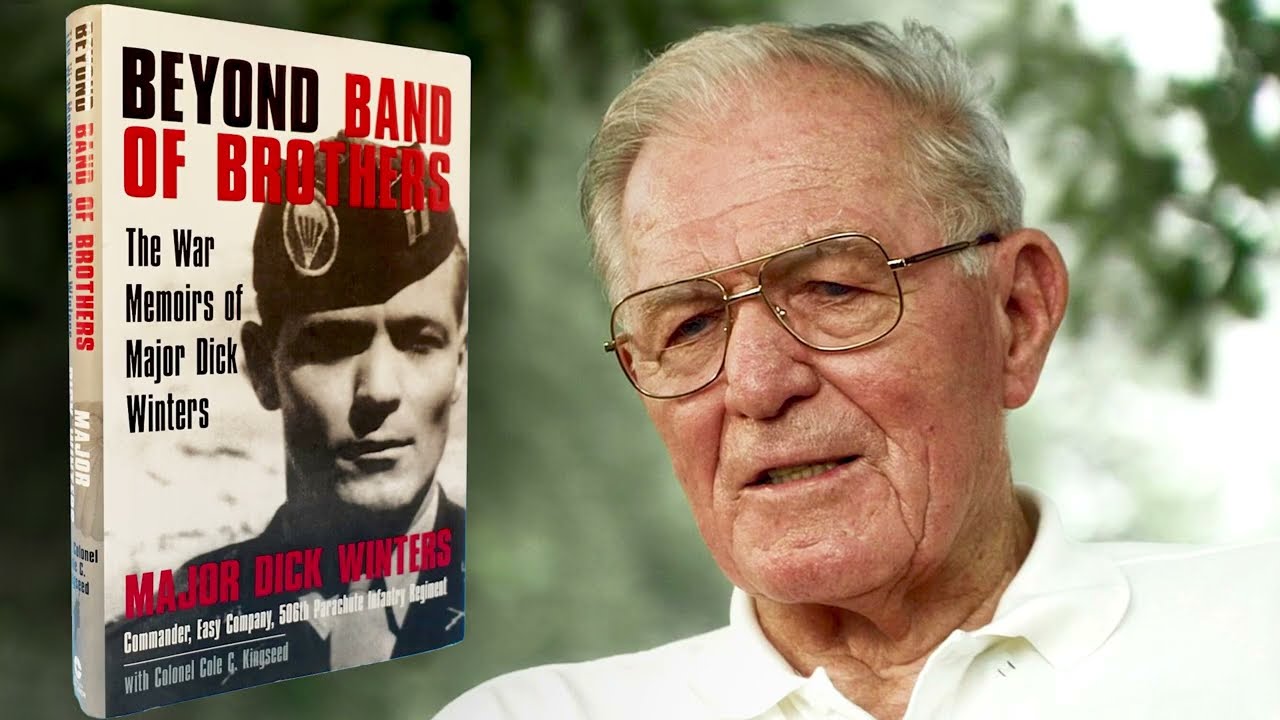
The revelation, drawn from a 2004 interview Winters gave to American History magazine and corroborated by biographer Larry Alexander’s book “Biggest Brother,” casts new light on the creative tensions that simmered beneath the surface of one of television’s most celebrated wartime dramas. Winters, who served as a consultant on the project, made clear that his advisory role came with significant limitations.
The scene in question appears in the fifth episode of the series, titled “Crossroads.” In the sequence, Winters, played by Damian Lewis, is on a 48-hour leave in Paris and rides the city’s metro alone at night. He notices a young boy in the subway car who reminds him of the young German soldier he shot during the attack at the crossroads in Holland on October 5, 1944.
As Winters stares at the boy, flashbacks of the smiling German soldier’s face flood his memory. He loses all sense of time and place until the train reaches the end of the line. The boy exits alongside Winters, looks at him with admiration, and renders a military salute before the two part ways.
The scene is widely regarded as one of the miniseries’ most powerful depictions of the psychological toll of combat.
But according to Winters himself, none of it ever happened. “I remember when I was interviewed for the film,” Winters recalled. “I told one of the writers that when I shot the German, he looked at me and smiled.”
Winters continued his account, but he soon realized the writer had seized upon that single detail with a different purpose in mind.
 “The writer wanted to focus on that smile,” Winters said. “He wanted to highlight it as a flashback, the kind of painful memory that haunts you. I have memories every day, but the writer wanted to focus on that point.
That’s why that German was portrayed in the series as a child, and that’s why they later filmed me in Paris looking at this child on the train and having other memories come flooding back.”
Winters did not mince words about his feelings. “It’s stupid,” he said flatly. “But I didn’t get a chance to review the scenes.”
His comments underscore a fundamental disconnect between the veterans who lived the history and the filmmakers tasked with adapting it for a mass audience.
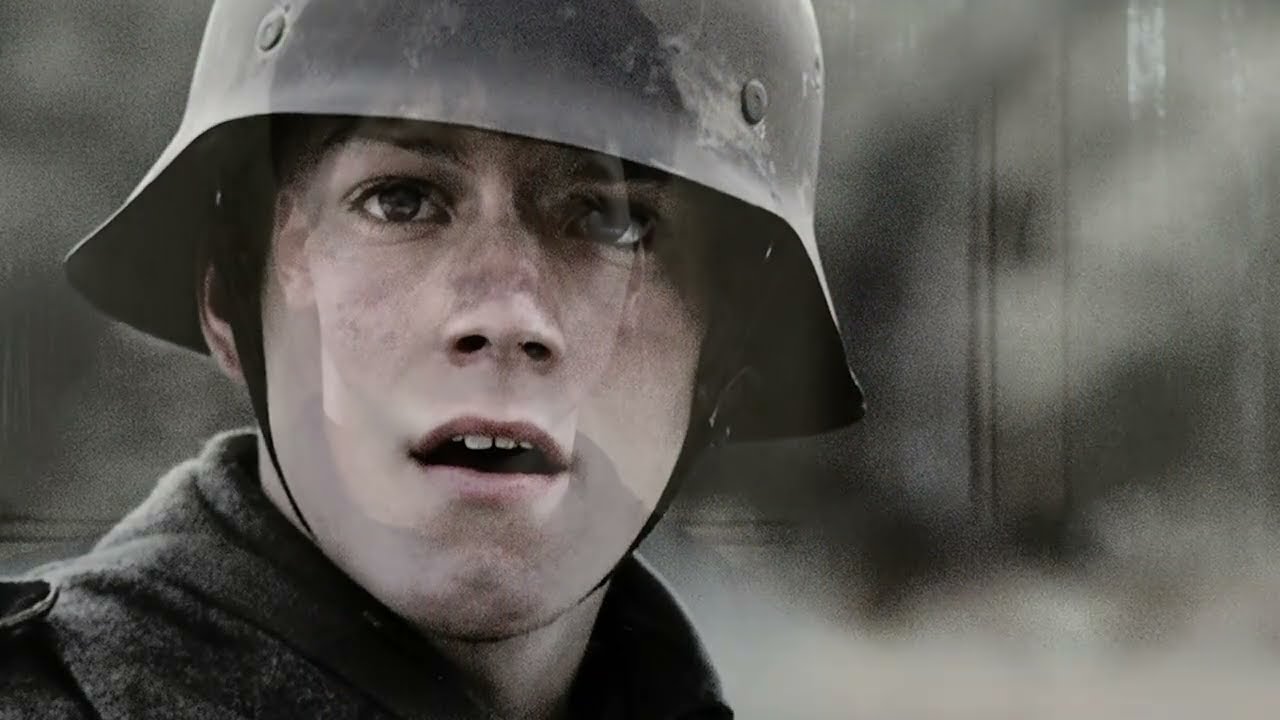
The creative liberties did not stop at the invention of the Paris metro sequence. The writers also transformed the German soldier who smiled at Winters during the crossroads attack into a child, a decision designed to heighten the 𝒹𝓇𝒶𝓂𝒶 and set up the Paris flashback. In Stephen Ambrose’s book “Band of Brothers,” upon which the miniseries was based, the author refers to the soldier simply as a German guard and makes no mention of anything unusual about his age.
Winters’ own memoir likewise describes the soldier as a German guard and says nothing about him being a child. Larry Alexander, who conducted extensive interviews with Winters for his biography “Biggest Brother,” also referred to the German soldier as a man. The evidence suggests the writers fabricated and distorted the historical record in pursuit of greater dramatic impact.
 In “Biggest Brother,” Winters identified another reason for his distaste for the Paris flashback: the way Damian Lewis continued to stare at the boy on the metro. “It looked like I was trying to pick him up,” Winters said. He did not hold back in assigning blame for the sequence.
“I don’t know where screenwriter Erik Jendresen’s head was when he came up with that,” Winters said. “That was one of his worst ideas.”
While Winters’ criticism may seem harsh to viewers who found the scene moving, his objections reveal a fundamental truth about the gap between lived experience and cinematic interpretation. The miniseries suggested, for dramatic purposes, that Winters had shot a child during the crossroads attack, when in reality the soldier who smiled at him was, by nearly all accounts, a grown man.
Winters was known to tolerate many of the fictionalized elements that “Band of Brothers” introduced over its ten-episode run. The series, produced by Tom Hanks and Steven Spielberg, prioritized compelling storytelling for a broad audience while attempting to remain faithful to facts as a secondary consideration. This approach frequently resulted in creative liberties whenever they promised a greater emotional payoff.
Yet the Paris flashback struck a particular nerve. It wasn’t merely that the scene was invented; it was that the invention carried an implicit accusation, suggesting that Winters had killed a child in combat. For a man who carried the weight of his wartime decisions for the rest of his life, the distortion was not an abstract artistic choice but a personal affront.
Historians and fans of the miniseries have long debated the balance between dramatic license and historical accuracy in portrayals of World War II. The case of Winters and the Paris flashback offers a stark example of how even well-intentioned filmmakers can stray far from the truth in service of narrative. The scene remains in the series, a testament to the power of fiction to move audiences, even as the man it purported to portray rejected it as absurd.
Winters passed away in 2011 at the age of 92, but his willingness to speak candidly about his disagreements with the production has left behind a valuable record. It reminds viewers that behind every dramatized moment lies a real person whose experiences may have been very different from what appears on screen. His decision to correct the record, even decades after the events, speaks to a sense of duty that defined his life both in uniform and out.
The controversy also raises broader questions about the responsibility of filmmakers when adapting the stories of living veterans. Winters was available, willing, and articulate. He had already shared his memories in books and interviews.
Yet the creative team behind “Band of Brothers” chose to invent a sequence that never occurred, and in doing so, altered the historical record in ways that troubled the very man they sought to honor.
For those who knew Winters, his frustration was understandable. The miniseries remains a landmark achievement in television, praised for its realism and emotional depth. But its treatment of the Paris flashback serves as a cautionary tale about the costs of prioritizing 𝒹𝓇𝒶𝓂𝒶 over truth.
Winters, a man of quiet dignity and unwavering honesty, deserved better than to have his story reshaped for effect.
His willingness to speak out, even when it meant criticizing a beloved production, reflects the same moral courage he displayed on the battlefields of Europe. It is a reminder that the greatest heroes are not those who accept the narrative imposed upon them, but those who insist on telling their own story in their own words.