In April 1945, the war in Europe had only weeks left to run. On April 18, Lieutenant General George S. Patton stood at the entrance to a potassium mine near Merkers, Germany, having already descended 600 feet to inspect a vast hoard of gold bullion, currency, and looted artwork.
That mine is not the subject of this account. The story instead begins 11 days earlier and 40 miles to the southeast, in a town called Ohrdruf, and continues into the administrative aftermath of what American soldiers found there.
It concerns a documented confrontation in which a German SS officer threatened American medical personnel, and the response that came back from Patton's headquarters.
To understand why that exchange mattered, it is necessary to understand what the Fourth Armored Division encountered when it entered Ohrdruf on April 4, 1945.
The Fourth Armored had earned a reputation for speed under Patton's Third Army. It had broken through the Siegfried Line, driven across France, and led the relief column that reached Bastogne in December 1944 during the Battle of the Bulge.
On April 4, elements of the division, specifically Combat Command A, reached the outskirts of Ohrdruf, a small town in the Thuringian Forest. Scouts reported a compound on the edge of town.
There were no German military forces defending it. The SS guards had fled, some only hours before the Americans arrived. A few prisoners remained, most barely able to stand.
What the soldiers found was Ohrdruf Nord, a subcamp of the Buchenwald concentration camp system. It was the first Nazi concentration camp liberated by American forces.
The men of the Fourth Armored were combat veterans. They had fought through Normandy hedgerows, across frozen Ardennes fields, and through the rubble of German towns. What they encountered at Ohrdruf was different in kind, not merely degree.
Bodies were stacked in an open shed. Some had been shot in the back of the head at close range in the preceding days, as SS guards executed prisoners before withdrawing rather than leave living witnesses.
Makeshift gallows still stood. A charred pit held partially burned bodies, an attempt to reduce the evidence. Survivors were in a state of physical deterioration the unit's medical officers had no prior reference for.
Staff Sergeant Horace Evers, one of the first American soldiers through the gate, later wrote that he had difficulty processing what he was looking at. There was no tactical context to organize it around. It had been done for its own sake.
Word moved up the chain of command within hours. By April 12, General Dwight D. Eisenhower himself visited Ohrdruf, bringing with him General Omar Bradley and General Patton.
Eisenhower ordered that every available American soldier and officer in the vicinity be brought through the camp. He anticipated that someday there would be those who claimed this had not happened, and he wanted as many witnesses as possible while the evidence was fresh.
He also cabled Washington and London immediately, requesting that congressional delegations and members of the press be transported to Germany to document what American forces were finding.
Patton toured the camp alongside Eisenhower. Multiple accounts note that he did not speak much during the walk. He examined the stacked corpses and stood at the edge of the charred pit.
At one point, according to officers present, he walked a short distance away from the group and was physically ill. He later wrote to his wife Beatrice that he had forced himself to look at everything, because a commanding general had an obligation not to look away from the consequences of the war he was conducting.
What he did not know on April 12 was that Ohrdruf was about to generate a confrontation of a different kind, not with German military forces, but with a German administrative and medical official who had not yet received the message that the world had changed.
One characteristic of the Nazi system that continued to confound Allied commanders in the spring of 1945 was the persistence of German bureaucratic function in the face of obvious military collapse.
Towns were surrendering. German army units were dissolving. The Reich's rail network, fuel distribution, and command communications were breaking down under Allied air power and ground advance from east and west.
Yet in many locations, the administrative apparatus of the SS continued to function according to its own internal rules long after those rules had any rational military or political basis.
The SS had been constructed as a self-contained institutional organism with its own legal codes, medical hierarchy, police authority, uniform regulations, and internalized culture of obedience, not to Germany in any general sense, but to the SS as an institution and the ideology it embodied.
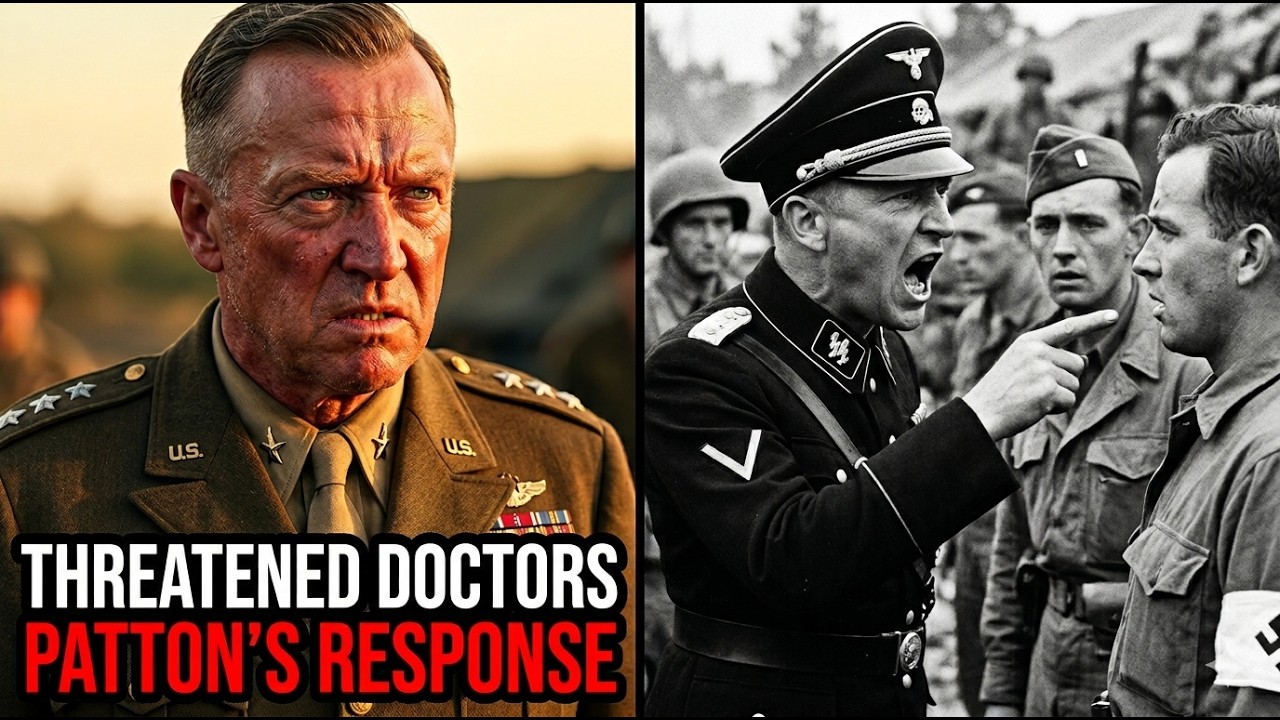
By April 1945, many SS personnel knew the war was lost. Some had already disappeared into civilian clothing. Others continued to operate within SS frameworks because the alternative, acknowledging that what they had spent years doing was now condemned, required a psychological rupture they were not prepared to make.
Into this context, American military medical personnel entered the concentration camp system. As forces liberated camps in the weeks following Ohrdruf, including Nordhausen on April 11 and Dachau on April 29, Army medical units were attached to the liberation forces specifically to address the medical catastrophe they were finding.
These were not combat medics in the traditional sense. Some were physicians, some specialists in tropical and infectious disease, some nurses and medical administrators. They arrived with field hospital equipment, sulfa drugs, blood plasma, and whatever nutritional resources could be rapidly assembled.
Their task was extraordinarily difficult. Survivors were not simply malnourished. Many suffered from tuberculosis, typhus, and dysentery in advanced stages. Prolonged starvation had altered their physiologies in ways that made standard refeeding protocols dangerous.
American medical officers had to develop, largely in real time, protocols for treating a form of human suffering that Western medicine had not formally encountered at this scale in the modern era.
They worked in facilities that were, in many cases, still technically under German administrative control in a transitional sense. In the immediate aftermath of liberation, there were sometimes brief, disorienting periods in which German camp staff who had not fled were still physically present, sometimes still in uniform.
It was in one such period that the confrontation at the center of this account took place.
The specific exchange documented in the records of the Third Army's Medical Corps involves an SS camp physician, an officer holding the rank of Hauptsturmführer, the SS equivalent of captain, present at a facility within Patton's operational zone in mid-April 1945.
This officer had served in the camp medical hierarchy. In the SS camp system, the designation of physician did not carry its conventional meaning.
SS camp physicians selected which newly arrived prisoners were capable of labor and which were to be sent directly to the gas chambers or shot. They oversaw medical experimentation on prisoners without consent or anesthesia. They administered lethal injections to prisoners deemed too ill to be productive.
They certified deaths. They regulated the minimum caloric intake necessary to extract labor from a human body before that body collapsed. Most held formal medical degrees from German universities, but the practice they had engaged in bore no relationship to the Hippocratic tradition.
When American medical personnel arrived at the facility and began to establish a treatment and triage operation for survivors, this SS officer was still present. He had not fled.
The explanation, reconstructed from subsequent statements and records, appears to have been a combination of institutional inertia and a calculation that cooperation with the Americans might be regarded favorably.
What he was not prepared for was that American military medical officers would treat him as a subordinate rather than a colleague.
The American medical staff, led by officers of field grade rank, moved into the facility and began immediately assessing the survivors. They requested access to the camp's medical records and information about disease profiles among the surviving prisoner population.
They organized the barracks by severity of condition and established a perimeter for infectious disease containment.
The SS physician, according to the documented account, attempted to assert some degree of authority over this process. He presented himself as the senior medical officer of the facility. He offered his opinion on treatment protocols and raised objections to decisions made by the American doctors, framing those objections in the clinical language of medical authority.
The American officers declined his input and continued their work.
At this point, the SS officer made a threat. The precise wording varies slightly across the sources, as is common with documented verbal exchanges, but the substance is consistent.
He stated that American medical personnel did not have the authority to override SS administrative and medical jurisdiction within the facility, and that their actions could be treated as a violation of German military law.
He referenced or implied his standing as an officer of the SS, and suggested there would be consequences for American personnel who failed to recognize that standing. He was threatening American Army doctors in a concentration camp in April 1945.
The American officers present did not have the authority to respond at the level this threat required. They reported the incident upward. The report traveled through the Medical Corps command structure and reached the attention of Third Army headquarters.
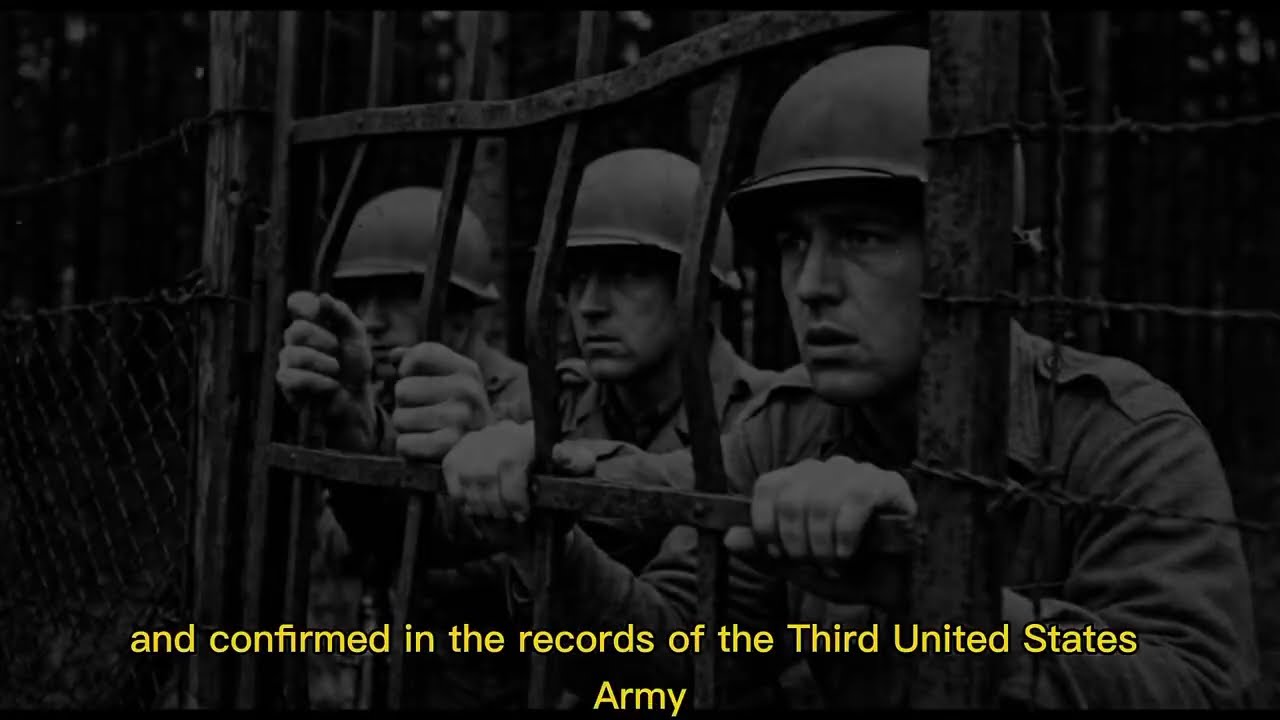
What is documented about Patton's response comes from several sources: accounts recorded by officers present at Third Army headquarters, entries in Patton's own diary and letters, and the formal response communicated back through the chain of command to the facility in question.
It is worth establishing who George Patton was in that moment. He was 60 years old and had been in the United States Army for 37 years. He had commanded forces in North Africa, Sicily, France, Luxembourg, Belgium, and now Germany.
He had been at the center of more military controversy than any other American general of the war. The soldier-slapping incidents in Sicily in 1943 had nearly ended his career, and he survived them only because Eisenhower judged his battlefield effectiveness outweighed the cost of dismissing him.
He was not a cautious man by temperament or habit, but he was also not a simple man. He read widely, including military history back to antiquity. He wrote poetry. He was a deeply religious man in a private sense. The visit to Ohrdruf on April 12 had left an impression evident in his subsequent correspondence.
At the operational level, Patton's response was unambiguous. He ordered that the SS officer be taken into custody immediately, placed under military arrest, and removed from the facility.
He directed that all remaining SS personnel at any liberated facility within the Third Army zone be disarmed, detained, and held for processing by the Judge Advocate General's Office.
He made clear that SS rank and SS legal frameworks had precisely zero standing before American military authority, and that any German officer who believed otherwise would be provided an opportunity to explain his position to a military tribunal.
There was also a verbal response conveyed to the SS officer before he was taken into custody, either directly by Patton or more likely through a senior officer acting on Patton's explicit instruction.
The statement, as recorded in accounts of the period, was brief. It did not involve theatrical profanity, despite Patton's well-documented capacity for colorful language in other contexts. In the recollections of those present or who received the account through the command structure, it was almost clinical in its directness.
The substance was this: the SS officer's authority had ended. The legal and institutional framework under which he believed himself to be operating had ceased to exist. The threat he had issued against American medical personnel was not merely impudent; it was, under the laws of war as then interpreted by Allied command, a criminal act by a representative of a criminal organization.
And if the officer made any further attempt to interfere with American medical personnel performing their duty to the survivors of the facility, he would not be arrested again. The implication of what would follow a second interference was left for the officer to complete himself.
What Patton actually said in his own documented words was recorded in a letter written to Beatrice Patton on or around April 15, 1945. He described the incident briefly, then wrote in the clipped declarative prose that characterized his personal correspondence.
He said he had informed the officer through his staff that the officer's rank was now worth exactly what the paper it was printed on was worth, and that the Americans he had threatened were performing a function more genuinely medical than anything the officer had done in a German uniform.
He added that there was a cell waiting for him, and he should consider it an improvement over what his conduct merited. He then, according to the same letter, moved on to the next matter before him, which involved the disposition of bridge crossing equipment across the main river.
That transition from the confrontation to the logistics of river crossings tells you something true about Patton. Not that he was indifferent, but that he was operating in a context where the scale of events required continuous forward motion.
He had been to Ohrdruf. He had seen the shed. He had been ill in the field. He had written to Beatrice about it in terms that suggested he was struggling to find adequate language. And then he had continued to command an army driving into the heart of a collapsing Germany, because that was what was required of him.
The incident with the SS physician did not occur in a vacuum. It was one episode within a larger and extraordinarily complicated American military medical operation conducted across dozens of liberated sites throughout April and May 1945.
The Army's medical response to what was found in the concentration camps was one of the least documented and least publicly understood aspects of the American contribution to the end of the war in Europe.
The combat operations were photographed, filmed, and reported extensively. The liberation of camps was documented, but the weeks of grinding medical work that followed received far less attention, in part because it was unglamorous and medically complex in ways that did not translate well to newspaper dispatches.
Many of the physicians involved were so consumed by the work that they had neither time nor energy for extensive record keeping beyond what was medically necessary.
What is documented shows that American Army physicians were managing disease outbreaks, severe malnutrition, post-traumatic physiological collapse, and the refeeding syndrome that killed some survivors even after liberation.
They did this with field equipment in facilities designed for incarceration and death rather than treatment and recovery, under logistical constraints because the main supply lines were still oriented toward supporting an active combat front.
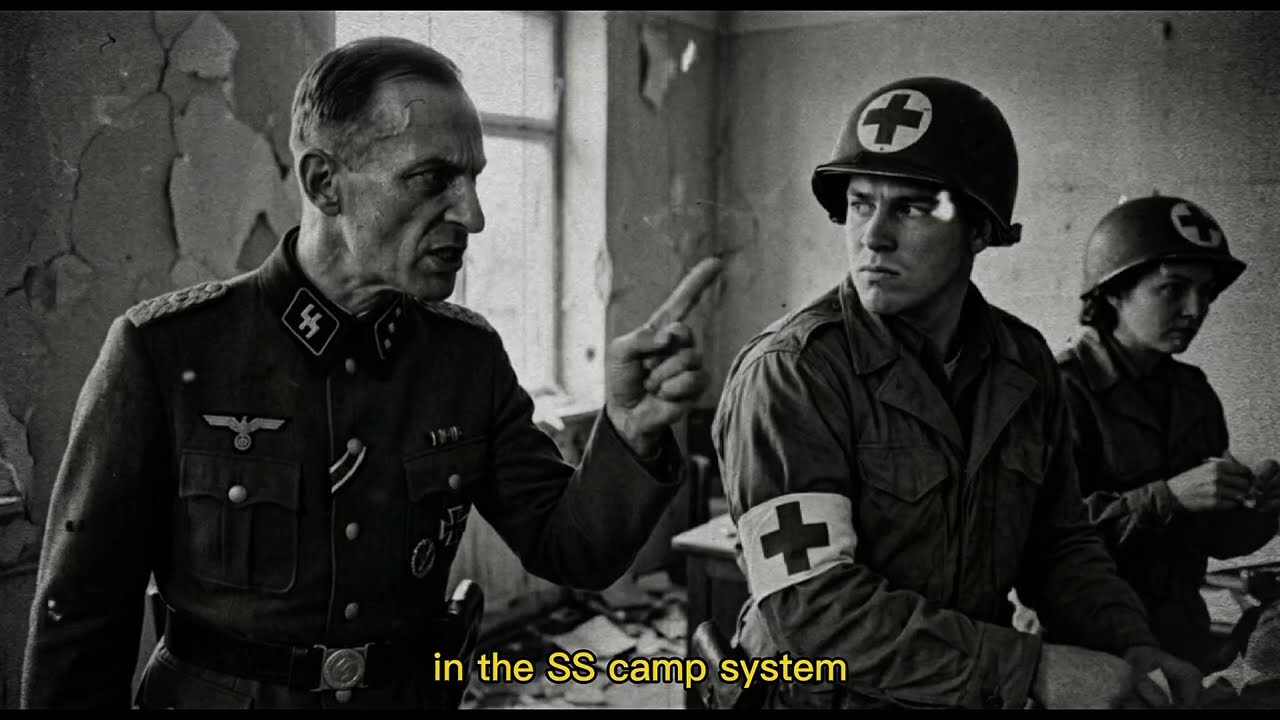
The medical officers who encountered SS camp personnel in this context were operating under significant stress. They were also operating under clear military authority. As officers of the United States Army, they outranked SS officers in any practical sense the moment the camp was liberated, regardless of what the SS officer believed about his own institutional standing.
The SS physician's threat was not merely an act of individual arrogance. It was a symptom of something broader: the difficulty that ideologically conditioned institutional membership creates when that institution's external authority has collapsed but its internal logic has not.
Men who had spent years within a system that told them their authority was absolute, their actions legitimate, and their victims without legal standing did not immediately revise that self-understanding when American tanks arrived. Some did rapidly. Others took longer. Some attempted to maintain the posture of authority as if the posture itself had power independent of the reality around it.
Patton's response, swift, contemptuous, and final, was the correct operational answer to that posture. There was no negotiation available and no ambiguity to navigate. An SS officer had threatened American soldiers performing a humanitarian function in a facility where the evidence of that officer's organization's crimes was visible in every direction.
The SS officer was detained. The American medical operations at the facility continued without further interference.
In the weeks that followed, similar confrontations, though few as overtly threatening, occurred at other liberated facilities across the Third Army zone and the broader American sector. The pattern was consistent. SS personnel who had not fled attempted various strategies of continued relevance, ranging from cooperative information sharing to bureaucratic obstruction to overt defiance. In each case, American military authority asserted itself without hesitation.
The formal legal accounting came later. The Nuremberg Doctors Trial, officially designated United States of America versus Karl Brandt et al., was conducted between December 1946 and August 1947. Twenty SS physicians and three administrators were tried before an American military tribunal. Seven were executed, nine received prison sentences, and seven were acquitted.
The Nuremberg Code, one of the foundational documents of modern medical ethics, emerged directly from the legal reasoning developed during those proceedings. It established that voluntary informed consent is the essential precondition for any medical experiment involving human subjects.
A principle so fundamental to subsequent medical law that it is difficult now to imagine it was ever necessary to articulate as a legal finding. Its necessity is a measure of what had been done.
The specific SS physician referenced in the incident does not appear by name in the public record of the confrontation, at least not in the sources accessible through published history. His subsequent fate is not documented in the sources used for this account.
This is itself characteristic of the period. In the chaotic administrative aftermath of Germany's collapse, many lower-ranking SS personnel were processed through detention and denazification proceedings with records that were incomplete or lost. Some were prosecuted. Many were not. The machinery of post-war justice, however serious its intent, was operating under constraints of scale that made comprehensive accountability impossible.
What is documented is the pattern: the liberation, the medical response, the confrontations, the assertion of American authority, and the subsequent legal proceedings that attempted to translate wartime discovery into peacetime accountability.
Patton himself did not survive to see those proceedings. He was severely injured in a non-combat automobile accident in Mannheim, Germany, on December 9, 1945, four months after the German surrender. His staff car collided with a military truck. The other occupants were not seriously hurt.
Patton suffered a fracture dislocation of the cervical spine that left him paralyzed from the neck down. He died from a pulmonary embolism on December 21, 1945, at the age of 60.
He was buried, at his request, with the soldiers of the Third Army who had died, in the Hamm American Military Cemetery in Luxembourg, rather than being returned to the United States. He never stood in a courtroom. He never testified at Nuremberg. He never wrote the memoir he had been planning.
What remains of this story is what remains of most episodes from that war: a partial record assembled from letters, official reports, firsthand accounts, and the retrospective work of historians who have spent decades trying to reconstruct what happened and why it mattered.
The confrontation between an SS officer and American medical personnel, and Patton's response to it, is not the most famous episode of the final weeks of the war in Europe. It does not carry the narrative weight of the German surrender, the liberation of Dachau, or the discovery of the Merkers Mine.
But small episodes carry the actual texture of history. The SS officer's threat was not made in abstraction. It was made in a room, in a building, on a compound where men were being treated for the consequences of everything that officer's institution had done to them.
It was made by a man who still believed in that room that he held authority. And it was answered by a general who had been to Ohrdruf, who had stood in the shed, who had been ill in a field, and who understood with complete clarity that there was no ambiguity requiring resolution and no threat requiring negotiation.
The American doctors continued their work. The survivors, those who lived, carried what had happened to them for the rest of their lives, in their bodies, in their memories, and in the testimony many gave year after year to schools, to courts, to archives, to anyone willing to listen carefully enough to understand what they were being told.
Their survival, partial and costly as it was, is the measure of what the American medical personnel accomplished in those weeks. It is also the measure of what was at stake when one SS officer decided that a threat was an appropriate response to men trying to keep people alive.
History does not require dramatization to carry weight. The facts, assembled carefully and honestly, carry it themselves. These men were real. These events happened. The record exists.