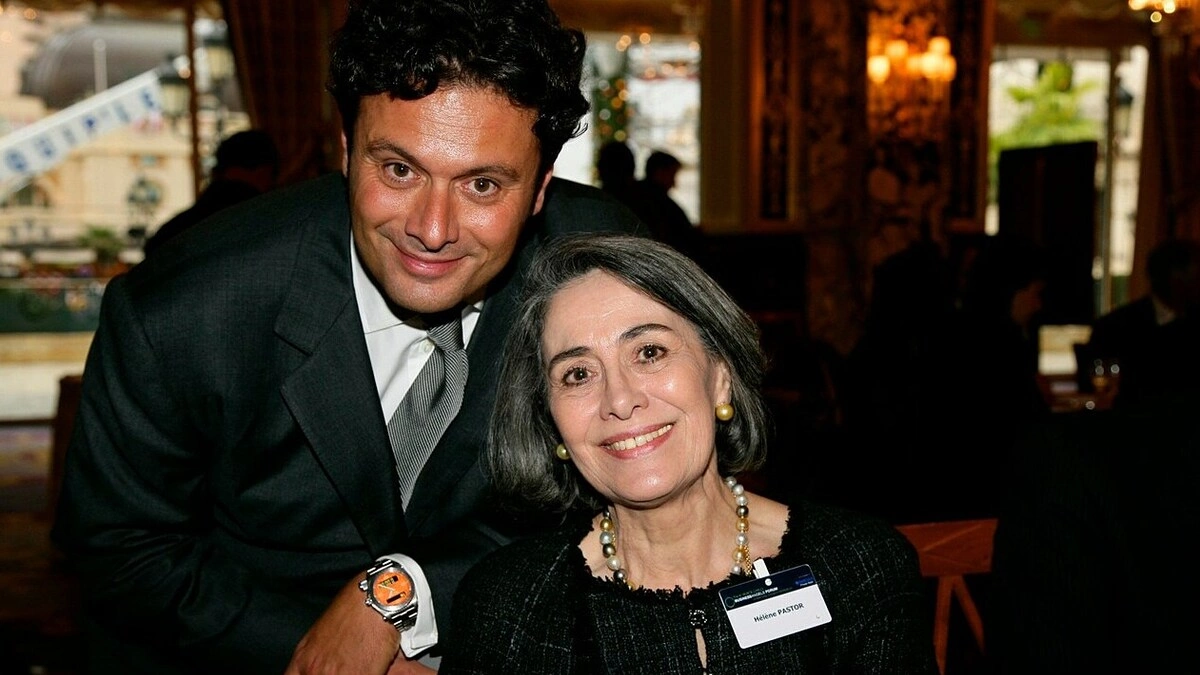
Monaco has long been associated with wealth, glamour, and the quiet discretion of old money. But behind the principality's polished facade lies one of the most shocking crimes in its modern history. The 2014 assassination of Hélène Pastor, Monaco's second wealthiest woman, exposed a family tragedy driven by greed, dependency, and betrayal.
Hélène Pastor was born in 1937, the third generation of a real estate dynasty that had come to control roughly a third of Monaco's total real estate. Her grandfather, Giovanni Battista Pastor, arrived in Monaco in 1880 as a penniless Italian stonemason. The orphan from Bioglio had worked underground since the age of 13, learning that fortune favored those who seized it.
Renaming himself Jean Baptiste in French fashion, he laid stones for wages that barely covered bread. He saved every franc while studying Monaco's geography like a general surveying battlefields. In 1936, Prince Louis II needed someone to build Monaco's first football stadium, and Pastor won the contract. That stadium's silhouette became his company's permanent logo.
After World War II, Jean Baptiste recognized the potential of the Larvotto district, buying beachfront parcels when there was nothing to the east of the Monte Carlo Casino. He bet that millionaires would eventually crave Mediterranean views. Each purchase expanded his holdings along what would become Monaco's golden coastline.
His son Gildo inherited more than a construction company. He possessed his father's vision for exploiting Monaco's transformation into Europe's money laundering jewelry box. In 1966, Prince Rainier authorized Gildo to build high-rise apartments along the coast, creating a real estate revolution in a nation constrained by geography.
The Pastor doctrine took shape: build luxury towers, never sell, collect rent forever. Formula 1 champions, arms dealers, and oligarchs would write monthly checks to the Pastor Empire for generations. By the 1990s, the family controlled more of Monaco than anyone except the ruling Grimaldi family itself.
Hélène inherited the premium assets when her father died in 1990. Her empire encompassed La Bella, the Hôtel de Paris, the Trokadéro, the Continental, the Luilkil apartments, and the Gildo Pastor Center, worth an estimated $3.7 billion concentrated in six square miles. Monaco nicknamed her the "vice princess," acknowledging the Pastors as the principality's shadow royalty.
Yet Hélène cultivated eccentricities that humanized her billions. She drove through Monte Carlo in a London taxi, preferring its boxy anonymity to chauffeur-driven Bentleys. Two children consumed her attention: Sylvia, born in 1961, and Gildo Pallanca Pastor, born in 1967. Each received monthly allowances of €500,000, or €6 million annually.
That arrangement would prove fatal. It created a dependency that attracted predators who saw opportunity in Hélène's maternal generosity. The Pastor name decorated 15 percent of Monaco's residential buildings, a vertical empire built by three generations of calculated ambition.
In 1986, at a charity ball, Sylvia encountered a Polish charmer whose fraudulent credentials would eventually paint the Pastor Empire's walls with blood. Wojciech Janowski was born in Warsaw on August 15, 1949, equipped with communist-era survival skills: forge documents, fabricate histories, monetize proximity to power.
His father had been convicted and imprisoned after World War II as a Nazi collaborator. The legacy of deception passed to the son. Janowski's resume glittered with false gems. He claimed to be a Cambridge University graduate, a hotel magnate, a casino operator, and a nanotechnology pioneer. He served as Poland's honorary consul to Monaco and co-founded Monaco Against Autism.
He had earned France's National Order of Merit from President Nicolas Sarkozy. Genuine honors built on top of fraudulent foundations. Sylvia Pastor, nursing divorce wounds at 53, avoided the dance floor that night until Janowski appointed himself her permanent companion, deploying charm like a sniper.

History repeated itself. He would later muse that Sylvia's mother had once eloped with Sylvia's father, a Polish man, before the family retrieved her. It was a romantic precedent for his infiltration. They spent 28 years together and had one daughter.
Millions upon millions were siphoned from Sylvia's accounts into Janowski's elaborate theatrical production of non-existent success. Cambridge never knew him. Pascal Doryak, the personal trainer who would eventually coordinate the murder, had purchased a diploma from a Thai degree mill. Hudson Oil existed primarily in Janowski's imagination and self-authored Wikipedia entries.
Reality was one defunct Polish refinery called Gleimar, purchased for $40 million and never paid for. Court orders chased phantom payments while Hudson Oil's website died and its headquarters transformed into a therapist's office. The company owed its first installment by the end of 2014, and pressure was mounting.
Dubai became his financial laundromat. Sylvia's money entered, emerged cleansed, then vanished into ventures that existed solely on letterhead and cocktail party conversations. "The only money he ever had was his wife's money," Gildo's lawyer would observe, summarizing decades of parasitic attachment.
In 2012, a yacht purchase saw Janowski doctor invoices, adding €1 million to the price. Sylvia paid, and he pocketed the difference. A London apartment for their daughter was bought in Janowski's name and secretly mortgaged before Sylvia noticed her gift had been stolen and leveraged. Dental school tuition became another profit center, with actual costs of €250,000 annually inflated to €500,000.
Sixteen months before the murder, €7.5 million of Sylvia's €9 million vanished into Janowski's financial quicksand. "Investors adored Sylvia," he would admit during trial. "Whenever there was a problem, she'd call her friends and they'd sort it out." His Polish consul title was unpaid, ceremonial, and worthless, but it opened Monaco's doors through perceived prestige.
Then came 2012 and disaster. Sylvia's cancer diagnosis threatened the host-parasite relationship that sustained Janowski's entire fictional existence. The equation tormented him: if Sylvia died before Hélène, the monthly €500,000 would disappear. His debts would devour him within weeks.
Pascal Doryak testified that immediately after Sylvia's diagnosis, Janowski first mentioned eliminating the old woman. Murder as financial planning. Janowski claimed Hélène tortured Sylvia psychologically daily, though prosecutors recognized this as posturing designed to justify matricide. He weaponized the tensions between mother and daughter, presenting himself as Sylvia's protector.
Hudson Oil's collapse accelerated. Creditors mobilized. Criminal prosecution loomed. Every direction led to exposure, bankruptcy, and the end of Janowski's Monaco masquerade. Hélène Pastor, 77 and healthy, controlled the solution to every problem. Her death would unlock Sylvia's inheritance and save Janowski from his self-created catastrophe.
At 7 p.m. on May 6, 2014, Hélène completed her daily ritual at L'Archet Hospital, kissing her stroke-afflicted son Gildo before departing. Mohamed Darwich waited beside the black Lancia Voyager. Twenty years of faithful service were about to end in shotgun smoke and blood splatter.
The chauffeur had become more than an employee. He was Hélène's trusted companion, a member of the extended family who had driven her through two decades of Monaco life. The Lancia nosed toward traffic when sudden movement erupted. A figure sprinted from behind concrete barriers, a sawn-off shotgun rising toward tinted glass.
The first blast shattered the passenger window. Buckshot invaded Hélène's jaw, neck, chest, and abdomen. Over 50 pellets perforated Monaco's second wealthiest woman. The gunman leaned through the destroyed window and fired again. Darwich caught the second load. Twenty meters forward, the Lancia crashed.
Dr. Eric Quir, smoking nearby, rushed toward the gunfire echoes and found Hélène pulseless. "I thought she was dead," he later testified, describing the scene of Monaco's property queen slumped in her seat, chest riddled with shot. One witness described raw terror: "I saw the gunman turn back towards me with his big gun and a bag. I thought he was coming for me."
Surveillance cameras captured criminal incompetence. The assassins arrived by taxi after failing to purchase a scooter, then escaped in another cab like tourists. The €500 return taxi to Marseilles immediately flagged the transaction. "They did everything you're not supposed to do," police marveled.
The amateur hour continued at their hotel, the Azur Riviera near the railroad station. DNA on a shower gel bottle and cell phone records created digital breadcrumbs any investigator could follow. A maid wearing gloves had appropriated the shower gel bottle and delivered it to police, providing key DNA evidence.
Samin Said Ahmed, 24, and Al Hair Hammadi, 31, were Comoros Island natives with Marseilles addresses and criminal histories. They were hired guns who had never graduated from street crime, men whose poverty made them susceptible to Janowski's money, desperate enough to attempt murder for €30,000 each.
Four days later, Mohamed Darwich died. Collateral damage. Wrong place, wrong time, wrong employer. His only crime was driving Monaco's marked woman. On May 16 came a miracle. Hélène was conscious, speaking through her tracheotomy tube about a Black man who appeared and fired two shots.
Police presented photographs. Hélène studied them carefully before whispering, "I'm scared. I want to see you again because I have other things to say." Those crucial words never came. On May 21, Hélène Pastor died, taking her secrets and suspicions into Monaco's most expensive grave.
Prince Albert issued platitudes and deep support for the Pastor family. Black funeral ribbons decorated corporate signs. Monaco reeled from its first assassination in memory. Investigators initially suspected Italian syndicates or Russian mafia expansion into Riviera real estate. The Pastor Empire made an obvious target.
Financial forensics revealed a different story. Nine Dubai account withdrawals between April 22 and May 4 saw €200,000 systematically extracted. On June 23 came thunder: 23 arrests across France, including Sylvia Pastor and her Polish partner. The grieving daughter and her Cambridge-educated consort.
Pascal Doryak cracked immediately. The personal trainer had no stomach for murder charges, spilling every detail of Janowski's recruitment and payment schedule. The conspiracy extended from the splendors of Monaco to the slums of Marseilles, as prosecutors described it, connecting billionaires' row to a housing project hitman.
The money trail led through Dubai back to Janowski, while the killers' incompetence created an evidence museum: DNA, phones, witnesses, surveillance footage, taxi receipts. Janowski had scripted everything. Kill both targets, steal Hélène's handbag to simulate robbery, create chaos to mask the most intimate betrayal imaginable.
On September 17, 2018, Wojciech Janowski entered the Aix-en-Provence courtroom, radiating the same false confidence that had sustained decades of deception. Four years had passed since the murders, four years of maintaining innocence while evidence accumulated against his elaborate denials.
"Show me the proof," he demanded, silver-haired and impeccably dressed, maintaining that police brutality and language barriers had produced false confessions. He claimed investigators had done everything to him but tear out his fingernails, painting himself as victim rather than orchestrator of matricide.

Prosecutors obliged his demand, screening his 2014 interrogation video. Calm questioning, clear French, Janowski stating, "Yes, madame. I asked Doryak if he could resolve the problem with my mother-in-law." The footage destroyed his torture claims. Polite exchange, no coercion, perfect comprehension. Janowski's own words convicted him more thoroughly than any prosecutor could.
Pascal Doryak proved unbreakable. €140,000 from Janowski. Specific instructions: kill both victims, steal the handbag, make it look random. The trainer had kept €50,000 and paid the killers €30,000 each. Doryak testified about bonuses: €20,000 if Darwich died, €20,000 more if they stole Hélène's handbag, incentivizing thoroughness in murder.
Sylvia Ratkowski Pastor endured three hours describing her life's destruction, the tsunami that had obliterated everything. She recounted Janowski's explanation: "He said to me, 'This is to save you.'" She described their final meeting before his arrest. "I was exceedingly angry. He told me he was the one who commissioned it."
Gildo Pallanca Pastor attended every day, certain of his brother-in-law's guilt. "She died without knowing that the devil was sitting at our table," he said. Weeks passed. Denials accumulated. Evidence mounted. Then came October 16, verdict eve. Tears finally breached Janowski's composure for the first time.
Eric Dupond-Moretti rose, delivering a theatrical surprise. "Wojciech Janowski is guilty of having ordered the assassination of Hélène Pastor. These words which you wanted to hear from him come from my mouth. He tried to say these words. He wanted to say them, but he couldn't."
Love, not greed, motivated his client, the lawyer argued, protecting Sylvia from her monstrous mother justified murder. Prosecutor Pierre Cortez eviscerated this fiction. "It was with the money of his companion, that is to say, with the victim's money, that Wojciech Janowski paid the killers. It doesn't get more ignominious."
Financial records proved everything. Collapsed businesses, hemorrhaged millions, looming prosecutions. Murder as the final solution to self-inflicted problems. On October 17, life sentences were handed to Janowski, Ahmed, and Hammadi. Doryak received 30 years. The jury rejected love and saw only greed.
"This is an exemplary sentence," pronounced Gildo. The jury didn't fall for Janowski's final manipulation, his last-minute confession. Appeals brought fresh delusions. Janowski accused Gildo of masterminding the matricide, prompting his lawyer, Gérard Baudou, to pronounce him simply despicable.
"You are despicable," Baudou pointed at Janowski in court, disgusted by the attempt to blame the victim's son for her murder. Intercepted letters exposed Janowski's cynicism: "I am innocent. My lawyers have decided to say that I am guilty, but only in part." Strategic confession as manipulation.
On November 12, 2021, the appeal was rejected after seven hours of deliberation. The life sentence was confirmed. At 72 years old, Janowski would die in prison for his avarice. Poland had already stripped his honorary consul title in June 2014, the foreign ministry citing the loss of the irreproachable reputation essential for the role.
The Pastor empire endures. Buildings still dominate Monaco's skyline. Rents flow eternally. But the family lies shattered like Hélène's car window. Sylvia lost mother, partner, brother, and peace. Gildo survived his stroke, but not his suspicions. The dynasty fractured beyond repair.
Monaco's shadow princess died without knowing that her daughter's lover had orchestrated everything. Twenty-eight years of family dinners concealed murder plans. From Italian stonework to a life sentence in four generations, the Polish prince who promised salvation instead delivered damnation, trading Sylvia's love for bullets that killed the golden goose he had been plucking for almost three decades.