Allied soldiers advancing into the heart of Nazi Germany in the final months of World War II expected to find the remnants of a broken war machine. Instead, they walked into an industrial system of murder that would permanently scar the minds of hundreds of thousands of young troops and force the world to confront crimes so vast that no courtroom could ever fully answer for them.
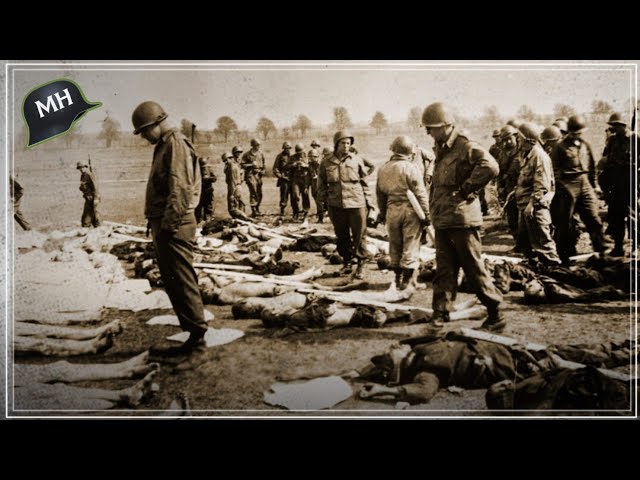
The liberation of the concentration camps, which unfolded from the summer of 1944 through the spring of 1945, produced scenes that seasoned veterans of brutal combat described as worse than anything they had witnessed on the battlefield. The images that emerged from these camps, piles of unburied corpses, survivors reduced to living skeletons, and the overwhelming stench of death, became the first visual proof of what would later be called the Holocaust.
The first camp to fall into Allied hands was Majdanek, located near Lublin in German-occupied Poland. Soviet soldiers of the Red Army entered the facility on July 22, 1944, during their rapid westward offensive. Because the Germans had been forced to retreat too quickly to destroy the evidence, Majdanek was captured almost entirely intact.
What the Soviet troops found inside defied comprehension. Seven gas chambers stood operational. Approximately 880,000 men, women, and children had been murdered there.
The soldiers encountered piles of corpses and thousands of prisoners so malnourished and diseased that they could barely lift their heads. This was the first time Allied forces confronted the full machinery of Nazi extermination.
For the Soviet soldiers, many of whom had survived the brutal siege of Stalingrad and the horrors of the Eastern Front, the sight of the camps broke something inside them. Veterans who had witnessed mass death on an industrial scale broke down in tears. Some expressed shame at belonging to a species capable of such cruelty.
The reports they filed would later be shared with their Western allies, but few were prepared for what those reports described.
Auschwitz, perhaps the most notorious of all the camps, began its evacuation on January 17, 1945. Tens of thousands of prisoners were forced onto death marches deeper into the Reich. When Soviet soldiers finally arrived on January 27, they found evidence the Germans had failed to erase.
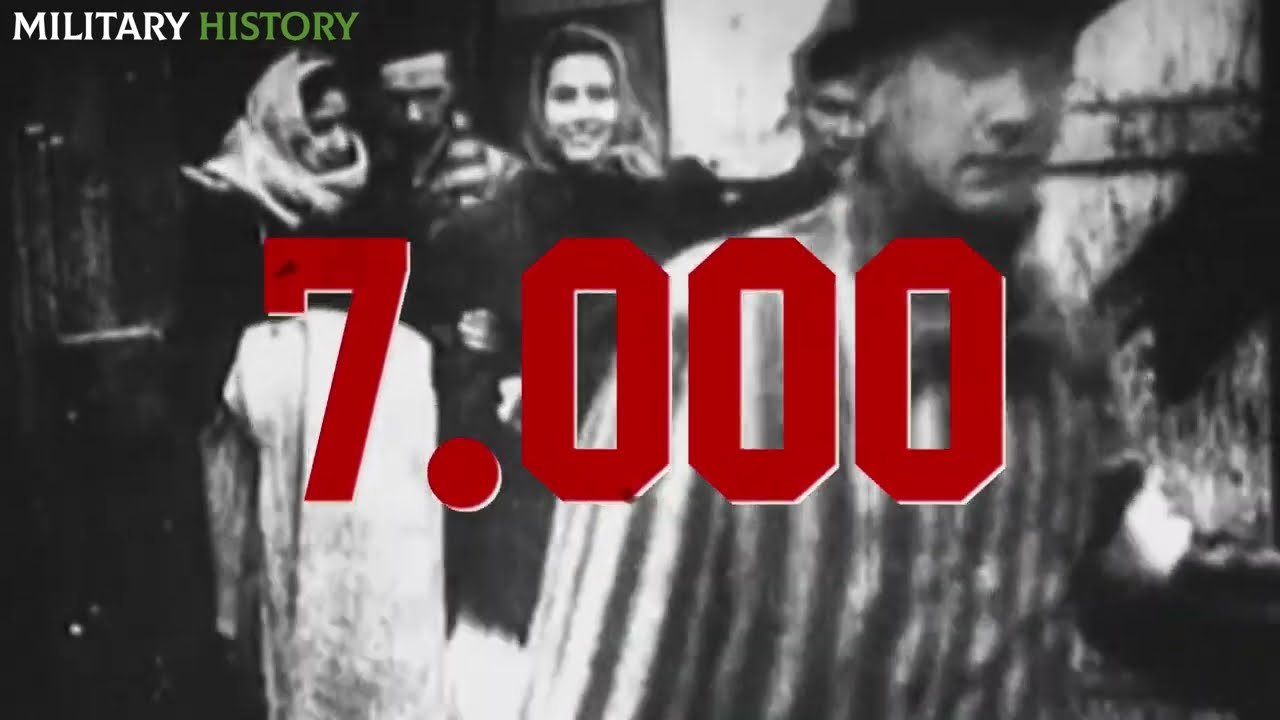
In some warehouses, hundreds of thousands of suits and dresses were stacked, all belonging to murdered people. More than 7,000 kilograms of human hair had been collected from prisoners whose heads were shaved upon arrival.
Of the roughly 1. 3 million people who had been deported to Auschwitz, only about 7,000 remained in the camp when the Soviets arrived. Most were too weak to move, too sick to understand that their captivity had ended.
Many believed their liberation was a cruel trick designed by their captors to give them false hope before a final execution.
It was only when Allied medical teams carried them to hospitals and offered them nutritious food for the first time in months or years that these survivors began to grasp that they were free. Yet freedom came too late for thousands. Typhus, tuberculosis, and starvation had ravaged their bodies beyond recovery.
Many died in the days and weeks after liberation.
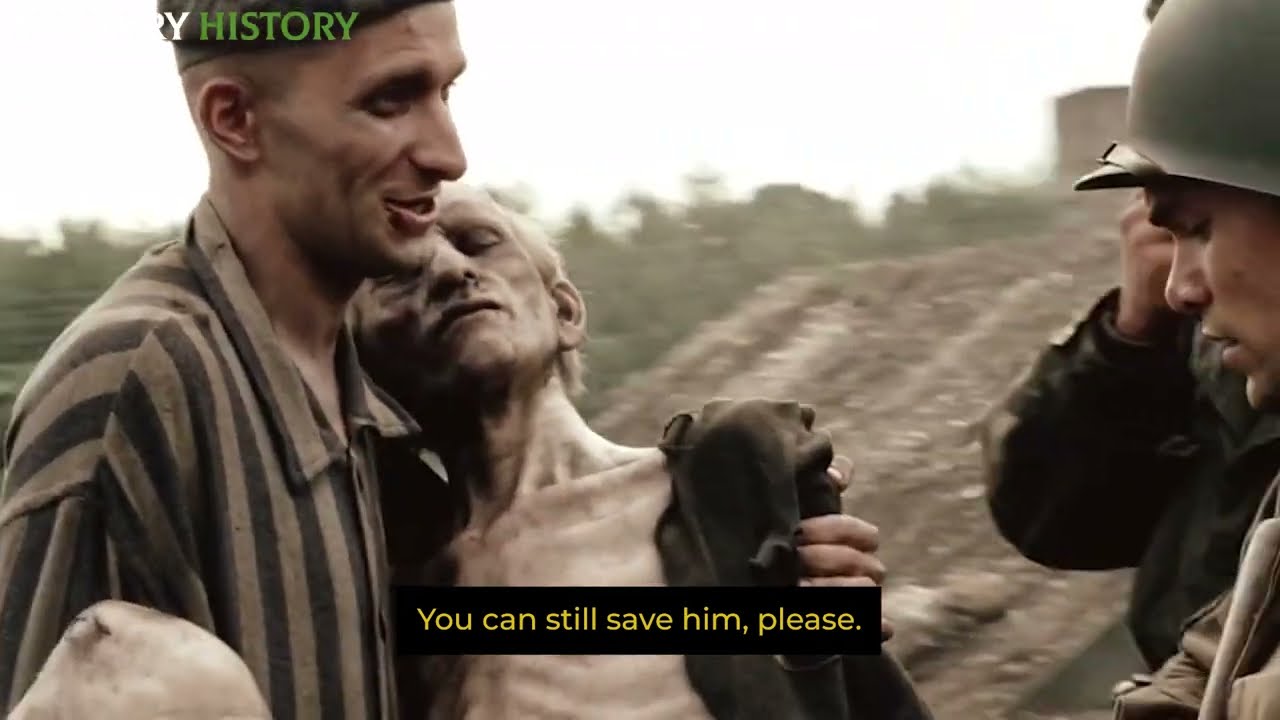
By April 1945, American and British forces were pushing deep into German territory. On April 11, American soldiers liberated Buchenwald, a camp where a resistance organization had already taken control to prevent the last SS guards from massacring prisoners before fleeing. Most of the captives could barely stand when the Allies arrived.
The Allied generals had read the Soviet reports. But most of the lower-ranking soldiers, many of them under the age of twenty, had not. The rumors they had heard were nothing compared to what they now witnessed.
By the end of the war, there were so many corpses in these places that the guards had not even attempted to dispose of them. Thousands of bodies lay completely in the open, bearing the marks of torture and hardship.
According to the testimonies of the liberators, the smell was the first thing they perceived, even before they saw the prisoners. Years of overcrowding with almost no hygiene had produced a stench that made many soldiers vomit upon entering the camps. The few survivors looked like skeletons.
Thousands died after being released from diseases they had contracted there. Several camps had to be completely incinerated to prevent the spread of typhus and other diseases.
One American medic later recalled, “Our medical battalions worked two days and nights binding wounds and giving medications, but for advanced cases of starvation and tuberculosis there were often no cures.”
The emotional toll on the liberators was immense. Soldiers who had been trained to suppress their feelings in combat found themselves unable to contain their emotions. Some wept openly.
Others flew into rages. A small number would later take their own lives, unable to cope with what they had seen.
On April 29, 1945, American troops advanced on Dachau, another concentration camp on German soil. The SS men in charge of security, upon learning that their enemies were nearby, began to destroy evidence of their crimes. But they were not fast enough.
When they surrendered, there were still many signs of their sadistic behavior.
Upon entering the camp, the Americans found 39 wagons full of naked corpses so thin that the bones could be seen beneath the skin. There were about 2,000 bodies. Some showed signs that they had been recently murdered.
 For a group of Allied soldiers, this was too much. They needed revenge.
Even today, it is not known exactly what happened at Dachau. According to some witnesses, 50 German SS men were gathered in front of one of the walls of the camp after their surrender. A squad of Americans, some carrying machine guns, was tasked with keeping a close watch on them.
This is where accounts differ.
Some sources state that the prisoners tried to escape, so the soldiers opened fire. Dozens were killed almost instantly, while many others were seriously wounded. Other accounts describe a mass summary execution in retaliation for the atrocities committed at Dachau.
Whatever the truth, between 35 and 50 Germans died after their surrender within the walls of the camp. Many of those wounded by bullets never received medical attention and bled slowly to death in the snow.
One American soldier later admitted, “Didn’t really feel good about what happened there, but also I have to admit I felt there was a certain amount of revenge. And in a way I felt that even though these may not have been the men who perpetrated this sort of thing, at least you paid back a little bit for these people, what happened to them.”
Dachau is perhaps the best-known case of a camp whose liberation turned bloody against its oppressors, but it was far from the only one. Mauthausen in Austria was one of the last detention centers to be reached by the Allies, liberated between May 3 and 6, days after Adolf Hitler, seeing that the war was lost, decided to take his own life.
This camp was one of the most brutal in all of Nazi Germany. The inhuman conditions to which its prisoners were subjected caused the death of more than 90,000 people, approximately half of those who set foot there. As in many other such prisons, the cause of death was not only the German guards but also the so-called kapos, prisoners who collaborated with their captors in exchange for better living conditions.
These kapos supervised the rest of the prisoners and often tortured them. Sometimes they were even crueler than the Nazis.
By the time American soldiers arrived at Mauthausen, most of the guards had evacuated the camp, but dozens remained. After the Allies disarmed these men, chaos broke out. The prisoners took the opportunity to take revenge on the people who had tormented them for years.
Many were decapitated with their own knives. In several cases, their heads were reportedly placed on stakes in a macabre display of rage.
The kapos were not spared from the wave of retribution. Those who had not fled were hunted down and killed with guns or beaten to death. In many cases, American soldiers, sickened by the brutal images they encountered, did not intervene to help the Nazis.
 To them, it was exactly what they deserved.
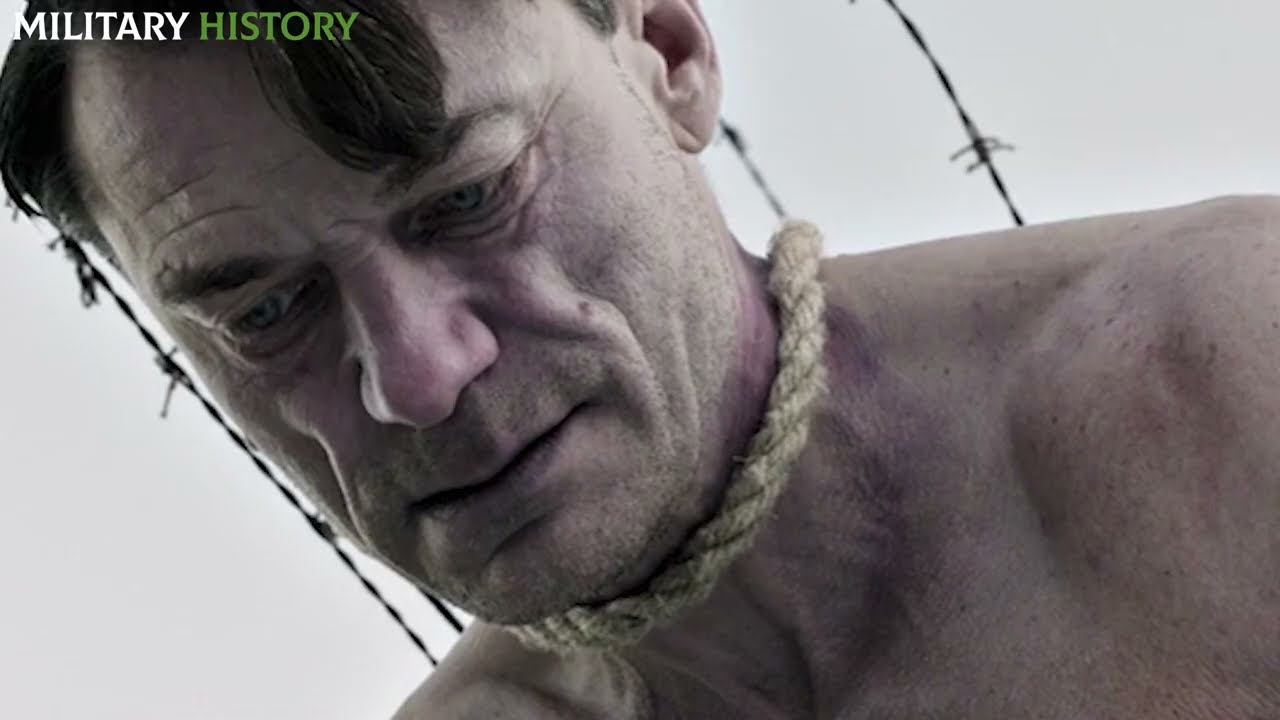
On the first night after the liberation of the Dachau concentration camp, all the prisoners who had collaborated with the administration, the so-called kapos, were also executed by the prisoners. They were strangled, torn apart, some had their heads crushed, and some were simply hanged. Altogether, about 300 prisoners became victims of the first night after the liberation.
On May 8, 1945, Germany signed its unconditional surrender. World War II in Europe came to an end. By then, only a few concentration camps remained to be liberated.
In these, the guards peacefully laid down their weapons and let their prisoners go.
But even though the days of captivity were over, the deaths continued. The malnutrition, exhaustion, and disease to which these people had been subjected for years was too much for many of them. Tens of thousands lost their lives months after the end of hostilities.
A large number decided to take their own lives, unable to comprehend the cruelty they had experienced.
Even some Allied soldiers could not cope with what they saw in the camps and made the same tragic decision. One veteran recalled a fellow soldier named Bobby saying, “I’ll never make it through the night with the smell,” because he had been smelling the bodies all day long. “No one ate that night.
I don’t think there was a guy that slept that night, and I don’t think there was a guy that didn’t cry openly that night.”
Some German guards, filled with guilt for what they had done, also took their own lives. Many others were put on trial after the war and sentenced to prison. But only the camp commanders were sentenced to death.
Among them was Rudolf Hoss, the leader of Auschwitz, and Martin Weiss of Dachau. For the lower-ranking Germans, however, even though they were responsible for unimaginable cruelties, the maximum penalty they faced was a few years of imprisonment. Many were never even brought to court and managed to spend the rest of their lives in freedom, though not in peace.
The anguish of the guards, however, would never be comparable to that of the few survivors of the Holocaust who witnessed firsthand one of the most barbaric acts in human history. As the world marks the anniversaries of these liberations, the testimony of those who were there remains a warning about what happens when hatred is allowed to govern.