On the morning of August 30, 1981, a 55-year-old man stepped out of his apartment building on Madison Street on Manhattan’s Lower East Side. He walked maybe 40 to 100 feet down the sidewalk. A voice called his name. It was not the voice he expected.
The man was Benjamin “Lefty” Ruggiero, a soldier in the Bonanno crime family who once claimed 26 murders. He had received a summons that morning, the kind of call that in his world meant only one thing. He was walking toward his own execution, ordered by the same family he had served for more than three decades. He never reached the car that was supposed to be waiting.
Instead of a bullet, he met federal agents and handcuffs, a ruse that lasted only seconds. The movies tell a different story. If you have seen the 1997 film Donnie Brasco, you likely know the ending as Hollywood presented it. Al Pacino’s Lefty removes his jewelry, leaves it for his wife, and walks into the darkness to face certain death at the hands of his own family.
That ending never happened. The real Lefty Ruggiero lived 13 more years after the FBI arrested him that August morning. The truths of his final years, the prison sentence he never fought with cooperation, the cancer that killed him, and the mob’s strange decision to leave him alone, are stranger and more human than the movie’s fictional climax. Born on April 19, 1926, in New York City, Ruggiero grew up on the Lower East Side and Little Italy.
Without education or a legitimate career, he was running numbers, booking bets, and loan sharking by his early 20s. He eventually became a soldier in the Bonanno crime family. But Ruggiero was not a boss or a capo. He was a street soldier hustling day to day.
He once complained to a man he believed was his closest friend, “I’ve made 26 hits and what do I got? I’m still taking the subway. ”
That friend was not who he seemed. In 1976, FBI agent Joseph Pistone entered the Bonanno family’s orbit under the alias Donnie Brasco.
Pistone posed as a jewel thief from Paterson, New Jersey. For six years, he rode with Ruggiero through every part of his criminal world, collecting debts, sitting in on card games, and driving between New York and Florida. Ruggiero took Pistone under his wing like a son. He vouched for him, introduced him to everyone, and taught him how to carry himself in dangerous rooms.
All the while, Pistone was recording and documenting everything for federal prosecutors. Reports captured a recorded phone conversation between the two men, one described as life-and-death. Ruggiero’s voice is heard warning Pistone urgently, “If you’re wrong, you’re dead. You know that, don’t you?
” He was not threatening the man. He was trying to save him. The deepest truth about Lefty Ruggiero was his absolute belief in the code. He explained it to Pistone once, simply: “In our thing, you don’t ask why.
You just do. You get a call, you go. ”
That sentence became the key to everything that followed. When the 1981 call came, the one that meant death, Ruggiero did not run.
He did not call the FBI. He did not beg. He simply got dressed and walked out, the way he said he always would. The chain of events had begun months earlier.
Under captain Sonny Black Napolitano, a Brooklyn-born traditionalist, Ruggiero’s crew operated in Manhattan and Brooklyn with bookmaking, loan sharking, and debt collection. Sonny Black had pushed hardest for Donnie Brasco, seeing energy and earning potential in him. The deeper Pistone went, the stronger the FBI’s case became. By 1980, the crew was expanding to Florida, with nightclubs in Tampa and rackets in Miami.
Every trip and transaction added to the evidence. Then came a development the Bureau never anticipated. Sonny Black told Donnie directly, “We’re going to make you. You did good.
You earned it. ” The Bonanno family was preparing to induct Pistone as a made member. Becoming made required a final test: the new member could be asked to participate in a murder. That was the line the FBI could not cross.
In late July 1981, senior officials and Justice Department prosecutors made the call. The operation was done. Pistone was pulled from the field. Pulling Pistone did not just end the investigation.
It signed death warrants for the men who had vouched for him. When the Mafia learned an FBI agent had been at their table for six years, someone would have to pay in blood. In the months before the extraction, the bond between Ruggiero and Pistone deepened. Pistone later described Ruggiero as teaching him everything, from how to walk to how to speak to how to think like a wiseguy.
In the middle of it all, Ruggiero said something that would haunt both men for life. Looking at the man he trusted, Ruggiero said, “If I ever find out you’re a cop, I’ll kill you myself. ” He meant it. Pistone knew he meant it.
And Pistone was a cop. Sonny Black was summoned first, in late July 1981. He knew what the call meant. According to people who were there, he removed his watch and ring, handed them to an associate, and told the man to return them to his family.
Then he got in the car. Sonny Black was driven to a house in Brooklyn. He went down to the basement. According to evidence later recovered, he was shot multiple times and killed.
When his body was found about a year later, his hands had been severed, a message in the symbolic vocabulary of the Mafia: these hands welcomed an FBI agent into the family. Now the family turned to the other man who had let the FBI inside. The phone rang on the morning of August 30, 1981. Ruggiero picked up.
There was no explicit language needed. He had been on both sides of such calls before. He knew what a summons meant when it was not a meeting. Accounts differ about whether Ruggiero knew with certainty that he was walking to his death or held a sliver of hope it was a routine meeting.
Either way, he did not arm himself. He left his apartment like a man who did not expect to come back. The movie Donnie Brasco gave that moment cinematic form: the long solitary walk, music swelling, Pacino crossing a room into darkness. The reality was almost entirely different.
The FBI had wiretaps, informants, and intelligence confirming the Bonanno family had voted to execute Ruggiero. They knew the call had come. One agent later described the urgency plainly: “We knew if we didn’t grab him that day, he was going to get killed. He was walking to his own funeral.
”
Agents were positioned near Ruggiero’s building. Around 11:00 or 11:30 that morning, he opened his apartment building door and stepped onto the sidewalk. Madison Street was a regular New York street, cracked concrete, parked cars, summer heat. He made it roughly 40 to 100 feet.
Agents stepped out and called his name. They identified themselves and placed him under arrest. The whole thing took less than a minute. The most consequential walk of his life was shorter than a bowling lane.
In the hours after the arrest, the FBI made him an offer: cooperate, testify, give names and dates, help build cases against the men above him. In exchange, reduced sentence, protection, a new life. Ruggiero said no. He said no for 11 years.
He never cooperated. He never testified. He never gave them a single name. The racketeering case went to trial in late 1982.
The evidence was overwhelming: six years of undercover recordings, Pistone’s firsthand testimony, documentation of interstate criminal activity. In November 1982, the jury deliberated for just over a day. They returned a guilty verdict on racketeering conspiracy. The judge sentenced Ruggiero to 15 years in federal prison.
He was 56 years old. He would not see the outside until he was 71 if he served the full term. The world he knew was gone. His crew was dismantled.
His captain was dead. The cigarette habit that had flavored every smoky back room of his criminal career was building the thing that would actually kill him. In April 1993, after roughly 11 years behind bars, the federal government released Ruggiero on compassionate grounds. He was 67 years old.
He had lung cancer, advancing with the same steady inevitability as the FBI’s case once had. He returned to New York City, not to the social clubs or the crews, but as a broken, sick old man. The question then becomes: why did the mob not kill him? In 1981, the Bonanno family had voted, at least informally, to execute him.
By 1993, the world had changed. The men who made that decision were dead, imprisoned, or replaced. Killing a dying ex-soldier would accomplish nothing except attracting FBI attention. He was not forgiven.
He was irrelevant. The contract simply expired, like a debt no one bothers to collect because the debtor has nothing left. The operation Ruggiero unwittingly helped build resulted in more than 100 federal indictments against members and associates of the Bonanno crime family. At the time, it was the most successful undercover infiltration of the American Mafia in FBI history.
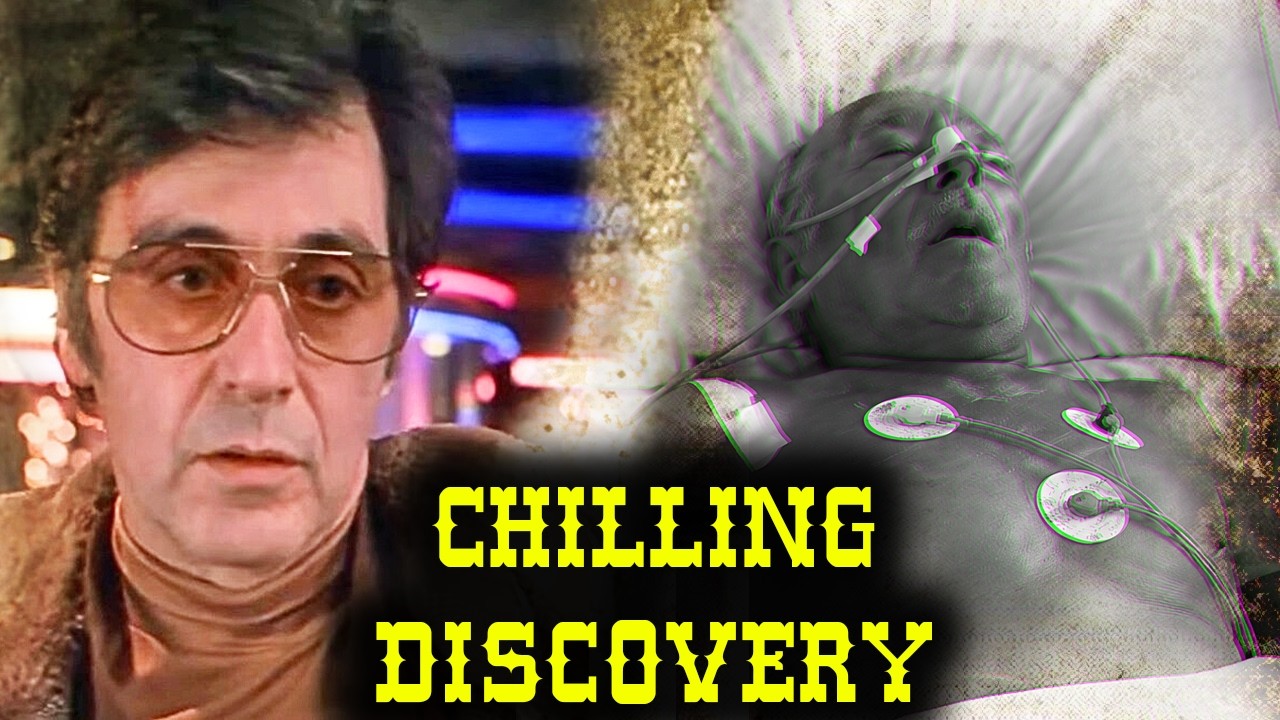
Ruggiero died on November 24, 1994, at age 68, in a hospital bed. There was no ambush, no car bomb, no sit-down. There was the beep of a heart monitor, the shuffle of nurses’ shoes, and the rasp of a man trying to breathe through lungs that no longer worked. The mob never came for him.
A man whose family had voted to kill him died of his own bad lungs. Years later, Joseph Pistone spoke about Ruggiero with complicated grief. “Lefty was as close to me as anyone I ever met in that life,” he said. “He taught me how to walk, how to talk, how to think like a wiseguy.
”
But Ruggiero’s story does not end in a hospital room. It ends in a movie theater. In 1997, three years after his death, Donnie Brasco was released. Al Pacino played Lefty.
Johnny Depp played Pistone. The film’s ending, the jewelry removal, the acceptance of fate, the walk to death, was built from real events, but not Ruggiero’s. It was Sonny Black who removed his jewelry and handed it to an associate to return to his family. It was Sonny Black who got into a car knowing he was not coming back.
The film took the most devastating moment of Sonny Black’s death and gave it to Ruggiero because Ruggiero was the character the audience cared about. Millions of people watched that ending and walked away believing Ruggiero was killed by his own family. The real ending was buried beneath one of the most powerful closing sequences in modern crime cinema. The movie gave him a dramatic death.
Reality gave him something harder: a long, slow, unglamorous one. The myth is more cinematic. The truth is more human.