On December 25, 1991, the Soviet flag was lowered over the Kremlin for the final time. The world saw it as an ideological collapse—a triumph for democracy or a defeat for communism. But inside the Ministry of Finance, the story looked very different. The Soviet Union did not die because of an idea.
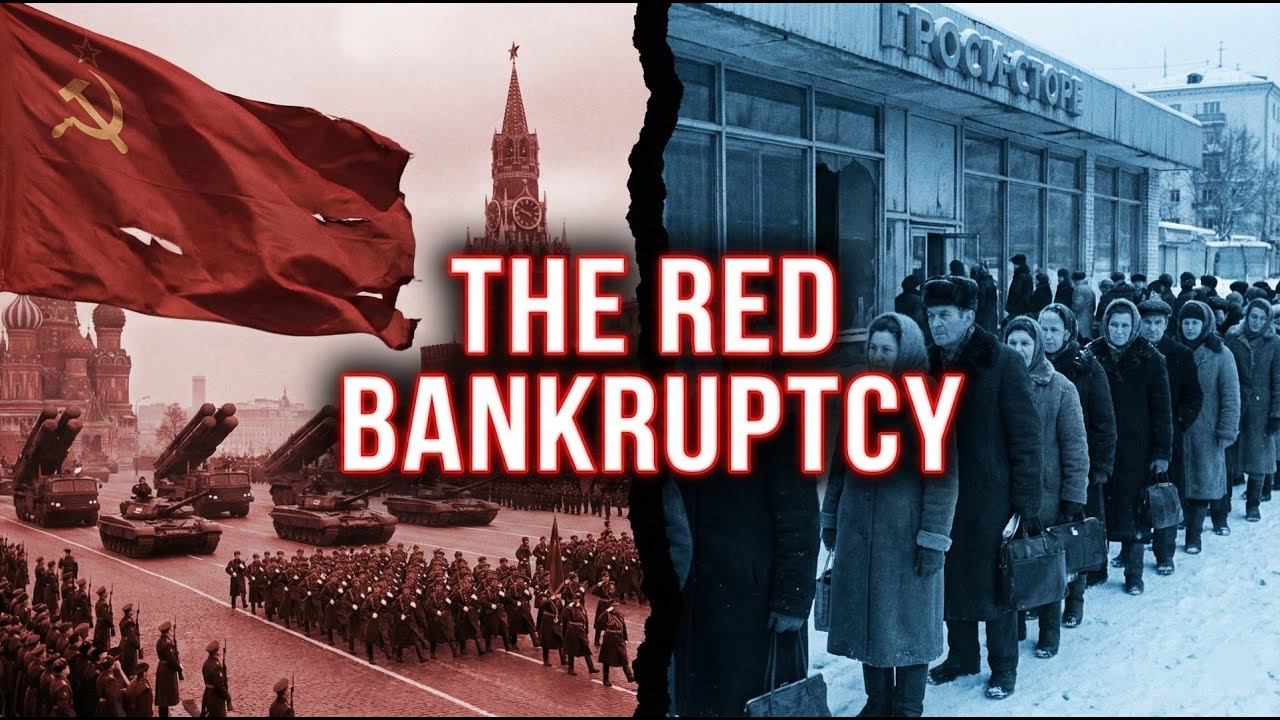
It died because it ran out of money, making its collapse the greatest bankruptcy in human history. This was a superpower armed with 40,000 nuclear warheads that could not afford to buy bread. To understand how a nation goes broke, you have to go back to 1965, when Soviet geologists discovered the Samlore oil field in western Siberia. The find seemed like a miracle.
The Soviet economy was already slowing, and the communist system could not produce quality consumer goods. But now, they did not need to build good cars or televisions. They just needed to drill holes in the ground. Through the 1970s, oil prices soared as the OPEC embargo hit the West.
The Soviet Union became the biggest beneficiary, with billions of dollars in hard currency flooding into Moscow. But this wealth was a curse. Because the money came so easily, the Soviet leadership stopped trying to fix their broken economy. They were essentially a third-world economy with first-world rockets, exporting raw materials and importing everything else.
As long as oil was above $30 a barrel, the Soviets were rich. But new supply was coming online from the North Sea and Alaska, and then the Soviet agriculture sector collapsed. This is the part of the story that is often forgotten. The Soviet Union, which controlled some of the most fertile farmland on Earth in Ukraine, could not feed itself.
The collective farm system was so inefficient that half the potatoes would rot in the fields before reaching the stores. By the early 1980s, the country was deeply dependent on foreign cash, and the consequences were brutal. The state froze all accounts at the Venesh economy bank, and workers stood by the side of the road trying to trade a set of tires for a bag of potatoes. The black market became the only real market, and the dollar became the only real currency.
Taxi drivers, prostitutes, and waiters were the new elite because they had access to foreign cash. The collapse came into sharp focus when the country had to ask Germany for care packages of powdered milk and canned beef—the same nation they had defeated in World War II and the first to put a man in space. The government tried desperate measures. They imposed a tax on vodka, which was one of the largest sources of state revenue after oil, but sugar disappeared from the stores because people were buying it all to make alcohol.
The state began doing the one thing you should never do: printing more money. But because there were no goods in the shops to buy, the cash just piled up. The shortage economy kicked into high gear. If people saw a line, they joined it without even asking what was being sold.
You grabbed whatever you could because tomorrow it would be gone. The Soviet people had tolerated the lack of freedom because the state provided stability. But by the late 1980s, that stability was gone. The government was borrowing just to pay the interest on previous loans, and panic set in inside the Kremlin.
A coup attempt against Mikhail Gorbachev failed, not because the people resisted—though they did—but because the plotters realized they were fighting for the captain’s chair on the Titanic, and the ship was already underwater. When Gorbachev returned to power, he was a ghost. The Soviet Union existed only on paper. By late 1991, the nation was bankrupt.
Investigating prosecutors found only about 240 tons of gold left in the vaults; the rest had been sold, stolen, or wasted in a desperate attempt to keep the system afloat for just one more month. Gorbachev did not resign because he was conquered by an invading army. He resigned because he had lost the ability to write checks. The Soviet Union was no longer a superpower; it was a debtor nation.
The new democratic government was immediately strangled by interest payments on loans taken out by the communists. The shock therapy reforms of the 1990s, which wiped out the life savings of millions of ordinary Russians in a matter of days, were a direct result of this bankruptcy. The lesson is clear: natural resources are not the same as economic strength.
The Soviets thought they were rich because they had oil, but an empire that cannot pay for its bread is not an empire.