Edda Göring was born in Berlin on June 2, 1938, the only child of Hermann Göring and his second wife, Emmy. Her father was then one of the most powerful figures in Nazi Germany, and her birth was treated as a national event.
The Reich received some 600,000 messages of congratulation from around the world. Telegrams even arrived from countries that would be at war with Germany within a year.
Some observers at the time compared the excitement surrounding her birth to the story of the birth of Christ, casting Edda as a messianic figure. One historian wrote that the Reich was jubilant when Emmy Göring, then 45, gave birth to a baby girl.
There was also talk of a virgin birth. Hermann Göring had been shot in the groin during the Beer Hall Putsch, and when he came to collect his wife and child from the sanatorium ten days later, the streets were black with cheering crowds.
It is generally accepted that the inspiration for the name Edda came from Göring's friendship with Benito Mussolini, whose daughter was also named Edda. The choice was seen as a nod to the Italian dictator and the growing alliance between the Nazis and fascist Italy. Emmy Göring later denied this, but Edda was not a common name in the Reich at the time.
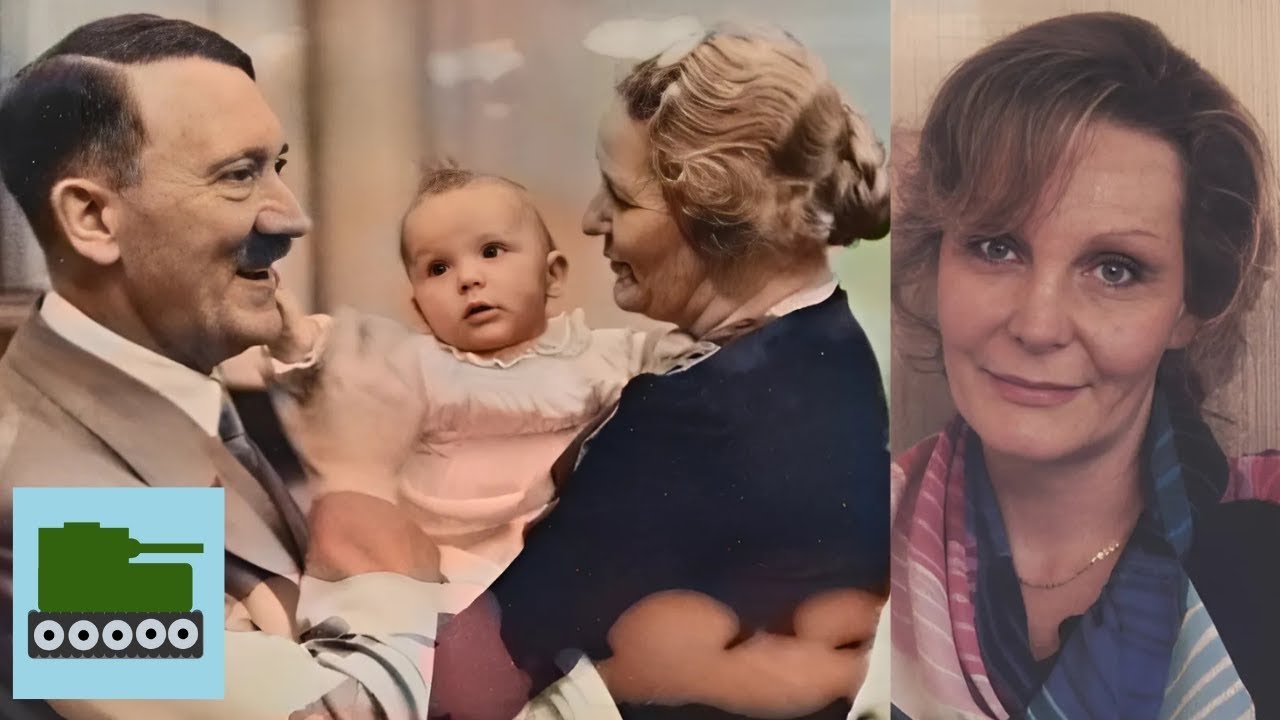
Edda was baptized at Carinhall, the Görings' huge hunting lodge. Adolf Hitler was named her godfather and attended the ceremony. The event was a lavish Nazi spectacle that displayed the family's wealth and influence.
She grew up in luxury and was described by one contemporary magazine as a kind of Nazi crown princess. Her father, despite his military role as the war began, still made time for her and arranged huge spectacles in her honor.
The Air Force even had a small-scale replica of Frederick the Great's palace built in the orchards at Carinhall for Edda to play in. It was known as Edda's little palace.
Not everyone in Germany's inner circle was friendly to the family. The editor of Der Stürmer, the infamous anti-Semitic Nazi newspaper, claimed in one edition that Edda had been conceived by artificial insemination.
Hermann Göring was outraged. He went straight to Hitler with other leading Nazis and demanded action. Hitler agreed to have the editor, Julius Streicher, brought before a Nazi court, and Streicher was stripped of some offices and honors.
Göring wanted Streicher executed over the scandal. Streicher was allowed to keep publishing Der Stürmer, but he never targeted Göring again.
As the Second World War ended, Göring fell from grace and went on the run. He stayed at his mountain home in Upper Salzburg, close to Hitler's Berghof, with his wife and daughter.
He was held under partial guard on Hitler's orders, then handed over to the Americans. Edda and Emmy were also held under lock and key. Although Edda was only about seven years old, she was locked up in Camp Ashcan in Luxembourg.
In 1946 she was released and lived with her mother near Nuremberg. One visitor described her as a beautiful child, the image of her father, bright, perky, polite and well trained.
Her father was brought before the Nuremberg trials and accused on all four counts, including war crimes and crimes against humanity. He was sentenced to death.
Edda was allowed to visit her father in prison. When she heard he was going to be killed, she said she hoped to meet her daddy in heaven, a remark that greatly touched him.
Hermann Göring cheated the hangman's noose. The night before his execution, he died by his own hand, consuming a cyanide capsule that had somehow been smuggled into his cell.
In the years after her father's death, Edda lived with her mother and aunt and the family moved around a great deal. As a former first lady of the Reich, Emmy Göring faced significant problems. She was a celebrity, but not a well-liked one.

Much of her property, stolen from others by her husband, was recalled to be returned to its rightful owners. Emmy Göring tried to defend paintings and other items by saying they were in fact her daughter's property.
Edda attended school and then university, studying at the University of Berlin. She became a clerk in a law firm and later became a doctor.
She was described as slim, fair-haired and pretty, living with her mother on the fifth floor of a modern apartment block in central Munich. In later years she continued to work in various jobs in the medical field.
She also regularly kept company with former associates of Adolf Hitler. The grandson of one of Hitler's close friends, Winifred Wagner, later said that his aunt Friedel was outraged by how his grandmother slowly blossomed as the first lady of right-wing groups.
That circle received political friends including Edda Göring, Ilse Hess, former National Democratic Party of Germany chairman Adolf von Thadden, Gertrud, the wife of Nazi architect and Hitler friend Paul Ludwig Troost, British fascist leader Oswald Mosley, Nazi film director Karl Ritter, and the racial officer of former Reich culture leader Hans Hinkel. Even after the fall of the Reich, Nazi meetings continued.
Edda worked in a rehab clinic and spent much of her time looking after her mother, Emmy, who died in June 1973. Years later she spent time with journalist Gerd Heidemann, who had purchased her father's yacht.
It was claimed that Heidemann charmed Edda, who was pretty, unmarried and devoted to the memory of her father, and started an affair with her. Together they ran social events aboard the boat where talk turned to Hitler and the Nazis.
Guests of honor included weathered eyewitnesses of the Nazi era, among them two generals, Karl Wolff and Wilhelm Mohnke. Mohnke was one of the people in the bunker in the final moments.
In her final years, Edda lived a much quieter life. She never really spoke out about her father's role in the slaughter and murder of the Holocaust, or the crimes he committed as a major war criminal.
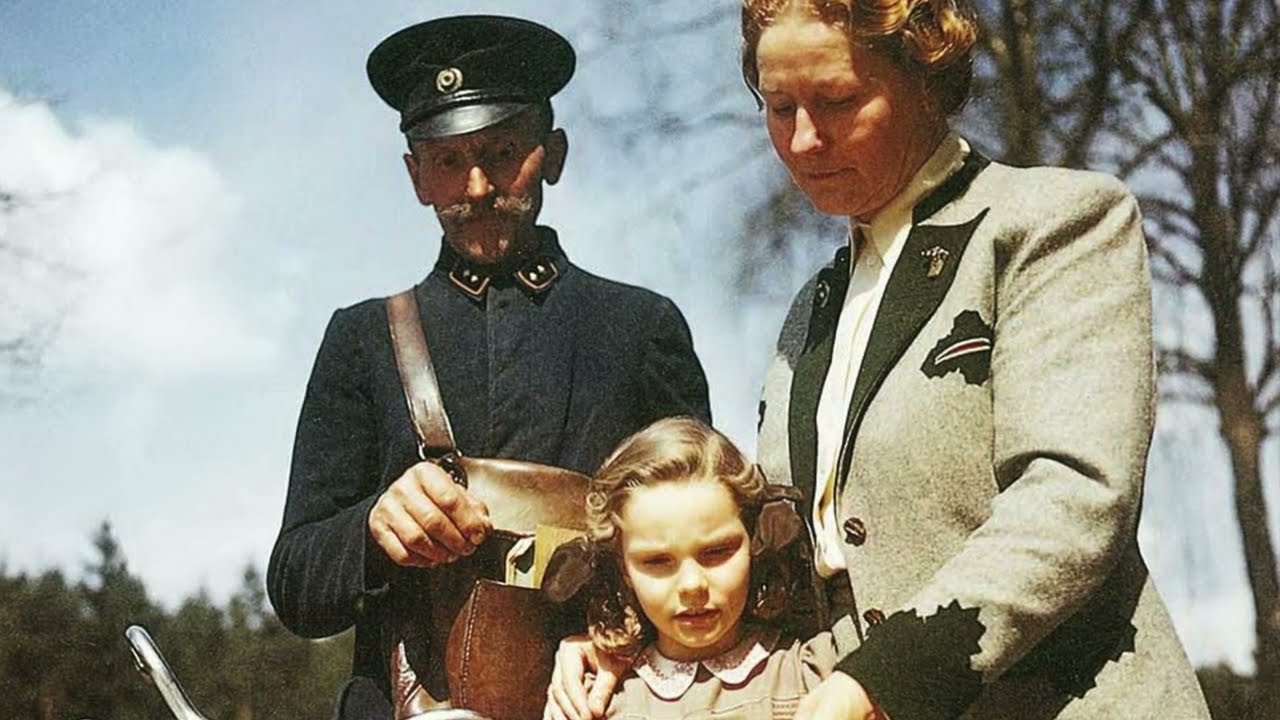
She did claim in an interview that she loved her father very much and that it was obvious how much he loved her. She said her only memories of him were loving ones and that she could not see him any other way.
She added that she expected everyone had a favorable opinion of her father, except maybe in America, and that he was a good father to her.
She was denied a pension that would have been given to her as the child of a former minister of the old Reich, depriving her of funds to live on. She later tried to appeal to government officials in Bavaria to be compensated because of her father's reputation.
She had, however, been given huge amounts of paintings and riches throughout her early life. Some of these may have been hidden away and kept by Edda Göring, and some may still be missing today.
Throughout her life she managed to have jewelry returned to her, valued at hundreds of thousands of Reich marks, during legal proceedings.
On December 21, 2018, Edda Göring died in Munich at the age of 80. She is believed to have been buried in some form in the vault of Friedhof, a cemetery in the city where her mother Emmy was buried.
The exact location of Edda Göring's grave is not known. She was buried in an unmarked grave and the location has purposely not been disclosed.
She may even have been interred with her mother quietly, though the ground disturbance would have been noted if that were the case. It is not even known whether she was cremated and her ashes then buried in an unmarked grave.
Much secrecy surrounds the final moments of Edda Göring. She was considered the Nazi crown princess and lived the life of a princess, as her mother's and father's status at the very top of Nazi society solidified her importance.
After the Second World War she rubbed shoulders with many other Nazi leaders and was involved in meetings and appearances with former war criminals and army generals. Her birth had led to huge celebration, and her father doted on her and showed his fatherly side often in public.
But her father was a man condemned for war crimes and crimes against humanity, and he has been regarded as one of the worst art thieves in history. In images of Edda Göring, especially in her final years, she eerily had her father's looks.