On the evening of December 16, 1985, Paul Castellano stepped out of a black Lincoln Town car on East 46th Street in Manhattan, outside Spark Steakhouse. He was 70 years old. Six shots rang out. His underboss, Tommy Bilotti, fell beside him. Neither man survived.
John Gotti had ordered the hit. With Castellano gone, Gotti sat atop American organized crime. He controlled the unions, the piers, the construction rackets, and the loyalty of men who would kill on a phone call.
He also inherited a problem: a crew of Irishmen from Hell's Kitchen who answered to nobody. Not completely, and not even to the new king of New York.
This is the story of the Westies, and it ends with their own hitman wearing a wire for the federal government.
To understand the Westies, you have to understand Hell's Kitchen as it existed before the restaurants and luxury apartments and the rebranding as Clinton. In the 1960s and 1970s, it was as dangerous a square mile as urban America had.
The neighborhood sat west of Eighth Avenue between 34th and 59th Streets, Irish working class and built on a code outsiders rarely survived long enough to fully understand. The docks and the Hudson piers were right there, and the Javits Center was coming. The unions were everything. Whoever controlled the labor pipelines controlled the money, and whoever controlled the money controlled the streets.
In the 1970s, the man running it was Mickey Spillane. He ran ransom kidnappings and took cargo off the Hudson piers. He kept a lid on things, but he was not a visionary. He was a neighborhood boss who had held power long enough to believe it was permanent. It wasn't.
Then Jimmy Coonan came up. By the mid-1970s, Coonan was the most dangerous operator in the Kitchen. He was methodical in a way that set him apart. He didn't just want to run things. He wanted to build something durable, something that could survive the scrutiny that had destroyed other crews.
Between 1975 and 1977, Spillane's world came apart piece by piece. His key men went down one by one. Tom Devaney, Tom Kapatos, and Eddie Cummiskey were killed at a bar along Tenth Avenue. Accounts have long disputed whether those killings belonged to Coonan's war or to Italian interests that wanted the West Side ground cleared. What nobody disputes is the result.
Spillane fled to Woodside, Queens. On May 13, 1977, he was shot dead outside his apartment building. The hit is credited in most tellings to Roy DeMeo's Brooklyn crew, done as a favor. Mickey Featherstone himself was tried for it and acquitted.
The Kitchen belonged to Coonan.
The next move is the part most tellings rush past. Coonan didn't just take over a neighborhood. He restructured it. He assigned roles. He created a financial reporting system. He instituted a disposal protocol. He thought about the operation the way a CEO thinks about a company, except the product was violence and the liability was prosecution.
In 1978, Coonan sat down with Paul Castellano in a restaurant in Bay Ridge, Brooklyn. The deal they struck made the Westies a satellite crew for the Gambino family. They would do the work the Italians wanted kept off their own hands: contract killing, collections for loan sharks, muscle on the labor sites at the Javits Center and the piers.
In exchange, the family's name stood behind them. A federal appeals court later put the price in one line: the Westies paid the Gambino family 10 percent of the proceeds from their rackets.
That 10 percent bought something no Italian boss had ever fully owned, an Irish crew whose blood work never traced back to his family. When the Gambinos needed something done, the chain of evidence stopped at Hell's Kitchen. It did not reach Mulberry Street. It did not reach the Gambino administration. Castellano had purchased deniability at a discount, and both sides knew who needed the arrangement more.
What made the Westies different from every other crew in New York was Coonan's doctrine: no body, no prosecution. His crews removed teeth. They cut off fingertips. They dismembered remains and transported them at night. Pieces went into the Hudson River, into the East River, into New Jersey landfills.
Accounts place the crew's kill count anywhere from 30 to 60. Most of the victims were never found.
This wasn't savagery for its own sake. It was a legal strategy. Eliminate the corpus delicti and you eliminate the prosecution. Under American law, it is extraordinarily difficult to prosecute a murder when there is no body. No body means no cause of death. No cause of death means no murder charge.
Coonan understood this not as a concept but as an operational principle. He built his entire enterprise around it. It worked for years. The NYPD knew people were disappearing in Hell's Kitchen. They knew Coonan was responsible. They couldn't prove it. The cases sat open. The families waited. The men who had been killed were simply gone, and the law had no mechanism to reach the men who had made them disappear.
Then Gotti shot Castellano on a Midtown sidewalk, and everything changed.
By the account Mickey Featherstone later gave federal prosecutors, Gotti summoned Coonan to the Ravenite Social Club at 247 Mulberry Street in Little Italy. Coonan drove a station wagon. His kids went to Catholic school out in Hasbrouck Heights, New Jersey. He sat across from the new boss of New York and heard the terms.
The tribute stays. Every hit gets cleared with the family before it happens. And stop dismembering the bodies, because the bodies were drawing attention.
Coonan agreed to all three. He meant none of it.
Gotti had inherited the Westies arrangement from Castellano, but he had not inherited Castellano's patience. Castellano had managed the relationship through distance. He understood that the Westies were useful precisely because they operated independently. You didn't micromanage men like Coonan. You gave them parameters and collected your percentage.
Gotti wanted control. He wanted everything visible, everything accountable, everything running through him. It was the same instinct that had made him order the Castellano hit without commission approval. He believed that raw power was its own justification, that if you were feared enough, the rules bent around you.
What he didn't understand was that Coonan had been operating outside the rules since before Gotti had any real power. Coonan had built his entire career on the premise that the rules were for people who couldn't enforce their own terms. He had taken Castellano's terms because he had to. He was not going to start clearing murders through Gotti's administration because Gotti asked nicely.
The friction between the new boss and the Irish crew is on the record through the man who lived inside it, and the record shows who actually held the leverage. The Westies controlled the labor muscle at the Javits Center and the Hudson piers. Losing them would cost the Gambinos millions.
Gotti could summon Coonan, threaten him, fine him, and by Featherstone's account he did all three. What he could not do was replace him. The most feared man in American crime was collecting 10 percent from a man in a station wagon, and the man in the station wagon knew it.
That was 1986. The clock was already running.
Mickey Featherstone had been Coonan's most reliable killer since the 1970s. He had served in Vietnam. He came home to the Kitchen and went to work. He was the one who had helped dismantle Spillane's crew. He was the one Coonan trusted with the worst jobs. He was, in every meaningful sense, the operational backbone of the Westies.
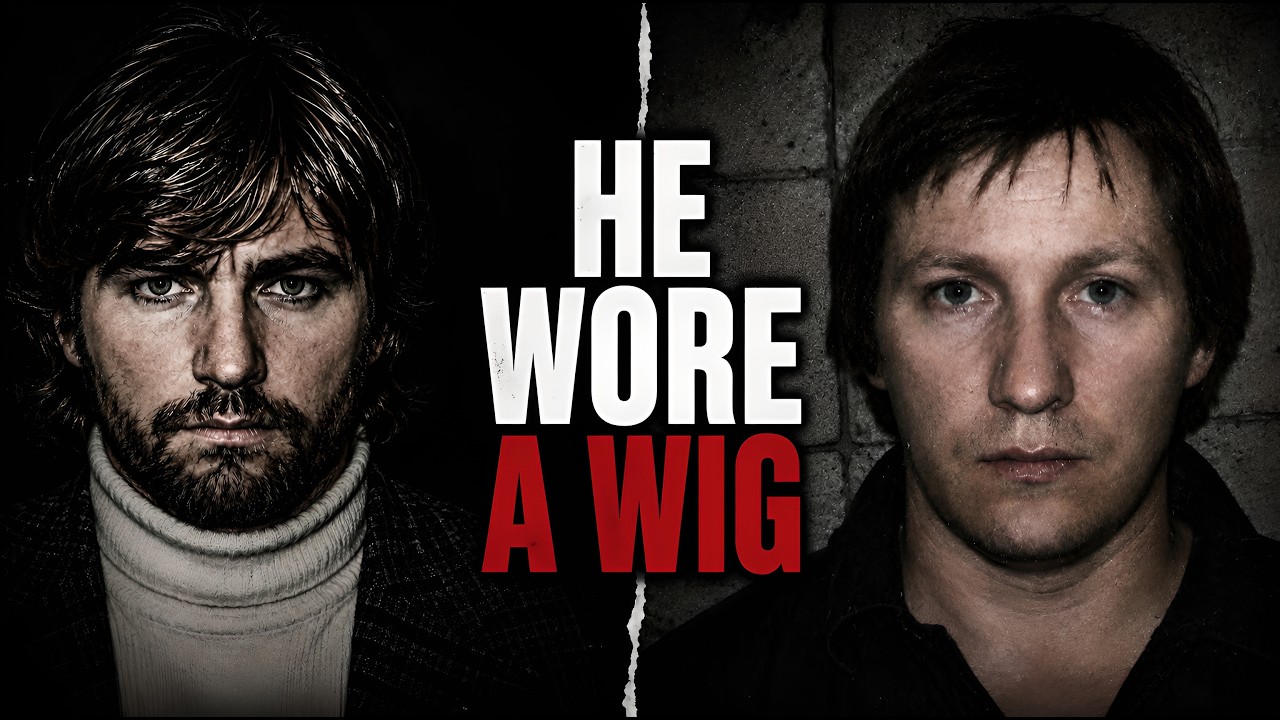
The court record tells the rest in language no storyteller could improve. On April 25, 1985, at midday, a Westie named Billy Bokun, wearing a wig to pass for Mickey Featherstone, walked up to Michael Holly on a crowded Manhattan street and fired five bullets into his back. Two eyewitnesses pointed at Featherstone. The car was traced to his employer.
In April 1986, Featherstone was convicted of the Holly murder and sentenced to 25 years to life. The Westies had framed their own hitman, and he took the fall knowing the men who sent Bokun out in that wig were the only people on Earth who knew the truth.

Featherstone sat in a cell and did the arithmetic. His wife did more than visit. In the account the court record preserves, she got a recording of Bokun talking about the shooting, about the wig, about the belief that the hit had been dressed up to take Featherstone off the board as a rival.
The man Featherstone had done murder for since the mid-1970s had let him take a quarter century for someone else's murder.
In September 1986, five months after the verdict, his conviction was set aside. The investigation, in the appeals court's words, conclusively established that Featherstone was not involved. He was out of the frame. He was not done.
Featherstone contacted the FBI. He and his wife carried wires into that world. The tapes documented the tribute pipeline to the Gambinos. They documented murder after murder. Every detail that Coonan thought had disappeared into the Hudson River came back on tape.
The scope of what Featherstone provided is worth pausing on. He had been present for, or had direct knowledge of, nearly every significant crime the Westies had committed since the mid-1970s. He knew names. He knew locations. He knew methods. He knew which Gambino soldiers had served as intermediaries. He knew the financial structure of the tribute payments. He knew where bodies had gone.
He was, from the FBI's perspective, the most valuable organized crime informant they had encountered in New York since Joe Valachi had testified before Congress in 1963.
The wire recordings covered more than a decade of criminal activity. They placed Coonan at the center of an enterprise that had operated with near total impunity for years. The RICO statute, passed in 1970, had been designed for exactly this kind of case. It didn't require the government to prove individual crimes in isolation. It required them to prove a pattern of racketeering activity connected to a criminal enterprise. Featherstone handed them the pattern of a decade and a half.
In 1988, federal agents moved before dawn across Manhattan, Queens, and New Jersey. The indictment ran 14 counts under the RICO statute: murder, conspiracy, extortion, loan sharking, narcotics. Coonan was taken from his house in Hasbrouck Heights in handcuffs.
The trial ran for months. When it ended, Jimmy Coonan stood convicted, and all but one of the defendants went down with him. Coonan was sentenced to 75 years in federal prison. Nearly four decades later, he is still inside.
The Gambino liaison to the Westies was a capo named Danny Marino, with Roy DeMeo as the intermediary soldier. Neither was indicted alongside Coonan. The FBI had what it needed to destroy the Westies. Reaching into the Gambino administration was a different operation, and it was coming.
Before the decade was out, the government had wired the Ravenite itself, including an apartment upstairs where the most dangerous conversations in New York were being put on tape. Gotti walked into that building regularly. He talked. He held court on Mulberry Street like a man who had decided visibility was its own protection.
The papers crowned him the Teflon Don, and he had beaten three cases in four years. He gave interviews. He waved to photographers. He seemed to genuinely believe that his public profile made him untouchable, that the government would hesitate to move against a man who had become a celebrity.
He was wrong about that. He was wrong about almost everything in those final years.
Gotti was not named in the Westies indictment. But the Javits Center pipeline was gone. The Hudson pier muscle was gone. A significant piece of the Gambino family's enforcement infrastructure had been dismantled from the inside.
And Gotti had watched the entire thing happen. He had watched Coonan, a man he had personally met with, personally threatened, personally extracted money from, go down because of someone Coonan had trusted.
Sammy Gravano watched all of it too. He watched Coonan go down. He watched Gotti walk out of the Ravenite and perform for cameras. And when federal agents took Gotti at the Ravenite at the end of 1990 on the strength of recordings made inside that same building, Gravano made the same calculation Featherstone had made five years earlier. The boss had become a liability. The only exit was cooperation.

On the recordings, Gotti had said things about Gravano. Specific things. Things that made it clear Gotti was willing to use Gravano as a buffer, as a scapegoat, as whatever the situation required. Gravano heard those recordings. He understood what they meant. He had watched Coonan do the same thing to Featherstone, and he had watched what happened next.
Gravano flipped. He testified. He provided the government with detailed accounts of 19 murders. He was the most significant mafia witness the country had yet seen.
Gotti was convicted in 1992. He died at the United States Medical Center for Federal Prisoners in Springfield, Missouri, on June 10, 2002.
The line from Featherstone's wire to Gotti's cell is not straight, but it runs in the same direction. Both men were brought down by someone they had personally wronged. Both betrayals came from the same flaw, the belief that loyalty could be manufactured through fear and discarded when inconvenient.
Coonan discarded Featherstone. Gotti, on the recordings, had said things about Gravano that made cooperation look rational. In both cases, the boss had confused control with loyalty. They were not the same thing. They never had been.
The Westies mythology tends to skip the part where Coonan was not a chaotic street brawler. He ran a structured criminal enterprise with assigned roles, a financial reporting system, and a disposal protocol that required planning, equipment, transportation, and people who stayed quiet. He ran that operation for roughly a decade without a single successful murder prosecution.
That's not luck. That's management, which makes the Featherstone decision harder to explain. Coonan had built his entire operation on the principle that silence was survival. He had kept as many as 30 to 60 killings off the books by eliminating evidence and controlling his crew. Then he handed the FBI a man with firsthand knowledge of every significant crime the Westies had committed since the mid-1970s. A man with nothing left to lose. A man whose wife was already asking questions.
Coonan may have believed Featherstone would absorb the sentence the same way he had absorbed everything else. He had done time before. He had survived Vietnam. He had survived Hell's Kitchen. Coonan likely calculated that a man like that would do the 25 years quietly. He had done it to protect the operation before. He would do it again.
He miscalculated by exactly one wire.
There is a telling of this story in which Coonan never frames Featherstone, where he finds another way to protect the killer he needed to keep on the street, where Featherstone serves out his career, retires, disappears into a suburb somewhere, and the Westies continue operating into the 1990s. It is not an implausible version.
Coonan had made hard decisions correctly for 15 years. He had navigated a partnership with the most dangerous family in New York. He had survived the transition from Castellano to Gotti. He had built something genuinely durable. One decision ended all of it.
Jimmy Coonan is in his late seventies. He has been in federal prison since 1988, held today at a federal institution in Pennsylvania, with a release date on the books that would make him an old man in his mid-eighties before he touches a sidewalk. The man who owned the Kitchen, who negotiated face to face with Paul Castellano, who made John Gotti swallow his temper rather than lose his labor rackets, has spent more than three decades in a cell.
Mickey Featherstone received a reduced sentence for his cooperation, entered witness protection, and has lived under a new identity since. The government rates his cooperation with few equals in the history of New York organized crime cases.
The Westies held Hell's Kitchen for about a decade. At their peak, they were the most feared crew in Manhattan. They had a deal with the strongest crime family in the country. They had a doctrine that kept them legally untouchable for years.
What finished them was not a planted informant. It wasn't patient surveillance. It wasn't some elaborate federal operation that took years to construct. It was a man Coonan had worked with since the 1970s. A man who had done his killing. A man he had then thrown away like he was disposable.
In organized crime, the rule is simple. You can survive enemies. You cannot survive the men you betray.
Coonan knew that rule. He had built his career on it. He had applied it to Mickey Spillane and every lieutenant who stood in his way. He had used it as a weapon against every rival who had underestimated him. Then he applied the opposite of it to the one man in his organization who had the knowledge, the contacts, and the motive to destroy everything Coonan had spent 15 years building.
The Westies held Hell's Kitchen for a decade. The frame held for five months. The wire he wore buried them. The math was never in Coonan's favor.