John Henry Holliday, better known as Doc Holliday, remains one of the most enigmatic figures of the American West. He was a gambler, a vagabond, a gentleman, and a gunfighter. He was also a loyal friend to Wyatt Earp.
His life was both interesting and tragic, filled with ups and downs that are still discussed today. From his upbringing in the South to his days as a notorious figure in towns like Tombstone, his story continues to fascinate.
Wyatt Earp once described him in vivid terms. He called Holliday a loyal friend and good company. Earp noted that Holliday was a dentist whom necessity had made a gambler, a gentleman whom disease had made a vagabond, and a philosopher whom life had made a caustic wit. He also called him a long, lean, blonde fellow nearly dead with consumption, and at the same time the most skillful gambler and the nerviest, speediest, deadliest man with a six-gun he ever knew.
Doc Holliday's father, Henry B. Holliday, was a trained pharmacist. He served in several wars, including the Cherokee Indian War and the Mexican-American War, and was a major in the Confederate Army during the Civil War. After returning from the Mexican-American War, Henry brought with him an orphaned Mexican boy named Francisco Hidalgo.
In 1849, Henry Holliday married Alice Jane McKey. The couple had a daughter named Martha Eleanora, who unfortunately passed away as a child. On August 14, 1851, John Henry Holliday was born. He was baptized at Griffin's First Presbyterian Church in 1852.
In 1857, Major Holliday inherited land in Valdosta, Georgia. He moved Alice, John, and Francisco to Lowndes County, where John Henry attended grade school at the Valdosta Institute. There he studied Greek, Latin, and French.
Major Holliday quickly became one of the town's leading citizens. He served two terms as mayor, acted as Secretary of the County Agricultural Society, was a member of the Masonic Lodge, served as Secretary of the Confederate Veterans camp, and was superintendent of local elections.
When John was just 15, his mother died of consumption, later called tuberculosis, on September 16, 1866. This loss was especially difficult for John, as he had been very close to his mother. Compounding this loss, his father remarried only three months later.
The family's status in the community, and the fact that his cousin Robert Holliday founded the Pennsylvania College of Dental Surgery, likely encouraged John's choice of profession. In 1870, he enrolled in college in Philadelphia, Pennsylvania.
Immediately after graduation, Doc Holliday began working as a dentist at Dr. Arthur C. Ford's office in Atlanta, Georgia. Though educated and respected, John Henry was a hot-tempered Southerner who was quick to use a gun.
On one occasion, African-American men were swimming in his favorite swimming hole. The outraged Doc Holliday started shooting over them, and one of the men shot back. No one was killed. This seems to be the first account of Doc's love affair with the six-shooter.
Shortly after starting his dental practice, Doc Holliday discovered that he had contracted tuberculosis, most likely from his mother before she died. He consulted several physicians who told him he had only a short time to live. They encouraged him to move to a drier climate to extend his life.
In October 1873, Doc Holliday packed up and headed for Dallas, Texas. The railroads ended at that time. Bat Masterson would later write in 1907 that Doc moved due to the shooting incident back in Georgia.
Initially, Doc worked with another dentist named Dr. John A. Seegar in Dallas. However, as coughing spells racked his body during delicate dental procedures, his business declined. Holliday was forced to find another way to earn a living.
Doc was a most unusual character out West. He was a highly educated and refined man where such things were uncommon. He was fluent in Latin, played the piano very well, was a nappy dresser, and displayed the manners of a Southern gentleman.
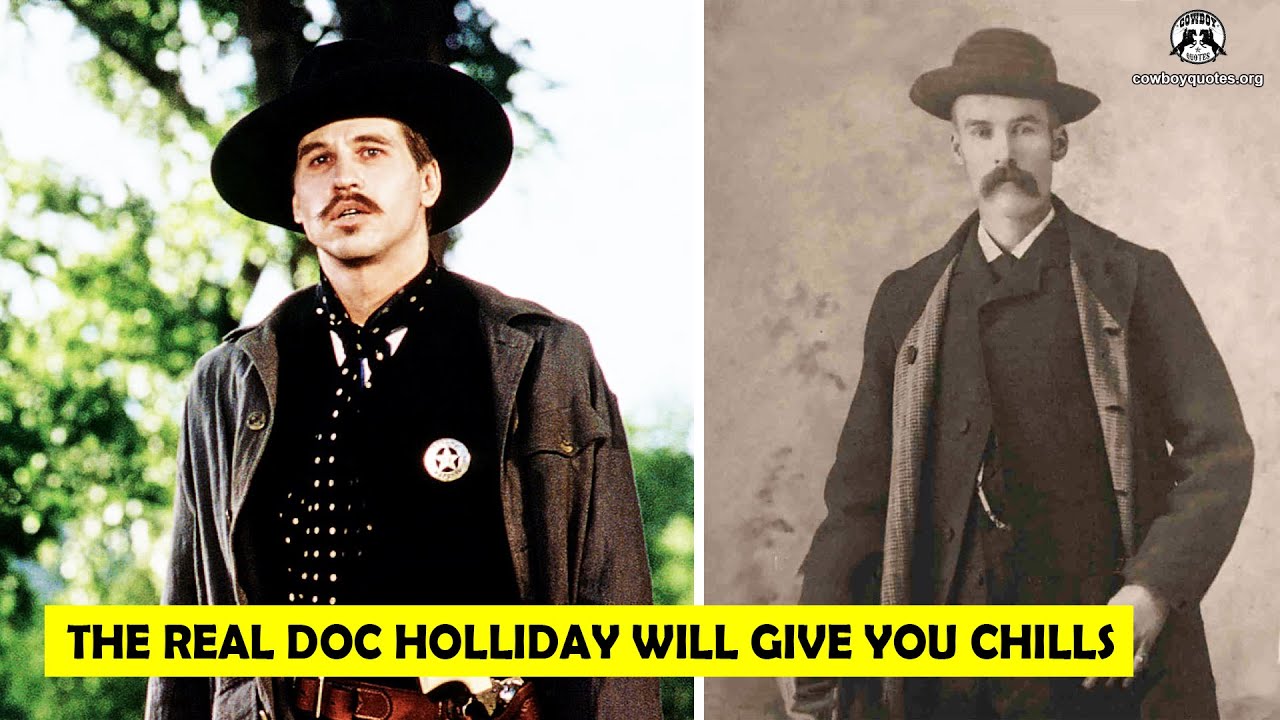
His intelligence made him a natural at gambling, which quickly became his means of support. He was both an active participant and a poker and faro dealer. However, Doc was also miserable with the knowledge of his impending death. He was moody, a heavy drinker, and perhaps more prone to the life he lived with no fear of death.
On January 2, 1875, the first recorded gunfight involving Doc Holliday occurred. He got into an argument with a local tavern owner in Austin, and it quickly escalated into a violent encounter. Despite multiple shots being fired, no one was injured, and both men were arrested. The incident was reported in the Dallas Weekly Herald.
At first, local citizens thought the gunfight was amusing. A few days later, Doc again got into a disagreement, killing a prominent citizen with two carefully aimed bullets. Fearing for his safety, he fled Dallas with authorities hot on his trail.
Holliday headed to Jacksboro, Texas, a wild and lawless cow town near an Army post. Doc found a job dealing faro, carrying a gun in a shoulder holster and another on his hip, along with a knife. Having become an expert shot, he was involved in three more gunfights in a short time. Though he left one man dead in these gunfights, no legal action was taken against him due to the town's lawless nature.
In the summer of 1876, a disagreement again led to violence, resulting in Doc killing a soldier from Fort Richardson. This brought the United States government into the investigation. A reward was issued for his capture, and he was aggressively pursued by the Army, the Texas Rangers, the U.S. Sheriff, local lawmen, and ordinary citizens who sought to collect the bounty.
Aware of the imminent hanging if captured, Doc fled for his life to Apache country, then Kansas Territory, and on to Colorado, making stops in Pueblo, Leadville, Georgetown, and Central City. He left three more dead bodies in his wake.
He eventually settled in Denver under the alias Tom Mackey and found work as a faro dealer for John A.B. Babb's theater at 357 Blake Street. He got into an argument with Bud Ryan, a well-known and tough gambler. They drew knives and fought, and Holliday left Ryan seriously wounded. Public resentment forced Doc to run again, first to Wyoming, then New Mexico, and finally back to Texas.
While dealing cards at John Shanssey's Saloon at Fort Griffin, Doc met Mary Katherine Elder Haroney, who went by many names but was most often known as Big Nose Kate. She was a tough and independent woman who occasionally worked as a prostitute. Despite her good education, Haroney chose that life because of the freedom it brought her. The two developed feelings, and she is the only woman known to have held Holliday's heart.
While traveling from Dodge City, Kansas, Wyatt Earp was on the trail of a train robber named Dave Rudabaugh. After being issued an acting commission as U.S. Deputy Marshal to pursue the outlaw out of state, he followed Rudabaugh's trail for 400 miles. Wyatt visited the largest saloon in town, Shanssey's, asking about Rudabaugh.
Owner John Shanssey said that Rudabaugh had been there earlier in the week but didn't know where he was bound. He directed Wyatt to Doc Holliday, who had played cards with Rudabaugh. Wyatt was skeptical about talking to Holliday, as it was well known that Doc hated lawmen. However, when Wyatt found him that evening at Shanssey's, he was surprised at Holliday's willingness to talk.
Doc told Wyatt that he thought Rudabaugh had backtracked to Kansas. Wyatt wired this information to Bat Masterson, sheriff in Dodge City, and the news was instrumental in apprehending Rudabaugh. The unlikely pair formed a friendship at Shanssey's that would last for years.
Wyatt Earp recounted one event during which Holliday killed a fellow gambler named Ed Bailey. He and his common-law wife, Mattie Blaylock, were in Fort Griffin, Texas, during the winter of 1878 looking for gambling opportunities. Earp visited the saloon of his old friend from Cheyenne, John Shanssey, and met Holliday at the cattle exchange.
The story of Holliday killing Bailey first appeared nine years after Holliday's death, in an 1896 interview with Wyatt Earp published in the San Francisco Inquirer. According to Earp, Holliday was playing poker with a well-liked local man named Ed Bailey. Bailey was unimpressed with Doc's reputation. To irritate him, he kept picking up the discards and looking at them.
Looking at the discards was strictly prohibited by the rules of Western poker, a violation that could force the player to forfeit the pot. Though Holliday warned Bailey twice, the bully ignored him and picked up the discards again. This time Doc raked in the pot without showing his hand or saying a word.
Bailey immediately went for his pistol, but Holliday whipped out a knife from his breast pocket and caught Bailey just below the brisket, or upper chest. Bailey died, and Holliday, new to town, was detained in his room at the Planter's Hotel. A vigilante group formed to seek revenge on Holliday.

Knowing that the mob would quickly overtake the local lawmen, Big Nose Kate devised a plan to free Doc from his confines. Setting fire to an old shed, it began to burn rapidly, threatening to engulf the entire town. As everyone else was fighting the fire, she confronted the officer guarding Holliday with a pistol in each hand, disarmed the guard, and the two escaped.
Hiding out at night, they headed to Dodge City on stolen horses. In the morning, they registered at Deacon Cox's boarding house as Doctor and Mrs. J.H. Holliday. Doc appreciated what Kate did for him so much that he was determined to make her happy and gave up gambling, hanging up his doctor's shingle again.
In return, Kate promised to give up the life of prostitution and stop hanging about the saloons. However, Kate couldn't stand the quiet and boredom of respectable living. She told Doc that she was returning to the bright lights and excitement of the dance halls and gambling dens. Consequently, the two split up, as they were destined to do many times during the remainder of Doc's life.
Doc went back to gambling, frequenting the Alhambra and dealing cards at the Long Branch Saloon. Though Dodge City citizens thought the friendship between Wyatt and Doc was strange, Wyatt ignored them and Doc kept to the law while in Dodge City.
In 1878, Wyatt Earp had previously banished two Cowboys, Toby Driskill and Ed Morrison, from Wichita during the summer. These two Cowboys and two dozen others rode into Dodge City and wreaked havoc by bombarding the town as they galloped down Front Street. They then entered the Long Branch Saloon, vandalizing the room and harassing patrons.
Earp ran to the scene when he heard the noise and was immediately confronted by a large group of Cowboys pointing guns at him. Stepping forward, Morrison sneered, "Pray and jerk your gun, your time has come." Suddenly a voice sounded behind Morrison: "No friend, you draw or throw your hands up."
It was Doc, his revolver to Morrison's temple. Doc had been in the back room, his card game interrupted by the havoc out front. "Any of you bastards pulls a gun and your leader here loses what's left of his brains," he said. The Cowboys dropped their arms.
Wyatt wrapped Morrison over the head with his long-barrel Colt. Then, relieving Driskill and Morrison of their arms, he ushered them to the Dodge City Jail. Earp always credited Holliday for saving his life that day, and the two developed a close friendship.
Later, in their ongoing love-hate relationship, Kate and Doc had another of their frequent violent quarrels. Furious, Doc saddled his horse and headed out, winding up in Trinidad, Colorado. Shortly after he arrived, he was goaded into a fight by a young gambler known as Kid Colton. The kid, wishing to make himself a reputation, was unaware of Doc's gunmanship and wound up in the dusty street with two bullets.
Not wanting to linger, Doc rode on to Las Vegas, New Mexico, where in the late summer of 1879 he hung out his shingle for the last time. However, this idea was short-lived, and he bought a saloon a few weeks later. In late August 1879, Doc argued with a local gunman named Mike Gordon. The two took the argument to the street, where Doc politely invited Gordon to start shooting whenever he felt like it. Gordon accepted this invitation and died with three shots in his belly.
Again a lynch mob formed with plans to lynch Holliday, and Doc returned to Dodge City. However, he arrived only to find that Wyatt had gone to a new silver strike in Tombstone, Arizona. Holliday finally joined the Earps in Tombstone in September 1880. Some accounts report that the Earps sent for Holliday for assistance with dealing with the outlaw Cowboys.
Holliday quickly became embroiled in the local politics and violence that led up to the gunfight at the O.K. Corral in October 1881. When Doc arrived in Tombstone, he found not only Wyatt but all of the Earp brothers, including Morgan from Montana, James who traveled with Wyatt from Dodge City, and Virgil from Prescott, where he had just been made a deputy U.S. Marshal. Wyatt and his brothers were mining silver, and James was dealing faro at Vogan's Saloon. Virgil appointed Wyatt as the acting City Marshal and swore in Morgan as an officer.
When the Earps arrived in Tombstone, the outlaw Clanton gang ran roughshod over the territory and immediately resented the Earps' arrival. Old Man Clanton, his sons Ike, Finn, and Billy, the McLaury brothers Frank and Tom, Curly Bill Brocius, John Ringo, and their followers lost no time in expressing their displeasure. Holliday was a welcome addition to the Earps' fight with the cowboy faction.
On October 26, 1881, Virgil Earp received reports that Cowboys with whom they had had repeated confrontations were armed in violation of the city ordinance that required them to deposit their weapons at a saloon or stable. Soon after arriving in town, the Cowboys had repeatedly threatened the Earps and Holliday. Fearing trouble, Virgil temporarily deputized Holliday and sought backup from his brothers Wyatt and Morgan.
Virgil retrieved a short coach gun from the Wells Fargo office, and the four men went to find the Cowboys on Fremont Street. They ran into Cochise County Sheriff Behan, who told them, or implied, that he had disarmed the Cowboys to avoid alarming citizens. Less than intent on disarming the Cowboys, Virgil gave the coach gun to Holliday so he could conceal it under his long coat. Virgil Earp took Holliday's walking stick.

The two forces finally met 90 yards down an alley from the O.K. Corral. The gunfight occurred off Fremont Street between Fly's Photo Gallery and Jersey Livery Stable. "You are under arrest for attempting to disturb the peace," Virgil announced. As a senior officer, he displayed only a non-threatening walking stick, giving Doc his shotgun. The rustlers tightened, and Morgan and Doc simultaneously braced for action. "Hold on, I don't want that," cried Virgil.
What happened next was a blur, occurring in about 30 seconds. The shooting started when Billy Clanton and Frank McLaury cocked their pistols. It is unknown who fired the first shot, but Doc's bullet was the first to hit home, tearing through Frank McLaury's belly and sending McLaury's shot wild through Wyatt's coattail.
Billy Clanton fired at Virgil, but his shot went astray when he was hit with Morgan's shot through his rib cage. Billy Claiborne ran as soon as shots were fired and was already out of sight. Ike Clanton panicked and threw his gun down, pleading for his life. "Fight or get out like Claiborne," Wyatt yelled, and watched Ike desert his brother Billy as he ran towards the door of the photography shop. But Ike withdrew a hidden gun, firing one more round toward Wyatt before disappearing.
The sound distracted Morgan enough that Tom McLaury sent a bullet into Morgan's side. Doc instantly countered, blowing Tom away with blasts from both barrels of his shotgun. Desperately wounded and dying, Billy Clanton fired blindly into the gun smoke encircling him, striking Virgil's leg. Wyatt responded by sending several rounds into Billy. Then it was silent.
The town's people ran from their homes and shops. Wagons were to convey the wounded Morgan and Virgil to their respective homes, and doctors followed. The 30-second shootout left Billy Clanton, Frank McLaury, and Tom McLaury dead. Virgil Earp took a shot to the leg, and Morgan suffered a shoulder wound.
As Wyatt stood still, stunned, Sheriff Behan appeared, advising him he was under arrest. The Earps and Doc Holliday were tried for murder, but it was determined that the Earps acted within the law.
On March 18, 1882, the cowboy gang struck again. While Morgan Earp played pool at Campbell and Hatch's saloon, a shot was fired from the alley's darkness, striking Morgan in the back. Morgan's body was dressed in one of Doc Holliday's suits and shipped to his parents in Colton, California, for burial.
Wyatt and Doc sought revenge on those who killed Morgan. In a year, they eliminated many outlaws, including Frank Stilwell, Curly Bill Brocius, and others. Wyatt and Doc left Tombstone, never to return, but vowing to seek revenge on John Ringo, Ike Clanton, Pete Spence, and Hank Swilling. They left Silver City and took the train to Colorado from Deming.
On July 14, 1882, Holliday's longtime nemesis Johnny Ringo was found dead in a low branch of a large tree in the West Turkey Creek Valley near Chiricahua Peak, Arizona Territory. He had a bullet hole in his right temple, and a revolver was found hanging from a finger of his hand.
A variant of the story popularized in the movie "Tombstone" holds that Holliday stepped in for Earp in response to a gunfight challenge from Ringo and shot him. But in fact, the Pueblo Daily Chieftain reported that Holliday was seen in Salida, Colorado, on July 7, more than 550 miles from where Ringo's body was found, and then in Leadville on July 18. Holliday biographer Karen Holliday Tanner notes that there was still a pending murder warrant in Arizona for Holliday's arrest, making it hard for him to choose to return to Arizona at that moment. Johnny Ringo's death remains a big mystery that has not been solved.
Holliday's health continued to deteriorate. As a realist, Doc was not one to believe in miraculous cures. But hoping that the Yampa Hot Springs and sulfur vapors might improve his health, he headed for Glenwood Springs, Colorado, in May 1887, registering at the fashionable Hotel Glenwood.
He grew steadily worse, spending his last 57 days in bed at the hotel and was delirious for 14 of them. On November 8, 1887, he awoke clear-eyed and asked for a glass of whiskey. It was given to him, and he drank it down with enjoyment. Then, looking down at his bare feet, he said, "This is funny," and died.
He always figured he would be killed with his boots on. Doc Holliday had come West years before knowing his days were numbered. He never believed that he would die in bed. He often said that his end would come from lead poisoning, at the end of a rope, a knife in his ribs, or that he might drink himself to death.
Holliday's final resting place is at Glenwood Springs Cemetery, set on a steep hillside overlooking the valley below. Despite his reputation as a gunfighter, Holliday was not invincible. He narrowly escaped death on nine different occasions, including four attempts to hang him and five gunshot wounds. He is said to have killed a number of men, but the exact number is unknown.
Doc Holliday's legacy lives on, not only as a legendary gunfighter of the Old West but as a symbol of resilience, loyalty, and courage in the face of adversity.