When she was seven years old, Princess Marina watched her grandfather, King George I of Greece, go out one morning and never come back. An assassin’s bullet took his life, and in that single moment, the golden childhood she had known inside the royal palace began to crumble around her. By the time she was eleven, the people of Greece had had enough of the monarchy entirely. The royal family was toppled and sent into exile, and young Marina found herself packed up and shipped off to Paris, suddenly a princess without a country.
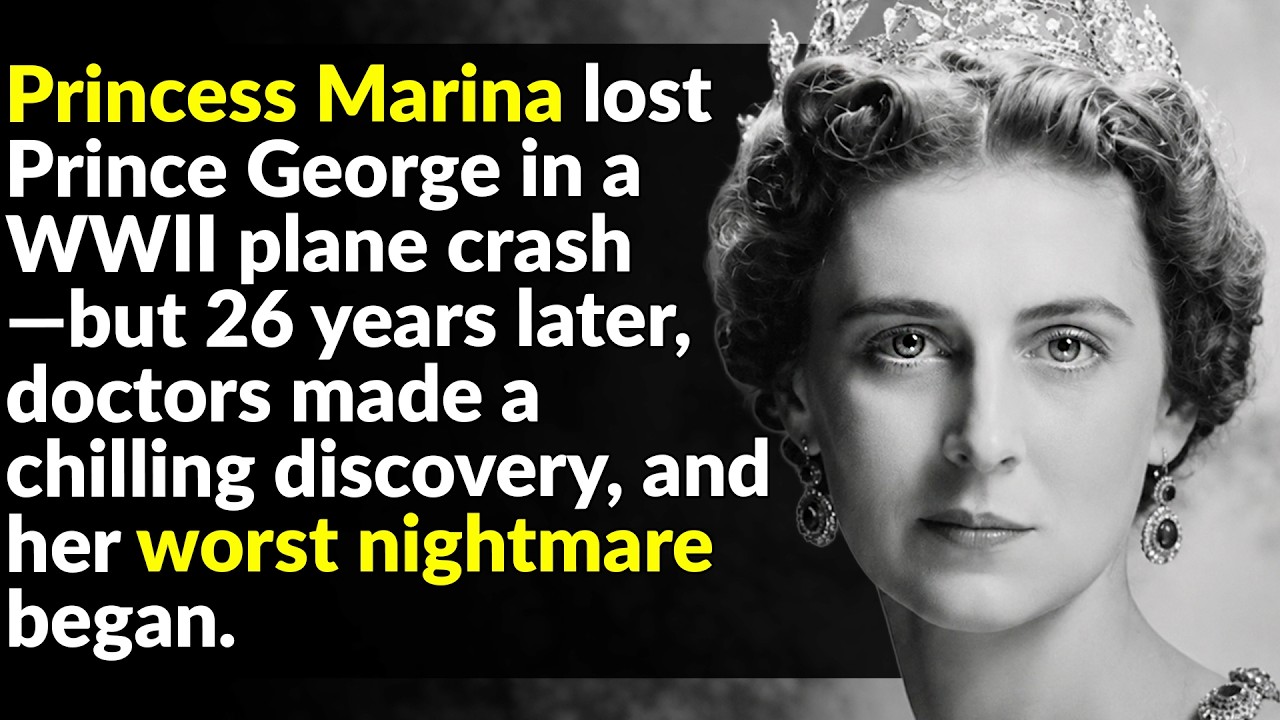
The next years of her life were spent drifting between relatives across Europe, never quite belonging anywhere, always the displaced royalty with the grand title and the empty pockets. But the 1930s brought a change in fortune. Marina traveled to London, where she crossed paths with Prince George, the handsome and eligible brother of the King of England. Whether or not she fell madly in love with him in those first meetings hardly seemed to matter.
The British Crown announced their engagement in 1934, and Marina, though born of royal blood, was in no position to argue. Her family was exiled and powerless. Prince George, on the other hand, had just been given the Duchy of Kent and was considered quite the catch. There was, however, talk around town about George’s character.
He had developed something of a reputation as a scoundrel, with whispers of substance problems and multiple affairs. One rumor even suggested an affair had led to blackmail. Whether any of it was true, the royal family knew they had an image problem on their hands, and they were determined to fix it. At the time, the public viewed the British royals as pompous and hopelessly distant, and the crown was desperate to change that perception.
George and Marina’s engagement seemed like the perfect opportunity to rebrand the monarchy entirely. In a move that had never been done before, the betrothed couple invited the popular newsreel company British Movietone to film them addressing the people of Britain. It was the first time the royals had ever used cinema to speak to the public, and the news outlet knew they had been handed the opportunity of a lifetime. Instead of proud and untouchable rulers, the public suddenly saw a young couple who seemed approachable, even likable.
For centuries, royal marriages had been little more than strategic alliances, but Marina and George represented something new. They were the first step in shifting the narrative to one where the people in such a pairing could genuinely fall in love. And the public was eating it up. When Marina entered the UK for the first time as Prince George’s fiancée, she stepped off the boat to a crowd in absolute ecstasy.
Within those first few moments, she started a trend that would define royalty for generations to come. She gave her fans a simple wave, and that gesture became the first of countless iconic royal waves. But it was more than just a wave. It broke down a barrier between the crown and the common people, and they loved her for it.
Before long, her reserved greeting turned into a more enthusiastic two-handed wave, as if she could hardly contain her excitement to see them either. The couple gave the spectators one more sensational first that day. Marina boarded a train to meet George, and when she stepped off, he was there waiting. Captured on film for all the world to see, they embraced and shared a kiss in front of the cameras.
It was the first on-camera royal kiss in history, and the British public couldn’t get enough of it. The media became utterly obsessed with Marina. She was stunning, elegant, and her style was unmatched. Every event she attended, she dazzled.
When it came time for the wedding itself, the couple chose Westminster Abbey, where no royal wedding had taken place in eleven years. To make the day even more extraordinary, microphones were set up throughout the abbey, allowing anyone with a radio to listen live to the ceremony. It was the first royal wedding ever broadcast wirelessly, and the entire nation felt like they were part of the celebration. Despite growing up in luxury, Marina displayed a genuine drive to serve those less fortunate, perhaps shaped by the hardship of her family’s exile.
She threw her wealth and influence behind numerous charities, including the Central School of Speech and Drama and the Women’s Hospital Fund. But the cause closest to her heart was building a family of her own. Her relationship with George flourished, and she already had a devoted ally in her mother-in-law, Queen Mary, who had first met Marina when the princess was just three years old and had carried a motherly fondness for her ever since. Together, Marina and George welcomed three children, and for eight years, they seemed to be a genuinely happy couple.
It was a rare thing for a royal marriage, and it seemed their story would be one of contentment. But the world was heading toward catastrophe. When World War II broke out, Marina refused to sit on the sidelines. Under the alias Sister Kay, she trained for three months and joined the Civil Nurse Reserve, tending to those serving their country.
Prince George did his part as well, joining the Royal Air Force to fight alongside his people. On August 25, 1942, the war took him from her. He was killed on active duty when his plane crashed over Scotland. Marina, who had already spent years drifting without a true home, was once again left with nothing but her title.
The grief was crushing, and the practical realities made it worse. With George gone, all civil list payments to him and his family ceased. Marina had no other income, and she found herself a royal who could no longer afford to live like one. On top of that, the estate left behind by anyone who died in the UK was subject to death duties, and Marina was on the hook for them.
Reportedly, the king and queen stepped in to help her financially, but Marina was determined not to let her husband’s legacy die with him. Instead of retreating into private mourning, she stayed in the spotlight and continued her royal duties. She visited areas left in ruins by the war and helped with the rebuilding efforts. In 1952, she appeared before the public at St.
Mark’s Church, which had been bombed during the conflict. As a symbol of perseverance and rebirth, she laid the new foundation stone for the church’s restoration. Her responsibilities also took her far beyond the UK. She helped open the outpatient department of a hospital in Cebu and visited a former Japanese internment camp in Borneo that had been converted into a training college for teachers.
In the immediate aftermath of George’s death, Marina found comfort in someone who understood her pain. Queen Mary was there for her daughter-in-law, just as she had been since Marina was a little girl, and she allowed Marina to stay with her as often as she liked. Mary helped Marina work through her mourning, and for over a decade, the two women remained each other’s closest companions. When Queen Mary died in 1953, Marina lost not only her greatest supporter but also the place she had come to think of as home.
She spent years still searching for a permanent home for herself and her children, moving from place to place. Finally, she received the news she had been waiting for. The Crown granted her a residence at Kensington Palace. After all the heartache and uncertainty, Marina finally had somewhere to settle down.
Given everything she had been through, and the fact that she had no direct connection to the surviving royal family members, no one would have blamed her for stepping back from public life. But under the new Queen Elizabeth II, Marina continued to serve the crown faithfully. She represented the Queen at the festivities in Ghana when the nation gained its independence from Britain. Her duties as the Duchess of Kent went beyond grand state events, though.
Often, she was simply picking up where her late husband had left off. Since George had served as the president of the All England Lawn Tennis and Croquet Club, Marina took over the role after his death and held it for twenty-six years. She also became the president of the Royal National Lifeboat Institution, overseeing the deployment of lifeboat services across the UK and Ireland. Even with all of her titles and achievements, there was one honor that mattered above the rest.
Marina had come from royalty in her own right, and the common practice would have been to style her as Dowager Duchess after her husband’s death. But Queen Elizabeth would not allow it. To preserve Marina’s regal heritage, the Queen insisted she keep the title of Her Royal Highness Princess Marina, Duchess of Kent. It was an act of profound respect that meant more to her than any other recognition.
Marina continued to serve in an official capacity for years, but eventually her health began to fail. In 1968, she admitted herself to the hospital. Within days, the doctors made a chilling discovery. They told the stunned princess that she had an inoperable brain tumor.
There was nothing they could do. A little over a month later, her health had deteriorated so completely that it was clear her time had come. On August 27, with her children gathered around her, Marina fell asleep and never woke up. When Prince George had died so many years before, he had been laid to rest at St.
George’s Chapel in the Royal Vault. After Marina’s passing, the Crown chose to move his remains to Frogmore, where Marina was placed right beside him at the Royal Burial Ground. After all the years of wandering and loss, of drifting between palaces that never quite felt like home, Marina was finally laid to rest next to the man she had loved. She had turned the British monarchy from something distant and cold into something the people could adore.
She had served her country through war and peace, through grief and duty. And in the end, she was reunited with the one person who had made her feel like she truly belonged.