On May 23, 1994, a Belgian-born diamond merchant stood before a Catholic altar on Park Avenue and read a Greek poem. The United States called it the tenderest love story of Jacqueline Kennedy Onassis's life.
That morning, he was the husband of another woman, and had been for 45 years. In her will, she left him one single object mentioned by name: an alabaster Greek head. He had managed her money for a decade and lived in her apartment without ever having signed the lease.
The eulogy omitted two questions. Why did she choose a man who could never marry her? And who controlled her final week?
The church was St. Ignatius Loyola on Park Avenue, the same church where she had been baptized as a child and confirmed as a teenager. That detail was repeated in every account because it was tidy, circular, and easy to say aloud. What almost no one said aloud was what the arrangement in the second pew actually was.
Maurice Tempelsman read Constantine Cavafy's "Ithaka," the poem about the long journey home, the one that tells you the important thing was never the arrival. Contemporary reports described him finishing with a line about the end of the journey. It was a beautiful and very careful lesson.
A Greek poem for a woman whose second husband had been Greek. A poem about a journey read by the man who owned the boat on which she had spent her final summers. Not a word about love, marriage, or 12 years of cohabitation. Nothing that required him to define what he had been to her.
In any case, he could not have defined it legally. That was the structural fact beneath everything, and it did not change once in 12 years.
Days earlier, on the night of May 19, she had died in her own bed on the 15th floor of 1045 Fifth Avenue, 15 rooms with a view of the Central Park reservoir. Tempelsman was the one who went downstairs and walked out the front door to address the reporters on the sidewalk.
He read a brief statement. He said she had been surrounded by her family, her friends, and her books. It was the phrase the country absorbed as the official version of how Jacqueline Kennedy Onassis had left the world, and it came from the mouth of a man who had no legal relationship with her.
Then the will was filed in Manhattan probate court, and the accounts began to seem strange. The estate was enormous, estimated at the time at several tens of millions, with initial estimates exceeding 100 million before appraisals and trusts reduced the public figure.
Almost everything had been structured for Caroline and John. Properties, works of art, a charitable trust, instructions regarding her image and her documents. Nancy Tuckerman, her friend and guardian since boarding school, was remembered, as were her relatives, godchildren, and employees.
Tempelsman was named executor alongside Tuckerman and lawyer Alexander Forger. And the legacy listed in the document she had signed a few months before dying was a single object: an alabaster Greek woman's head.
Twelve years in her house, the manager of the fortune, who had made all the other legacies possible. And the gift listed was a piece of carved stone from the ancient Mediterranean.
It can be interpreted generously. Some people did. Her friends pointed out that he already had money of his own and that a sentimental object from a woman famous for her precision in choosing objects was a compliment, not an insult.
It can also be interpreted exactly as what a woman does when she has decided to set down in writing the place a man occupies in relation to her children. Both interpretations can be true, but only one survived in public. And it survived because the man holding the alabaster head was also the man who told the story of her final days.
Now comes the part the obituaries almost completely omitted. On the morning of that funeral, Maurice Tempelsman was married, and had been since 1949, to Lily Buhals, later Lily Tempelsman, a Jewish woman born in Belgium, from a family very much like his own. They had three children.
They separated in the early 1980s, around the time he moved his life to Fifth Avenue, and they never once divorced during his entire relationship with the most photographed woman in America.
Lily Tempelsman was not a resentful recluse hiding in a suburb. She was a practicing marriage and family counselor in New York. And in 1994, the same year Jackie died, she was ordained as a rabbi by the Academy for Jewish Religion. She dedicated her professional life to sitting across from couples in difficulty.
In the eyes of the state of New York, she remained Mrs. Maurice Tempelsman. So the tenderest chapter of Jackie's life, the one biographers describe as her reward after two difficult marriages, remained forever impossible to formalize.
A wedding was never possible, an announcement was never necessary, and she was the woman the Catholic Church had once publicly rebuked for marrying a divorced man. In 1968, an official from the Archdiocese of Boston told reporters that she had become a public sinner, a phrase that appeared in newspapers across the country.
She spent her final 12 years living with a husband who had never bothered to stop being one. That is not a love story that demanded nothing of her; it is a negotiation.
The question is why she accepted those terms, and the answer begins in Paris in March 1975, in a hospital room she reached only after a delay. Aristotle Onassis died on March 15, 1975, at the American Hospital of Paris. Jackie was in New York when he reached the end. She flew there.
Photographs from the days that followed show her walking with Christina Onassis while wearing sunglasses. The two represented a unity that had not existed for years. To understand what she wanted from Maurice Tempelsman, you have to understand what Onassis had taught her about money in the hands of a man whose love was conditional.
The 1968 marriage on Skorpios had been, among other things, a contract. Onassis's lawyers and her representatives, her brother-in-law Ted Kennedy, traveled to Greece to negotiate on the family's behalf and agreed to the terms before the ceremony.
The exact figures have never been officially released, and the numbers that circulate come from later accounts, not the document itself, so they should be considered informed, not proven. A lump sum of a few million, an annual allowance, and crucially, a waiver of her rights under Greek law to receive a widow's share of the inheritance.
She married a man who demanded in advance that she renounce any claim upon him. Afterward, he humiliated her in the most public way possible, but he ended his relationship with Maria Callas, and he did it where the photographers could see. In 1970, the Italian press published photographs of the two having dinner in Paris. Jackie read the papers and studied the images. She understood perfectly what a photograph did.
By 1973, after the death of his son Alexander in a plane crash, the marriage was emotionally over. Onassis began talking to lawyers about the possibility of ending it. Reports from that period and various biographers who worked from the testimonies of his associates describe him searching throughout 1974 for ways to limit what she would receive.
The most cited claim maintains that he managed to have a Greek law changed, or pressured for the process to lead to that change, so that a widow's forced share could be reduced. Historians disagree on how much was due to Onassis's intervention and how much was a matter of convenient timing.
He died before the divorce. Technically, she was still his wife and later had to fight his daughter for the money. The settlement with Christina Onassis took until 1977 to be finalized. The figure reported by the press at the time was around 26 million dollars, and Jackie waived any other claims on the estate, on Skorpios, on the oil tankers, on everything.
It was a considerable fortune, and also, in the context of Onassis's properties, a payment for her to disappear. This is what she got from that marriage, besides the cash: the certainty that a rich man's affection could be withdrawn while the checkbook remained in his hands.
Two children she now had to support alone. Caroline was 19 and John was 16. She had no husband and no income of her own, except for what the Kennedy trusts provided. And she had a very specific fear, documented in the behavior of the rest of her life. She never wanted to be financially exposed again. She never was.
Between 1975 and her death, that Onassis money grew. After her death, it was reported that it had multiplied several times, though the figures came from estate estimates and journalists, not from financial statements published by anyone, so they should be taken with caution. The growth was real enough that her children inherited a fortune considerably larger than what their mother had received through the Greek settlement.

The man who managed it was Maurice Tempelsman. He wasn't a stranger who had suddenly appeared during her widowhood. He had been on the fringes of that circle for 20 years.
Born in Antwerp in 1929 to an Orthodox Jewish family in the diamond business, he managed to get out with his parents in 1940, before the Germans arrived, and grew up in New York. He left his studies very young to work in his father's business, Leon Tempelsman & Son.
He wasn't an educated man in the sense that her Newport circle understood education. However, he mastered what really moved the world into which she had married twice: rough stones, governments, and access.
In the 1950s, he closed some deals that made him prosper. The United States wanted industrial diamonds for its strategic reserves. The Belgian Congo had them and De Beers controlled their distribution. The United States had enormous surpluses of agricultural products. Tempelsman organized the trade, food and goods in exchange for industrial diamonds. The lawyer for that deal was Adlai Stevenson, two-time Democratic Party presidential candidate.
That was how a young diamond merchant from Antwerp ended up with a contact list full of Washington insiders. He donated money to the Democrats. He had known the Kennedys since the 1950s, before the White House. He and Lily moved in that overlapping world of donors, lawyers, and internationalists that surrounded the administration, and after Dallas, he stayed in touch.
So when Jackie emerged from her years in the Onassis orbit, needing someone to manage a Greek agreement, she didn't hire a stranger from a bank. She turned to a man who was already inside the perimeter, who had known her husband, who owed part of his position to Democratic politics, and who had spent 30 years learning exactly how to be useful without making noise.
What he got in return took longer to become visible. She possessed the one asset that no amount of diamond money could buy in the United States: legitimacy. He had built his entire career in a business that didn't survive well in the light of day.
Consider how the relationship actually went public. There was no wedding, engagement, announcement, interview, or anniversary. There was never a moment when either of them said what it was. Instead, throughout the second half of the 1970s and well into the 1980s, photographers simply began capturing them in the same frames, and the country figured it out on its own.
Dinners at Le Cirque, walks along the reservoir path in Central Park, leaving a Manhattan theater, boarding a plane. Then, in the early 1980s, came the photos of the summer in Martha's Vineyard, the two of them on the water, him at the helm and her barefoot on the deck.
The absence of a ceremony is the most telling aspect of that whole arrangement, and almost no one treated it as news. All the previous chapters of her life had been announced. The 1953 wedding to a Massachusetts senator at St. Mary's in Newport, 800 guests, 3,000 spectators outside the church, the Ann Lowe dress, the photographs distributed everywhere. The 1968 wedding on Skorpios, journalists renting boats to get close to the island, the Vatican's disapproval published a few days later.
Both marriages were public events before they became private relationships. This one worked in reverse. It was a private affair that was allowed to become publicly known little by little without ever being confirmed in public. She made no statement. He made no statement. When journalists asked their friends, they would say he was a wonderful man and change the subject.
She had spent 30 years learning how the press worked, and her greatest skill, the thing that set her apart from any other famous woman of her time, was controlling what was said by saying nothing. This time, she applied that skill to a man. If you never define the relationship, no one can ask you why it isn't a marriage, and it couldn't be a marriage. That was the condition neither of them had to negotiate because it had already been established beforehand by the continued existence of Lily Tempelsman.
Look at the place where they lived, because geography tells you who owned what. Apartment 15 at 1045 Fifth Avenue. She bought it in 1964, the year after Dallas, for about $200,000. Reportedly 15 rooms, five bedrooms, and a view over the reservoir, entirely hers. She had chosen it, decorated it, raised her children there, and never left it.
At some point between the early and mid-1980s, Maurice Tempelsman moved in. Her name was on the deed, her furniture and her staff, including the maid Martha Scubin, who had started working for the family in 1969 and had cooked for them for decades. There was also their doorman, who had known the children since they were small. He settled in there with his clothes and his briefcase in a house built entirely around the memory of another husband, and lived there for about a decade.
Then there was Red Gate Farm. In the late 1970s, she bought 375 acres on the southwestern end of Martha's Vineyard, near Gay Head, now Aquinnah, with a pond, dunes, and about a mile of private beach. She paid a little over a million dollars for the land, reportedly, and spent years building a 19-room house there with architect Hugh Jacobson. Finished in the early 1980s, it became the place she went to disappear.
That property was also hers. She had bought it with money from Onassis and passed it on to her children. The only thing in that shared life that belonged to him was the boat. A sailboat a little over 60 feet long. He named it Reomar.
It wasn't a Greek name, nor a Kennedy name, nor a joke about the sea. Reomar is a combination of three first names: Rina, Leon, and Marcy, his children, the children he had with Lily. That was the boat on which Jacqueline Kennedy Onassis spent her final summers.
The photographs of her happiest years that have been documented, the sun and the sails, the two of them in the Caribbean during the winter and off the Vineyard in August, were taken aboard a vessel that bore the name of another woman's family.
And she had a sphere that was entirely her own, something more important than real estate. In 1975, a few weeks after the funeral, she accepted a job as a consulting editor at Viking, four days a week, for $200 a week, at age 45. She had never held a salaried position since her brief stint as a young reporter at the Washington Times-Herald in the early 1950s.
In 1978, she moved to Doubleday after a dispute over a Viking novel that included a fictional plot against Ted Kennedy, and she remained in the publishing world for the rest of her life. Her colleagues at Doubleday, interviewed in the years that followed, described a person who did the actual work. Line edits written in her own hand, lunches with authors, and fights to publish books about photography, ballet, Egypt, and the Russian imperial court.
It was the only part of her adult life that was not financed by a man or inherited from a dead one. It paid her almost nothing in relation to her fortune, and yet she kept it for 19 years. That job is the counterweight to everything else in this story. She allowed a man to manage her money. She did not allow a man to manage her days.
Now consider the business he ran, because this is where the word "nasty" proves its usefulness. Maurice Tempelsman was no generic financier; he was a man of rough diamonds, and in his day, that meant working within the system created by De Beers and the Oppenheimer family in Johannesburg and London. The Central Selling Organization, the cartel that controlled the world's supply and set prices from an office on Charterhouse Street.
Tempelsman was a figure on the level of De Beers' authorized buyers, an intermediary between African production and the Western industry. His most valuable relationship was located in Central Africa. He had cultivated his contacts in the Congo since the Eisenhower years, and after Mobutu Sese Seko took power and changed the country's name to Zaire in 1971, Tempelsman became one of the Americans who had personal and reliable access to him.
Contemporary business reporting from the 1970s and 1980s consistently described him as a man who could get a meeting in Kinshasa. He participated there in deals involving industrial diamonds, and subsequently in Sierra Leone and Botswana. The Mobutu regime was a kleptocracy that lasted for 32 years thanks to mineral wealth and American strategic patience. The De Beers system operated in and around apartheid-era South Africa. None of that is a matter of controversy. Those were the sources of the experience and connections that made him the right man to manage a widow's portfolio.
There is a second set of claims that goes further. Various authors, Richard Mahoney in his work on the Kennedy brothers and investigative journalist Janine Roberts in her writings on the diamond trade, have argued that Tempelsman's activity in the Congo in the early 1960s coincided with American intelligence interests during the Lumumba period. Those claims are based on inferences and sources that have never been independently confirmed. Tempelsman never responded to them, and they must be treated as allegations, not as established facts.
The verifiable part is sufficient, and here is the consequence it had for the relationship, which is the only reason all this belongs in this story. For 12 years, the most aggressive press corps on the planet had a permanent invitation to investigate the private life of Jacqueline Kennedy Onassis. Photographers followed her to the gym. In 1972, a federal court had to issue an injunction to tell Ron Galella how many feet he had to stay away.
Her habitual route for exercise was public knowledge, and the American media, with all that appetite, practically never turned to examine the business interests of the man living in her apartment. They dedicated profiles to him that described him as courteous, cultured, and discreet, a lover of poetry, a collector, a soft-spoken man. The word diamonds appeared. The words Mobutu and apartheid, for the most part, did not.
She was the best reputational cover available in the Western world, and she never had to lift a finger to provide it for him. Every photograph of the two of them walking by the reservoir contributed more to his standing than any public relations agency could have organized. The most respectable diamond merchant in the United States was respectable because of the people he had dinner with.
So what happened when she wanted to leave? The honest answer is that there is no evidence that she tried, and the reasons are structural, not emotional.
Start with the question of marriage, because her friends did bring it up. Accounts from her circle, mostly collected after her death, indicate that the subject came up and was dropped. The obstacles mentioned vary depending on who is telling the story. That Lily would not accept a divorce, that his children were opposed, that his religious and community obligations in the Orthodox world he came from made the idea unthinkable, that Jackie herself, having been married twice and burned twice, had no interest in a third contract.
Those explanations conflict with one another and no document settles the matter. What is documented is the result. He remained married, and she publicly and permanently accepted that situation for 12 years.
Then there was the money, which by the mid-1980s was no longer a simple thing to untangle. Her portfolio was under his management. Her children's inheritance was within that portfolio. Separating from Maurice Tempelsman would have meant simultaneously separating from the management of her finances. All this at an age when she had already seen what happens to a woman forced to renegotiate her security from a position of weakness. She had had to fight for two years against Christina Onassis to obtain what a dead man's lawyers had tried to prevent her from receiving. She was not going to repeat that at 55.
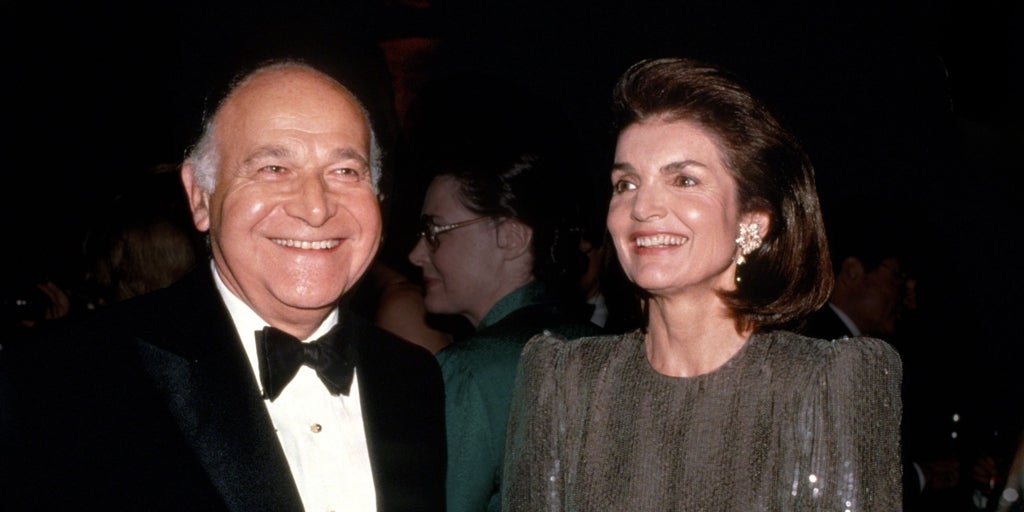
Add the final, most silent constraint. In 1985 she was 56 years old. She was a widow for the second time, and her children were adults who had already left the apartment. The alternative to that arrangement was not a better arrangement; it was an empty 15-room apartment on Fifth Avenue.
He provided her with competence, companionship, culture, and a man who never tried to sell an interview. She gave him legitimacy, access, and the only kind of social armor that money cannot buy in the United States. Neither of them was being fooled. That is what is uncomfortable.
She was not a woman swindled by a charming operator. She was one of the most astute people in 20th-century public life when it came to reading other people's intentions, and she had seen two husbands make their own calculations at her expense. She knew what she was getting and what she was giving up. She traded the possibility of being a wife again for the certainty of never being financially vulnerable again. He traded the appearance of a stable marriage for proximity to the Kennedy name. Both deals were closed. Neither was ever put in writing, and that worked for about a decade.
The most serene decade of her life, according to almost all accounts from those around her, until a routine neck swelling in the autumn of 1993 turned the entire arrangement into a question of who exactly had authority over her.
But before the illness, we must acknowledge what those good years were, because they were real and the evidence supporting them is better than the evidence for almost anything else in this story. From roughly 1980 until 1993, she had the life she had never had before: unsupervised, productive, and organized around her own preferences.
The people who described her were not paid publicists; they were editors, authors, and friends speaking publicly and on the record about what they had seen. She worked at Doubleday. She edited books on imperial Russian dress, Egyptian art, Second Empire Paris, and ballet. In 1988, she managed to get Michael Jackson's "Moonwalk" into bookstores. She traveled to California to do it and managed to finish the book even though it was nearly impossible to track down the author. She participated in acquisition meetings and championed projects that would never earn much money.
Her publishing colleagues, interviewed by Greg Lawrence for his book on her years in the industry, described a woman who read manuscripts on weekends and copy-edited with a pencil.
She fought for buildings. In 1975, she had already put her name behind the campaign to save Grand Central Terminal from a tower project that would have gutted it from within. She appeared at a press conference at the Biltmore and told reporters that if we allowed great things to disappear, nothing would be left. She remained involved for years with the Municipal Art Society. In 1978, the Supreme Court upheld the landmark designation.
She became a grandmother. Caroline married Edwin Schlossberg in 1986 at Our Lady of Victory in Cape Cod, and the three grandchildren arrived between 1988 and 1993. Her friends said the final stretch of her life was the happiest they had ever seen her, and they attributed it to two things: her children's children and Maurice.
The sailing was also real. Winters in the Caribbean, Augusts off the Vineyard, the two of them aboard the Christina O with a small crew. No photographer within a mile. He read poetry, talked about art, history, and Africa. He didn't want anything from her that she had to perform.
The affection in that relationship is documented and was likely mutual. The friends who said she was content were not lying. Anyone who tells you it was 12 cold years of pure transaction is interpreting the arrangement beyond what the evidence allows. And the arrangement is strange enough as it is, without exaggerating it.
What it meant, however, only became visible when she fell ill, because that was when someone had to be in charge.
At the end of 1993, she noticed a swollen lymph node in her groin. In November of that year, she went horseback riding with the Piedmont Foxhounds in Virginia. She fell from the horse, lost consciousness, and spent some time in a hospital in Middleburg. During the subsequent exams, doctors found an enlarged node in her neck, and further tests led to a diagnosis of non-Hodgkin lymphoma.
The news arrived at the beginning of January 1994. Her office issued a statement in February after the story leaked, saying she had a treatable cancer, that she had begun chemotherapy, and that she was continuing to work. Nancy Tuckerman handled the wording.
Then something happened that no one had ever seen before in her life. The private woman became a photographed patient. In the spring of 1994, she was seen on Fifth Avenue wearing a wig and a headscarf. In April, she was hospitalized after the disease spread to her brain and spinal cord.
There is a set of photographs taken in mid-May on a path in Central Park, near her building, in which she appears thin in a wheelchair and bundled up against the cold, while Maurice Tempelsman walks by her side. That was the image the country received. It appeared everywhere, and it was the right image of what the relationship had become, because by then he was no longer just her companion; he was the one running the entire operation.
He was the one dealing with the doctors. He was present during medical conversations. He decided who could come in and who could not. He was the one shuttling between the hospital, the apartment, and the press. When she was admitted for the last time to New York Hospital-Cornell, he was the fixed point.
The final sequence is documented, and it was brief. She was hospitalized in mid-May. On May 18, after doctors concluded that further treatment would not help, she returned to her home at 1045 Fifth Avenue by her own choice. According to everyone involved, her children were there. A priest came and administered the last rites. She died on the night of May 19, 1994, at the age of 64.
Then Tempelsman came downstairs. The crowd on the sidewalk had been growing for days. People were leaving flowers against the building. The journalists had set up across the street. He walked out the building's front door and read the statement: surrounded by her friends, her family, and her books, she did it her way, and we all feel lucky for it.
It is a good statement. It is also, if one stops to observe it, an extraordinary attribution of authority. Caroline Kennedy Schlossberg was 36, a lawyer, and was Jackie's daughter. John F. Kennedy Jr. was 33. Both were in the apartment. Neither came out to speak.
The man who addressed the public on behalf of Jacqueline Kennedy Onassis's family was a man legally married to someone else who had no standing before any court, hospital, or church as her next of kin. He did not seize that role. Clearly she, the children, or the simple logic of who had been handling everything for a decade granted it to him. But they granted it, and what he received was the final word.
There is a harsher version of those final weeks circulating, and it deserves care. Edward Klein's 1998 book "Just Jackie" described tensions surrounding access to her during her final days and presented Tempelsman as a gatekeeper limiting who could see her. In the tabloid reports of the time and later magazine articles, similar claims about those tensions appeared. Some of those accounts came from people identified only as friends.
Klein's sources in his books about the Kennedys have been repeatedly questioned, including by people quoted in them. Reports that he controlled access were published, but their level of credibility is unclear. Controlling access was also something that a dying woman's home would have required someone to do. It is not confirmed that any specific person was denied entry, and there are disputes regarding the motive.
This is what is not disputed. A woman who had spent 30 years refusing to let anyone speak for her ended her life with a man speaking on her behalf, and the version of her death that was recorded came through him.
Which brings us to the document she had signed two months earlier, and the way that document silently resolves the question of who really held the power in that apartment.
Her will was executed on March 22, 1994, after the diagnosis and during chemotherapy, before her lawyer Alexander Forger of Milbank Tweed. It was submitted for probate to the Manhattan Surrogate's Court on May 23, the day of the funeral, and the press obtained a copy just days later. It is one of the most revealing documents in the entire Kennedy archive, and it is revealing because of its coldness.
Almost everything was structured to go to Caroline and John. Red Gate Farm would pass to the children. The Fifth Avenue apartment would be sold, and the money would go into the estate. Her personal property, the furniture, the art, the jewelry, the documents, and the objects would pass to the children, piece by piece and as a whole.
A charitable trust was created. The income would go to charity for 24 years, and after that, whatever remained would pass to her grandchildren. She left money to Nancy Tuckerman. She left money to Martha Scubin, the woman who had cooked for her family since 1969. She left the sum of $250,000 to Providencia Paredes, her longtime maid.
She also included instructions regarding her image. She had spent her life battling photographers and editors over the commercial use of her name, and she left her wishes in writing in the will. Her executors were ordered to take into consideration her wish that her personal papers and correspondence not be published or exploited, and they were granted the authority to destroy any material they deemed private. She gave her executors the right to burn her letters.
And to Maurice Tempelsman, she left an alabaster head of a Greek woman. That was the numbered legacy, an antique. He was also named executor, a position of trust and work, not a gift.
It is true that he had his own fortune and did not need anything. It is also true that he had lived in her home for a decade. He had managed the money that made all the other legacies possible, and he received less in a personal capacity than her housekeeper.
Some biographers interpret it as a discreet show of kindness between two people who collected art together. Others interpret it as a boundary. Sarah Bradford, in studying the documents for "America's Queen," sees it as consistent with a woman who kept her categories strictly separate: children first, always, and no ambiguity about who was part of the family.

It may be simpler than either of those interpretations. In 1975 she had learned exactly what happens when a rich man's documents treat a woman like a stranger. She never allowed herself to be on the receiving end of that again, and she ensured the man living in her apartment was on that side instead.
Look at the whole sequence and the question of power answers itself, in a way that inverts everything the funeral had implied. He controlled the doctors, the door, the statement, and the money while she was alive. She controlled the paper, and it was the paper that decided who would get the fortune, who would get the properties, who would get the documents, and what would be destroyed.
She never had to tell him no regarding the marriage, never had to make a scene over Lily, never had to ask what those Onassis agreements were really about. She simply reserved the final signature for herself and used it.
The apartment was sold in 1995 for about nine and a half million dollars, reportedly to industrialist David Koch. Fifteen rooms that had belonged to her for 31 years, the place where two of her children had grown up and where she had died, passed into the hands of a stranger in less than a year. Maurice Tempelsman left the building where he had lived for a decade because it had never been his to stay in. He returned to a life that on paper had not changed. He was still a diamond merchant, still a Democratic donor, and still married to Lily.
And then, in April 1996, the objects she had spent a lifetime protecting from the public eye were laid out in a Manhattan auction house for anyone who would raise a paddle.
The Sotheby's auction was held from April 23 to 26, 1996, at 1334 York Avenue. It was a decision by Caroline and John executed through the estate. The catalog had more than 500 pages. Forty thousand people passed through the showrooms during the days prior and formed a line that went around the corner to gaze at the furniture of a dead woman.
Everything was sold. Her Onassis engagement ring, the Van Cleef bracelet, her father-in-law's golf clubs, which sold for over $700,000 to a buyer who later turned out to be Arnold Schwarzenegger. A faux pearl necklace she had worn in a famous photograph alongside John F. Kennedy Jr. when he was a toddler sold for over $200,000. A humidor that had belonged to John F. Kennedy reached over half a million. The sale raised approximately 34 million, compared to pre-sale estimates closer to 4 million.
The woman who had written in her will that her private correspondence should be protected from publication saw her stools, samples of her taste, side tables, fireplace screens, decoys, and paintings of her dog auctioned off to strangers 18 months after her death. There is no contradiction in the documents. Technically, she had protected the letters; she hadn't said anything about the furniture.
But look at the sale itself, and what she did with the registry. Each object came with a catalog entry describing its provenance and the place it had occupied in their homes. Some of those entries mentioned the Fifth Avenue apartment. Almost none mentioned the man who had lived in the apartment. He wasn't a lot number, he wasn't an estate asset, he was a name in the paragraph of the obituary dedicated to her final years, exactly the position he had occupied while she was alive: visible, without explanation and without definition.
Maurice Tempelsman lived another 26 years. He died in November 2022 at the age of 93. And here is the fact that brings the whole arrangement full circle, the one that almost never appears in print next to Jackie's photographs. His obituaries, including the one in the New York Times, identified him as the longtime companion of Jacqueline Kennedy. They also listed his surviving family members. Lily Tempelsman.
By then, she had been his wife for 73 years, through a separation of approximately four decades, throughout the entire 12-year period of America's most public unofficial relationship. And she was still Mrs. Maurice Tempelsman when he was buried.
She had become a rabbi in 1994. For decades, she had professionally advised couples. As far as the surviving record shows, she never gave an interview about any of that. Not a single one, not in 1994 when journalists would have paid to get one, nor in the years that followed, when books about the Kennedys constituted an entire publishing industry. Whatever she thought of the arrangement, she kept it to herself, and that silence was her own way of controlling the story, the story she had the right to tell and chose not to tell.
Three people, then, with three different kinds of power. Jackie had the money and the will. Maurice had the access and the microphone. Lily had the name and the refusal.
Now go back to the funeral, because it reads in a completely different way when you know all that.
St. Ignatius Loyola, May 23, 1994. Fourteen hundred guests, with Bill and Hillary Clinton sitting in the pews. Ted Kennedy, Lady Bird Johnson. Jessye Norman performed a piece of music. Caroline read a poem by Edna St. Vincent Millay. John spoke about his mother's love for words, adventure, and family. Everything had been organized by the children along with Nancy Tuckerman, and the guest list was kept strictly private.
And within that Catholic mass at the church where she had been baptized, a Belgian diamond merchant stepped up to the lectern and read a poem by a gay Greek poet born in Alexandria who had died in 1933.
"Ithaka" is not a love poem; it is advice for a traveler. It tells you to hope that the journey is long, not to fear the monsters, and to reach the island aged and enriched by everything you have seen along the way. And then it says the obvious, that Ithaka itself is not much, that the island only existed to give you the journey. Contemporary reports described him ending with words that meant the journey had ended.
That was how the country understood it, a grieving man saying goodbye to a woman who had sailed with him. Read it alongside the will, and it becomes something more difficult.
He got the journey: 12 years on Fifth Avenue and at Red Gate Farm, winters in the Caribbean and photographs beside the most recognizable woman on the planet, plus a supply of legitimacy accrued over an entire career, something no amount of Antwerp money could have bought. What he did not get was the island. Caroline and John got that, the estates, the documents, the fortune, the name. He got a carved head of a woman he could place on a shelf in an apartment that had never been his.
He read a poem about how the destination does not matter. He was the only person in that church who needed that to be true.
He was not a con man. That interpretation is too easy, and the evidence doesn't support it. He did the work, the money grew, he stayed when she was dying, and he took care of what needed to be taken care of. And according to all accounts from the people around her, he was kind to her, and she wanted him to be there.
Two of the three men she was closest to in her life died young and violently. The third let her glimpse an arrangement as a possibility while they were being photographed with Maria Callas in Paris. Maurice Tempelsman appeared, being competent and discreet. He remained for 12 years, and she allowed it.
But what he offered her was never marriage, and everyone involved understood that from the first year. What he offered was an arrangement in which she would never again have to negotiate her security with a man capable of withdrawing it. The price was that she would spend the rest of her life as the second home to a man who kept the first one on the records. She paid it without complaining in public for 12 years.
She was the woman whom a Boston monsignor had called a public sinner in 1968 for marrying a divorced man. By 1985, she was living with a man who had not divorced anyone, and the church said nothing, just like her.
That is the unpleasant aspect, and it is not a scandal in the sensationalist sense. There is no letter discovered, no confrontation, no screaming match in the kitchen of a house on the Vineyard. The unpleasantness is in the structure. The most privileged woman in American public life, with more money than either of her two husbands had given her, could not obtain the one thing that would have made her final relationship ordinary. And the reason was a woman in Manhattan who never agreed to disappear, and a man who never asked her with enough insistence to make it happen.
The reason it seemed like something kind for 30 years is that both survivors had every incentive not to describe it. Her children were not going to put their mother's private life on trial. He was not going to explain his marital status to reporters. Lily was not going to talk, having turned into a lifelong habit the most effective media strategy ever conceived: give them a photograph and not a single sentence.
So we got the photographs. Look at them again. The path by the reservoir, the deck of the boat, the wheelchair in May 1994, and count what they do not contain. There is no ring or ceremony, no shared surname, no document. Twelve years and not a single sheet of paper connecting them, except for the ones she signed alone.
Though that is not exactly the final word, because of the boat. Reomar. Rina, Leon, and Marcy, the three children he had with the wife he never divorced. She sailed on it for more than a decade. Her happiest surviving photographs were taken aboard a vessel whose name was a monogram of the family she was not a part of.
She was a woman with surgical attention to names and symbols. She named the rooms of the White House. She chose the riderless horse and the Eternal Flame in 1963. She had the cortege pass by the naval medical center and organized the entire grammar of the American morning in three days, when she was 34 years old. She understood better than anyone alive what an object communicates and to whom it communicates it. She knew what Reomar meant.
Yet she went aboard every summer for years, and when the time came to respond in her own way, not through a statement or an interview but through a signed document, she gave the man who owned that boat a single Greek head, and left the rest of her life's assets to her two children, with instructions that her private letters could be burned.
She could not marry him, so she gave up inheriting from him and made sure he inherited almost nothing from her. That is not a woman who was taken advantage of. She is the same operator who sat before the lawyers of Onassis in 1968, who accepted an editorial job in 1975 for $200 a week so that at least part of her income would belong to her. The same one who fought Christina Onassis for two years, obtained 26 million dollars, and walked away with them. And the same one who, at 64, with a diagnosis on her record and chemotherapy in her veins, sat down with Alexander Forger in March 1994 and distributed the last things she still controlled.
The eulogy was his. The estate was hers. He read a poem in her church and told America the journey had ended, and then he returned to the apartment for four more days. Then it was sold to David Koch. He left and returned to being, on paper, the husband of Lily, and in practice, the husband of nobody, carrying with him a fragment of alabaster that had been, from the beginning, the exact measure of the place he held in her life.
The Greek head is the only object in this story whose value no one ever published. It had no lot number, no hammer price, no photograph in the catalog of that 500-page book. Why didn't it go to auction? She left it expressly to him, a woman who had itemized every single object.
She spent 12 years without ever saying what he was to her. Then she wrote it once, in the only sentence that counted, and it was one line.