The popular version of the story is simple: the Queen Mother disliked Diana Spencer from the moment she appeared, and everyone around the royal family understood why. The historical record is messier, and more interesting.
Queen Elizabeth, the Queen Mother, had every reason to see Diana as exactly the kind of young woman the monarchy needed. That was precisely where the trouble began.
By 1980, the Queen Mother was 80 years old and had spent more than half a century learning what survived inside the House of Windsor and what did not. She married Prince Albert, the future George VI, in 1923.
She lived through the abdication crisis of 1936, watched her shy husband unexpectedly become king, endured the Second World War, and then watched him die in 1952 at only 56. Duty was not a slogan to her. It was the operating system.
She had seen one king surrender the throne because he wanted a woman the establishment considered unsuitable. Edward VIII and Wallis Simpson were not simply embarrassing relatives in her memory. They represented what happened when personal desire was allowed to outrank obligation.
The consequences had landed directly on her husband. George VI had never expected to be king. Edward's abdication placed the crown on his head, pushed Elizabeth into the role of queen, and eventually placed their daughter in the direct line of succession.
The Queen Mother therefore had very little patience for the fashionable idea that happiness should always come first. Happiness was pleasant when available. Duty had the more reliable attendance record.
That philosophy shaped how she viewed her family, and no member of the younger generation mattered to her more than her eldest grandson, Prince Charles. Charles adored his grandmother.
He found in her something that could be difficult to find elsewhere in royal life: warmth without too much interrogation. She encouraged his interests, listened to him, entertained him at Royal Lodge, and gave him a refuge from the more demanding atmosphere surrounding his parents.
Prince Philip wanted toughness. The Queen expected discipline. The Queen Mother offered comfort, good lunches, familiar rooms, horses, conversation, and the sort of reassurance that can make a grandmother's house feel like neutral territory in a family where almost nothing is neutral territory.
She also understood the problem facing Charles. He was approaching his 30s without a wife. For an ordinary wealthy bachelor, this might have produced a few comments from elderly aunts and increasingly unsubtle invitations to weddings.
Charles was not an ordinary bachelor. He was the Prince of Wales and heir to the throne. His marriage was not merely supposed to make him happy. It was expected to produce the next generation of the monarchy.
Every woman around him was therefore examined as if she were applying simultaneously to become a wife, national symbol, diplomatic asset, mother of a future sovereign, and full-time resident of one of the world's least private families.
The requirements were formidable. She needed the right background. She needed discretion. She needed to survive intense public attention. She needed to fit comfortably among aristocrats while somehow appearing natural to ordinary people.
Most importantly, in the thinking of the time, she needed a romantic history unlikely to produce newspaper surprises. Finding such a woman in the late 1970s was proving inconvenient.
Charles had already known Camilla Shand. Their relationship would eventually become one of the defining stories of modern royal history. But in the early 1970s, Camilla had not become the inevitable royal wife that later retellings sometimes make her seem.
She was lively, confident, amusing, and deeply comfortable in Charles's social world. She also had a complicated romantic history with Andrew Parker Bowles. Charles entered naval service. Camilla married Andrew in 1973.
The wedding itself offered a small clue about how tightly connected these circles were. The Queen Mother attended. So did Princess Margaret and Princess Anne.
This was not a world of strangers accidentally colliding. It was a world of cousins, godparents, polo companions, house parties, regiments, country estates, and old friendships. Everybody seemed to know everybody else, and when they did not know somebody directly, their grandmother probably did.
Charles continued searching. Lord Mountbatten, his beloved great-uncle and mentor, had his own ideas about Charles's future. Mountbatten hoped that Charles might eventually marry his granddaughter, Amanda Knatchbull.
Then in August 1979, Mountbatten was killed by an Irish Republican Army bomb while aboard his fishing boat off the coast of County Sligo in Ireland. Charles was devastated. The loss altered him.
Mountbatten had been part mentor, part father figure, part strategist in the young prince's life. His death left Charles emotionally exposed, just as pressure for him to settle down was becoming harder to ignore.
And inside the Queen Mother's world, another possibility was already standing remarkably close. Lady Diana Spencer.
There was nothing accidental about Diana's proximity to royalty. She was born on July 1, 1961, at Park House on the Sandringham estate in Norfolk. The house was leased by her parents from the royal family.
As a child, she could watch royal life from close range without actually belonging to it. Her family, the Spencers, was one of Britain's great aristocratic dynasties. They had wealth, land, titles, and centuries of history.
The family estate in Northamptonshire covered thousands of acres and contained generations of portraits, furniture, books, and accumulated proof that the Spencers had been important for a very long time. Diana did not arrive from nowhere.
Her problem was that grand houses do not guarantee happy childhoods. Her parents' marriage collapsed when she was young. Her mother, Frances, left Diana's father for Peter Shand Kydd, setting off an ugly divorce and custody fight.
For Diana, the emotional effect was profound. She would later describe memories of waiting for her mother to return. The childhood wound was not particularly aristocratic. It was the same wound millions of children understand perfectly well.
But the custody battle carried a distinctly upper-class complication. Diana's maternal grandmother, Ruth, Lady Fermoy, sided with Diana's father. Lady Fermoy was not simply a grandmother with opinions.
She was one of the Queen Mother's closest companions and served in her household for decades. There, in one relationship, sat the bridge between Diana's family and Charles's.
The Queen Mother and Lady Fermoy knew one another intimately. They shared years of friendship, royal service, and social life. Their grandchildren, therefore, did not need an introduction arranged by some ambitious outsider. The families were already intertwined.
This is why the claim that the Queen Mother simply disliked Diana from the beginning needs considerable qualification. Contemporary accounts and later biographies repeatedly placed the Queen Mother among those who viewed Diana as a promising candidate for Charles.
Some writers went further and described her, together with Lady Fermoy, as helping to encourage the match. Lady Fermoy herself denied that she had engineered it. There is also evidence that she warned Diana that royal life might not suit her.
According to Diana's biographer, Andrew Morton, Lady Fermoy told her granddaughter that the royal family's lifestyle and sense of humor were different from her own. That warning would later sound almost painfully accurate.
At the time, however, Diana looked excellent on paper, and royal marriages had a long tradition of being excellent on paper. Charles had first encountered Diana in 1977 when she was 16. He was dating her elder sister, Sarah Spencer.
Diana was young enough to be largely invisible as a romantic possibility. Charles later remembered her as lively, amusing, and attractive. Nothing happened. Three years passed.
By 1980, the situation had changed dramatically. Diana was 19, Charles was 31, and moving steadily toward the age at which the national conversation about his bachelorhood was becoming impossible to avoid.
One summer weekend brought them together again at the Sussex home of their mutual friend Philip de Pass. Charles was still grieving Mountbatten. Diana showed sympathy.
She later remembered telling him how lonely he must have felt while watching Mountbatten's funeral. It reached him. The shy teenager Charles had once seen around the Spencer family had become an attractive young woman who seemed emotionally intuitive in exactly the area where Charles felt most vulnerable.
The courtship accelerated. Diana entered Charles's world at a moment when nearly everyone around him had a reason to want the search to end. His family needed stability. The monarchy needed heirs. The newspapers needed a princess.
Charles needed an answer, and Diana, crucially, was in love. Those were not necessarily the same objective, but for a while everyone behaved as though they were.
Diana's public image could hardly have been better designed for the period. She worked with children in London. She lived with friends in a flat at Coleherne Court. She drove around in a small car.
Photographers discovered that she had the rare ability to look vulnerable and interesting at the same time. The press fell upon her with astonishing speed.
At first, Diana tried to continue her normal life while reporters followed her to work, waited outside her apartment, and photographed her movements. One famous picture showed her with sunlight passing through the fabric of her skirt while she stood with children.
It was innocent, accidental, and enormously effective. Britain had found its possible future princess. The monarchy had not experienced anything quite like the attention gathering around Diana.
That mattered. The Queen Mother belonged to a royal culture built on controlled appearances. Public affection was welcome, but it was supposed to flow toward the institution. Diana had not even joined the family, and affection was already flowing toward her personally.
At first, that was useful. There was no reason yet to see it as a threat. Diana visited Balmoral in Scotland, where prospective royal spouses faced one of the most peculiar entrance examinations imaginable.
There were no application forms. Instead, there were country clothes, meals, walks, shooting parties, unfamiliar routines, and a thousand tiny social rules that nobody needed to explain because the people who belonged there had known them since childhood.
This was the real test. Could Diana fit? Reports from the period suggest that the royal family liked what they saw. She had aristocratic instincts. She knew country life. She understood when to appear and when to disappear.
She could talk to older relatives. She did not arrive demanding that Balmoral reorganize itself around her preferences. This was encouraging. The royal family was not looking for revolution. It was looking for continuity in a pretty dress.
The Queen Mother had particular reason to approve. Diana's grandmother was her trusted friend. Diana came from an established family. She was young. She appeared shy. She seemed unlikely to challenge the machinery around Charles.
Most importantly, she offered the possibility of solving several problems at once. She could become Charles's wife. She could produce heirs. She could charm the public. And because she came from the aristocratic world, the assumption was that she would understand the bargain.
This assumption would prove spectacularly expensive. Not necessarily in money, although the eventual collapse of the marriage would involve palaces, separate households, lawyers, security costs, and a divorce settlement worth millions. The real cost would be institutional.
The Queen Mother's generation believed that someone raised within Britain's aristocracy would instinctively understand that private discomfort could be absorbed for the sake of public duty. Diana had been raised among aristocrats.
What they failed to understand was that she had not been emotionally shaped by a stable aristocratic household. Her childhood had taught her something very different.
When relationships became uncertain, Diana did not become detached. She sought reassurance. When she feared abandonment, she did not regard silence as dignified. She wanted proof that she mattered.
Charles, meanwhile, had been shaped by an environment in which emotional discomfort was often handled by retreating into routine work, country pursuits, or private friendships. This was not yet a disaster, but the ingredients were being arranged.
The Queen Mother saw lineage. Diana felt longing. Charles felt pressure. The newspapers saw a fairy tale. Everyone was looking at the same young woman and seeing something different.
Meanwhile, Camilla Parker Bowles had not disappeared. She remained part of Charles's social circle. For Diana, this would become increasingly disturbing.
For many people around Charles, long-standing friendships between married men and women were hardly unusual. Their aristocratic world had developed remarkably flexible attitudes toward certain private arrangements, provided public appearances remained orderly.
Diana was less interested in centuries of sophisticated precedent. She wanted the man she intended to marry. This seems an obvious requirement in a marriage, but royal history has occasionally treated obvious requirements as radical innovations.
Charles continued wrestling with the decision. His father, Prince Philip, eventually wrote to him about Diana. Accounts differ in their interpretation of the letter, but its central message was practical.
Charles could not continue seeing a young unmarried woman indefinitely while press attention intensified. He needed either to propose or end the relationship. Charles later felt pressured. Philip maintained that he had not ordered his son to marry Diana.
Both things could be true. A father can believe he is asking for a decision while a son hears that only one decision is acceptable.
Around them, the machine was already moving. Diana was being photographed constantly. Public excitement was building. The Queen Mother approved of her. Charles's family could see her advantages. The possibility of simply ending the relationship was becoming more difficult with every newspaper front page.
Then Charles proposed. The proposal took place in February 1981 at Windsor Castle. Diana accepted. She was 19 years old. Charles was 32.
The engagement was announced publicly on February 24. Diana appeared beside Charles in a blue suit wearing the large sapphire and diamond engagement ring that would become one of the most recognizable pieces of jewelry in the world. She looked delighted.
Then came the interview. A reporter asked whether they were in love. Diana answered immediately. Of course, she said. Charles answered differently. Whatever "in love" means.
The remark has been replayed so many times that it is difficult to hear it as people heard it in 1981. At the time, many simply treated it as Charles being Charles: intellectual, awkward, slightly philosophical at precisely the moment when philosophy was not required.
Diana did not find it charming. Years later, she described the answer as devastating. The warning had arrived in public. Almost nobody treated it as one.
Preparations continued. Britain wanted the wedding. The royal family wanted the wedding. The newspapers most certainly wanted the wedding, and the Queen Mother had what appeared to be a solution to the problem of her beloved grandson's future.
The bride was young, beautiful, aristocratic, and popular. What could possibly go wrong? Quite a lot, as it turned out.
Because the qualities that made Diana perfect for the monarchy from a distance were not necessarily the qualities the monarchy understood how to manage at close range. Her emotional openness looked charming when directed toward children and strangers. Inside a family trained to conceal emotion, it could become unsettling.
Her need for affection looked romantic during courtship. Inside a marriage to a man who often withdrew when overwhelmed, it could become explosive. Her instinctive connection with ordinary people looked like a public relations miracle. For older royals accustomed to carefully distributed attention, it would eventually alter the balance of the entire family.
The Queen Mother did not yet hate Diana. The evidence points in the opposite direction. She had helped welcome her toward the center of the royal world, but she had welcomed a version of Diana that existed largely in expectation.
A well-born young woman, a suitable wife, a future mother, a girl who would learn the rules, a girl who would fit. And as the wedding approached in the summer of 1981, the first signs were appearing that Diana Spencer might be many things, but fitting quietly into somebody else's design was not going to be one of them.
The difficulty was that by the summer of 1981, Diana was no longer entering a marriage privately. She was entering an institution in front of hundreds of millions of people.
On July 29, 1981, St. Paul's Cathedral became the center of a spectacle watched across the world. Diana arrived in a vast ivory silk taffeta gown with a train stretching behind her like a royal road of its own. The dress became famous instantly. So did the bride.
Charles looked every inch the future king. Diana looked like the future. That difference mattered.
The monarchy had expected the wedding to renew public affection for the royal family. It succeeded far beyond expectations. But the affection did not spread evenly.
People were fascinated by Diana. Women copied her hair. Magazines studied her clothes. Newspapers followed her expressions. Crowds called her name.
For the older generation of royals, this was initially excellent news. The monarchy had acquired a young princess who could make ancient ceremony feel fresh without appearing to reject it.
The Queen Mother had spent decades helping the royal family understand the value of warmth. Diana seemed to possess it naturally. She smiled easily. She bent down to children. She looked nervous without looking cold.
She gave the public something that royal ceremony could not manufacture: the sense that the person behind the title might actually be feeling the occasion as strongly as they were.
There was, however, an important difference between the Queen Mother's warmth and Diana's. The Queen Mother's warmth was disciplined. Diana's was personal. The distinction was small at first. Later, it would become enormous.
Immediately after the wedding, Charles and Diana began the strange work of discovering whether a relationship built under pressure could function after the pressure had apparently been removed. Except the pressure had not been removed. It had merely changed clothes.
Before the wedding, the question had been whether Charles would marry Diana. After the wedding, the question became whether Diana could become the Princess of Wales everybody had imagined.
She had entered the royal family at 20 years old. That fact is easy to lose beneath the photographs. She was not a polished 35-year-old social operator arriving with a decade of adult experience.
She was barely out of her teens, newly married to the heir to the throne, surrounded by staff, protocol, private secretaries, courtiers, police officers, and relatives who had been navigating royal life since before she was born.
The family assumed she would learn. Diana assumed marriage would give her security. Charles assumed marriage might finally settle the problem that had occupied so much of his adult life. Three assumptions entered the same palace. None of them had bothered to consult the others.
The newlyweds spent part of their honeymoon aboard the royal yacht Britannia before traveling to Balmoral. On paper, it was magnificent. In emotional terms, it was more complicated.
Charles brought books. Diana wanted attention. Charles liked painting, reading, walking, and established routines. Diana wanted the intense closeness she believed marriage should provide.
These were not monstrous incompatibilities. Thousands of couples discover after a wedding that one person considers sitting silently with a book an enjoyable evening, while the other considers it evidence that something has gone terribly wrong. Most of those couples do not have their disagreement observed by the royal household.
Diana was also becoming increasingly preoccupied with Camilla. Before the wedding, she had already discovered evidence that Charles's relationship with Camilla remained emotionally significant.
One episode became particularly painful. Diana later recalled finding a bracelet Charles intended to give Camilla shortly before the wedding. The bracelet carried the letters associated with private nicknames between them.
The discovery struck directly at Diana's deepest insecurity. She was about to marry a man while suspecting that another woman occupied a permanent place in his emotional life.
Charles, from his perspective, appears to have seen his friendship with Camilla in a more complicated way. She had been important to him for years. She understood him. Their relationship had survived her marriage to Andrew Parker Bowles and his own search for a wife.
To Diana, complexity was not reassuring. Arrival is rarely made less alarming by being described as complicated. The wedding went ahead anyway.
Once Diana became Princess of Wales, the royal system expected private uncertainty to remain private. That was an expectation the Queen Mother understood instinctively.
Her own marriage had been formed in a different age and under different rules. George VI had depended heavily on her. Their partnership had been close and mutually reinforcing. She had become his source of confidence through the abdication crisis and war.
For the Queen Mother, marriage inside the monarchy meant strengthening the person carrying the burden. A royal wife did not merely marry a man. She supported a role.
This was one reason Charles's marriage mattered so much to her. She loved her grandson and understood his sensitivity. She knew that he could be introspective, uncertain, and easily bruised by criticism. The ideal Princess of Wales, in her mind, would help steady him.
Diana had entered the marriage needing exactly the same thing. She wanted to be steadied. This was the hidden collision. The Queen Mother had imagined a young woman supporting Charles. Diana imagined Charles supporting her. Charles, meanwhile, often seemed to need support himself.
Within months, Diana became pregnant. The news was celebrated. This was the central dynastic purpose of the marriage, spoken about more politely than that but understood by everyone involved. The monarchy needed an heir. Diana was carrying one.
Pregnancy, however, did not make her emotional life easier. She suffered badly from morning sickness and later spoke about depression, loneliness, and episodes of self-harm.
During this period, the palace world was poorly designed for such distress. The older royal generation had been formed in an age when emotional problems were handled discreetly, privately, and preferably without disrupting lunch.
The Queen Mother had survived extraordinary strains, including war, widowhood, and decades of public duty. Her generation admired endurance because endurance had been required of them.
But endurance can create a dangerous misunderstanding. People who survive suffering in one way sometimes assume that everyone else should survive suffering the same way. Diana did not. She wanted her pain recognized. The royal household wanted it contained.
Charles struggled to understand the intensity of her emotions, and the Queen Mother, watching from the older generation, was beginning to encounter a young woman very different from the quiet aristocratic bride who had appeared so ideal.
There was another complication. Diana was becoming more popular. Not merely popular in the ordinary royal sense. She was becoming magnetic.
During public engagements, crowds strained to see her. When Charles and Diana appeared together, people sometimes called for Diana while Charles stood beside her. He could joke about it. Sometimes he did. But jokes do not always mean something is harmless.
Charles had spent his life preparing for a role defined by attention. Now he had married someone who could attract more of it without appearing to try. Diana did not create this deliberately. That made it harder, not easier.
She had qualities television loved. Her face showed emotion clearly. She seemed accessible. She could look glamorous at a state occasion and then kneel beside a child without making the gesture appear rehearsed.
The cameras followed her. Editors put her on covers because covers with Diana sold. The market had made its choice. The Prince of Wales came with history. Diana came with circulation.
The Queen Mother understood publicity extremely well. Her own public image had been carefully built over decades. She knew the value of appearing cheerful, interested, and uncomplaining.
But Diana's fame was developing at a speed the royal family had never experienced. This was not the traditional admiration given to a princess because of rank. People were beginning to care about Diana as Diana. That was new.
On June 21, 1982, less than a year after the wedding, Diana gave birth to Prince William. The arrival of a healthy son produced enormous relief. The line of succession was secure. Charles had an heir.
The Queen had a grandson who would probably one day become king. The Queen Mother had lived long enough to see another generation of the dynasty arrive.
For a monarchy obsessed with continuity, William's birth was one of those rare moments when the future suddenly became a baby wrapped in blankets. Diana's position appeared stronger than ever. She had performed the role the institution required.
Yet motherhood also strengthened something in her that the institution had not expected. Diana became fiercely attached to William. She wanted a more involved relationship with her child than royal tradition had sometimes encouraged.
She wanted to feed him, comfort him, and spend time with him. Nannies would still be present. This was not exactly a revolution conducted from a one-bedroom flat. But her instincts were noticeably personal. She wanted motherhood to belong to her.
The same pattern would later shape much of Diana's royal life. Institutions spoke in categories: heir, duty, engagement, household. Diana thought in relationships: son, husband, friend, enemy, person who loves me, person who does not.
This way of seeing the world made her emotionally powerful. It also made royal life exceptionally difficult for her. The Queen Mother had spent a lifetime putting the institution and the family so close together that separating them was almost impossible. Diana would increasingly separate them.
She could love individual people and still resent the system around them. For the older royals, that distinction could feel almost incomprehensible.
In early 1983, Charles and Diana traveled to Australia and New Zealand. It became one of the defining tours of their marriage. Diana did something unusual. She took William with them.
Traditionally, royal children could be left at home during lengthy overseas tours. Diana resisted that idea. She did not want to be separated from her baby for weeks. The decision required practical adjustments, but Diana got her way.
It was an early sign that she could push against convention when the issue mattered enough to her. The tour itself was a sensation. Huge crowds gathered. Diana's popularity exploded.
She was still nervous and inexperienced, yet the nervousness helped rather than hurt her. People could see it. She did not appear as if she had been manufactured inside a palace. She appeared young, overwhelmed, and determined to get through it. The public identified with her.
Charles noticed the imbalance. At one event, the crowds on Diana's side of the street were noticeably more enthusiastic. People wanted to shake her hand. People called her name. Diana was becoming the attraction.
Charles later acknowledged that the attention was difficult. He had spent years receiving admiration because of what he represented. Diana received it because people felt something toward her personally.
That could be exhilarating for a husband when the marriage was strong. When the marriage was insecure, it could become corrosive. Diana sensed jealousy. Charles felt overshadowed. The public saw romance. That was the pattern.
The further the couple traveled, the happier the photographs looked. Privately, the marriage was becoming more unstable. Diana later described violent arguments and emotional extremes during these years.
Charles often retreated. Diana pursued reassurance. The more he withdrew, the more abandoned she felt. The more intensely she reacted, the more overwhelmed he became. It was a perfect machine for producing misery.
Neither person had to be a villain. They only had to keep responding to pain in exactly the way most likely to increase the other's pain.
The royal family watched. At first, many relatives probably believed what families often believe about young marriages. They would settle down. They had a baby. They had duties. They had every material advantage imaginable. They lived in palaces. Surely they could sort out the rest.
Money was not the issue. Diana had access to clothes, staff, travel, homes, and security that would have been unimaginable to most people. But wealth is remarkably bad at answering the question, "Does my husband love someone else?" There was no palace large enough to make that question disappear.
Charles and Diana lived primarily between Kensington Palace, Highgrove, and royal residences used for family gatherings. Highgrove, Charles's country home in Gloucestershire, was particularly important to him. He wanted to shape the house and gardens around his tastes.
Camilla lived not impossibly far away. To Diana, geography itself could feel suspicious. The Cotswolds became part of the emotional map of the marriage. Names, houses, telephone calls, and social gatherings began carrying meanings that outsiders could not see.
The Queen Mother remained close to Charles. He continued visiting her and seeking her company. This mattered because Diana increasingly believed members of the royal family saw Charles's side more clearly than hers.
From the Queen Mother's perspective, the situation may have looked equally frustrating. She had supported a match that was supposed to stabilize her grandson. Instead, Charles appeared increasingly unhappy.
The young princess, who had seemed shy and accommodating, could be intensely emotional, unpredictable, and angry. The Queen Mother had been raised to believe that royal women dealt with private difficulty by mastering themselves. Diana's distress did not look like mastery. It looked like disruption.
There was also the matter of hierarchy. The Queen Mother had enormous informal influence. She had no constitutional power over Charles's marriage, but influence inside families is rarely constitutional.
She was respected. Charles trusted her. Courtiers listened to her. Her opinions carried weight precisely because she did not need to issue commands. Diana could feel the structure around her, even when nobody explicitly confronted her.
A young wife entering an established family often has to negotiate old loyalties. Diana had entered a family in which those old loyalties had castles. She was not simply married to Charles. She was married into relationships that had existed for decades.
Charles and his grandmother, Charles and Camilla, Charles and his friends, Charles and his staff, Charles and the expectations of the crown. Diana could not replace those relationships merely because a wedding had occurred. Yet emotionally, she wanted the marriage to come first. The conflict was becoming clearer.
In September 1984, Diana gave birth to their second son, Prince Harry. Again, the public celebrated. The royal family now had the expected spare to the heir, although the phrase was far more casual than the emotional weight it would acquire in later decades.
Diana later claimed that Charles had hoped for a daughter and reacted with disappointment when Harry was born. Charles's supporters have disputed some of Diana's later characterizations, and private conversations from an unhappy marriage are especially difficult to reconstruct with perfect certainty.
What is clear is that by the time Harry arrived, the marriage had already accumulated injuries. The birth did not repair them. Diana later said that the period around Harry's birth briefly brought her and Charles closer before relations deteriorated again.
Two beautiful children could not solve the original problem. Diana wanted emotional exclusivity. Charles remained connected to the world he had known before her. She wanted signs of affection. He often responded poorly to emotional confrontation. She felt unseen. He felt attacked.
And around them sat a family whose instinct was not to discuss private pain openly. The Queen Mother had once looked at Diana and seen suitability. Now she was beginning to see consequences.
Charles was unhappy. The household was strained. Rumors circulated among those close enough to notice. Diana's moods could be difficult. Charles's absences could be painful. Camilla's name did not go away.
And the young Princess of Wales was discovering that public adoration could provide something her private life did not: validation.
When she stepped from a car and thousands of people cheered, there was no ambiguity. They wanted her. When she entered a hospital ward and a patient reached for her hand, she knew what was expected. When children smiled at her, she knew how to respond. Public duty, strangely, could be simpler than marriage.
The royal family had imagined duty as the difficult part and marriage as the support system. For Diana, the equation was reversing. Work was becoming the refuge. Home was becoming the battlefield.
That shift would eventually transform the relationship between Diana and the Queen Mother. Because the Queen Mother had spent her adult life believing that public duty required private sacrifice. Diana was slowly discovering that public duty might give her the strength to challenge what was happening in private.
And once the crowds began telling Diana that she mattered in her own right, the quiet young woman who had entered the royal family with every intention of fitting in began to understand something nobody around Charles had planned for. She did not have to disappear behind him.
By the middle of the 1980s, Diana had acquired something far more dangerous than a title. She had acquired confidence. Not complete confidence, privately. She could still be anxious, suspicious, and deeply vulnerable.
Her marriage remained unstable, and her sense of security could rise or collapse depending on what Charles said, where he went, and who she believed had his loyalty. But in public, Diana was changing.
The shy young woman who had once lowered her head beneath a fringe of blonde hair was learning exactly what happened when she walked into a room. People watched her. More importantly, she was learning how to watch them back.
She noticed the lonely person at the edge of a reception. She noticed the child nobody else had bent down to speak with. She noticed the patient whose illness made other visitors uncomfortable.
These instincts began transforming her from a popular princess into something more complicated for the royal family. She was becoming independently important. That was not what the original arrangement had been designed to produce.
When Charles married Diana, the expectation was that she would strengthen the Prince of Wales. She would accompany him, support him, produce heirs, and eventually become queen beside him. By the mid-1980s, there were moments when Charles seemed to be accompanying her.
Photographers followed Diana's clothes. Newspapers followed her moods. Television audiences waited for her smile. On overseas tours, crowds could become visibly disappointed if Charles appeared on their side while Diana went in the opposite direction. Charles sometimes joked about it. There was not much else he could do.
A prince cannot reasonably step toward a cheering crowd and announce that they are applauding the wrong spouse.
The Queen Mother could see what was happening. She had herself once been one of the most popular women in Britain. During the Second World War, she and George VI had become symbols of endurance. She visited bomb-damaged neighborhoods, hospitals, and factories.
Her image as a warm, smiling royal matriarch had been built through decades of carefully judged public appearances. She understood the power of affection. But Diana's popularity was different. It was faster, more intimate, more emotional. The public did not merely approve of Diana. They identified with her.
That could be useful to the monarchy, but it also shifted the balance within the family. The Queen Mother's public appeal had never threatened her husband's position. She had used her popularity to strengthen George VI. Diana's popularity was beginning to expose Charles.
If she smiled and he looked serious, he appeared cold. If she connected with a crowd and he delivered a thoughtful speech, newspapers often preferred the photograph of Diana. If she seemed unhappy, the public increasingly wondered what Charles had done. The marriage was becoming a competition neither of them had officially entered.
Privately, the distance between them widened. By Diana's own later account, Charles had resumed his intimate relationship with Camilla Parker Bowles during the second half of the 1980s.
Charles later acknowledged adultery after the marriage had, in his words, irretrievably broken down. That phrase would become extremely important. It allowed Charles to describe the affair as a consequence of a dead marriage.
Diana saw it differently. To her, Camilla was one of the reasons the marriage had died. The argument was not merely about dates. It was about responsibility.
Charles believed he had entered a marriage that became emotionally impossible. Diana believed she had entered a marriage in which another woman had never really left. Both accumulated evidence for their own version. Both found friends willing to listen. Both became more convinced.
And the royal family began dividing itself, not into formal camps, but into loyalties. The Queen Mother was always going to be closer to Charles. He was her grandson. She had known him since birth. She had comforted him as a child. She understood his temperament and admired his sense of duty.
When Charles described difficulties in the marriage, the Queen Mother was not hearing an abstract dispute between two equal strangers. She was hearing that someone she loved was miserable.
Diana had her own network. Her sisters remained important to her. Friends became confidants. Members of staff sometimes found themselves drawn into the emotional life of the household. The marriage was losing the privacy that might have allowed it to recover.
Each side increasingly needed witnesses. Who had said what? Who had been where? Who had telephoned whom? Who had been invited? Who had been excluded? Who knew about Camilla? Who was pretending not to know?
High society had always been good at pretending not to know things. It was practically a social qualification. But Diana was becoming less willing to participate.
This created a fundamental problem between her and the Queen Mother's generation. The older royal culture depended upon discretion, not innocence. Discretion. There is a difference.
The royal and aristocratic worlds had never been free of affairs, difficult marriages, or private arrangements. What mattered was that they were managed without damaging the institution. The Queen Mother had lived through the abdication crisis and understood the catastrophic potential of private desire becoming public business.
Diana was beginning to believe that secrecy itself protected the people hurting her. To the Queen Mother, silence could preserve dignity. To Diana, silence could feel like surrender. That difference would eventually become impossible to bridge.
For several years, however, the public still saw the Wales marriage as glamorous. Photographs showed Charles and Diana with William and Harry. There were holidays, polo matches, royal tours, school visits, Christmas gatherings at Sandringham. The family image remained valuable.
William and Harry were especially important. Diana wanted them to experience a childhood that included ordinary pleasures. She took them to amusement parks. She stood in queues. She brought them to fast food restaurants. She arranged outings that would have looked perfectly unremarkable in many families, but became news because princes were involved.
The Queen Mother belonged to a different philosophy of royal childhood. She loved her great-grandchildren, but monarchy in her world was built through separation as much as connection. Royal children were not simply children. They were being prepared for roles.
Diana wanted William and Harry to understand ordinary life. The older system wanted them to understand royal life. Neither ambition was unreasonable, but they came from very different emotional instincts.
Diana's childhood had left her frightened of abandonment. She wanted her sons to know that their mother was present. The Queen Mother's generation valued constancy, too, but expressed it through structure, nannies, households, schools, traditions, routine.
Diana wanted presence to be felt. The royal family often assumed that if the system was functioning, love could be taken for granted. This was one of the reasons Diana could be both deeply loved inside the family and deeply lonely inside it. She needed emotion to be visible. The Windsors were specialists in keeping it indoors.
Then Diana began choosing causes that took her beyond the traditional boundaries of royal charity. In April 1987, she opened Britain's first hospital unit dedicated specifically to patients with HIV and AIDS at the Middlesex Hospital in London.
The fear surrounding the illness at the time was extraordinary. Many people still misunderstood how it was transmitted. Patients could be treated not merely as sick but as untouchable. Diana shook hands with an infected patient without wearing gloves.
It sounds simple now. At the time, the image mattered enormously. There was the Princess of Wales touching someone others feared to touch. She did not need a speech explaining the science. The photograph did the work. Human contact became the message.
This was where Diana's particular talent became undeniable. She could turn compassion into something visible. The Queen Mother had done charitable work for decades, but Diana belonged to a television age that rewarded emotional immediacy. She did not simply visit suffering. She appeared willing to enter it.
That made her beloved. It also made her harder to control. Publicity creates leverage, even when nobody intends to use it that way. Diana could increasingly sense that the institution needed her almost as much as she needed it.
Her private life was deteriorating at the same moment her public life was becoming stronger. That contrast changed her. She could spend a morning being ignored or hurt within her marriage and then walk outside to find hundreds of strangers cheering. The message was difficult to miss. Inside the palace, she could feel like a problem. Outside it, she could feel indispensable.
Charles was building his own serious public program. He had strong interests in architecture, the environment, agriculture, and opportunities for young people. In 1976, he had founded the Prince's Trust, which would become one of his most significant achievements.
But serious causes do not always produce glamorous photographs. Charles could spend years developing ideas about urban design and still find the next day's newspaper dominated by Diana wearing an evening gown.
The imbalance frustrated him, not because his work was insignificant, but precisely because he believed it was significant. He wanted attention directed toward the subjects he cared about. Instead, journalists might ask what Diana was wearing.
From Diana's perspective, Charles resented something she had not asked for. From Charles's perspective, Diana's fame could swallow everything around it. Their different interpretations hardened. So did the Queen Mother's.
The young princess she had once viewed as a solution increasingly appeared to be part of the problem. This did not require personal hatred in the simple sense. Families rarely become that tidy.
The Queen Mother could admire Diana's charitable gifts and still disapprove of her behavior at home. She could recognize Diana's popularity and still believe she was making Charles miserable. She could love her great-grandchildren's mother and still wish that mother would behave differently.
That mixture was more realistic and in many ways more damaging than simple hatred. Because Diana wanted emotional acceptance. Respect for her public work was not enough. She wanted to belong. And when she felt judged by Charles's family, she often interpreted reserve as rejection.
The Queen Mother's relationship with Camilla made this more difficult. Camilla Parker Bowles moved comfortably through the same country house world the Queen Mother knew well. She understood its language, habits, and jokes.
She did not need to be taught why certain people were invited to certain weekends or why friendships could continue across marriages in ways that might look peculiar from outside. Camilla was socially fluent.
Diana was aristocratic, too, but emotionally she was far less detached from the rules of romance. She had married Charles, expecting the marriage itself to settle the question of who came first. When that did not happen, she regarded the surrounding social tolerance as betrayal.
If people continued welcoming Camilla, Diana could see that as taking Camilla's side. If older relatives treated Charles and Camilla's closeness as a private matter, Diana could see that as permission. If nobody confronted the situation directly, Diana could assume everybody knew and nobody cared.
Whether every individual actually understood the full extent of the relationship at every stage is much less certain, but perception was becoming reality inside the marriage. Diana believed the circle around Charles protected him. The Queen Mother believed the institution needed protecting from marital chaos. Each woman was increasingly convinced that the other did not understand what was at stake.
Then came the social confrontations. One of the most famous happened around 1989 at a birthday party for Camilla's sister, Annabel Elliot.
Diana later claimed that she confronted Camilla directly. According to Diana's account, she told Camilla that she knew what was going on between her and Charles. Camilla reportedly responded by pointing out that Diana had everything she could want, including the love of two beautiful sons and the admiration of men around the world.
Diana's answer was simple. She wanted her husband.
The exchange has become part of Diana legend largely because it captured the emotional logic of the entire triangle. Camilla could see Diana's status. Diana could see Camilla's intimacy. Each possessed what the other woman could not comfortably dismiss.
Diana was the Princess of Wales. Camilla understood Charles. Diana had the public. Camilla had history. Charles was caught between a marriage that was deteriorating and a relationship that felt familiar. There was no clean solution left.
For the Queen Mother, the situation must have looked increasingly grim. She had lived through one royal romantic crisis that had shaken the throne. Now another Prince of Wales was entangled in a relationship scandal.
The parallels were not exact. Charles was not king. Camilla was not Wallis Simpson. Diana was not Queen Elizabeth. But the Queen Mother had a long memory. She knew what happened when private relationships became public constitutional theater. Above all, she feared damage to the crown.
This is where many later accounts of her attitude toward Diana become sharper. The Queen Mother's loyalty was institutional as well as personal. She could tolerate unhappiness. She had much less tolerance for behavior that threatened public respect for the monarchy.
The problem was that Diana was moving in the opposite direction. The more isolated she felt inside the family, the more she relied on people outside the traditional royal circle. Friends, therapists, advisers, journalists, authors. People who listened without telling her that duty required silence. That last category would prove especially dangerous.
But before the marriage reached open warfare, there was another phase. Diana began changing herself physically and emotionally. She became more confident in fashion. Her clothes became sleeker. Her posture changed. The hesitant young princess gradually disappeared.
She learned how to use glamour strategically. The woman who entered the royal family at 20 had often seemed dressed by committee. The woman approaching 30 increasingly dressed like someone who understood exactly where the cameras would be.
This mattered because appearance in royal life is rarely just appearance. Clothing communicates rank, mood, confidence, and allegiance without anybody having to say a word. Diana had discovered that one of the few things she could control completely was how she presented herself.
The public responded. Her international fame grew. She formed friendships with celebrities, designers, and prominent figures outside the traditional aristocratic circle. To the older royal establishment, some of this could seem dangerously modern.
The Queen Mother preferred a world with clear boundaries. Royalty was royal. Celebrities were celebrities. Newspapers observed, courtiers advised. Private life remained private.
Diana moved easily across those boundaries. She could attend a formal state function one night and speak candidly to a friend from outside royal life the next. She had become a royal figure with celebrity instincts, not because she was shallow, but because she understood personal connection.
That same quality which allowed her to connect with hospital patients also encouraged her to seek emotional connection wherever she could find it. The royal system had no simple defense against that.
Charles and Diana increasingly led separate lives while maintaining joint appearances. There were still moments of warmth. Their relationship was not 24 hours of hostility. They shared children. They shared history. They could still laugh. They could still cooperate.
This is important because collapsing marriages are often described afterward as though every previous moment had been fraudulent. Human relationships are usually messier. Two people can be unhappy and still care. They can resent each other and still protect each other. They can have one good evening in the middle of a disastrous year.
Charles and Diana were not exceptions, but the general direction was unmistakable. The marriage was breaking.
By the end of the 1980s, people inside royal circles knew. Journalists knew enough to become suspicious. Friends knew more. Staff members saw separate bedrooms, separate schedules, and separate emotional lives. The image of the perfect royal marriage had become increasingly difficult to maintain.
The Queen Mother, who had once helped encourage Diana's entry into this world, now faced a painful conclusion. The match had not stabilized Charles. It had destabilized almost everything around him.
And if the Queen Mother's sympathy increasingly rested with her grandson, Diana noticed. She noticed who telephoned Charles. She noticed who invited Camilla. She noticed which relatives treated her distress as excessive. She noticed which doors seemed warmer for Charles than for her.
Every slight entered the growing account she was keeping in her mind. Some were real, some may have been magnified by hurt, but together they produced a powerful conviction. Diana believed the family had closed ranks, and the Queen Mother was not merely another relative within those ranks. She was one of the most influential women in the entire system.
The grandmother who had once seemed to offer Diana security through her friendship with Lady Fermoy was now becoming, in Diana's eyes, part of the old order protecting Charles.
The irony was extraordinary. The same connections that had made Diana look so suitable before the marriage now made her feel trapped after it. The Spencers and the royal family had known one another for generations. Lady Fermoy had served the Queen Mother. Diana had grown up near Sandringham.
Everyone had assumed familiarity would make the transition easier. Instead, familiarity meant there was nowhere clean to retreat. Her marriage problem was also a family problem. Her family problem was also a royal problem. And her royal problem was becoming a national story.
The most dangerous thing had not yet happened. Diana had not yet publicly told her version, but by the beginning of the 1990s, she had begun to understand the value of having one.
For years, other people had interpreted her behavior. She was difficult. She was unstable. She was immature. She was demanding. She was jealous. Some of those descriptions reflected genuine episodes. Diana could be extraordinarily difficult when distressed.
But she increasingly believed those descriptions were being used to explain away the reason for her distress. If she became angry about Camilla, the anger was the problem. If she cried, the tears were the problem. If she demanded reassurance, the demand was the problem. The original wound disappeared behind the reaction.
Diana wanted the sequence reversed. She wanted people to hear what had happened before they judged how she responded. That desire would change everything.
Because once Diana decided that the private story needed a public audience, the Queen Mother's deepest fear was about to come true. A royal marriage was no longer going to fail quietly. It was going to explain itself.
And when Diana finally decided to explain herself, she did not begin with a television camera. She began with tapes.
By 1991, the marriage had reached the stage where silence was no longer preserving peace. It was preserving two completely different versions of the same story.
Around Charles, the prevailing version was becoming familiar. Diana was emotionally volatile. She could be difficult. She required constant reassurance. Her jealousy had become exhausting. The marriage had failed because two unsuitable personalities had been placed together under impossible pressure.
Diana heard that version and believed something essential had been removed from it: Camilla. She believed that if the public heard only about her reactions without understanding what she believed she had been reacting to, she would eventually be remembered as the unstable young wife who had made Prince Charles miserable. That terrified her.
Diana did not simply want sympathy. She wanted the record changed. The man who would help her change it was journalist Andrew Morton.
Morton had been reporting on the royal family and had become convinced that there was a much darker story behind the increasingly strained photographs of the Prince and Princess of Wales. Diana could not openly sit down with him. That would have been explosive.
Instead, the arrangement operated through an intermediary, her friend James Colthurst. Questions were passed to Diana. Diana recorded answers. The recordings were then carried back to Morton.
It was discreet in the technical sense that nobody was supposed to know. In every other sense, it was a grenade being assembled one cassette at a time.
Diana spoke about her marriage with extraordinary candor. She discussed her bulimia. She described self-harm. She spoke about her unhappiness during pregnancy. She described her suspicions about Charles and Camilla. She described feeling isolated within the royal family.
And she presented herself not as the difficult princess of palace gossip, but as a frightened young woman who had entered the monarchy believing she was loved and discovered that the reality was very different.
Morton understood immediately what he had. This was not another royal biography assembled from distant observers. The Princess of Wales was secretly providing the emotional architecture of the book herself.
The public would not know that at first. When "Diana: Her True Story" appeared in 1992, Diana's direct involvement was denied. Only after her death would Morton openly confirm the extent of her cooperation.
But even in 1992, people close to the palace had suspicions. The information was simply too intimate. The book knew what Diana had felt in bedrooms, corridors, and private conversations. It knew about episodes that could hardly have been observed from the gates of Kensington Palace.
For the Queen Mother, this was not merely embarrassing. It challenged one of the principles on which her entire adult life had been built. Private royal suffering was supposed to remain private, not because suffering was unimportant, but because the monarchy survived by presenting continuity while individuals absorbed difficulty behind the scenes.
The Queen Mother had done exactly that. When Edward VIII abdicated, she had not published an account describing what the crisis had done to her husband. When George VI struggled with the burden of kingship, she had supported him. When he died and left her widowed in her early 50s, she had continued performing public duties. She had built her identity around endurance.
Now Diana was effectively arguing that endurance without acknowledgement could become cruelty. The conflict between them was no longer about personality. It was about philosophy.
The Queen Mother believed dignity required restraint. Diana increasingly believed dignity required truth. And both women had enough public affection to believe their instincts had been validated by experience.
The book landed in Britain like an accusation. Readers encountered a Diana very different from the smiling woman on royal balconies. She described suffering from bulimia nervosa, an eating disorder involving cycles of binge eating and purging.
At the time, such problems were discussed far less openly than they are today. For many readers, particularly women, the revelation changed the way they interpreted Diana's dramatic physical transformation during the early years of her marriage.
The beautiful clothes had hidden a private illness. The smiles had hidden panic. The fairy tale had hidden a wife who said she felt desperately alone.
The book also painted an unflattering picture of Charles. He appeared remote, insensitive, and emotionally attached to Camilla. Diana's supporters saw confirmation of what they had suspected. Charles's supporters saw a deeply unfair account presented without his ability to answer. The royal family saw disaster.
The book did something more dangerous than reveal marital misery. It gave the misery a protagonist: Diana. Once a story has a protagonist, the audience naturally begins looking for an antagonist. Charles was the obvious candidate. The Queen Mother's instinct was to protect him. That placed her still further from Diana.
This is where the idea that the Queen Mother had hated Diana from the beginning becomes particularly misleading. Her hostility, to the extent it developed, made much more sense as the result of what happened after the marriage began collapsing.
The young woman she had once regarded as suitable was now involved in a book that exposed royal family life to millions of strangers.
From Diana's side, however, the sequence looked completely different. She believed she had spent years trying to make herself heard privately. She believed the family had chosen Charles. She believed Camilla remained protected by the social circle around him. She believed her emotional difficulties were being used against her.
If private channels had failed, why should she continue trusting them? The Morton book was Diana's answer. It was also a declaration of independence. The problem was that royal families are not especially fond of declarations of independence from people still receiving invitations to Christmas.
The year 1992 was already becoming catastrophic for the monarchy. Prince Andrew and Sarah, Duchess of York, separated. Princess Anne's first marriage was ending in divorce. Then came the revelations surrounding Charles and Diana.
In November, a devastating fire broke out at Windsor Castle. The Queen would later describe 1992 as her "annus horribilis," her horrible year. The phrase became famous because it sounded almost restrained compared with what had actually happened.
The House of Windsor had managed within 12 months to produce enough family difficulty for several ordinary decades.
The Queen Mother's concern went beyond embarrassment. She had lived long enough to remember how quickly respect for monarchy could become fragile. The institution depended heavily on the idea that its members accepted constraints in exchange for privilege.
The palaces, jewels, servants, ceremonies, and deference were easier for the public to tolerate when royal life appeared to represent duty. A bitter family war threatened that bargain. If the public began seeing the Windsors merely as rich relatives arguing in enormous houses, the mystery became rather expensive.
Diana's popularity protected her from much of the damage. Indeed, the Morton revelations often increased sympathy for her. The more vulnerable she appeared, the more people identified with her.
This was particularly powerful among women who recognized elements of their own experiences in her story: a husband emotionally elsewhere, a young wife expected to adapt, a family that seemed to close ranks, an eating disorder kept secret, a woman told that her emotional reactions were themselves the problem.
Diana's circumstances were spectacularly unusual. The feelings were not. That was her great advantage.
The Queen Mother represented the monarchy at its most traditional. Diana increasingly represented emotional experience at its most accessible. The conflict was becoming generational without either woman needing to announce it.
One believed that private unhappiness should be mastered. The other believed that hidden unhappiness could become unbearable. One had been shaped by war, the other by divorce. One came from a world where duty offered identity. The other had discovered that duty without affection could feel like imprisonment.
And in 1992, Britain was listening more carefully to Diana.
The press quickly intensified its attention. Every gesture became evidence. If Charles and Diana stood apart at an event, the distance was measured emotionally. If they exchanged few words, the silence became news. If Diana looked unhappy, photographs were examined as though facial expressions were official documents. The marriage was now being investigated in public every day.
Then came another humiliation. A privately recorded telephone conversation involving Diana and her friend James Gilbey was published. The recording had been made years earlier, in 1989, without their knowledge.
Gilbey repeatedly used an affectionate nickname for Diana, and the press turned the conversation into another national spectacle. The contents were intimate. Diana spoke bitterly about her marriage and about members of the royal family.
Whatever sympathy she had received from Morton's book, the recording showed another side of her private life. She could be angry, sarcastic, resentful. She could speak about the royal family in language very different from the respectful phrases heard during public engagements.
For the Queen Mother and others around Charles, this could only deepen distrust. Diana believed the institution had failed her. The institution increasingly believed Diana could not be trusted with its privacy.
That is how family conflicts become self-sustaining. Each side's defensive behavior becomes proof of the other side's accusation. Diana leaked because she felt powerless. The palace became more guarded because Diana leaked. Diana saw the guarded behavior as proof that the palace was against her. The palace saw her reaction as proof that greater caution was necessary.
Nobody needed to arrange a conspiracy. Ordinary mistrust was doing perfectly well by itself.
Charles and Diana continued performing public duties. This became increasingly surreal. They could attend an official event while newspapers were simultaneously describing the death of their marriage in astonishing detail.
The royal calendar moved forward as if nothing had happened. There were speeches to deliver, hands to shake, hospitals to visit, receptions to attend. Behind the smiles, discussions about separation were becoming unavoidable.
The couple's joint tour of South Korea in November 1992 made the problem impossible to conceal. Photographs showed them looking miserable. The British press quickly turned their expressions into a symbol of the marriage.
Here were the most famous husband and wife in Britain, traveling together because duty required it, looking as though each would have preferred a delayed flight. The image of the fairy tale was finished. The remaining question was whether the institution would admit it.
For the Queen Mother, the prospect of separation would have carried another unpleasant historical echo. Her generation had been raised to regard royal divorce as dangerous. Divorce had been central to the Wallis Simpson crisis. The Church of England's traditional attitudes toward remarriage added further difficulty.
The Queen Mother's own life had been permanently altered because Edward VIII placed his private relationship above the expectations surrounding the crown. Now Charles, the next Prince of Wales, appeared headed toward a broken marriage.
Again, the circumstances were different. But emotional memory does not always wait politely for constitutional distinctions. The Queen Mother had spent decades believing that the abdication had placed unbearable pressure on George VI and shortened his life.
Whether that conclusion can be proved medically is less important than the fact that she believed the crisis had wounded him deeply. To her, royal romantic chaos was not entertainment. It had consequences.
Diana, however, was not Wallis Simpson. She was the mother of the future king. That changed everything. She could not simply be pushed outside the royal story. William and Harry tied her permanently to the dynasty.
Any attempt to humiliate Diana would eventually touch the boys. Any attempt to erase her would be absurd. She was their mother and one of the most famous women alive.
The Queen Mother therefore faced a problem with no elegant solution. Supporting Charles too visibly could make Diana look persecuted. Supporting Diana could appear to betray her grandson. Demanding that the couple remain together could prolong misery. Accepting separation threatened the image of royal family stability.

There are moments in royal history when immense privilege proves surprisingly useless. This was one of them. There was no servant who could repair the marriage. No private secretary could schedule affection. No palace could provide trust. No title could force forgiveness.
By late 1992, separation became the only realistic outcome. On December 9, Prime Minister John Major stood in the House of Commons and announced that the Prince and Princess of Wales had decided to separate.
The statement emphasized that there were no plans for divorce. Their constitutional positions would remain unchanged. They would continue carrying out public engagements. They would both remain involved in raising William and Harry.
The language was calm. The reality was historic. Eleven years after the wedding at St. Paul's Cathedral, the fairy tale was formally over.
Charles and Diana would still be husband and wife. They would still be Prince and Princess of Wales. They would still appear at some family and national occasions, but they would no longer pretend to share a normal married life.
The separation solved one problem. It created several others. Diana now had greater personal freedom. She also had less institutional protection.
Charles could establish a separate household and concentrate on his own work. He also faced the growing question of whether a future king whose marriage had collapsed could ever openly acknowledge Camilla.
The Queen had to manage the constitutional and reputational consequences. William and Harry had to live inside a family breakup discussed by adults across the world. And the Queen Mother watched the marriage she had once considered so promising formally divide into two competing royal lives.
There was no victory in it for her. Even if she blamed Diana heavily, Charles was not emerging untouched. His judgment was being questioned. His suitability as future king was being debated. His relationship with Camilla was moving closer to the center of public attention. The grandson the Queen Mother had wanted protected was now more exposed than ever.
Diana was exposed, too. Separation did not bring peace. It removed the final reason for either side to protect the appearance of the marriage.
The Wales household was dividing. Staff loyalties mattered. Friends became sources. Newspapers developed relationships with people around both Charles and Diana. Stories appeared that favored one side and damaged the other. A private marriage had become a public information war.
For Diana, the new arrangement carried an intoxicating possibility. She could define herself separately from Charles. She had already proved that people would come to see her alone.
Her charities wanted her. The international press wanted her. Fashion houses wanted to dress her. Photographers wanted her picture. Famous people wanted to meet her. The title still gave her royal status, but her personal fame increasingly gave the title something in return.
This was precisely what the old royal system had never expected. A separated Princess of Wales could potentially become more powerful in public than she had been as a wife.
The Queen Mother could hardly have welcomed that possibility. From her point of view, Diana had already crossed a line by allowing the family's private troubles to reach the public through the Morton book. Now there was no shared household encouraging restraint.
Diana had space. She had grievances. She had an audience. Most dangerously, she had learned that when she told her story, people listened.
Charles understood that he could not leave the narrative entirely to her. His reputation had been badly damaged. The Morton version of events had presented him as emotionally cold and indifferent to his young wife's suffering. If he hoped one day to become king with public confidence intact, he needed to recover some control over how people understood him.
That would lead him toward his own attempt at explanation. But explanation was becoming a dangerous royal habit. For decades, the family had survived by saying very little about its private life. Now husband and wife were preparing separately to tell Britain what had gone wrong.
The Queen Mother's nightmare was not merely that Charles and Diana had separated. It was that separation had not ended the argument. It had liberated it.
And as 1992 gave way to 1993, one of the most private families in the world was discovering an unpleasant truth. Once the doors had been opened, everyone wanted to know what was behind the next one.
The separation had liberated the argument, and by 1993, neither Charles nor Diana could pretend that the old rules were still working. They were living apart, appearing separately, choosing different advisers, and quietly building different futures.
Yet one uncomfortable fact remained. They were still married. That meant every friendship could become suspicious, every private conversation could become evidence, and every public appearance could be interpreted as part of a contest neither side officially admitted was taking place.
Diana now occupied apartments at Kensington Palace and began constructing a life increasingly independent of Charles. She had more control over her engagements. She had more control over her appearance. She had more control over the people around her. What she did not have was peace.
The newspapers were still following her relentlessly. Photographers waited outside Kensington Palace. Telephone conversations could not be assumed to be private. Friends sometimes became sources. Staff could become witnesses.
A dinner was not simply a dinner if the wrong person attended. A holiday was not simply a holiday if a camera caught it. And Diana, who had spent years feeling watched inside the royal family, was now being watched by almost everyone else.
The strange thing was that she was becoming better at it. The more unstable her private position became, the more assured she looked in public.
Her clothes changed. Gone were many of the oversized collars, bows, and romantic dresses associated with the young bride of the early 1980s. Diana's style became cleaner and more confident.
She understood tailoring. She understood entrances. She understood that one photograph could carry more emotional force than a page of palace statements. She was no longer merely wearing clothes chosen for a princess. She was communicating.
This would become especially clear in 1994. But before Diana delivered one of the most memorable appearances of her life, Charles made his own attempt to reclaim the story.
The Prince of Wales had endured years of humiliation. The Morton book had damaged him. Reports about Camilla had damaged him. The separation had damaged him.
And then there had been the telephone recording. In January 1993, newspapers published details from a private conversation between Charles and Camilla recorded in 1989. It became one of the most embarrassing royal stories of the decade.
The conversation was affectionate, intimate, and unmistakably personal. It confirmed what many people had long suspected. Charles and Camilla were not simply old friends exchanging observations about the weather.
The recording was particularly humiliating because portions of it were intensely private. The tabloids extracted the most sensational lines and printed them across front pages.
For Charles, who had spent his life surrounded by ceremony and dignity, there can have been few more unpleasant experiences than waking to find millions of strangers discussing a private telephone conversation.
For Diana, the recording provided something different: confirmation. For years, she had been portrayed by some as jealous and suspicious. Now the public could hear evidence that Charles and Camilla had maintained an intimate relationship.
The question of exactly when adultery resumed remained important to Charles's defense. But emotionally, the distinction mattered less to Diana. She believed the central truth had finally escaped. Camilla was still there.
The Queen Mother must have found the episode appalling. Her generation treated private sexual matters as exactly that: private. To see the Prince of Wales exposed in such a way was not simply embarrassing for Charles. It damaged the dignity of the office he might one day inherit.
The Queen Mother had spent decades protecting the mystique surrounding royalty. Now one of the most important men in the family had been reduced to tabloid entertainment.
Again, Diana was not responsible for the recording. It had been made without the participants' knowledge. But the scandal intensified the conflict around her because it strengthened the public case she had been making.
Charles was no longer merely the unfortunate husband of a difficult princess. He was a man whose relationship with Camilla could no longer be dismissed as Diana's imagination. This changed the balance. It also made Charles more determined to explain himself.
He turned to Jonathan Dimbleby, a respected journalist and broadcaster, for an authorized biography and television documentary. The project would present Charles as a serious man burdened by extraordinary expectations. It would explore his childhood, his work, his ideas, and his marriage.
Like Diana before him, Charles wanted the public to understand that there was another version of events. The royal family had now reached a remarkable position. First, Diana had helped produce a book explaining why the marriage had failed. Now Charles was helping produce another account explaining why the marriage had failed.
The monarchy had moved from "never complain, never explain" to what was beginning to resemble competing memoirs with palaces attached.
The Queen Mother was not enthusiastic. She had spent her life believing that explanation often made scandal larger rather than smaller. The abdication crisis had taught her that once private relationships entered public debate, nobody controlled where the debate ended.
But Charles had his own reputation to defend. He wanted people to understand that the marriage had not been the simple story of a cold husband betraying an innocent wife. He had felt trapped too. He had felt emotionally battered. He had believed the relationship had broken down before he returned to Camilla.
And in June 1994, during the televised interview accompanying the Dimbleby project, Charles was asked whether he had been faithful to Diana. His answer was carefully worded. He said he had been faithful until the marriage had become irretrievably broken down.
The sentence was intended as an explanation. It became a confession. There was no longer any ambiguity. The future king had publicly acknowledged adultery.
For traditional royalists, it was astonishing. For Diana, it was a turning point. And that evening, she had an engagement.
Diana was scheduled to attend a fundraising event at the Serpentine Gallery in London. She could have cancelled. She could have stayed home while Charles's interview dominated the news. Instead, she appeared.
She wore a black off-the-shoulder dress by Christina Stambolian. It was shorter and more daring than the conventional royal evening dresses associated with her earlier years. The photographs were immediate. Diana looked glamorous, confident, and strikingly independent.
The newspapers did the rest. The dress would become known as the "revenge dress." Diana herself did not need to call it anything. She simply walked into the event looking like a woman who understood that the world was watching.
The contrast could hardly have been more effective. Charles had spent the evening discussing the collapse of their marriage. Diana appeared to be moving beyond it. One gave an explanation. The other gave a photograph. The photograph won.
This was the public relations problem the royal establishment never fully solved with Diana. She understood instinctively that people remembered images more easily than statements.
Charles could speak thoughtfully for an hour about his responsibilities and difficulties. Diana could step from a car in the right dress and dominate the next day's newspapers.
The Queen Mother would have understood the effectiveness even if she disliked the method. She had always known that monarchy depended upon presentation. What she could not have expected was that Diana would use presentation to establish an identity separate from the monarchy itself.
The Princess of Wales was still royal, but she was becoming a brand before royal families commonly used such language. Her image could travel without Charles. Her charities could attract attention without the palace. Her presence could create an event.
That independence made her extremely powerful. It also made reconciliation with the old system less likely.
By now, the Queen Mother's sympathy was firmly with Charles. That did not mean she approved of every decision he made. The public acknowledgement of adultery was hardly an outcome she could celebrate. Nor did it mean she lacked concern for Diana.
But Diana's increasingly public approach to private conflict violated almost everything the Queen Mother believed royal life required. The generational divide had become almost complete.
The Queen Mother had survived by controlling emotion. Diana survived by expressing it. The Queen Mother believed respect came from constancy. Diana increasingly found strength in change. The Queen Mother saw loyalty as remaining within the structure. Diana began to see loyalty to herself as something the structure could not always provide.
Their relationship cooled accordingly. There were still family occasions. There were still shared connections through William and Harry. But the warmth imagined at the beginning of Diana's marriage had largely disappeared.
For Diana, this was painful because she remembered that the Queen Mother had once seemed an ally. Their family connection through Lady Fermoy had made the older woman familiar. Diana had not entered royal life believing she was walking into enemy territory. She had entered believing she already belonged to the same world.
That was one reason rejection, real or perceived, hurt so intensely. Being disliked by strangers is unpleasant. Feeling rejected by people who once welcomed you is personal.
Diana increasingly felt that the older royal generation had decided the marriage failed because she had failed to adapt. Her supporters believed the opposite. They argued that Diana had been placed inside a cold, rigid institution that refused to adapt to her.
Both interpretations were too simple. Diana could be compassionate, intuitive, and extraordinarily effective in public. She could also be impulsive, demanding, and difficult when hurt.
Charles could be thoughtful, dutiful, and serious about causes years ahead of fashionable opinion. He could also be emotionally distant and extraordinarily insensitive to Diana's needs.
The royal family could provide structure, stability, and a powerful sense of duty. It could also be terrible at dealing with emotional chaos.
The tragedy was not that one side contained all the virtues and the other all the faults. The tragedy was that their worst qualities activated one another.
The Queen Mother saw Diana's volatility and wanted more discipline. Diana experienced that desire for discipline as rejection and became more volatile. Charles withdrew from confrontation. Diana interpreted withdrawal as abandonment and confronted harder. The family guarded its privacy. Diana interpreted secrecy as protection for Charles and sought outside allies. Every defense became another attack.
There was also a practical question nobody could postpone forever. What was Diana going to do with the rest of her life?
She was in her early 30s. She was separated from her husband. She was still expected to perform royal duties. She remained mother to the second and third people in line to the throne. Yet she was increasingly uncomfortable with the enormous schedule and institutional machinery attached to her position.
In December 1993, Diana announced that she would reduce her public commitments. She described the pressures on her life and said she needed time and space. It was a significant withdrawal. The woman who had once seemed able to carry an endless calendar of engagements was exhausted.
But she did not disappear. Instead, she began becoming more selective. This mattered. The traditional royal model relied heavily on volume: open the hospital, visit the factory, attend the reception, tour the county, meet the mayor, unveil the plaque, return home, and begin again tomorrow.
Diana increasingly preferred a smaller number of causes with deeper emotional impact. Homelessness, cancer, AIDS, leprosy, children in distress. These were not always fashionable subjects. That was partly why they suited her. She liked going where discomfort already existed.
The royal family had long supported difficult causes, but Diana's manner was distinct. She touched people. She sat close. She looked directly at them. She sometimes abandoned the safe distance associated with formal visits.
This did not merely make her popular. It created a moral identity separate from her failed marriage. Diana was becoming the princess who cared.
That identity was enormously valuable to her. She had spent years being defined as Charles's wife. Now she could be defined by what she did. The more this happened, the less important royal approval became to her public survival.
This was a profound shift. The Queen Mother's power operated inside the monarchy. Diana's growing power operated outside it. The Queen Mother could influence family opinion, advisers, and Charles. Diana could influence public opinion.
For most of royal history, the first kind of power had mattered more. In the 1990s, television and tabloid culture were changing the equation. Public affection could become protection. Diana understood that, perhaps before the palace did.
She also began forming relationships that caused concern. One of the most important was with James Hewitt, a cavalry officer who had helped Diana improve her riding. Their relationship became romantic during the second half of the 1980s.
Hewitt would later speak publicly about the affair, creating another humiliation for Diana. For years afterward, wild rumors would suggest he was Prince Harry's biological father. The chronology does not support that claim. Harry was born in September 1984, before Diana's relationship with Hewitt is generally understood to have begun. But rumors rarely retire simply because dates are inconvenient.
The Hewitt relationship complicated Diana's position. She could no longer present herself simply as the faithful wife betrayed by an adulterous husband. She too had sought affection outside the marriage.
That did not erase Charles's relationship with Camilla. Nor did Charles's behavior erase Diana's. The marriage had become a place where both husband and wife found emotional connection elsewhere.
For the Queen Mother, this only strengthened the sense that the entire situation had become intolerable. She had wanted Charles married to a suitable young aristocratic woman who would provide stability. Instead, the Prince and Princess of Wales were living separately, both linked to other people, and discussing the consequences through books and television.
Suitability had turned out to be an extraordinarily poor predictor of happiness.
Lady Fermoy, the woman whose friendship with the Queen Mother had helped place Diana comfortably within the royal orbit, died in 1993. By then, the relationship between grandmother and granddaughter had reportedly been strained. Diana had believed Lady Fermoy sided with the royal family during the marital crisis.
Once again, Diana experienced the old social network not as protection but as judgment. The woman who connected her to the Queen Mother had become another example of the loyalties Diana felt she could not trust.
The old world was closing around Charles. Diana was building another world. It included friends from different social backgrounds, therapists, healers, designers, charity workers, and people who would once have seemed far removed from the traditional court.
Some relationships were wise, others were not. Diana had a weakness for people who made her feel immediately understood. That could produce deep loyalty. It could also produce poor judgment.
She was famous enough to attract people with many motives. Some wanted friendship. Some wanted access. Some wanted stories. Some wanted association with the most famous woman in Britain. Distinguishing between them was not always easy.
Inside Kensington Palace, Diana could still feel isolated. Her sons became increasingly central to her emotional life. William was growing old enough to understand that his parents' marriage was not merely unhappy, but public property.
Diana sometimes leaned on him emotionally. William loved his mother deeply, but he was also a child being asked to absorb adult tension.
The Queen Mother, intensely conscious of William's future role, would have viewed anything that burdened him with alarm. He was not simply her great-grandson. He was a future king. The family needed him protected.
Diana also wanted him protected. The disagreement concerned what protection meant. For the Queen Mother, protection meant keeping children away from scandal and preserving stability. For Diana, protection meant honesty, affection, and giving William and Harry experiences beyond palace walls.
The boys moved between their parents. Charles introduced them to his interests, including country life, tradition, and the responsibilities attached to their positions. Diana introduced them to hospitals, homeless shelters, and ordinary amusements. Both influences would remain visible in the men they became.
Even as their parents fought, Charles and Diana were each giving their sons parts of a larger education. But the fight was moving toward another escalation.
Charles's confession in 1994 had altered the public story. He had admitted adultery. Camilla could no longer remain a shadow. The question became whether Charles intended eventually to make her part of his public life.
For the Queen Mother, Camilla presented a delicate problem. Personally, she was familiar. She belonged to the social world. The Queen Mother understood her. She was comfortable around Charles. She did not have Diana's emotional explosiveness.
But publicly, Camilla was toxic. She was widely regarded as the other woman. Any attempt to move her into a recognized position beside Charles risked confirming Diana's entire account of the marriage.
There was no rush toward acceptance. Charles had to proceed slowly, very slowly. The monarchy measures some relationship changes in decades.
Diana did not intend to wait quietly while that process unfolded. By 1995, she was operating with increasing independence. She continued significant charitable work. She had become more comfortable speaking about personal pain. She understood that the public wanted to hear directly from her, and she was becoming suspicious of the people she believed controlled information around the royal family.
Then a young television journalist entered her orbit. His name was Martin Bashir. Bashir worked for the BBC program "Panorama." He wanted an interview with Diana.
Not a polite royal interview, not an engagement about one of her charities. He wanted Diana to talk about her life, her marriage, the monarchy, Charles, Camilla, her treatment by the institution. Everything.
At first, gaining Diana's trust was the central challenge. She had been used by people before. She feared surveillance. She feared betrayal. She worried that forces around Charles wanted to discredit her.
Bashir presented himself as someone who understood those fears. Years later, an independent investigation would establish that Bashir used deceitful methods, including fake bank documents, in his effort to secure access to Diana. Those findings would radically change how the interview itself was understood.
But Diana did not know that in 1995. What she knew was that someone was offering her the opportunity to speak directly to millions of people without a palace official translating her feelings into acceptable language.
For a woman who had spent years believing other people controlled the story, the offer was almost irresistible.
The Queen Mother had feared Diana's public disclosures since the Morton book. Now something far more powerful was approaching. Morton's book had allowed Diana to speak while maintaining deniability. A television interview would remove the disguise.
There would be no intermediary, no anonymous source, no suggestion that friends had spoken without her approval. The audience would see Diana's face. They would hear her voice. They would watch every pause. And Diana knew exactly how powerful that could be.
By autumn 1995, the old assumption that the Princess of Wales would eventually become quieter had proved completely wrong. Separation had not diminished her. Charles's confession had not destroyed her. Scandal had not driven her from public life.
The Queen Mother's generation had expected time, duty, and discretion to contain the crisis. Instead, Diana had spent four years learning how much influence came from refusing to be contained. She was about to use all of it, and this time she would not let anybody else tell the story for her.
On November 20, 1995, Diana sat before a television camera and did what the Queen Mother's generation had spent a lifetime teaching royal people not to do. She explained.
The interview was broadcast on "Panorama," one of the BBC's most respected current affairs programs. Nearly 23 million people in Britain watched.
For Diana, it was the largest audience she had ever addressed without standing beside Charles, waving from a balcony, or opening something with a plaque attached. She was alone. That was the point.
Martin Bashir asked about her marriage, her health, the royal family, and her future. Diana answered with a calmness that made the contents even more powerful.
She spoke about bulimia. She acknowledged that she had been unfaithful with James Hewitt. She discussed Charles and Camilla. And then came the sentence that would follow all three of them for the rest of their lives.
"There were three of us in this marriage, so it was a bit crowded."
It was devastating because it was simple. Years of rumors, private misery, telephone recordings, biographies, and carefully worded statements were reduced to one line that anybody could understand.
Diana did not need to explain the entire history of Charles and Camilla. She had given the public an image: three people inside a marriage intended for two.
Charles's supporters could object to Diana's version. Camilla's friends could argue that the history was more complicated. The palace could point to Diana's own relationships. None of that changed the effect. Diana had won the sentence, and in public arguments, the person who produces the sentence everyone remembers often has a considerable advantage.
She did not stop there. Diana questioned whether Charles would be comfortable becoming king. She said she thought the top job would bring enormous limitations to a man who preferred greater freedom.
This was much more serious than discussing infidelity. The Princess of Wales had publicly raised doubts about the future king's relationship with kingship itself.
For the Queen Mother, that would have crossed into territory far beyond marital grievance. Charles was not simply her grandson. He was the heir to the throne. Criticizing him as a husband was one thing. Casting doubt on his future as sovereign was something else entirely.
The Queen Mother had spent most of her life defending the principle that personal difficulties must not weaken the crown. Diana had just placed Charles's future fitness at the center of a television interview watched by millions.
Whatever sympathy the Queen Mother might still have possessed for Diana's unhappiness, the interview made reconciliation between their worldviews almost impossible.
Diana also spoke about the royal household in terms that suggested she felt treated as a threat. She described herself as someone who did things differently. She suggested that the establishment found that unsettling.
This appealed enormously to viewers who already saw Diana as a woman trapped inside an old institution. The image was almost irresistible: one woman against the palace.
Reality was more complicated. Diana still had staff, protection, royal status, an apartment at Kensington Palace, and access to circles of power unavailable to almost anyone else. She was not an outsider in the normal sense, but emotionally she felt like one. And television deals very effectively in emotion.
The Queen Mother represented continuity. Diana represented disruption with excellent lighting.
The reaction inside the royal family was severe. The Queen had not been told in advance that the interview was going to happen. Neither had Charles. The secrecy surrounding it deepened the sense of betrayal.
For the Queen, who had spent 43 years maintaining extraordinary public discipline, the spectacle of the Princess of Wales discussing intimate family matters on national television was difficult enough.
For the Queen Mother, it must have felt like confirmation of every fear that had developed since the Morton book. Diana would not be contained by family expectations. She would go around them.
The irony was that Diana believed she had gone around them because working within them had failed. Both sides were now using each other's behavior as justification for their own.
The family saw the interview and concluded Diana could not be trusted with royal discretion. Diana saw the family's anger and concluded that speaking publicly had been the only way she could ever be heard. There was no bridge left.
Within weeks, the Queen made a decisive move. In December 1995, she wrote separately to Charles and Diana urging them to divorce. The message was unmistakable.
The institution that had once hoped they might somehow repair the marriage now wanted the uncertainty ended. Prime Minister John Major was consulted. The Archbishop of Canterbury was consulted. The royal machinery was preparing for something that would once have seemed almost unthinkable. The future king was going to divorce the mother of his children.
Diana did not immediately agree to every term. There were negotiations, and negotiations after a royal marriage involve rather more than deciding who gets the dining table.
Money mattered. Titles mattered. Homes mattered. Staff mattered. Security mattered. Future public duties mattered. Most sensitive of all was Diana's position in relation to William and Harry.
Nothing could change the fact that she was their mother. Nothing could change the fact that William was expected one day to become king. Diana was leaving her marriage but could never fully leave the royal family. Her sons guaranteed that.
The financial settlement became one of the most discussed aspects of the divorce. Diana ultimately received a lump sum of around 17 million pounds, together with an annual amount to support her private office.
It was an enormous sum by ordinary standards, but there was nothing ordinary about maintaining the public life of one of the most recognizable women on earth. Diana required staff. She required security. She needed to maintain the kind of wardrobe and travel arrangements expected of someone still performing significant public work. She continued living at Kensington Palace.
There was one loss that mattered far more symbolically than the money: her style. Before the divorce, Diana was formally Her Royal Highness, the Princess of Wales. Afterward, she would be Diana, Princess of Wales. She lost the designation "Her Royal Highness."
This produced endless discussion about whether she would have to curtsy to other members of the family. William reportedly tried to comfort her by saying that when he became king, he would give the title back.
It was exactly the sort of remark that exposed the strange emotional burden placed upon the boy. A child comforting his mother after divorce by promising that one day, when he inherited the throne, he could correct the hierarchy. Royal families have unusual versions of family therapy.
The Queen Mother would have understood the significance of the title immediately. "Her Royal Highness" was not decorative wording. It located Diana formally inside the royal structure. Removing it marked the fact that she was no longer the wife of the Prince of Wales in any practical sense.
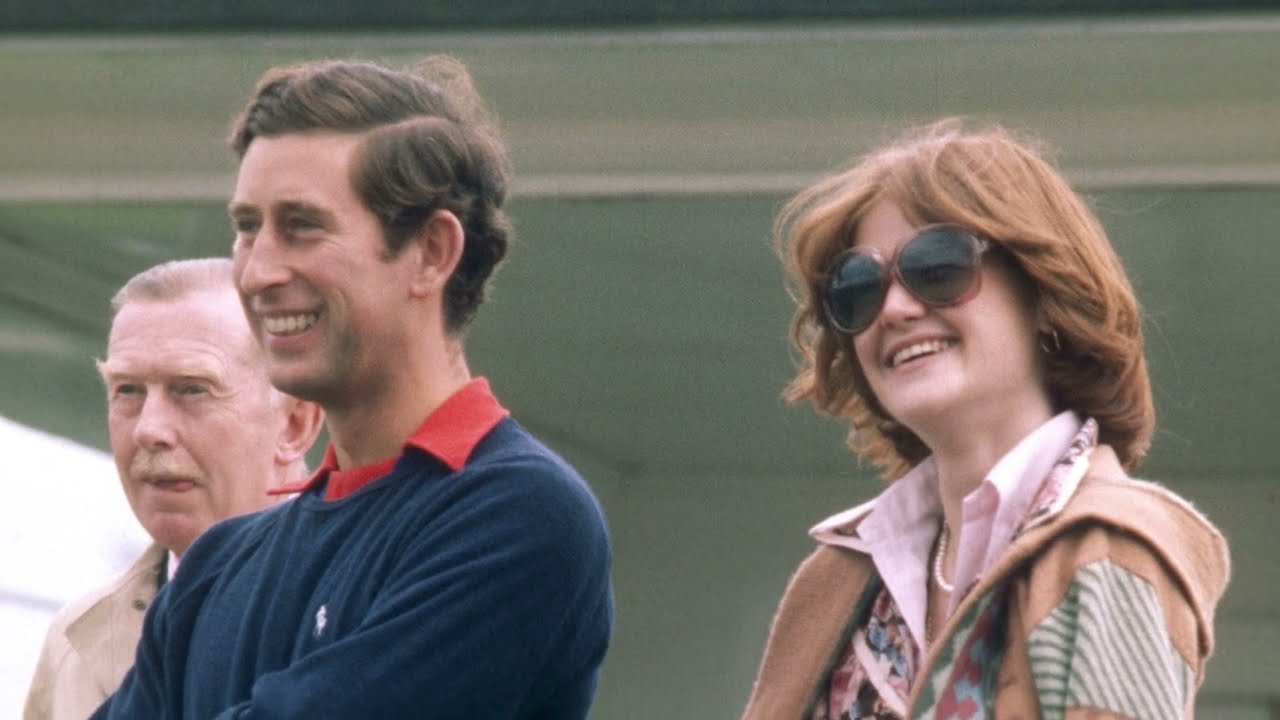
Diana remained a princess. She remained famous. She remained the mother of princes. But she was now outside the central royal household.
For some of Diana's supporters, the removal looked petty. For the royal establishment, it reflected the legal reality of the divorce. The distinction mattered because Diana's future would depend upon a strange contradiction. She was no longer fully royal. Yet she was far too important to become private.
The divorce became final on August 28, 1996. Fifteen years after the wedding watched around the world, Charles and Diana were no longer husband and wife. The marriage had begun with a carriage ride and cathedral bells. It ended with lawyers.
There is something almost cruelly efficient about that. The person most relieved by the finality may have been the institution itself. The open question had been answered. Charles was divorced. Diana was independent. The Wales household could stop pretending that separation was temporary.
But divorce solved the legal problem. It did not solve Diana. If anyone inside the older royal circle imagined that losing her marriage and royal style would reduce her public importance, they were mistaken.
Diana now possessed freedom she had never previously known. She could choose more of her own work. She could travel without representing Charles. She could develop relationships without technically betraying a husband. She could build a public identity almost entirely around her own instincts.
And she had another advantage: sympathy. Millions of people saw the divorce not as Diana being expelled from royalty, but as Diana surviving royalty. That distinction was deeply uncomfortable for the institution.
The Queen Mother had spent decades encouraging the public to view monarchy as a stabilizing force. Diana's story offered another interpretation. The palace could be lonely. Protocol could be harsh. Privilege could coexist with misery.
The princess had entered the system as a 19-year-old hoping for love and had emerged 15 years later divorced, famous, and emotionally scarred. That narrative did not make the Queen Mother a villain, but it made the world she represented look less comforting.
Diana now began refining her public life. She reduced the enormous list of charities with which she had once been formally associated and concentrated on causes where her personal presence could make the greatest difference. This gave her appearances more impact.
One of the most important came in January 1997. Diana traveled to Angola with the British Red Cross to draw attention to landmines.
The Angolan civil war had left huge areas contaminated with explosives buried beneath the ground. Long after soldiers moved away, ordinary people continued losing legs, arms, and lives. Children could mistake dangerous objects for toys. Farmers could not safely use land. Families could not simply return home and rebuild.
Diana walked through a cleared minefield near Huambo, wearing protective clothing. The photographs traveled around the world. Once again, she had found a cause that television could understand visually: a princess walking where mines had been buried.
The image was direct. Some British politicians criticized her involvement. One government minister reportedly described her as a loose cannon. Diana responded that she was simply trying to highlight a humanitarian issue. The controversy helped the cause. People who had never thought about landmines were suddenly discussing them.
This was Diana at her strongest. She could take an issue buried in policy papers and give it a human face.
The Queen Mother came from a generation in which royal political neutrality was sacred. Diana's landmine work approached an uncomfortable boundary because banning anti-personnel mines was politically contested. But Diana framed her involvement around victims rather than party politics.
She met people who had lost limbs. She held children. She listened. The emotional method was the same one she had used with AIDS patients years earlier. Go toward the person others were avoiding. Touch them. Make the public look.
In June 1997, Diana took another step away from her old royal life. She auctioned dozens of her dresses in New York to raise money for charity. The sale brought in millions of dollars for causes including AIDS and cancer organizations.
The symbolism was obvious. These were the dresses of the old Diana. State dinners, foreign tours, royal premieres, photographs beside Charles. She was selling them. It was not merely a charity auction. It looked like a woman clearing out the wardrobe of a previous existence.
The Queen Mother, whose own clothes and jewels were part of royal continuity, could hardly have approached possessions this way. For her, objects carried history. For Diana, objects increasingly carried memory, and some memories were easier to live with after someone else had bought the dress.
By then, Diana's personal life was changing, too. After the collapse of her marriage, she had developed a serious relationship with heart surgeon Hasnat Khan.
Diana met him at the Royal Brompton Hospital in 1995 while visiting a friend whose husband was receiving treatment. Khan was intelligent, private, and deeply committed to his medical work. Most importantly, he seemed unimpressed by Diana's title. That appealed to her enormously.
She had spent years surrounded by people who responded first to the princess. She wanted someone who responded to the woman.
Their relationship was kept remarkably private considering Diana's fame. She visited him discreetly. She became interested in his Pakistani background and family. There were reports that she considered whether marriage might be possible. She traveled to Pakistan and met members of his extended family.
For Diana, Khan offered something Charles had never been able to offer by the end: the fantasy of an ordinary emotional life. Not ordinary in the sense of income or attention. Nothing involving Diana could be ordinary anymore. But ordinary in the sense that the relationship might belong primarily to the two people inside it.
Khan understood the problem. He valued privacy. Diana's life made privacy almost impossible. A relationship with the most photographed woman in the world meant reporters, security, speculation, and the possibility that his medical career would become secondary to his identity as Diana's partner. The pressure was immense.
By the summer of 1997, their relationship had effectively ended. Diana was wounded. Once again, the pattern was familiar. She wanted emotional certainty. The man she loved could not offer a life that satisfied both her needs and his own.
Then another man entered the story: Dodi Fayed. Dodi was the son of Mohamed Al-Fayed, the wealthy Egyptian businessman who owned Harrods and the Ritz Hotel in Paris.
Mohamed Al-Fayed had long wanted greater acceptance within the highest levels of British society. He possessed enormous wealth. What he could not simply purchase was establishment approval. Money opens many doors. Britain's old aristocratic world has occasionally enjoyed demonstrating that it still owns a few stubborn locks.
Diana already knew the Fayed family socially. In the summer of 1997, Mohamed invited her and her sons to vacation in the south of France. Diana accepted. Photographers soon captured images of her aboard the family's yacht.
Later, after William and Harry returned to Britain, Diana and Dodi spent more time together. The relationship moved quickly. Exactly how serious it was remains disputed. Some accounts describe an intense romance, and others suggest Diana was enjoying companionship after her breakup with Hasnat Khan.
Mohamed Al-Fayed would later make much larger claims about the couple's intentions. But in the summer of 1997, the visible fact was enough. Diana was dating the wealthy son of a man whom the British establishment regarded with considerable suspicion.
For the Queen Mother's circle, this would not have looked like a return to calm. Diana had divorced the future king and was now appearing on yachts with Dodi Fayed while photographers pursued them from port to port.
The contrast with the young Lady Diana Spencer could hardly have been greater. That girl had seemed almost designed for traditional royal expectations. The woman of 1997 was moving through an international world of billionaires, designers, celebrities, doctors, charity campaigners, and foreign travel. She belonged everywhere and nowhere.
The royal family no longer controlled her schedule. They did not control her relationships. They did not control her image. And they certainly did not control the photographers.
The paparazzi pursuit became relentless. A photograph of Diana with Dodi could sell for extraordinary amounts. Photographers chased cars. They waited outside hotels. They followed yachts by boat. Every private moment carried a market price.
Diana sometimes cooperated with selected photographers when she believed doing so served her interests. At other times, she desperately wanted to escape them. This complicated relationship with the press had followed her since she was 19. She understood how to use attention. She could not control what attention eventually became.
For the Queen Mother, the entire spectacle must have seemed like a nightmare version of celebrity. Royalty, in her understanding, created distance. Diana had become famous through closeness. Now that closeness meant strangers could purchase photographs of her kissing someone on a boat. The old barriers had collapsed.
Yet the personal relationship between Diana and the royal family was not one simple state of permanent hostility. This is important.
Diana continued communicating with the Queen. She remained connected to Charles through their children. There were moments of greater civility after the divorce.
Charles and Diana had spent years fighting, but the legal end of the marriage removed some of the immediate pressure. They both loved William and Harry. Charles was not trying to remove Diana from their lives. Diana was not trying to remove Charles. Whatever had happened between them, parenthood continued.
The Queen Mother also continued to care deeply about William and Harry. Her relationship with Diana therefore could never be entirely detached. The boys linked them. But emotionally, the distance was enormous.
The Queen Mother's great disappointment was not merely that the marriage had failed. Royal marriages had failed before. It was that the failure had become a public referendum on the royal family itself.
Diana's version had prevailed with many people. The beautiful young bride had entered the House of Windsor. The institution had not understood her. Charles had loved another woman. Diana had suffered. She had rebelled. Then she had escaped.
That story was irresistible. It was also incomplete. It minimized Diana's own affairs. It often ignored the strain her behavior placed on Charles and staff. It reduced complicated family relationships to camps. It transformed years of mutual damage into a cleaner story of victim and institution.
But stories do not have to be complete to become powerful. They only have to feel true.
The Queen Mother knew something about powerful stories. Her own image had been shaped by one. The smiling queen who remained in London during the war. The devoted wife who strengthened a reluctant king. The grandmother who embodied national continuity.
Those things were rooted in reality. They were also simplified. Public figures eventually discover that people do not remember every contradiction. They remember the shape.
Diana had created a shape of her own. And by 1997, the two women stood as representatives of almost opposite ideas of royal womanhood.
The Queen Mother had surrendered personal freedom to preserve the institution. Diana had challenged the institution to recover personal freedom. The Queen Mother had become beloved by appearing constant. Diana had become beloved by appearing vulnerable.
The Queen Mother rarely allowed the public to see private pain. Diana made private pain central to her public identity. Neither woman was as simple as the symbol she became, but symbols have consequences.
Then, in late August 1997, Diana traveled to Paris with Dodi. William and Harry were at Balmoral with Charles and other members of the royal family. The Queen Mother was there, too.
The Scottish estate represented almost everything Diana had once struggled to understand: routine, family tradition, country clothes, long-established habits, privacy guarded by distance. Diana was hundreds of miles away, moving through a completely different world.
She and Dodi arrived in Paris on August 30. Photographers followed them. They went to the Ritz Hotel, owned by Mohamed Al-Fayed. That evening, they attempted to dine away from the hotel but abandoned the plan because of the attention surrounding them. They returned to the Ritz.
Later that night, shortly after midnight, they prepared to leave for Dodi's apartment. A plan was made to use a decoy vehicle at the front of the hotel. Diana and Dodi would leave through the rear.
The photographers were still there. Their driver was Henri Paul, the Ritz's acting head of security that evening. Bodyguard Trevor Rees-Jones sat in the front passenger seat. Diana and Dodi were in the back.
The Mercedes pulled away. Several photographers followed. The car moved through Paris toward the Pont de l'Alma tunnel.
At Balmoral, the royal family was asleep. The Queen Mother had spent years fearing what Diana's independence might do to the monarchy. She had worried about interviews, books, scandal, Charles's future, William's future, the dignity of the crown.
But the next crisis would make every previous argument suddenly seem smaller. Because within minutes, the question would no longer be whether Diana belonged inside the royal family. The question would be how the royal family could possibly respond to a world in which Diana was gone.
The call reached Balmoral in the early hours of August 31, 1997. At first, Diana was still alive.
The crash in the Pont de l'Alma tunnel had killed Dodi Fayed and driver Henri Paul at the scene. Bodyguard Trevor Rees-Jones survived with terrible injuries. Diana was taken to the Pitié-Salpêtrière Hospital. Doctors fought to save her. They could not.
At 4 in the morning, Diana, Princess of Wales, was pronounced dead. She was 36 years old.
At Balmoral, Prince Charles now had to tell William and Harry that their mother was gone. William was 15. Harry was 12.
Whatever resentments Charles and Diana had carried through their marriage, whatever books had been written, whatever interviews had been given, none of that mattered in the room where two boys learned that their mother would never come home.
Charles was reportedly devastated. The Queen was confronted with a problem no sovereign could solve with constitutional experience. The Queen Mother, at 97, had lived through deaths, war, abdication, and widowhood. But this was different.
Diana had died young, suddenly, and violently while being pursued by photographers. And she had died after becoming one of the most beloved women in the world.
The first instinct at Balmoral was family. Protect William and Harry. Keep them away from television. Allow them some hours before forcing them into public grief.
For the royal family, this made perfect sense. For the public, it soon looked like something else: coldness. That misunderstanding would create one of the most dangerous weeks the modern monarchy had faced.
Charles decided to travel to Paris and bring Diana's body home. There was initially uncertainty over what status should accompany the journey. Diana was divorced. She was no longer Her Royal Highness. Technically, she was no longer a working member of the royal family in the old sense.
"Technically" was about to become one of the least useful words in Britain. Charles insisted that Diana be treated with appropriate royal dignity.
He flew to Paris with Diana's sisters, Lady Sarah McCorquodale and Lady Jane Fellowes. At the hospital, the reality became unavoidable. The woman Charles had married at St. Paul's Cathedral was lying dead.
Their relationship had contained affection, jealousy, cruelty, tenderness, betrayal, children, public humiliation, and years of argument. Now there would never be another argument.
Charles accompanied her coffin home. It was draped with the royal standard. That gesture mattered. The institution from which Diana had become partially separated was claiming her again in death. Not as Charles's wife, not quite as a working royal, but as the mother of a future king, and as a woman whose life had become inseparable from the House of Windsor.
Outside, Britain was already changing. People began arriving at Kensington Palace. They brought flowers, then more flowers, then thousands upon thousands of flowers. Bouquets covered the pavement.
Messages appeared from people who had never met Diana. Some addressed her simply as Diana. Some called her their princess. People cried in the streets. Radio and television schedules changed. News coverage became continuous.
The emotional scale surprised the palace. It surprised much of the country. Britain had experienced the deaths of major public figures before. This felt different.
Diana's relationship with the public had always been intensely personal. People who had watched her marry at 20 felt they had watched her grow up. They had watched her have children. They had watched her become glamorous. They had watched her marriage collapse.
They had watched her speak about eating disorders, loneliness, and betrayal. They had watched her touch patients others feared to touch. They had watched her walk through a minefield. Now they watched her coffin return from Paris.
For many people, the grief was not simply for a princess. It was grief for the entire unfinished story.
The Queen Mother had never inspired that particular kind of emotion. She was enormously popular, but her appeal was built on reassurance. Diana's appeal was built on recognition. The Queen Mother made people feel that the old world would endure. Diana made people feel that somebody inside that old world understood pain.
In death, those two versions of royalty collided.
The royal family remained at Balmoral with William and Harry. The Queen attended church with the family. The boys were kept largely out of public view.
To the family, they were children whose mother had died. To the newspapers, their absence increasingly became part of a larger question. Where were the royals? Why was the Queen not in London? Why was the flag above Buckingham Palace not flying at half mast? Why had there been no major public statement? Why did the family seem so distant while the country was grieving?
Some of these questions had answers rooted in tradition. The royal standard was not normally flown at half mast because it represented the sovereign and the monarchy never ceased to exist. When the Queen was not in residence at Buckingham Palace, the royal standard was not flown there at all.
But a public crying beside mountains of flowers had little interest in a lecture about flag protocol. People wanted a sign. The old royal system offered procedure. Diana had trained the public to expect emotion.
This was the central problem of that week. The monarchy was responding according to rules formed over generations. The public was responding according to a relationship formed with one woman.
The Queen Mother represented those older instincts perhaps more completely than anyone alive. She had survived by controlling grief. When George VI died, she had been shattered. But she had continued. When Lord Mountbatten was murdered, the family continued. When friends died, when relatives disappointed her, when history delivered one unpleasant surprise after another, she continued. That was what duty meant.
Diana had spent much of her adult life challenging the idea that continuing silently was enough. Now, after Diana's death, the public was effectively demanding that the royal family behave more like Diana. Show us what you feel. Come outside. Say something. Acknowledge the pain.
The irony was brutal. The woman who had caused such discomfort by making private emotion public was now changing royal behavior without being there.
Pressure intensified. Newspaper headlines became openly critical. Tony Blair, the newly elected prime minister, described Diana as "the people's princess." The phrase captured the national mood immediately. It also created an uncomfortable implication. If Diana belonged to the people, where did that leave the royal family?
The Queen was deeply concerned about William and Harry. Charles was grieving while helping plan a funeral of extraordinary complexity. Prince Philip focused on supporting the boys. The Queen Mother, old enough to remember public crises from another century, watched an institution she had spent her life protecting face accusations of indifference.
And this is the point where later stories about her supposed hatred of Diana became particularly powerful. People looked backward. They remembered that the Queen Mother had been close to Charles. They remembered that she belonged to Camilla's social world. They remembered Diana's complaints about the establishment. They remembered the Queen Mother's preference for discretion.
Then they watched the royal family remain at Balmoral. To many people, the conclusion seemed obvious. They had never understood Diana. Perhaps they had never liked her. Perhaps some had hated her. The simplest explanation became the most emotionally satisfying.
But simple explanations are often what remains after complicated evidence has been removed.
There is no reliable evidence that the Queen Mother hated Diana from the beginning. The early history points in the opposite direction. Diana came from the right family. Her grandmother was the Queen Mother's trusted friend. The Queen Mother regarded Diana as a promising match for Charles.
She welcomed the possibility because it seemed to solve a dynastic problem. Where the relationship deteriorated was not at the beginning. It deteriorated as Diana ceased behaving like the woman the Queen Mother believed she had welcomed.
That distinction explains far more. The Queen Mother wanted a wife who would strengthen Charles. Diana became more famous than Charles. She wanted discretion. Diana cooperated with Andrew Morton. She wanted private marital trouble contained. Diana discussed it on television.
She wanted the monarchy protected from scandal. Diana increasingly believed the monarchy itself needed to answer for what had happened to her. And perhaps most painfully, the Queen Mother wanted the marriage she had encouraged to secure the future. Instead, it became the greatest public crisis surrounding Charles.
None of that proves hatred. It explains resentment, disappointment, distrust, and a widening emotional distance that people around them could hardly fail to notice.
By September 1997, however, all of that belonged to the past. The immediate question was Diana's funeral.
The palace had to create a ceremony for someone who occupied no established category. Diana had been a future queen. Then she had become a divorced princess. Now she was the dead mother of the future king. There was no handbook for that.
The funeral was scheduled for September 6. Westminster Abbey would host the service. The route would allow enormous crowds to gather. Diana's family would play a central role. William and Harry would attend.
Then came one of the most difficult decisions. Should the boys walk behind their mother's coffin?
Prince Philip was concerned about William and Harry facing such a public ordeal. Harry was only 12. Yet the procession was becoming a national event, and there was pressure for the princes to take part. Philip reportedly offered to walk with them.
Charles would walk, too. So would Diana's brother, Charles Spencer.
The image became one of the most unforgettable of the 20th century. Diana's coffin moving through London. Behind it: Prince Philip, Prince Charles, Prince William, Prince Harry, Charles Spencer.
The Queen Mother did not walk in that procession. She attended the service with the rest of the royal family. At 97, nobody could reasonably expect her to march through London.
But every royal expression was being examined. A face could become evidence. A gesture could become a verdict.
This is why accounts of the Queen Mother's behavior around Diana's funeral have remained so emotionally charged. People wanted to know who cried, who looked cold, who appeared sympathetic, who bowed, who did not. The royal women, including the Queen Mother, were judged against the enormous grief outside the palace gates.
But expecting the Queen Mother to grieve like Diana's admirers misunderstood almost everything about her. She did not belong to a generation that displayed emotion easily. Her public expression had been trained through decades of ceremony. She could feel something deeply without performing it visibly.
That did not mean she had suddenly forgotten the conflicts of the previous 15 years. It meant both things could exist at once. Diana's death was tragic. Their relationship had been difficult. Charles was suffering. William and Harry had lost their mother. The monarchy was under attack. The Queen Mother had reasons to grieve that had very little to do with whether she had personally liked Diana.
By 1997, when Diana's coffin passed Buckingham Palace, the Queen bowed her head. The moment became immensely important because the sovereign rarely bowed to anyone. It was not simply a gesture toward Diana. It was an acknowledgement of the emotional force outside the gates. The monarchy was learning.
Inside Westminster Abbey, Diana's brother delivered the speech that transformed the funeral from mourning into accusation.
Charles Spencer spoke about Diana's compassion and insecurity. He criticized the media. He also suggested that Diana had needed protection from those who had tried to control her.
Then came his declaration concerning William and Harry. He promised that Diana's blood family would continue helping the princes develop in ways Diana would have wanted.
The congregation remained silent. Outside, crowds applauded. The applause entered the abbey.
For members of the royal family, including the Queen Mother, it must have been an extraordinary sound. A funeral had become a public judgment. The audience outside was effectively endorsing a speech widely interpreted as criticism of both the press and the royal establishment.
Diana's final triumph over palace discretion had occurred at her own funeral. Nobody could answer. Nobody was supposed to.
The coffin was taken to Althorp. Diana was buried on an island in an ornamental lake on the Spencer estate. She had entered royal history through marriage. She was buried by her own family.
Afterward, the argument about what Diana had meant began almost immediately. To some, she was a saintly figure destroyed by an uncaring institution. To others, the image ignored her flaws, her manipulation of the media, her affairs, and the pain she could cause when emotionally distressed. To many, she was simply a complicated woman placed inside an impossible situation far too young.
The Queen Mother's place in that story became equally simplified. She was cast as the embodiment of the old royal establishment. And because Diana's story required an establishment that had failed her, the Queen Mother became a convenient symbol of it.
There was some truth beneath the symbolism. The Queen Mother did represent an older royal culture. She valued hierarchy. She valued discretion. She valued continuity. She valued Charles. And as the Wales marriage deteriorated, those values increasingly placed her against Diana's choices.
But the idea that she had always hated Diana misses the more interesting tragedy. At first, she had thought Diana would work. That is what made the outcome so bitter.
The Queen Mother had looked at Diana's background and seen reassurance. She saw the Spencer name. She saw Lady Fermoy's granddaughter. She saw a young aristocratic woman familiar with royal circles. She saw someone who could marry Charles, produce heirs, and adapt to the system.
What she did not see was the abandoned child inside the suitable bride. She did not understand how intensely Diana needed emotional certainty. She did not anticipate how badly Charles and Diana's personalities would collide. She could not imagine how television, tabloids, and celebrity culture would magnify every crack in the marriage.
And she certainly did not foresee that Diana would learn to use public affection as a source of independence.
That was the real failure. Not hatred at first sight. Misjudgment.
The Queen Mother's generation believed character could be inferred from breeding, manners, and social background. Diana shared all three, but she belonged emotionally to a newer age. She wanted to talk. She wanted reassurance. She wanted love to be visible. She wanted suffering acknowledged.
The Queen Mother had been formed by exactly the opposite lesson. Do not burden others with your pain. Do your duty. Protect the institution. Carry on.
Neither philosophy was entirely foolish. Neither was sufficient for the crisis they faced.
Diana's openness could become reckless. The Queen Mother's reserve could become cold. Diana's instinct for public connection made lonely people feel seen. Her instinct to involve outsiders in private disputes could deepen conflict.
The Queen Mother's devotion to duty gave Britain continuity through extraordinary upheaval. That same devotion made it difficult for her to understand someone who believed the institution sometimes had to change for the individual.
After Diana's death, the monarchy did change. Slowly, royal figures became more willing to show emotion publicly. William and Harry grew into men whose charitable work often reflected their mother's influence.
Charles eventually rehabilitated his public image. Camilla's rehabilitation took even longer. There would be carefully managed appearances, years of preparation, and gradual acceptance. In 2005, Charles and Camilla married.
The Queen Mother did not live to see it. She died on March 30, 2002, at the age of 101.
By then, she had outlived her husband by half a century. She had outlived both of her daughters' marriages in their original forms. She had outlived Diana. She had watched the monarchy pass from an age of deference into an age in which members of the royal family could find their private telephone calls printed in newspapers and their marriages analyzed on television.
She had also watched William, the boy Diana had once carried out of the hospital, grow into a young man preparing for his own future. That future contained pieces of both women.
From the Queen Mother came tradition, service, continuity, and an understanding that monarchy survives because someone continues doing the job when personal life becomes unpleasant. From Diana came emotional accessibility, greater informality, and the understanding that duty means very little if the people in front of you feel unseen.
The two approaches had once seemed incompatible. The monarchy that followed Diana's death increasingly needed both.
And that may be the most revealing answer to the accusation that the Queen Mother hated Diana from the start. She did not begin by seeing Diana as an enemy. She began by seeing her as an answer: a beautiful, well-born, and inexperienced young woman who could solve Charles's problem and secure the future of the House of Windsor.
Then Diana became something nobody had planned. She became emotionally demanding inside a family uncomfortable with emotional demands. She became more popular than the husband she was expected to support. She refused to treat infidelity as something a princess should quietly endure.
She exposed her suffering. She challenged the palace. She built an identity beyond Charles. She discovered that millions of strangers would choose her side.
And by the time the Queen Mother's warmth had hardened into distrust, everybody close to the family understood why. It was not because Diana had failed to be royal enough. It was because she had become powerful in a way the old royal system did not know how to control.
The Queen Mother had spent her life proving that the monarchy could survive by keeping personal feelings beneath the surface. Diana proved that by the end of the 20th century, the public sometimes trusted a royal precisely because she allowed those feelings to show.
That was the clash. Not simply between two women, but between two ages. One woman had survived by never telling the world too much. The other became unforgettable because she did.