Marion Crawford, a Scottish governess who spent sixteen years raising the future Queen Elizabeth II and Princess Margaret, was cut off completely by the royal family after publishing a memoir about the princesses’ childhood. She died in 1988 without receiving a single royal flower at her funeral, after living for decades in exile beside the very road the royal family drove down every summer. Born in Ayrshire in 1909, Crawford trained as a teacher in Edinburgh during the late 1920s, specializing in the then-modern field of child psychology. Her ambition was to teach the poorest children in Edinburgh’s slums.
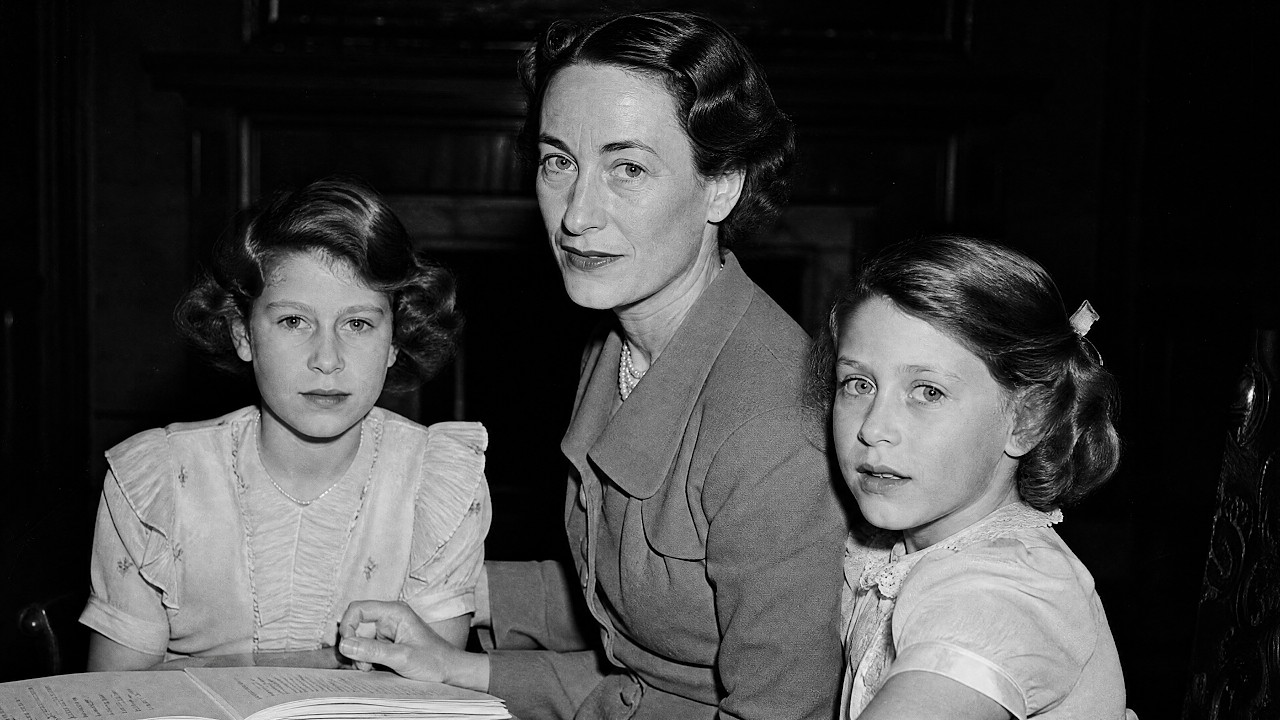
She worked as a private teacher during holidays to fund her studies, teaching for the Elgin family and, crucially, for Lady Rose Leveson-Gower, sister of the Duchess of York. In 1932, the Duchess of York offered Crawford a one-month trial position as governess to her two young daughters, Princess Elizabeth and Princess Margaret. The family then lived at 145 Piccadilly in London. The month stretched into sixteen years.
The princesses, unable to pronounce her name, called her “Crawfie. ” Elizabeth, serious and careful, was six. Margaret, mischievous and lively, was not yet two. Crawford brought unconventional methods to royal education.
She took the princesses on the London Underground, believing they should know the ordinary world. She took them for tea at a YWCA, where the girls left their used cups on the table, unaware anyone else might clear them. In 1937, she helped establish the first Girl Guides company at Buckingham Palace, where the young Elizabeth served as a patrol assistant. The abdication crisis of 1936 changed everything.
The princesses’ uncle gave up the throne, and their father became King George VI. Elizabeth suddenly became heir to the throne of an empire that ruled nearly a quarter of the world’s population. The family moved to Buckingham Palace, and Crawford moved with them, continuing the lessons in a far more significant setting. During World War II, she remained with the princesses at Windsor Castle, where Elizabeth grew into a serious young woman.
Crawford’s loyalty came at a personal cost. She postponed her marriage for years. When she raised the subject with the Queen, she was reportedly told she was indispensable. She finally married bank clerk George Buthlay in July 1947, when she was 38, just months before Elizabeth’s own wedding.
On retirement, the family gave Crawford two gifts that seemed to mark deep gratitude. She was appointed a Commander of the Royal Victorian Order, a personal honor from the sovereign. She was also granted Nottingham Cottage, a grace-and-favor home within Kensington Palace, reportedly furnished by Queen Mary herself. In 1949, as American magazines circled with lucrative offers for Crawford’s story, the Queen wrote her a direct warning.
The Queen said that people in positions of trust should be like oysters, completely closed, and that Crawford should refuse the money, saying “no, no, no” to offers for articles. Despite the warning, Crawford agreed to share her memories. In 1950, her account was published first in Ladies’ Home Journal in America and as a book titled “The Little Princesses. ” It was a warm, admiring account of two young girls, containing no scandal.
It sold enormously on both sides of the Atlantic. The royal family responded not with argument but with total and permanent severance. According to one account, the Queen told American publishers that Crawford had simply lost her mind. In the autumn of 1950, Crawford was forced to leave Nottingham Cottage, reportedly near the point of a nervous breakdown.
No member of the royal family contacted her again for 38 years. Within royal service, Crawford’s name became a verb. The phrase “doing a Crawfie” came to mean breaking royal confidence for personal gain. That linguistic transformation became a warning to every servant who followed her.
Crawford moved back to Scotland, settling in Aberdeenshire, in a house near the route the royal family used each summer on their way to Balmoral. Every year, the royal cars passed her home on their way to the Highlands. They never once stopped. The image of the old woman watching from her window as the family she had raised drove past became the defining portrait of her exile.
In 1955, Crawford’s career as a writer ended in humiliation. Articles written under her name described the Trooping the Colour parade and Royal Ascot in loving detail. Neither event had taken place that year; both had been cancelled due to a national railway strike. The descriptions were exposed as inventions, destroying whatever credibility she had left.
After her husband George Buthlay died in 1977, Crawford was left entirely alone. The loneliness and silence overwhelmed her. She attempted suicide, leaving a note that read: “The world has passed me by, and I cannot bear those I love passing me on the road. ”
Crawford died on February 11, 1988, at a care home in Aberdeen, at the age of 78.
She had suffered a series of strokes in her final years. No royal flowers were sent to her funeral. Not from the Queen, the serious child she had taught to read. Not from Princess Margaret.
Not from the Queen Mother, who had hired her and warned her so explicitly. There is one detail that shows where Crawford’s loyalty remained to the end. In her will, she left behind a box of letters written to her by the two princesses over many years. She had kept every one of them.
She never sold them, never used them as leverage, never turned them into money. Today they are said to rest in the royal archives, her secrets preserved until her final breath. Historians now largely view “The Little Princesses” as harmless, affectionate, even reverent, and the punishment as wildly disproportionate. Within a generation, royal insiders would cooperate with far more revealing works about Princess Diana and others, and none of them paid anything near the price Crawford paid.
The institution that destroyed her for a book of nursery stories eventually opened itself up far more deeply than she ever had. In 2020, novelist Wendy Holden published a sympathetic account of Crawford’s story. Through her attempts to free the princesses from their golden cage, the book concludes: “She imprisoned herself. ” Marion Crawford went to her grave without ever hearing a word from the family she served, and without ever stopping her love for them.
The question her life leaves behind is whether sixteen years of devotion should ever be repaid with silence, exile, and the passing of cars on a Highland road.