In 1975, as Babe Paley underwent chemotherapy for lung cancer, the man she considered her closest friend published her deepest secrets in a national magazine. Truman Capote, the celebrated author of “Breakfast at Tiffany’s” and “In Cold Blood,” had spent two decades collecting her confidences, then turned them into a thinly disguised fictional chapter that exposed the private humiliations of her marriage. She never spoke to him again. Barbara “Babe” Cushing Paley was the youngest daughter of Harvey Cushing, one of the world’s most renowned neurosurgeons, and Kate Cushing, a mother who raised her three daughters to marry well and marry up.
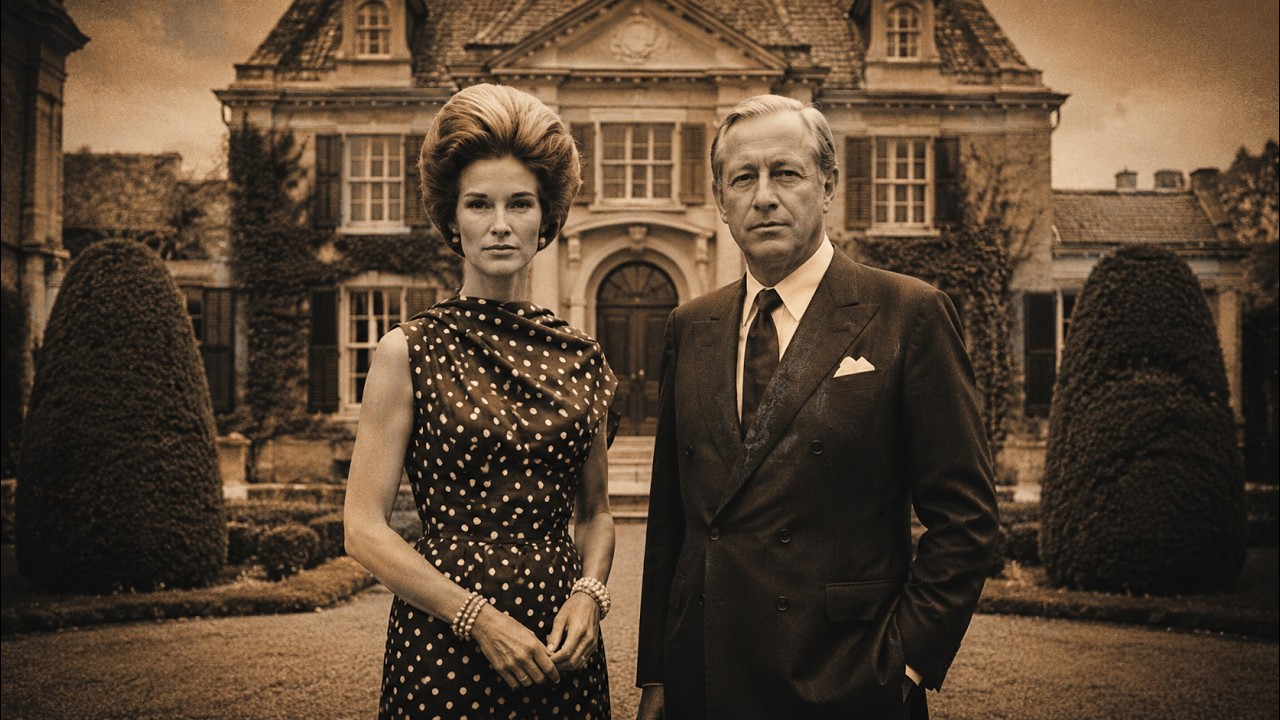
Her sisters married an Astor and a Roosevelt. Babe, named for being the baby of the family, understood from an early age that her value lay in beauty, composure, and knowing exactly when to be seen. At 17, she was in a car accident that knocked out her front teeth and left scars on her face. Reconstructive surgery gave her cheekbones a finer line.
As one biographer later wrote, she emerged more beautiful than before and understood that beauty was not a gift but a material—something that could be shaped, repaired, and deployed. She worked as a fashion editor at Vogue in the late 1930s. Her first marriage, to oil heir Stanley Mortimer Jr. , lasted six years and ended in divorce in 1946 after the war changed him into a cruel and cold man.
In July 1947, she married William S. Paley, the founder and chief executive of CBS, the most powerful media company in America. Bill needed her lineage and connections to enter the old-money circles that had shut him out because he was Jewish. She needed his immense wealth and power.
Together they created a world that dazzled the public: the apartment at 820 Fifth Avenue with a seven-foot Picasso in the living room, the 80-acre estate Kiluna Farm in Manhasset, the gardens designed by Russell Page, the archived dinner menus ensuring no guest was ever served the same meal twice. But the marriage was not what it appeared. Bill Paley was a serial womanizer who trawled bars and clubs for models and blondes. Babe knew about his affairs and said nothing.
She maintained the perfect surface of a perfect life while carrying the private weight of 30 years of humiliation. In the summer of 1955, on a flight to Jamaica, she met Truman Capote. They fell instantly into a deep friendship. For two decades, he called every morning, appeared at her door with flowers, and made her laugh.
He told her, “Look upon being Mrs. William S. Paley as a job, the best job in the world. Accept it and be happy with it.
”
She told him things she had never told anyone: the details of Bill’s infidelities, the humiliations she had swallowed, the loneliness inside her beautiful houses. He called her the most important person in his life. She believed him. He was, as one biographer put it, the confessional she had never had.
What she did not know was that he was writing everything down. Since the early 1960s, Capote had been working on a novel he called “Answered Prayers,” which he promised would be a definitive portrait of American society rivaling Proust. The women he called his Swans—Babe, Slim Keith, C. Z.
Guest, Gloria Guinness, and others—had given him their secrets and their trust. He was turning them into sentences. In 1974, Babe was diagnosed with lung cancer. She had smoked two packs of cigarettes a day for most of her adult life.
She began chemotherapy. Her hair fell out. She bought silk turbans and continued attending dinners and the theater, appearing at parties with the same composure she had always maintained. As one observer later put it, she had turned dying into an accessory.
Under pressure from his publisher, who was threatening to reclaim an advance long overdue, Capote agreed to submit a single chapter from “Answered Prayers” to Esquire magazine. He chose a chapter called “La Côte Basque, 1965,” set in the famous New York restaurant. It was officially fiction. The names were changed.
The characters were said to be composites. But the details were not imagined. A character named Sidney Dillon, transparently based on Bill Paley, was described with infidelities that matched the specifics of Babe’s own private knowledge—knowledge she had shared only with Truman. The chapter also told the story of Ann Woodward, a socialite who had shot and killed her husband in 1955 under circumstances a grand jury ruled accidental.
Ann Woodward received an advanced copy of the chapter before it reached the public. She read it, took a handful of barbiturates, and did not wake up. Her death spread through the Swans’ world like a cold current. Slim Keith called Babe and told her that Ann was dead because of what Truman had written.
According to Laurence Leamer’s account in “Capote’s Women,” Babe responded quietly: “Well, I want to die, too. ”
When the November 1975 issue of Esquire reached the newsstands, Babe picked it up. She read the chapter and recognized details that could only have come from her own confidences. According to researcher Kelly Greenburg Jeffcoat, what she felt was not rage but absolute disbelief—that someone she had trusted more than her husband, more than her children, could do this to her.
She called Slim Keith. “Have you seen Esquire? ” Slim had read it. The two women understood what had happened.
Babe Paley did not speak to Truman Capote again—not that day, not in the three years that remained of her life. One word, not one. The other Swans cut him off as well. The world that had made Capote possible closed around him.
He tried to explain himself, saying, “What did they expect? I’m a writer. ” It explained nothing. He knew Babe’s silence was the one that mattered most.
She gave him her absence completely. In her final years, she continued to appear at events, wearing the turban, maintaining perfection as a reflex rather than a performance. In the evenings, she sat in her apartment and wrapped her jewelry in tissue paper, tucking a small card into each parcel with a name written in her handwriting. She was distributing herself to the people who had not left her.
Not to Truman. On July 6, 1978, Barbara Cushing Paley died of lung cancer at 63, one day after her birthday. The apartment was exactly as she had maintained it. The parcels were wrapped.
The cards were written. She had left instructions for the funeral, including the wine to be served at the reception. Her funeral was held at Christ Episcopal Church in Manhasset, near Kiluna Farm. The wine was the wine she had selected herself.
Truman Capote was not there and had not been invited. C. Z. Guest was the one who told him.
She reached him by phone and told him Babe was gone and that he was not invited to the funeral. He had been carrying an unfinished eulogy he called “Beautiful Babe. ” He could not finish it. He read what there was alone, then put it away.
“Answered Prayers” was never finished. Capote spent the remaining six years of his life trying and failing to complete it. When he died in August 1984 at the home of a friend in Los Angeles, the manuscript was still incomplete. The women he used outlasted the work he used them for.
William S. Paley attended the funeral and wept openly, surprising those who knew his composed public persona. He remarried and, in 1985 at age 83, appeared on Cosmopolitan’s list of the 10 most eligible bachelors, a list later said to have inspired the famous Top 10 lists on “Late Night with David Letterman. ”
He died in October 1990 of kidney failure at 89.
His estate was valued at half a billion dollars. His art collection went to the Museum of Modern Art. He was buried beside Babe at the Memorial Cemetery of St. John’s Episcopal Church in Cold Spring Harbor, New York.
Kiluna Farm burned in a fire and was demolished around 1990. The secret garden where Babe used to sit alone is gone. What remains are the photographs, the style she influenced, and the small white cards inside the wrapped parcels of jewelry, each bearing a name in her handwriting.
And the question she carried with her to the end, the one she never answered out loud: whether she had ever been truly loved.