A confidential letter written by Confederate General John Bell Hood more than a decade after the Battle of Gettysburg offers a striking personal account of a crucial moment in the fight, including a warning he says was rejected three times by his commanding officer. In the letter, dated 1875 and addressed to General James Longstreet, Hood described his experiences on July 2, 1863, the second day of the battle. Longstreet had contacted Hood seeking his perspective on the events at Gettysburg, and Hood’s reply detailed the day from his arrival in the morning through his wounding in the afternoon. Hood wrote that he reached the heights of Gettysburg with his staff just after sunrise.
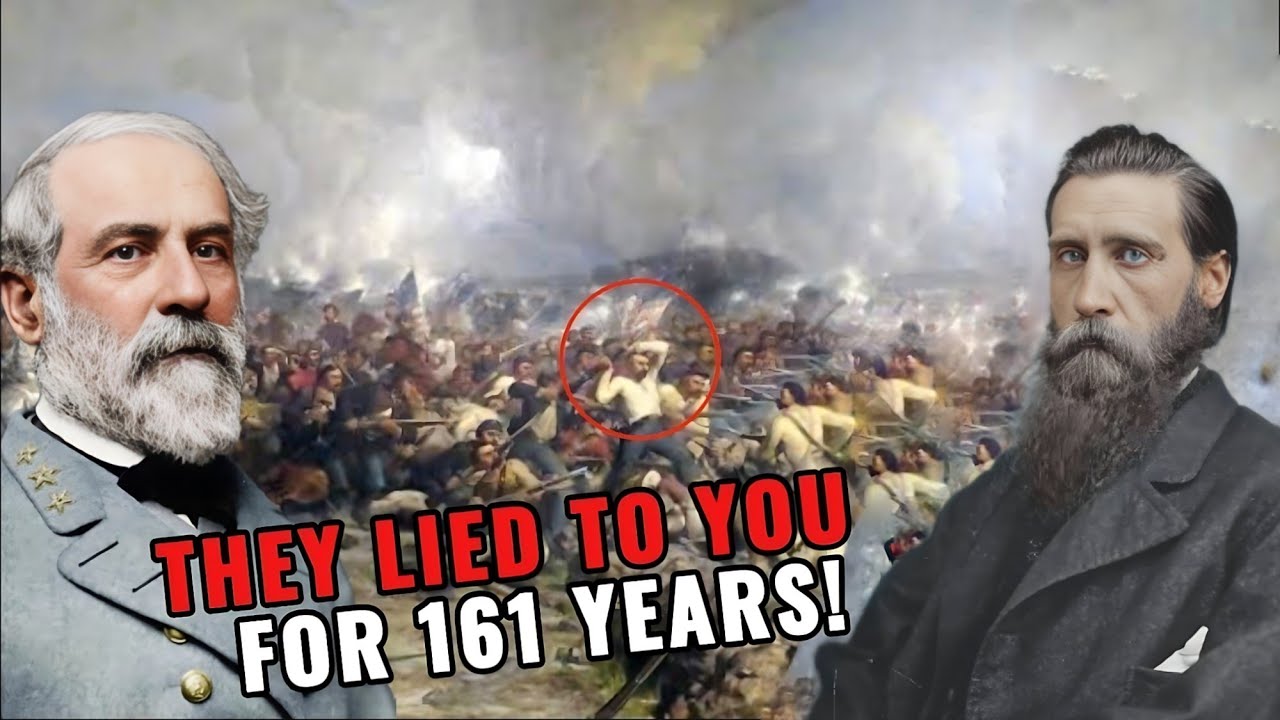
His division was permitted to stack weapons and wait while he joined Generals Robert E. Lee and A. P. Hill in observing the positioning of Federal forces.
According to Hood, General Lee appeared eager to begin an attack that morning. Lee told him, “The enemy is here, and if we do not beat him, he will beat us. ” Hood, however, thought it more prudent to wait for the arrival of General George Pickett’s division, which had not yet reached the field. Longstreet, Hood recalled, shared this hesitation.
Longstreet reportedly said that Lee was impatient and wanted an attack, but that he was reluctant to move without Pickett. Hood quoted Longstreet as saying he never wanted to step into battle with “one boot missing. ”
The morning passed under growing tension until around 3 p. m.
, when the decision was made to proceed without waiting longer for Pickett. The plan was to focus on the Confederate right and prepare a charge along the Emmitsburg Road. Hood wrote that he was ordered to hasten his troops and passed General Lafayette McLaws’s division on the advance. He sent pioneers ahead to clear fences and open the path for the infantry.
Before reaching the Emmitsburg Road, Hood dispatched several of his most trusted Texas scouts to locate the enemy’s far left flank. According to Hood, they returned quickly with an important report: the Federal flank rested on a position the scouts identified as Roundtop Mountain. The scouts stated that the terrain was open enough to move through a wooded pasture around Round Top and strike the enemy from the side or rear. They also reported that Federal supply wagons were concentrated behind the lines, making them vulnerable to an attack from that direction.
When Hood arrived at the Emmitsburg Road, he positioned artillery batteries and opened fire. The enemy responded quickly, revealing their placements. Hood observed that their left flank was near Round Top, with their main line curving inward and outward in a concave formation. He also noted that a significant Federal force was positioned ahead of the main line, between the Emmitsburg Road and Round Top Mountain, formed up on a rise near a peach orchard.
To advance as ordered, Hood believed he would first have to drive back this forward line. Hood’s letter described additional obstacles. At the base of the mountain and up its side, he wrote, enormous boulders were piled closely together, creating narrow passages that threatened to break up his formation during the climb. He believed his division would face intense fire from the main enemy line positioned on the crest of the high ground, with the Round Tops securing the Federal left.
Because of the curved shape of the enemy’s main line, Hood concluded that his men would suffer heavy fire from the front, the flank, and the rear. He considered it almost impossible to climb the steep, rocky mountain under such converging fire while also driving the enemy away. He wrote that any victory would require “a terrible cost” from the most courageous men ever to wage war. Hood said he made his assessments quickly, and they led him to urgently caution Longstreet that attacking as directed was inadvisable.
Instead, he begged to move around Round Top and assault the enemy’s side and rear. According to Hood, he sent an officer to propose this altered plan and list his justifications. The answer, he wrote, was immediate: “General Lee’s orders are to attack up the Emmitsburg Road. ”
Hood said he dispatched a second officer to repeat his concerns of defeat and renew his request to flank Round Top.
Again, he received the same reply. Meanwhile, Hood continued artillery exchanges against the enemy and became increasingly convinced that the Federal line extended to Round Top. He wrote that the enemy’s position was so naturally strong that he could almost describe it as impregnable. He noted that the Federals could easily drive back the assault by throwing stones down the hillside as the Confederates climbed, apart from their flanking fire.
For a third time, Hood sent a staff officer, his adjutant general, Colonel Harry Sellers, chosen for bravery and ability to explain the situation fully and encourage Longstreet to see it himself. Hood wrote that Sellers returned carrying the same directive: “General Lee’s orders are to attack up the Emmitsburg Road. ” Almost immediately afterward, Colonel Fairfax from Longstreet’s staff repeated the orders. After this objection, which Hood described as his only protest during his whole military life, he ordered his line to move forward and begin the assault.
As his men advanced, Longstreet came to him personally. In a short discussion, Hood again expressed his worries and his disappointment at being refused the opportunity to flank Round Top. According to Hood, Longstreet emphasized that they must follow General Lee’s orders. Hood then advanced his line under severe fire.
Approximately 20 minutes after arriving at the peach orchard, he suffered a serious arm injury and was carried from the field, ending his participation in the battle. In the letter, Hood described his feelings as he lay on a stretcher. He wrote that he felt deep sorrow in his heart and soul, fearing for his courageous soldiers, whom he considered one of the most excellent divisions in the Confederate army. He expressed his strong belief that had he been allowed to maneuver around Round Top Mountain, his men would have taken that ground and overwhelmed the enemy.
The locations central to Hood’s account, Devil’s Den and Little Round Top, became two of the most legendary sites of the Battle of Gettysburg, known for fierce and bloody fighting. The attacks there rank among the Civil War’s most vicious contests, marked by furious combat and immense losses. The letter’s historical value is accompanied by legitimate questions. Hood wrote it more than a decade after the war ended, and he never recorded his thoughts immediately after the battle.
Human memory is naturally fallible, and details can shift or fade with time, raising questions about whether he remembered events exactly as they occurred. Despite these concerns, the letter remains a compelling look into the experience of a Confederate general struggling with battlefield confusion and the responsibilities of command. Hood’s expressive words and genuine feeling convey the desperate conditions soldiers faced that day. John Bell Hood died in New Orleans just four years after composing the letter.
His life and military legacy continue to draw interest from historians and Civil War scholars. The letter raises a lasting historical question: if Hood’s warning had been heeded, might the course of the Battle of Gettysburg have been altered? His account offers a rare personal view of a battle that remains the subject of ongoing debate and controversy.