Saddam Hussein’s children were born into absolute privilege, but their lives ended in violence, exile, and obscurity. The two sons groomed to inherit Iraq’s dictatorship were killed in a single raid, while the daughters scattered across foreign capitals, each carrying the weight of a fallen dynasty. Uday Hussein, born in 1964, was the eldest and the most volatile. From childhood, he displayed cruelty that alarmed even his father’s inner circle.
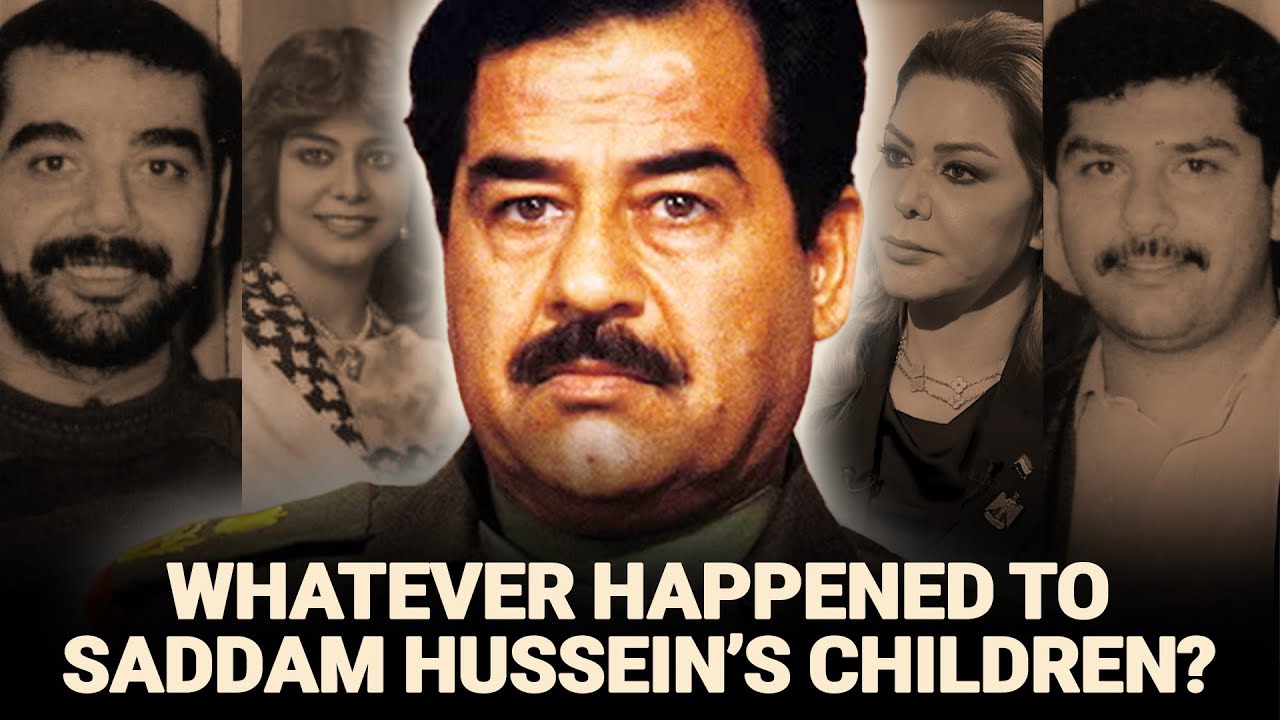
He attended Baghdad’s College of Medicine, where professors understood that failing the president’s son was dangerous. His graduation reflected corruption, not achievement. Uday later ran the Iraqi Olympic Committee, where athletes who disappointed him faced imprisonment, torture, and death. He also built a media empire used for propaganda and personal attacks.
His violent behavior, including documented rape and murder, made him an international liability for the regime. On December 12, 1996, gunmen opened fire on Uday’s car in Baghdad. Relatives of one of his rape victims carried out the attack, leaving him severely wounded with partial paralysis. The assassination attempt marked a turning point, raising doubts about his fitness for succession and pushing Saddam to transfer favor to his younger son.
Kusay Hussein, born in 1966, was the discipline of his brother. Where Uday sought attention, Kusay preferred the shadows. He studied engineering and rose through Iraq’s security apparatus, eventually leading the Special Republican Guard and managing the regime’s most sensitive operations. The Special Security Organization under his control became the regime’s most effective institution.
By the late 1990s, Kusay had clearly emerged as Saddam’s designated successor, surpassing his older brother through competence rather than birthright. When American forces invaded Iraq in 2003, Kusay coordinated the regime’s resistance. Despite organizing more effective defense than many expected, the military imbalance made victory impossible. He rejected opportunities to negotiate or surrender, remaining loyal to his father until the government’s collapse.
On July 22, 2003, American forces received intelligence that Uday and Kusay were hiding in Mosul. A four-hour firefight ended with both brothers dead. Their deaths eliminated the male lineage and ended any chance of dynastic continuation. Ragad Hussein, born in 1968, was the eldest daughter.
She studied psychology at Baghdad University and married her cousin, Hussein Kamel al-Majid, in a political alliance that strengthened Saddam’s control. In 1995, Ragad and her sister Rana defected to Jordan with their husbands, creating an international sensation. Their return to Iraq in 1996 was followed within days by the executions of both husbands, officially described as a firefight. Ragad and Rana were widowed, their children made fatherless.
After the 2003 invasion, Ragad returned to Jordan, where she lives under royal protection. She has given select interviews defending her father’s memory, portraying him as a misunderstood patriot despite overwhelming evidence of the regime’s brutality. Rana Hussein, born in 1969, was the youngest daughter of Saddam’s first marriage. Described as the most approachable member of the family, she married Saddam Kamel al-Majid, the brother of her sister’s husband.
She joined her sister in the 1995 defection, then returned in 1996, only to see her husband killed. After the regime collapsed, Rana chose obscurity over advocacy, focusing on survival and privacy rather than public defense of her father’s legacy. Hala Hussein, born in 1972 to Saddam’s second wife, Samira Shawandar, was the product of a love match that scandalized conservative Baghdad society. She received an excellent education and maintained a low profile, protected from political pressures.
Her husband, Jamal Mustafa Abdullah al-Sultan, was arrested by American forces and held for nearly two decades. Hala effectively disappeared from public view after the regime’s collapse. Reports suggest she may live in the Gulf, but her exact whereabouts remain unknown. Her continued invisibility represents a form of escape from the Hussein legacy.
Stories about a rumored sixth child, a son named Ali, remain unverified. Various defectors and intelligence reports have referenced his existence, but no concrete evidence has emerged. Neither confirmed family members nor intelligence agencies have provided definitive proof. His story remains speculation, serving as a reminder that even the most documented dynasties may maintain secrets.
Saddam Hussein was captured in December 2003, hiding in a hole near his hometown of Tikrit. His trial and execution in 2006 marked the formal end of his rule, but his family’s political relevance had already been destroyed. The grandchildren, now adults, continue to navigate a world where the Hussein name opens some doors while permanently closing others. The dynasty’s end came not from internal rebellion but from external force.
The system Saddam created subordinated love to loyalty, making family bonds serve state purposes. The Hussein story illustrates how absolute power creates the conditions for absolute downfall. The name will survive in history books, but the dynasty itself ended in a house in Mosul, when the last shots were fired and the final chapter of an impossible family was written in blood and silence.