In November 1935, Joseph Stalin created the highest military rank in the Soviet Union and awarded it to five commanders on the same day. Alexander Yegorov was among them, a man who had fought in two armies and three wars, commanded four armies at once, and spent four years as Chief of the General Staff. Three years later, Stalin signed his arrest warrant. Yegorov was born on October 25, 1883, near Samara on the Volga River.
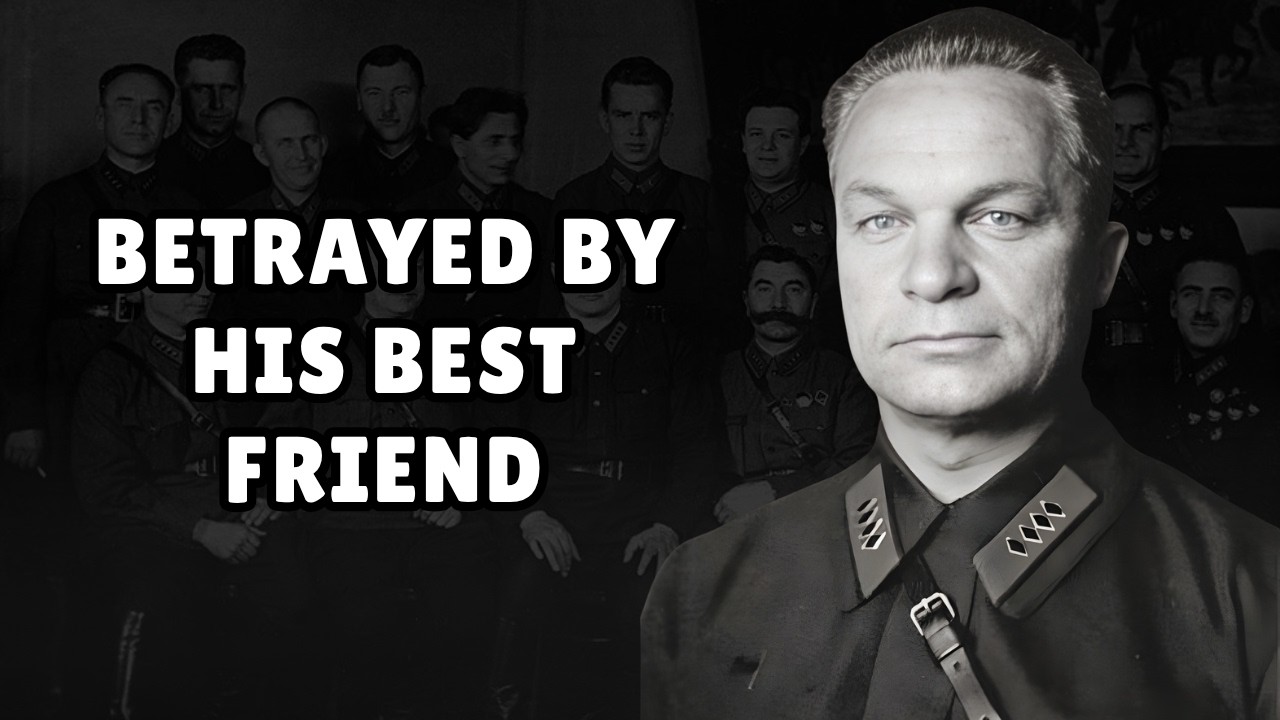
He volunteered for the Imperial Russian Army at 17, graduated from the Junker School in Kazan in 1905, and was posted to the Caucasus. His first duties included helping suppress protests in Tiflis, Baku, and Gori during the 1905 Revolution. In 1904, he joined the Socialist Revolutionary Party, not the Bolsheviks, while serving as an Imperial officer. He resigned from that party in 1909 and belonged to no political organization for the next eight years.
During World War I, Yegorov served on the Eastern Front for three years and was wounded multiple times in combat, each time returning to duty. By 1917, he had reached the rank of Lieutenant Colonel. After the February Revolution, he rejoined the Socialist Revolutionary Party, but broke with them in the summer of 1918 after their failed uprising against the Bolsheviks. In July 1918, he joined the Communist Party and offered his military experience to the new government.
Yegorov rose quickly during the Civil War. He commanded a division, then the Ninth Army on the Southern Front from August to November 1918, fighting White forces in the Don and Kuban regions. In December 1918, he took command of the Tenth Army at Tsaritsyn. In the autumn of 1919, he took command of the entire Southern Front, defeating General Denikin’s forces and driving the White Army from Rostov and Novocherkassk.
It was during these campaigns that Yegorov’s relationship with Stalin began, as Stalin served as political commissar on the Southern Front. By the end of the Civil War, a personal relationship had formed. Their wives knew each other, and their families spent time together at the dachas and resorts where the Soviet elite gathered in the summers. Yegorov was part of Stalin’s inner circle.
But Stalin, according to those who knew him closely, never fully trusted Yegorov. He privately believed that a man who had served the Tsar and spent years in the Socialist Revolutionary Party had never made the complete transition that genuine loyalty required. Stalin kept that assessment private, and the friendship continued for 20 years. In the summer of 1920, the Red Army was winning the Polish-Soviet War.
What had begun as a Polish offensive into Ukraine had been reversed, and Soviet forces were driving deep into Polish territory. Yegorov commanded the Southwestern Front, with four armies pushing toward Lwów. To the north, Tukhachevsky’s Western Front was approaching Warsaw. The High Command issued a direct order: Budyonny’s First Cavalry Army, the most powerful mobile force on Yegorov’s front, was to swing north and reinforce Tukhachevsky’s drive on Warsaw.
Yegorov did not send him. Yegorov and Tukhachevsky were personal rivals, and sending Budyonny north meant subordinating his front’s operations to Tukhachevsky’s campaign. Stalin, serving as political commissar for the Southwestern Front, wanted Lwów and supported Yegorov’s decision. Budyonny stayed south.
On August 16, 1920, the Polish Army launched a counterattack against Tukhachevsky’s exposed flank. The Western Front, unsupported and unprotected, collapsed. Soviet forces were routed across a wide front, and tens of thousands of soldiers were captured. The advance on Warsaw was over.
It was one of the most significant military defeats of the 20th century, and the Red Army would not advance into Central Europe again for 25 years. After the defeat, the Soviet leadership assigned blame to Tukhachevsky. Yegorov, Stalin, and Budyonny wrote the official accounts, in which the collapse was Tukhachevsky’s failure alone. The withheld cavalry was not part of the official record, and that version stood for 17 years.
After the Civil War, Yegorov continued to advance. In 1925, he went to China as a military adviser. He returned to command the Belorussian Military District, one of the most strategically significant postings in the Soviet Union. In 1931, Stalin appointed him Deputy People’s Commissar for Defense and Chief of the General Staff.
As Chief of the General Staff, Yegorov oversaw the largest expansion of the Red Army in its history. He ran some of the largest military maneuvers in Europe at the time and was responsible for testing the doctrine of deep operations, the combined use of armor, artillery, infantry, and air power developed by Tukhachevsky and his colleagues. In 1935, Stalin awarded the rank of Marshal of the Soviet Union to five commanders: Tukhachevsky, Budyonny, Voroshilov, Blyukher, and Yegorov. Within four years, Stalin would destroy three of them.
In 1936 and 1937, Stalin turned on his own army. The process worked through forced confessions. Officers under arrest were made to name names, and each name produced another arrest. The mechanism required no evidence, only the next name.
The first major target was Tukhachevsky, arrested May 22, 1937, and charged with treason and espionage for Germany. Every charge was fabricated, and everyone involved in the proceedings knew it. Yegorov was asked to serve on the tribunal. He did not hesitate.
On June 11, 1937, Yegorov signed the death warrants of Tukhachevsky and seven other commanders, men he had known for nearly two decades. He did not simply sign. He wrote that the condemned men should be wiped off the face of the earth as the most hostile enemies and disgusting scum. Tukhachevsky was shot that same night.
Yegorov had feuded with Tukhachevsky since 1920, had helped construct the official account blaming him for Warsaw, and had now signed his death warrant. Whether he believed the charges is not recorded. What is recorded is that he signed. While Yegorov was signing death warrants, his own file was being assembled.
A letter from a subordinate officer questioned his political reliability. A name extracted under interrogation from an arrested commander connected him. The NKVD did not need evidence. It needed a file, and it built one.
At the end of 1937, Stalin removed him from Moscow. He was not arrested, but he was taken off the General Staff and sent to command the Transcaucasian Military District, the same Caucasian cities where he had carried out his first military assignment 30 years earlier under the Tsar. In February 1938, they came for him. The charges were conspiracy, espionage, and terrorism against the Soviet leadership, the same charges that had been applied to the men whose warrants he had signed eight months before.
He had fought in the same Civil War as the man who signed his arrest warrant. He had been awarded the Marshal’s Star by Stalin’s government. He had been part of Stalin’s personal circle for 20 years. None of it provided any protection.
Stalin had decided years earlier that Yegorov could not be fully trusted. He waited until Yegorov was no longer necessary, then signed the arrest warrant. Yegorov was held for nearly a year, and the NKVD interrogated him until he confirmed the charges against him. On February 23, 1939, Alexander Yegorov was executed.
He was 55 years old. His ashes were placed in a mass grave at the Donskoy Cemetery, the same ground that held the remains of the men whose warrants he had signed. His books were removed from library shelves. His name was deleted from official military histories.
Photographs were altered, his face removed, his figure cropped out, until his presence in the institution he had helped build was eliminated from the record. Of the five original marshals of the Soviet Union, only two survived Stalin’s purges: Budyonny and Voroshilov. Tukhachevsky was shot in 1937. Blyukher died in custody in 1938.
Yegorov was shot in 1939. When Germany invaded in June 1941, the Red Army fought its opening battles without the men who had spent the previous decade preparing it. In the first months of the war, hundreds of thousands of Soviet soldiers were captured or killed, and entire armies ceased to exist. After Stalin’s death, Yegorov was rehabilitated.
His Marshal’s rank and military decorations were posthumously restored, and the charges against him were found to have been fabricated. Stalin had never trusted him. He had kept him useful, promoted him, decorated him, and waited. When the purges began and Yegorov was no longer essential, Stalin applied the same machinery to him that Yegorov had helped apply to everyone else.
In 1937, Yegorov had written that Tukhachevsky and his co-defendants should be wiped from the face of the earth. Two years later, Stalin made the same decision about him.