Between 1870 and the outbreak of the First World War, hundreds of young American women crossed the Atlantic to purchase something their families’ fortunes could not buy at home: a European title. Their money propped up crumbling estates, made front-page news, and permanently reshaped the upper reaches of British society. By one count, around 450 American women married into the European nobility during that period, including more than 100 countesses, 17 duchesses, and over 40 wives of princes. The press gave them a name that stuck: dollar princesses.
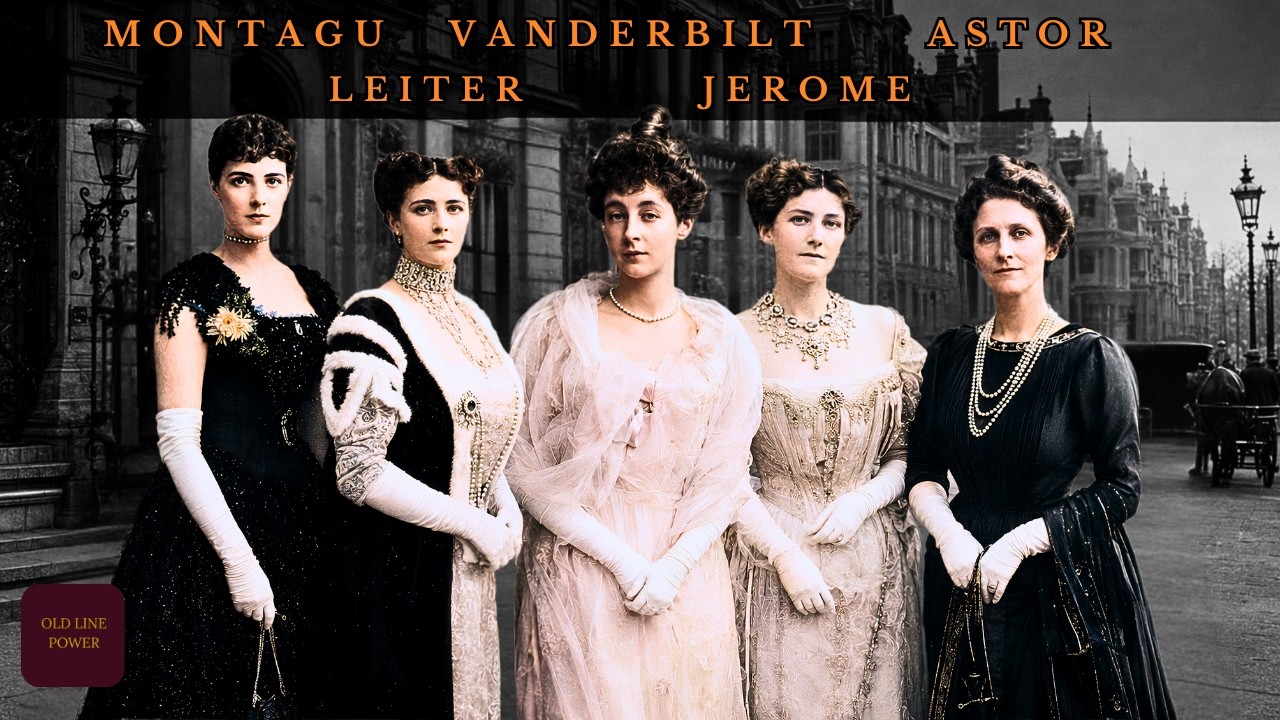
The trade was so organized that it even had a catalog. A quarterly guide called “Titled Americans” listed unmarried British and European noblemen for New York mothers, complete with their rank, family seat, and estimated fortune. The arrangement was polite on the surface and transactional underneath. Newspapers used a blunter phrase for the exchange: cash for coronets.
American money flowed one way, an ancient title the other, and almost everyone involved understood the deal perfectly. The desperation on the British side came from a collapse in agricultural income. Cheap American grain flooded the market in the 1870s, and the great landed families—whose wealth sat in farmland and tenant rents—saw their incomes vanish. At the same time, the new Estate Duty of 1894 taxed inherited land at rates that made keeping vast estates even harder.
Heirs were often trapped by family settlements that prevented them from selling the land. What they could still sell was the title itself. Across the Atlantic, a different kind of desperation had taken hold. Men who had built fortunes in railroads, steel, mining, and banking found that new money did not buy entry into the closed circles of old New York society.
A European coronet was the one trophy the old families could not match. Two desperate worlds fit together like a lock and key, and thousands of lives were arranged around the exchange. The era began with a genuine love match. In 1873, Jenny Jerome, the 19-year-old Brooklyn daughter of a Wall Street speculator, met Lord Randolph Churchill at a ball on a warship.
By their third evening, he had proposed. Both families objected. Jenny’s father withdrew his consent when the Duke of Marlborough made his disapproval plain, and Randolph only won his parents over by promising to stand for Parliament. Jenny received a settlement that included a thousand pounds a year in her own name—her father insisted the money stay in her hands.
They married in Paris in April 1874, one day after the payment cleared. Seven months later, Jenny gave birth to a son. They named him Winston. The better-organized trade soon followed.
In 1875, a New York mother named Ellen Yznaga learned that a young English heir, George Montagu, Viscount Mandeville, was ill while visiting America. She installed him in her New Jersey home and assigned her daughter Consuelo to nurse him. He proposed. Despite his family’s horrified objections, they married in 1876 in New York before 1,200 guests.
In England, society initially shunned the American newcomer, but Consuelo won over the Prince of Wales, later King Edward VII, with her warmth, humor, and banjo playing. His approval made her fashionable. Her marriage, however, collapsed as her husband spent through her family’s money. He inherited the dukedom in 1890, but there was little behind the title.
A business of arranging such matches quietly took shape, run by women like Minnie Stevens and the Duchess of Manchester. They could arrange introductions, coach young women in dress and deportment, and secure presentation at court—the formal moment that opened the season where marriages were actually made. Even the financial discussions ran through them: a word dropped about what a duke might accept, a hint passed about what a daughter ought to offer. The most famous bride of the era was Consuelo Vanderbilt, who arrived at her own wedding in 1895 having been crying.
She was 18, heir to a great railroad fortune, and about to become the Duchess of Marlborough. Consuelo had loved a young American named Winthrop Rutherford and had accepted his proposal. Her mother, Alva Vanderbilt, opposed the match. By Consuelo’s own later account, her mother kept her moving through Europe, intercepted Rutherford’s letters, locked her in her room at Marble House, and threatened to shoot Rutherford.
When she still held out, her mother’s health suddenly failed—and the girl was told her defiance was killing her. Consuelo gave in. Her mother recovered in time to plan the wedding. The financial settlement was drafted by lawyers before the vows.
Roughly $2. 5 million in railroad stock went to the Duke, with a guaranteed income on top. On the honeymoon, by Consuelo’s account, the Duke told her he had loved another woman but had married to save Blenheim Palace. Vanderbilt money restored the great house.
The marriage produced two sons and little else. The couple separated in 1906 and divorced in 1921. Five years later, Consuelo sought a remarriage to a French aviator, which required an annulment. Under oath before a church tribunal, her mother testified: “I forced my daughter to marry the Duke.
”
Life inside the English country houses was frequently cold in the most literal sense. The great houses relied on coal grates rather than central heating, and hot water was carried up the back stairs by housemaids. The strict servants’ hierarchy judged a new American mistress by rules she had never been taught. Husbands, in many cases, considered the wedding the completion of the transaction and returned to their clubs, their racing, and often other women.
The bride’s remaining duty was to provide a son. Even the love match that opened the era cooled within a few years into something polite and separate. The costs did not end with the wedding. Fathers discovered that a noble son-in-law was a subscription, not a purchase.
In 1903, a Pittsburgh heiress named Alice Thaw was due to marry the Earl of Yarmouth. On the morning of the wedding, the groom was arrested for debt. The ceremony waited while lawyers renegotiated the marriage settlement upward. Once the figure moved, the sheriff stepped aside and the wedding went ahead.
Five years later, the marriage was annulled after a court heard it had never been a marriage in any meaningful sense. The highest official rank reached by any American woman in this era belonged to Mary Leiter. Her father had helped build the business that grew into Marshall Fields. In 1895, she married George Curzon, a rising Tory politician who had wanted to rule India since boyhood.
In 1898, he was appointed Viceroy of India, and Mary stood beside him, outranking every duchess on the subcontinent. She ran the viceregal household, acted as hostess and advisor, and edited his speeches. At the great Delhi Durbar of 1903, she wore a gown embroidered in gold and silver peacock feathers, each feather inset with the wing case of a jewel beetle. The dress became a fashion legend.
Her letters home confessed she missed America and would never truly be English. In 1904, she lost a pregnancy, and infection nearly killed her. She returned to India against medical advice to support her husband as his position collapsed. He resigned before the year was out.
Her heart never recovered, and she died in July 1906, aged 36. Another American woman left a different kind of mark. Nancy Astor, born in Virginia in 1879, was the first woman ever to take her seat in the House of Commons. She was not the first woman elected—an Irish revolutionary named Constance Markievicz had won a seat the year before but refused to occupy it.
Astor won a special election in Plymouth in 1919 after her husband, who had inherited a peerage and was required to sit in the House of Lords, vacated his Commons seat. When she walked into the chamber on December 1, 1919, many members refused to acknowledge her. Winston Churchill froze her out for years. She later claimed he told her a woman in the Commons felt like an intruder in his bath, leaving him nothing to cover himself with; she answered that he was not handsome enough to have such fears.
She held her seat for 26 years. During the Second World War, she stayed in Plymouth during the bombing and walked the wrecked streets to lift spirits. Her reputation never fully recovered after she backed appeasement in the late 1930s, and her recorded remarks about Catholics and Jews still read as ugly. In 1945, her own party and her husband pressed her not to run again.
She complied without forgiving them. The trade that had carried hundreds of American fortunes across the Atlantic did not collapse suddenly. It drained away. New York society eventually opened to the new money that had spent decades storming its walls, and a European title stopped being a necessity once a daughter could reach the top of American society at home.
The results of the bargain were also public. In 1906, the Duke and Duchess of Marlborough formally separated, and the American Anna Gould ended her marriage to a French aristocrat who had burned through millions of her dollars. Marriage settlements tightened, and money increasingly stayed home in trusts the husband could not touch. The daughters themselves were changing, arriving with education, opinions, and their own ambitions.
The First World War ended the market entirely. The ballrooms closed overnight. Young noblemen went to France as junior officers, the rank that led from the front and died first. Britain’s old families lost their heirs at a rate not seen in centuries, some houses burying two or three sons.
When the war ended, death duties took 40 percent of a dead man’s estate, and a quarter of England changed hands in the four years after the armistice. Country houses came down by the hundred. The need for American money had never been greater, but the supply had never been smaller, because the war had left Europe poor and America booming. The flow reversed: by the 1920s, the penniless European count hunting an American wife had become a stock comic character.
The market had simply inverted, and the industry that had grown up around it quietly died. The magazine where the story began printed its final edition in 1915. Its list of eligible noblemen had emptied as the candidates died in France. There was nothing left to sell.
The legacy of the trade outlived the market. The novelist Edith Wharton, who grew up inside old New York and watched the invasion from the defenders’ side, spent her last working years on a novel about these women. She died in 1937 with it unfinished, and it appeared the following year under the title “The Buccaneers”—her word for the American women who raided the aristocracy in silk. The long-term consequences reached further than anyone involved could have imagined.
Jenny Jerome’s son Winston Churchill led Britain through its darkest hours in 1940. Addressing the American Congress during the war, he joked that if the lines had run the other way—an American father and a British mother—he might have reached the chamber on his own. The country that had once sneered at American brides was saved in its worst crisis by the son of one. And the royal family itself is connected to the trade.
In 1880, a New York heiress named Frances Work married a chronically broke Irish heir to the title of Baron Fermoy. Her father, a stockbroker who had grown rich alongside the Vanderbilts, reportedly declared that international marriage ought to be a hanging offense. The marriage failed exactly as he warned. When he died, he reportedly tied the family money to America and demanded his grandsons never return.
They returned almost immediately. Four generations later, Frances Work’s granddaughter married the future Earl Spencer, and their daughter Diana married the Prince of Wales in 1981. Her elder son, William, Prince of Wales, stands next in line to the British throne. The future king of England is the direct descendant of an American heiress—and of a New York stockbroker who wanted the entire business outlawed.
The catalogues and the settlements are dust now. The lives turned out to be the part that lasted.