A 12-year-old boy was riding a borrowed minibike near his home in Howard Beach, Queens, when a car struck him and dragged his body roughly 200 feet before neighbors stopped the vehicle. The boy, Frank Gotti, died from his injuries. Four months later, the driver, a neighbor named John Favara, vanished without a trace and has never been seen since. Police ruled the March 18, 1980, death an accident and filed no criminal charges.
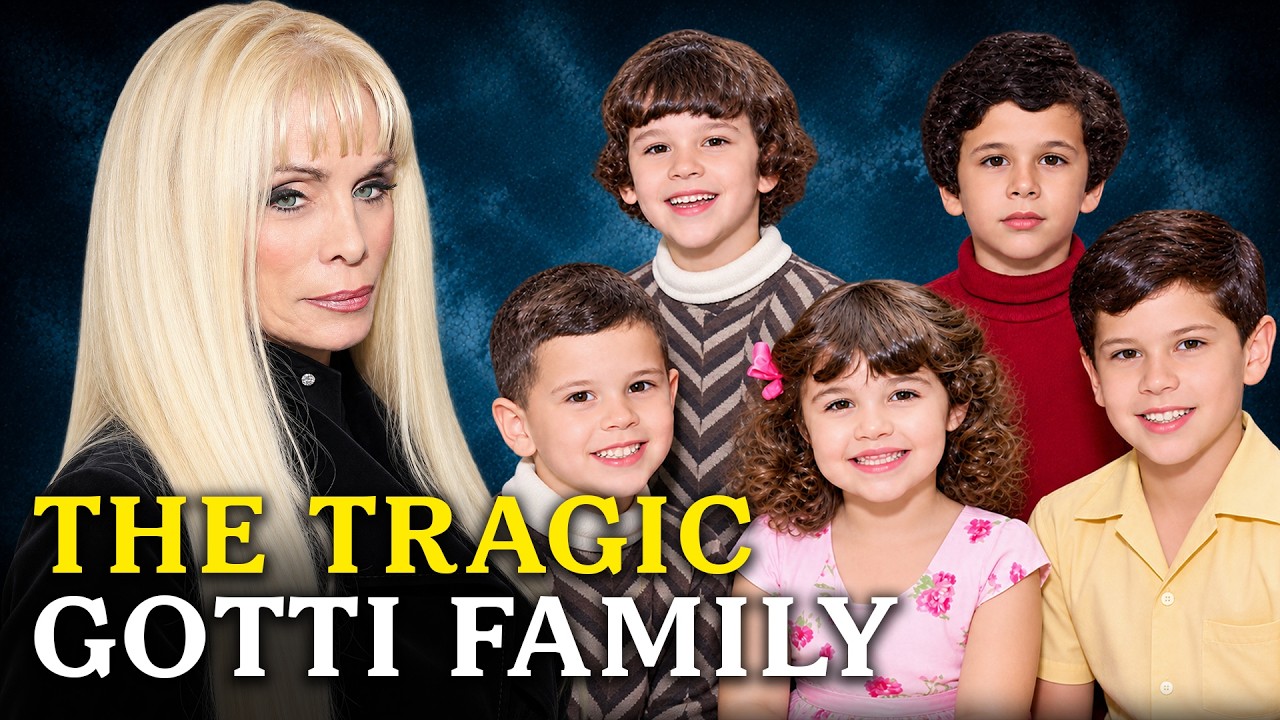
Frank’s mother, Victoria Gotti, reportedly fell into a deep depression, became bedridden for nearly a year, and was said to have crossed onto Favara’s property with a baseball bat, striking his car in the days after her son’s death. Favara disappeared on July 28, 1980, and his case remains one of New York City’s most chilling unsolved disappearances tied to organized crime. Frank’s father was John Gotti, who would later become the head of the Gambino crime family and one of the most infamous mob bosses in American history. Gotti never publicly addressed what happened to Favara, and neither did his wife.
The tragedy shaped how the family handled loss and public scrutiny for decades. Long before the media dubbed John Gotti the Teflon Don, he met a young woman named Victoria DiGiorgio at a Brooklyn bar in the late 1950s. Victoria had been married once before and had a child from that relationship. The couple married on March 6, 1962, after their first child, a daughter named Angela, had already been born the previous year.
Over the next 12 years, the couple had four more children. Victoria arrived in November 1962, John Angelo, known as Junior, in February 1964, Frank in 1967, and Peter in 1974. During the early years of the marriage, John Gotti spent considerable time incarcerated on hijacking charges, leaving Victoria to manage the household and raise the children largely on her own. By 1972, following his release from prison, Gotti became a fully initiated member of the Gambino crime family.
The family settled in Howard Beach, drawn by its relative suburban calm despite John’s growing involvement in the criminal underworld. The death of young Frank Gotti nearly destroyed Victoria, according to accounts later shared by her daughter, also named Victoria, in a 2009 memoir titled “This Family of Mine. ” John Gotti reportedly admitted that telling his wife their son had died was among the most difficult things he had ever done, describing the sight of her in the hospital waiting room as something that genuinely frightened him for the first time in his life. Victoria’s grief turned to rage.
She was described as having eyes filled with hatred, disbelief, and grief as she crossed onto Favara’s property with a baseball bat, striking his car repeatedly and lunging at him, though she reportedly never landed a blow on him directly. Later that year, the family took Victoria to Florida, hoping the distance might ease her overwhelming grief. Despite the extraordinary criminal empire her husband was building, the family maintained a modest two-story home in Howard Beach. Victoria was later described by her daughter as the family’s shyest child growing up, so quiet that her parents once wondered whether she might be autistic.
The household was defined, by the children’s later accounts, by old-fashioned family values and a surprising degree of sheltered normalcy. As John Gotti’s power and public profile grew throughout the 1980s, his reputation for escaping conviction earned him nicknames like the Dapper Don and the Teflon Don. His legal troubles mounted in the early 1990s, culminating in a 1992 conviction on charges including murder, racketeering, and obstruction of justice, secured in large part through the cooperation of his former underboss, Sammy “The Bull” Gravano. Gotti was sent to federal prison for the remainder of his life.
With his father imprisoned, John Angelo “Junior” Gotti stepped into the role of acting boss of the Gambino crime family, inheriting leadership of one of the most powerful organized crime organizations in the country while still in his early 30s. He also inherited intense federal scrutiny. In 1998, he was arrested on charges connected to gambling and extortion, and the following year he pleaded guilty, receiving a sentence of just over six years in federal prison and a substantial fine. Following his release in 2004, Junior faced additional legal proceedings, though prosecutors were never able to secure another conviction against him.
Multiple trials ended in hung juries and mistrials. It was during this period that Junior made a decision that seemed almost unthinkable within the traditional codes of organized crime: he publicly stated his intention to leave that world behind. According to accounts of the family’s internal dynamics, Victoria had grown deeply distressed watching her only son follow so closely in his father’s footsteps. She reportedly confronted John directly, threatening to cut off contact with him entirely if Junior’s continued involvement in organized crime persisted.
Junior eventually settled into a quieter existence on Long Island, marrying Kimberly Albanzy in 1990 and raising six children. He has since published his own memoir and worked to publicly distance himself from his father’s legacy. Junior’s sister Victoria, John and Victoria Senior’s second child, charted an entirely different course. She married Carmine Agnello, a scrap metal dealer, in 1984 against her parents’ explicit disapproval.
The couple’s first child, a daughter named Justine, was tragically stillborn nine months into the marriage. They later had three sons: Carmine Jr. , John, and Frank, named in memory of Victoria’s brother who had died so tragically decades earlier. Carmine Agnello’s business dealings reportedly drew increasing scrutiny from federal authorities, eventually resulting in his arrest and imprisonment on charges connected to extortion and arson.
In 2003, with her husband still incarcerated, Victoria filed for divorce on the grounds of constructive abandonment, formally ending the 19-year marriage. The settlement granted her ownership of the family’s mansion in Old Westbury, New York. It was around this same period that Victoria and her three sons became the subjects of an A&E reality television series called “Growing Up Gotti,” which premiered in 2004. The show became the highest-rated program in the network’s history upon its debut, drawing more than 3 million viewers for its premiere.
It ran for three seasons, concluding in December 2005 after producing more than 40 episodes. Victoria had already built a modest career as a published author before the show’s success, having written several novels throughout the 1990s and early 2000s, including works inspired by her personal health struggles with a heart condition known as Barlow syndrome. She would go on to write a 2009 memoir offering her own account of growing up as the daughter of one of America’s most notorious organized crime figures. Victoria’s three sons each grew into adulthood with the weight of their family name.
Carmine Gotti Agnello Jr. , the eldest, briefly pursued a career as a recording artist after the show, appearing on VH1’s “But Can They Sing? ” and announcing plans for a hip-hop album. The project never achieved significant commercial traction, and Carmine has since maintained a lower public profile.
John Gotti Agnello, the middle son, chose to step away from public life almost entirely, marrying his longtime girlfriend, Alina Sanchez, in a 2015 ceremony at Long Island’s Oheka Castle. The couple has built a family of their own. Frank Gotti Agnello, the youngest, likewise moved largely out of the public spotlight, choosing to build his adult life away from the reality television fame that had briefly defined his teenage years. Angela Gotti, John and Victoria’s eldest daughter, took on a different role.
Rather than pursuing public notoriety, she has spent much of her adult life working to portray her family in what she considers a more accurate and sympathetic light, pushing back against what she sees as sensationalized portrayals of her father in books, documentaries, and dramatized films. She has appeared periodically in interviews connected to retrospective projects but never sought the same sustained media attention as her sister. Peter Gotti, the youngest, born in 1974, came of age during the years when his father’s public profile was reaching its peak. Unlike his brother Junior, he chose not to pursue any direct involvement in organized crime, instead building a legitimate business career, eventually establishing and operating tattoo parlors alongside his wife.
Reports over the years have indicated that his own son faced legal troubles of his own during subsequent years. Victoria DiGiorgio remained married to John Gotti for the entirety of his imprisonment, never publicly turning against him. She visited him regularly and maintained whatever version of a marriage remained possible under the circumstances of a federal life sentence. John Gotti died on June 10, 2002, at the Federal Medical Center in Springfield, Missouri, succumbing to throat cancer while still serving his life sentence, ending a marriage that had lasted exactly 40 years.
Following John’s death, Victoria inherited a considerable sum of money and chose to step back almost entirely from public life, rarely granting interviews. In the years since, she has reportedly faced her own health challenges, including a heart attack and, in 2013, a stroke. As of recent years, Victoria DiGiorgio remains alive, having outlived the husband whose extraordinary criminal career had defined so much of her own adult life. Looking across the full arc of the Gotti family story, what emerges is a portrait considerably more layered than the simplified mythology often associated with America’s most notorious organized crime figures.
The five children scattered across an almost impossibly wide spectrum of outcomes, from quiet advocacy to reality television success, from inheriting and then walking away from a criminal empire, to building legitimate business careers. Each new generation has seemed determined to write its own distinct chapter, even as the Gotti name continued to follow every member of the extended family throughout their entire lives.