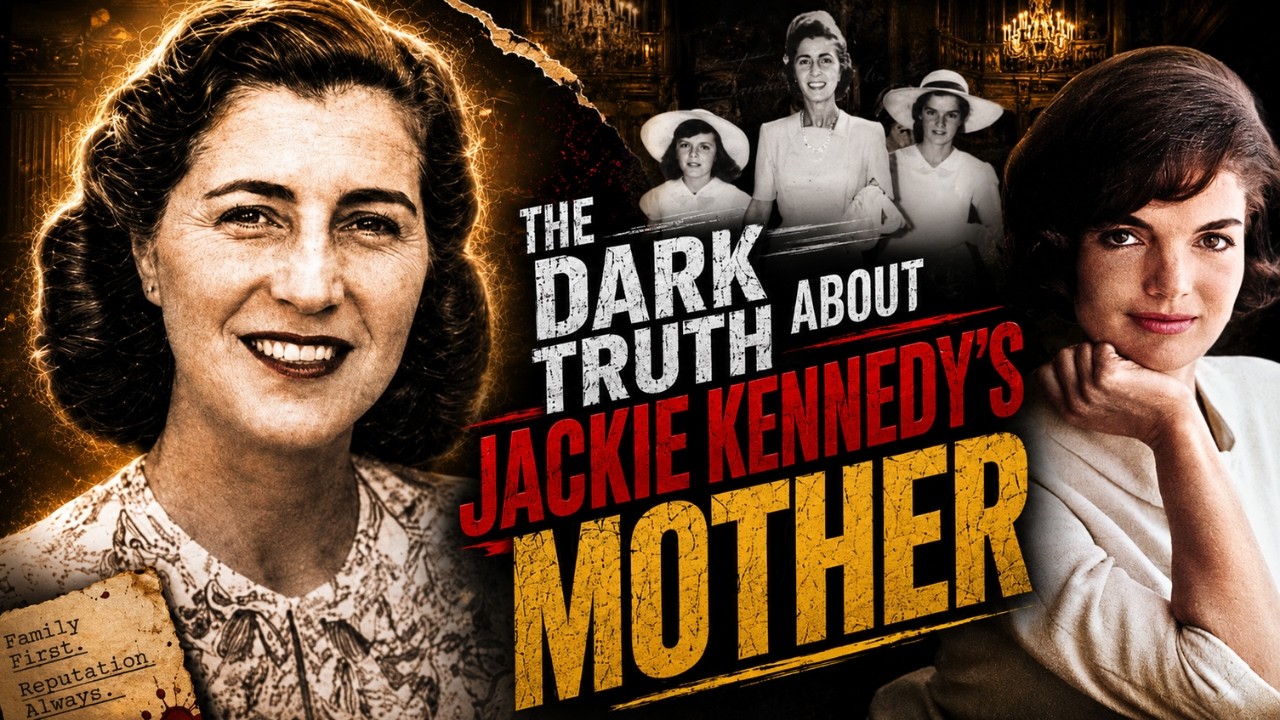
Janet Norton Lee was born on December 3, 1907, in Manhattan. On the surface, her life looked like a portrait of American privilege. Her father, James T. Lee, was a real estate magnate who helped shape the New York property market, and was the driving force behind the legendary luxury building at 998 Fifth Avenue.
But James T. Lee lacked the one currency that mattered most in early twentieth-century New York: pedigree. He and his wife, Margaret Merritt, were both children of Irish Catholic immigrants. In the 1920s, the East Coast elite operated as a closed fortress, guarded by wealthy Anglo-Saxon Protestant families who traced their lineage to the Mayflower.
To that world, the Irish were laborers, policemen, and servants. Wealth could buy James T. Lee tailored suits and fine properties, but it could not buy his family an invitation to the right clubs or a place in the Social Register. Janet grew up watching this invisible barrier at work, absorbing every quiet humiliation.
Her response was not rebellion. It was calculated assimilation. The rejection planted a deep inferiority complex that soon hardened into a ruthless lifelong ambition. If the old rich despised her Irish origins, she would simply erase them.
Janet buried her direct ancestry entirely. She stopped speaking of her grandparents and began circulating a new story: that she was a direct descendant of the aristocratic Lee family of Maryland and Virginia, the family of Confederate General Robert E. Lee. It was a claim to unmatched status at the top of the American social hierarchy.
She repeated the lie until it was accepted as fact. To make the fabrication seamless, she used her father's bank accounts to buy the right setting. She enrolled at Miss Spence's School in New York, an institution designed not for academic achievement but for training the daughters of the elite in the mechanics of high society.
Janet treated the school as a laboratory. She studied the postures, accents, and quiet arrogance of wealthy girls, learning to move, speak, and command a room like a woman born to power. Her educational record reflected her real priorities. After Miss Spence's, she attended Sweet Briar College and Barnard College, but records confirm she never completed her studies.
Once she had extracted the social connections and the veneer of intellectual refinement, she abandoned academics. She had another arena in mind for her ascent: competitive equestrianism. In the 1920s, show jumping was reserved for a select few, requiring enormous financial investment, membership in exclusive country clubs, and exceptional physical courage.
A pedigree could be faked in a drawing room, but the ability to control a horse over a meter-and-a-half jump in front of a crowd could not. Janet trained with severe discipline and became a skilled show jumper. Her riding style was described as aggressive and bold. She did not merely compete; she dominated.
She won three major championships at the National Horse Show, a decisive victory. When she sat on the saddle performing flawless jumps while New York's elite watched from the stands, she embodied the image of the ideal aristocrat. Her equestrian titles gave her an aura of unquestionable legitimacy.
She was no longer just the daughter of an Irish real estate developer. She had become a polished woman with the composure of Southern aristocracy. With her public image established, Janet sought to cement her new identity through historical associations and exclusive boards.
Using her new social connections and her father's money, she secured positions on the boards of the Redwood Library and the Newport Historical Society. Newport, Rhode Island, was the ideal playground for the American elite, and a foothold in their historical society embedded her in their cultural record.
Her masterpiece of social manipulation came when she used her fabricated Southern lineage to win election as honorary director of the Robert E. Lee Memorial Association in Stratford, Virginia. A granddaughter of Irish Catholic immigrants from Manhattan had infiltrated the guardians of Southern aristocratic history and won their recognition.
By her early twenties, Janet Norton Lee had built a fortress of lies so solid that no one thought to question it. She had erased her past, rewritten her lineage, and forced the East Coast elite to accept her on her own invented terms. She had acquired the pedigree. Now she needed the power.
By 1928, Janet had built an impeccable aristocratic facade. She had the right accent, the right equestrian trophies, and the right board memberships. But in the harsh calculus of high society, a woman's status was only provisional until confirmed by marriage.
Janet needed a husband whose name could validate her invented pedigree. She found him in the carefully manicured gardens of East Hampton. His name was John Vernou Bouvier III, known to the world as Black Jack, a nickname honoring his permanent tan, slicked-back black hair, and dangerous charm.
He was a stockbroker, a prominent figure in the finest gentlemen's clubs, and a man who wore his tailored suits with precision. He was also notorious as a womanizer, which earned him another nickname: the Black Orchid. To Janet, none of these warning signs mattered. What mattered was the Bouvier name.
New York high society presented the Bouviers as French aristocracy, claiming direct descent from noble bloodlines, complete with a family crest and a fabricated history of European grandeur. For Janet, desperate to distance herself from her immigrant grandparents, the French nobleman was the grand prize.
But their relationship was not a love story. It was a mutual con. The gossips of the era summed up the marriage with a cruel and precise verdict: she married him because his name was in the Social Register; he married her because her father ran a bank.
Black Jack was as much a fraud as Janet. The Bouviers were not French nobility but third-generation immigrants descended from cabinetmakers and hardware merchants. They had accumulated some wealth but exaggerated their lineage to climb the social ladder. In an odd irony, Black Jack pursued Janet precisely because he believed her elaborate lie.
On July 7, 1928, they married at the Catholic Church of St. Philomena in East Hampton. It was a scene of wealth and privilege, a merger of two supposedly distinguished families. The illusion lasted only a year. In October 1929, the Wall Street crash destroyed the American economy.
The Bouvier fortune, heavily leveraged in the market, evaporated almost overnight. Stripped of his financial power, Black Jack lost the elegant facade he used to navigate the world. Without the cover of unlimited money, his true nature emerged. He was not a resilient aristocrat but a brittle pleasure-seeker.
He turned to heavy drinking to dull his financial failures and gambled recklessly, squandering what remained of the family capital. During this rapid decline, Janet gave birth to their daughters: Jacqueline in 1929, months before the crash, and Caroline Lee in 1933.
The children did not calm Jack. His behavior grew more erratic and cruel. His most destructive weapon was chronic infidelity. Black Jack was a serial cheater who made little effort to hide his affairs. In Janet's rigid, image-obsessed world, a wife was expected to tolerate infidelity silently, provided it stayed secret.
But Jack was careless. He humiliated Janet openly, pursuing other women at society parties and leaving her to endure the pitying stares of her peers. The psychological war between the spouses was fierce. Janet, whose entire existence rested on total control and a perfect public image, was trapped in a house with an unpredictable, chaotic drunk.
Behind closed doors, the Park Avenue apartment became a battlefield of screaming, broken glass, and shattered pride. The breaking point arrived through the tabloids. Janet opened a newspaper to find a photo of her husband, the father of her children, casually holding another woman's hand in public.
For a woman who had spent a decade managing her image, it was a fatal blow. The public humiliation was absolute. It compounded a darker family tragedy: William "Bud" Bouvier, Black Jack's younger brother, lost his battle with severe alcoholism and ended his life early.
To Janet, Bud's death was a terrifying mirror, proof that the Bouvier men lacked the discipline to face their inner demons. She looked at her husband and saw a man perfectly willing to drag his wife and daughters into a spiral of scandal and poverty. She made a hard, unyielding decision: she would not drown with him.
In 1936, she took Jackie and Lee, packed her bags, and formally separated from John Vernou Bouvier III. The departure was an act of extraordinary courage. In the 1930s, divorce was not merely a legal procedure but a social execution for a prominent Catholic family.
The Catholic Church strictly forbade divorce, and high society cast divorced women aside as damaged goods. Janet knew she risked total social ostracism, but she did not care. Her survival instinct overpowered her fear of the social establishment.
She fought a bitter legal battle that drew wide media coverage. The proceedings dragged on for years, filled with vulgar accusations, financial disputes, and public slander. The divorce was finalized in 1940. The fallout was catastrophic, leaving a deep and permanent psychological scar on eleven-year-old Jacqueline.
Jackie had adored her father. Despite his serious flaws, Black Jack lavished his daughters with affection when he was present. The divorce tore Jackie's world apart. She watched her father deteriorate amid her mother's cold fury, learning a harsh lesson about the fragility of love.
It instilled in Jackie a deep distrust of men and a severe caution that followed her to the White House and beyond. For Janet, the 1940 divorce was a brutal ordeal. It destroyed any trace of romantic naivety she had possessed. She entered marriage believing in the power of a name and the illusion of aristocratic refinement.
She left it knowing that names can be forged, refinement can be faked, and men can destroy women. She found herself in a terrifying reality: divorced, thirty-three years old, a Catholic mother of two, publicly humiliated, her social standing shattered, and facing the threat of severe financial hardship.
Black Jack was ruined, and the alimony she fought for was a fraction of what she needed to maintain the world she had built. She had survived the con. Now she had to survive poverty. And Janet Lee suffered from a pathological fear of poverty.
The ink on the 1940 divorce papers had barely dried when Janet began to confront the harsh reality of her new life. She had won her freedom from John Vernou Bouvier III, but that freedom came at a steep price. In the eyes of the law, she was victorious. In the harsh ledgers of New York high society, she was on the edge of the abyss.
When a society woman falls, she does not fall into destitution. She falls into what the elite considers far worse: marginalization. The court granted Janet a monthly alimony of one thousand dollars. For an average American family in 1940, still recovering from the Great Depression, that was a huge sum.
But Janet did not live in ordinary America. She lived in a world where a hundred dollars barely covered the minimum requirements of maintaining a respectable aristocratic appearance. She had to pay for a luxury Manhattan apartment, designer clothes, private school fees, and the rigid social obligations needed to keep her daughters in the ruling class.
For the first time in her life, Janet looked at her bank accounts and felt real terror. It was not passing worry but a deep, pathological fear of poverty. Poverty, to Janet, was not merely a lack of money. It meant the erasure of her social status, the dissolution of all the years she had spent building her Maryland lineage, her equestrian titles, and her Newport board memberships.
She refused to become a cautionary tale, a tragic divorce story forgotten amid society parties. She could no longer afford to host parties, but willpower alone could not pay the bills. When the alimony was no longer enough, Janet was forced to do the unthinkable: she went to work.
In a move that dismayed her social circle, the former society queen took a job as a fashion model in a luxury store. It was a harsh psychological retreat. The women who had once been guests at her lavish Park Avenue dinners now watched her display clothes for a fee.
She swallowed the humiliation with patience and endurance. Every condescending smile she received on the showroom floor became fuel. Even with her modeling income, things were not going well. The ultimate humiliation came when she had to ask her parents for financial help.
James T. Lee, the Irish real estate magnate whose past she had spent a decade evading, now held her fate in his hands. Begging for an allowance from the father she regarded with deep and complicated shame was bitter. Yet Janet's most defining trait was her absolute refusal to abandon her principles.
Behind closed doors, she imposed a strict regime of financial discipline, hidden behind a perfect facade. She drastically cut the grocery budget, forcing herself to skip meals so she could afford a live-in maid and a private tutor for Jackie and Lee. This was not maternal vanity but strategic training.
Janet understood that once her daughters realized their poverty, they would lose their aristocratic confidence. They had to walk, talk, and breathe as if they owned the world, because that was the only way they would ever control it. Jackie's riding lessons were never cancelled, and she continued to wear elegant riding clothes.
Janet starved in private so her daughters could shine in public. But she knew that budgets and department store wages were only temporary fixes for a fatal wound. She needed a permanent solution, an impenetrable financial fortress. She began searching for her second husband with the cold, sharp eye of a greedy investor.
Romance had no place in her life. Black Jack Bouvier had cured any remaining hope of magic, passion, or physical attraction. She had married for a name in the past. Now she would marry for money alone.
Her target was Hugh Dudley Auchincloss, known to friends as Hughdie, the exact opposite of Jack Bouvier. Where Jack was mysterious, dangerous, and chronically unfaithful, Hughdie was calm, predictable, even notably boring. He was a prominent lawyer and former intelligence officer.
Most importantly, he was an heir to the vast Standard Oil fortune. Hughdie did not just have money; he had empires. He owned Merrywood, a sprawling estate in McLean, Virginia, overlooking the Potomac River. He also owned Hammersmith Farm, a massive twenty-eight-room Victorian mansion on a fifty-acre peninsula in Newport, Rhode Island.
Marrying Hugh Auchincloss was a merger into an institution. Janet moved with astonishing speed. She deployed her refined charm, targeting a man who wanted a competent, elegant wife to manage his vast properties. In June 1942, as the United States plunged into the chaos of World War II, Janet and Hughdie married.
The wedding was entirely devoid of emotion. It was a hasty, practical transaction. Due to wartime travel restrictions and fuel rationing, Jackie and Lee could not attend. Janet did not wait for them. The ink on the marriage contract was the only thing that mattered.
With one signature, she gained absolute financial security, erasing the humiliation of the past two years. But immediately after the honeymoon, Janet faced a crisis that threatened to dismantle her newly established empire. Behind the closed doors of Merrywood, Hughdie made a highly private confession.
He suffered from chronic impotence. For many women in the 1940s, such a revelation might have led to resignation or a quiet surrender to a marriage without intimacy. But Janet did not view this as a romantic tragedy. She saw it as a critical weakness in her contract.
Hugh Auchincloss was wealthy, but he also had children from previous marriages. If Janet remained childless, her connection to the Auchincloss fortune would remain secondary. She would be the perfect wife, but never the mother of heirs. In the harsh hierarchy of American families, blood was the only guarantee of lasting power.
She needed to bind herself materially to the oil fortune. She needed children. Faced with an impotent husband, Janet bypassed grief and moved directly to radical solutions. With a powerful and highly practical mindset, she turned to a medical procedure that was then highly experimental, risky, and severely condemned.
Artificial insemination by donor was not a topic of discussion in polite society. It was medically primitive, legally ambiguous, and morally condemned by the Catholic Church, the institution in which Janet had been raised. If Newport or Washington society discovered that the Auchincloss heirs had been conceived in a laboratory using an anonymous donor, the scandal would be catastrophic.
It would have destroyed Hughdie's reputation, obliterated Janet's carefully rebuilt social standing, and branded the children as illegitimate in the eyes of the elite. It was an enormous gamble. But Janet's fear of losing control of the Auchincloss fortune far outweighed her fear of social ruin.
She arranged the procedure in absolute secrecy. The details remained confidential between her, Hughdie, and a trusted doctor. The psychological burden of undergoing such an invasive secret procedure during an era when women's reproductive health was heavily stigmatized must have been immense. But Janet never wavered.
The gamble paid off completely. Janet conceived successfully. She gave birth to two children: Janet Jennings Auchincloss in 1945 and James Lee Auchincloss in 1947. The birth of these children was Janet's supreme victory and the decisive blow against her financial insecurity.
She was now the mother of Auchincloss heirs, successfully binding her lineage to one of the most powerful industrial fortunes in the United States. No one could remove her from her throne. No one could return her to poverty, thanks to her determination, persistence, extreme realism, and willingness to break every convention of her era.
Janet Lee pulled herself from the ashes of a humiliating divorce, seated herself at the pinnacle of American society, and defeated poverty. Now, surrounded by vast wealth, she devoted her full attention to the two daughters who had accompanied her from her past. Jackie and Lee were about to become the subjects of one of the most rigorous and psychologically exhausting social experiments in American elite history.
After securing her fortune in Standard Oil and controlling the vast Merrywood and Hammersmith Farm estates, Janet achieved a brilliant financial victory. But for a woman whose psyche was forged in the crucible of social insecurity and humiliating divorce, victory was not a signal for rest. It was a mandate to consolidate power.
She directed her intense focus toward her two daughters from her failed first marriage, Jacqueline and Caroline Lee. Janet did not view raising her daughters as a maternal act but as a military campaign. She had survived the collapse of her romantic illusions and was determined to ensure her daughters did not make the same mistake.
Love, in Janet's view, was a dangerous burden, and financial power was the only truth. She projected her pathological fear of poverty onto Jackie and Lee, planting in their young minds a harsh, practical ideology. Her core philosophy was simple but absolute: luxury is not a preference but a biological necessity for survival.
In the 1940s and 1950s, the ideal American model for a young woman of means was to attend a prestigious university, perhaps work in a refined profession such as publishing or art history, and eventually marry a man of high social standing. Janet rejected this traditional model.
She did not want her daughters to become working women. A job meant dependence on a salary, and a salary meant weakness. The only acceptable path to absolute, invincible security was a strategic marriage to an extremely wealthy man. To achieve this, Janet designed and imposed what historians and biographers later called the "geisha method."
It was not a formal educational system but a rigorous, round-the-clock home training program designed to turn Jackie and Lee into masterful practitioners of the arts of social refinement. They were trained to attract influential men in American society and ultimately to win the most powerful men in America.
Every detail of their daily lives at the Auchincloss estate was tailored to this goal. The dining table at Merrywood was not a place for friendly family chat but a testing ground. During meals, Janet enforced a strict rule: French only.
This was not merely an encouragement to master a second language but a display of social status. Fluency in French was the language of the international aristocracy. If a young woman could discuss literature or politics fluently in proper Parisian French over a multi-course dinner, she immediately distinguished herself from the nouveau riche and joined the old-world elite.
If Jackie or Lee spoke a word in English or mispronounced something, Janet's rebuke was swift and harsh. Their intellectual regimen was closely monitored. Janet ensured they were thoroughly versed in classical literature, Renaissance art, and European history. This was not to satisfy a pure passion for knowledge but a tactic.
A society wife had to be a valuable addition to her husband in public. She had to sit beside senators, prominent foreign figures, or industrial titans at dinner parties and easily capture their attention. Intellectual refinement was just another weapon in the arsenal of seduction.
Physical discipline was equally important. Once again, Janet used the equestrian arena as a weapon. Jackie was placed on a horse as soon as she could walk. To an outsider, it looked like a normal recreational habit of the wealthy. In private, it was a harsh psychological test.
Janet demanded excellence. She used horseback riding to sharpen Jackie's character in a particular way. Controlling a huge, unpredictable animal required an iron will, physical courage, and a complete concealment of fear. When Jackie fell from a horse, Janet did not coddle her but ordered her back into the saddle immediately.
This training was designed to instill strong inner discipline. Janet wanted her daughters to learn how to fall, how to absorb blows, and how to rise without anyone seeing them cry. This was exactly the emotional resilience required to survive a high-status marriage.
But the most important lessons Janet instilled were in the dark arts of psychological manipulation. She taught her daughters how to operate within rigid patriarchal structures without entirely surrendering their freedom. She trained them in the subtle mechanics of behavior: to be composed, always elegant, somewhat reserved, and never eager.
They learned to listen to men with captivating focus, making a man feel like the center of the universe. It was a calculated and highly disciplined form of flattery. Yet Janet's ultimate strategic rule was devastatingly practical. She warned her daughters that in the world of old fortunes, young men rarely controlled their own destinies.
Trusts, estates, and family businesses were controlled by parents. Therefore, a woman's primary target was not only the suitor but also the parents. Janet taught Jackie and Lee that if they could charm a man's mother and win his father's deep respect, the marriage proposal would inevitably follow. The parents were the ultimate guardians of wealth.
This strategy required a terrifying level of situational awareness, demanding that the girls constantly read their surroundings and adapt their personalities to mirror the expectations of the older generation. From the outside, the Auchincloss estates looked like paradise.
Jackie and Lee were widely admired as the most composed, cultured, and elegant young women in Washington and Newport. But behind the manicured walls and grand facades, the atmosphere was gloomy, volatile, and suffocating. Janet's demand for absolute perfection created a home ruled by fear.
She had an explosive and terrifying temper. When the aristocratic facade of the house cracked, even slightly, her rage erupted, and the primary target of that rage was her eldest daughter, Jacqueline, who unfortunately resembled her father strikingly. She had Black Jack Bouvier's wide dark eyes, distinctive jawline, and athletic build.
To Janet, looking at Jackie's face was an unavoidable daily reminder of the man who had humiliated her, betrayed her, and nearly destroyed her social standing. Unable to punish Black Jack, Janet discharged her unprocessed trauma and resentment directly onto Jackie.
She subjected her daughter to a harsh and painful campaign of physical criticism. Janet attacked every feature that did not conform to the delicate feminine beauty standards of the 1950s. She constantly mocked Jackie's unruly hair. She harshly criticized her large hands and wide feet, calling her clumsy and unfeminine.
She also shamed Jackie for her broad shoulders and flat chest. In Janet's calculus, these physical traits were not minor flaws but fatal defects in the high-stakes marriage market. Janet made Jackie feel like a monster. This continuous physical bullying inflicted deep psychological damage, creating a self-consciousness Jackie would battle her entire life.
This is why, years later as First Lady, Jackie created the bouffant hairstyle to balance her facial features, and why she constantly wore her signature white gloves, a habit acquired to hide the hands her mother convinced her were ugly. But the abuse was not limited to harsh words.
The glamorous surface of high society often concealed horrific domestic realities, and the Auchincloss household was no exception. In her efforts to discipline her husband, Janet Lee crossed the line from propriety into physical violence. Evidence of this brutality had been recorded in public records years earlier during the 1940 divorce proceedings against Jack Bouvier.
During a sworn hearing, a former maid who had lived with the family testified under penalty of perjury. She stated that she had personally witnessed Janet Lee severely beating her two young daughters. This violence was not a passing loss of control. It was a systematic tool used to enforce submission and absolute obedience.
Jackie and Lee were trapped in a gilded prison. They wore the finest clothes, received their education in the most elite environments, and were displayed to society as symbols of American refinement. But their private reality was confined to carefully navigating a mother who did not see them as children but as assets to be managed firmly and polished ruthlessly.
The geisha method worked, refining Jackie and Lee into women of remarkable poise, intelligence, and exceptional survival instinct. But it also taught them that their value was fundamentally tied to their ability to attract and manage wealthy men. It taught them to hide their pain, conceal their flaws, and treat human relationships as business transactions.
Janet succeeded in building perfect weapons for social conquest. Now she was ready to deploy them on the decisive battlefield. By the 1950s, Janet Lee was about to direct her eldest daughter straight toward the rising star of the Democratic Party, a young ambitious politician with a name that would be immortalized in history.
She was about to target the Kennedy family. Jacqueline Bouvier's entry into John Fitzgerald Kennedy's social circle was no coincidence. It was the result of a decade-long, meticulously crafted training program. By the early 1950s, Janet Lee's training had refined her eldest daughter into a cornerstone of aristocracy.
Jackie was fluent in several languages, possessed a sharp intellect, natural composure, and a captivating charm and mystery. She was ready to reach the highest levels of American power. The target was identified in May 1952 at a dinner party hosted by journalist Charles Bartlett.
Across the table sat John F. Kennedy, the charismatic, ambitious young congressman from Massachusetts, whom his father was already grooming for the presidency. On paper, the Kennedys represented a fascinating psychological conflict for Janet. They possessed vast wealth, largely accumulated from bootlegging and Joe Kennedy's Wall Street maneuvers.
They had political influence, but they were also the exact opposite of what Janet had spent her adult life fleeing. They were Irish Catholics confronting the old-money elite Janet had successfully infiltrated. The Kennedys were seen as loud, brash, aggressive, and nouveau riche. Joe Kennedy was notorious for his boundless ambition.
Yet Janet was supremely pragmatic. She looked past the noise of the Boston Irish and saw the undeniable, rapid velocity of John Kennedy's political trajectory. The Kennedys did not just want to join the elite; they were determined to conquer it. Janet realized that merging the faux royal Lee lineage she had carefully built with the raw political machine of the Kennedys would create an invincible American dynasty.
At the Bartlett dinner, Jackie deployed her training with precision. While other women flocked to the handsome congressman, Jackie held herself back. She engaged him with sharp wit, displayed deep knowledge of history, and then gracefully withdrew, leaving him captivated. She played the perfect aristocratic game of coyness, a skill her mother had instilled in her for years.
John Kennedy was fascinated. Their courtship began. But as Kennedy's political star rose, culminating in his election to the U.S. Senate in late 1952, pressure mounted to secure a marriage. When John Kennedy finally proposed, presenting a massive emerald and diamond ring, Jackie did something that nearly caused her mother a nervous breakdown.
She did not accept. Not immediately. Jackie told John Kennedy she needed time to think, packed her bags, and left for London for a full month to cover the coronation of Queen Elizabeth II as a photographer for the Washington Times-Herald. When she returned to the United States, Janet was in a state of panic.
The control she craved was slipping through her fingers. She saw Jackie's hesitation as a reckless, catastrophic gamble. In Janet's view, it was unthinkable to delay Kennedy. You seal the deal before another society girl swoops in. During that month, Janet was a coiled spring of anxiety, pacing the halls of Merrywood, terrified that her masterpiece of social engineering would lose the grand prize due to a misplaced sense of independence.
When Jackie returned from Europe and finally accepted the proposal, Janet did not merely breathe a sigh of relief. She immediately seized control. The wedding was set for September 12, 1953, in Newport, Rhode Island. It was not just a wedding. It was a coronation.
Janet oversaw the finest details of the wedding of the century to ensure it displayed absolute, unmatched aristocratic power. She booked St. Mary's Church and prepared the vast grounds of the Auchincloss Hammersmith Farm to host more than seven hundred guests. The guest list was a calculated blend of the Kennedy political machine and Newport elite.
Yet beneath the surface of these lavish preparations, Janet's inherent snobbery and cruelty surfaced, particularly in her treatment of Ann Lowe. Lowe was a highly talented African American fashion designer hired to design Jackie's famous wedding dress and the bridesmaids' dresses. But a flood in Lowe's studio destroyed the dresses just ten days before the wedding.
Lowe and her team worked day and night, absorbing all costs to recreate them. When Lowe arrived at Hammersmith Farm to deliver the masterpieces, staff told her she had to use the back service entrance. Lowe refused, threatening to return the dresses to New York unless she entered through the front door. Lowe won that confrontation.

But later, when the press asked Janet about the designer of the magnificent dress, Janet coldly refused to name Lowe, saying only that it was made by a colored dressmaker. It was a stark reminder of the ugly elitism that formed the basis of Janet's worldview.
Yet Janet's ultimate cruelty unfolded on the morning of the wedding itself. Everything was ready. The press was waiting. But there was one enormous, unpredictable factor in the equation: Black Jack Bouvier. Jackie's biological father had been invited to escort her to the altar.
He had checked into the Viking Hotel in Newport, looking aged, broke, and emotionally volatile. For years he had drunk heavily, and alcohol had ravaged his handsome features. For Black Jack, this wedding was his last moment in the spotlight, a chance to prove he still mattered.
Janet knew her ex-husband better than anyone. She knew he was a ticking time bomb. She was terrified he would stumble, slur his words, or embarrass the family in front of the Kennedys and the world press. The Kennedys were already wary of Black Jack's reputation.
Janet would not allow a drunk man to jeopardize the most important day of her family's life. On the morning of the wedding, Black Jack was reportedly severely intoxicated in his hotel room. Some historical accounts suggest Janet deliberately supplied him with alcohol the night before, as if setting a trap.
Whether she orchestrated his drunkenness or exploited his addiction, her response was decisive. She barred him from the ceremony. She showed no sympathy and made no attempt to sober him up. She exercised his paternal rights with a single cold order. She informed Jackie that her father was unfit and would not attend.
To protect the family's perfect image, Janet ordered her current husband, Hugh Auchincloss, to step in and escort Jackie to the altar. It was a cruel emotional blow to Jackie, who adored her father despite his flaws. She walked down the aisle to marry the future president of the United States, hiding enormous inner pain behind a manufactured smile.
Meanwhile, Black Jack sat alone in his hotel room, weeping, entirely absent from his daughter's triumph. Janet had successfully neutralized the risk. The facade remained intact. As Jackie ascended to the highest offices, becoming First Lady of the United States in 1961, Janet moved into a new role: the hidden director managing affairs from behind the scenes.
The White House years cemented Jackie's status as a global symbol of elegance, culture, and fashion. But that natural perfection was meticulously managed. Janet was always present without being seen, advising her daughter on the intricacies of public life. Janet was consulted on Jackie's wardrobe, ensuring every Oleg Cassini suit and pillbox hat precisely expressed the optimal blend of modern elegance and aristocratic authority.
But Janet's most important role during the White House years was darker. She served as Jackie's emotional support and practical guide through the deepest shock of her marriage to Kennedy. John F. Kennedy, a husband accustomed to repeated infidelity, was a chronic womanizer. His affairs were numerous and reckless, conducted under the White House roof.
For Jackie, history was repeating itself with painful precision. She had married a man exactly like her father: charming, powerful, and utterly incapable of fidelity. The humiliation was devastating. But when Jackie turned to her mother, Janet offered no emotional consolation. She offered the harsh survival methods she had acquired from her own failed marriage.
Janet knew the pain of a cheating husband, but she also knew the price of divorce. She reminded Jackie that her separation from Black Jack had plunged them into near-poverty and social ostracism. Separation from a sitting U.S. president was impossible. Janet trained Jackie to emotionally detach and taught her how to exploit her husband's guilt.
Whenever John Kennedy's extramarital affairs became obvious or humiliating, Jackie, guided by her mother's practical approach, demanded enormous concessions, often in the form of precious jewelry or expensive artworks. Janet taught her daughter that if a man robs you of your dignity in private, you make him pay for it in vast sums. The image of the happy presidential family had to be maintained at all costs. Power was worth the pain.
While Janet managed the First Lady's affairs, she was simultaneously orchestrating an equally ambitious, if more complicated, campaign for her second daughter. Lee had always lived in her older sister's shadow. If Jackie was the cultured, composed queen, Lee was the restless, fiercely competitive vice president.
Janet recognized Lee's burning desire to outdo Jackie and directed her toward the only path she respected. Lee's first marriage to Michael Canfield, a publishing heir, was perfectly respectable. But for a family now allied with the Kennedys, respectability was no longer enough. The Canfield marriage lacked the influence to compete with the White House, and the couple separated.
In 1959, Lee set her sights on a target that would finally give her the one thing Jackie did not have: a royal title. His name was Prince Stanisław Radziwiłł, a Polish nobleman who had fled Soviet occupation and established himself as a wealthy London real estate developer. He was known as Stas.
But there was a massive institutional problem. Both Lee and Stas were divorced, and the Roman Catholic Church did not recognize their civil marriage. For a family deeply rooted in Catholic political power, with John Kennedy about to become the first Catholic president, having a sister in an unrecognized marriage was a huge political liability.
Janet refused to let institutional rules impede her family's ascent. She mobilized the full power of the Kennedy political machine and the Auchincloss fortune. In a stunning display of behind-the-scenes power manipulation, the family succeeded in pressuring the Vatican. They obtained a rare and controversial annulment of Lee's marriage, legally erasing her first marriage in the eyes of the Church.
Once the annulment was obtained, Janet fully endorsed the creation of Lee's new identity. Lee began introducing herself globally as Princess Caroline Lee Radziwill. It was a textbook lesson in hypocrisy and social manipulation. In reality, Poland had officially abolished all noble titles in 1921.
Under international law, the title of Prince or Princess Radziwiłł was entirely void and worthless. But Janet, the woman who had spent her youth claiming kinship with the Maryland Lees, understood that truth mattered far less than performance. If you insist that people call you a princess, and you have the money and clothes to qualify, society will eventually bow.
Janet enabled her daughter Lee to obtain her fake royal title and defended it fiercely, cementing her second daughter's status as a member of global royalty. But Janet's support for Lee's romantic pursuits was highly conditional, existing only as long as it served the family's reputation. When Lee's actions threatened to cast a shadow over the Kennedy administration, Janet transformed from a supportive mother into a ruthless enforcer.
The decisive clash occurred in the early 1960s and involved one of the most powerful and dangerous men in the world: Aristotle Onassis. The Greek shipping magnate was a billionaire, a pirate of the high seas, a man with a reputation stained by scandal, ruthless business practices, and flagrant affairs.
He was the complete opposite of the polished Kennedy image, and Lee Radziwill fell for him intensely and passionately. While still married to Prince Radziwiłł, Lee began a public, intense affair with Onassis. Lee believed he was her golden chance to escape Jackie's shadow. Onassis showered her with vast wealth, took her aboard his legendary yacht, the Christina O, and treated her like an empress.
Lee was ready to divorce Stas and marry the Greek billionaire. When Janet learned of this, she moved with the force of a devastating hurricane. Janet did not view Onassis as a romantic partner for her daughter but as a lethal political liability. John Kennedy was about to run for reelection in 1964.
The last thing the White House needed was for the president's sister-in-law to divorce a Catholic prince to marry a controversial Greek businessman under investigation by the U.S. Department of Justice for fraudulent shipping practices. Janet did not care about Lee's happiness. She cared about the fortress she had built around Jackie.
She intervened forcefully, traveled to Europe, and engaged in sharp confrontations with Lee. Janet ordered her daughter to end the relationship immediately. She exploited the family's sense of guilt, the political risks, and her terrifying authority to break Lee's will. Janet destroyed the love affair entirely.
She forced Lee back into her unhappy marriage to Prince Radziwiłł, preferring the glossy image of the Kennedy White House over her second daughter's psychological well-being. Lee complied, carrying a deep resentment that would poison the family dynamics forever.
By 1963, Janet Norton Lee was at the peak of her hidden power. She had manufactured a First Lady. She had invented a princess. She had successfully concealed the deep, painful dysfunctions of her daughters' marriages behind a curtain of geopolitical glamour. She was the true master of American aristocratic affairs.
But no amount of money, planning, or social engineering could alter the course of events. The final test of Janet's steely character was approaching rapidly. The autumn of 1963 was about to arrive, and the world she had built with such precision was about to collapse in the streets of Dallas.
Though she had orchestrated the rise of the most famous First Lady in American history and secured a royal title for her second daughter, Janet Norton Lee remained, in the public eye, a woman without a country. She had founded a perfect American dynasty, but the Kennedy image-makers systematically pushed her into the shadows.
The media, politicians, and public colluded to portray her in a role she hated: the cold, manipulative mother-in-law. In the early 1960s, the Kennedy administration was not merely a political operation but a highly sophisticated public relations machine. The White House, managed by skilled experts like Pierre Salinger and funded by Joe Kennedy's vast fortune, carefully crafted the Camelot myth.
They promoted to the American public an image of youth, vitality, and Harvard-educated intelligence on the Hyannis Port lawns. It was a brand built on the spontaneous, vibrant charm of a new generation. Simply put, Janet Lee did not fit that image for the Kennedy PR machine.
Janet was a remnant of a bygone elite era. With her Newport mansions, rigid posture, and manufactured aristocratic aura, she represented exactly the kind of exclusionary WASP establishment the Kennedys were trying to prove they had transcended. As a result, the Kennedy machine made a deliberate decision to minimize her public presence.
The press followed suit, treating Janet with a mix of suspicion and silent contempt. They rarely interviewed her. When they wrote about her, they leaned heavily into the wicked stepmother image. Society pages described her as a ruthless social climber, ambitious, who sold her daughters to the highest bidder. They portrayed her as humorless, demanding, and entirely devoid of maternal warmth.
But this media stereotype was a distortion built on class resentment and political marketing. Those inside the White House corridors saw a very different reality. Letitia Baldrige, Jackie's formidable White House social secretary, who tolerated no foolishness, fiercely defended against this narrative.
Baldrige, who dealt daily with Washington's most powerful figures, pointed out that Janet was completely misunderstood by the press. Away from the spotlight, Janet was fiercely loyal, highly intelligent, and fiercely protective of her inner circle. She did not seek the spotlight but was content to manage logistics, household affairs, and serve as a quiet pillar protecting Jackie's perfect public image from collapse.
The extent of media bias and the Kennedy family's willingness to exploit it was clearly demonstrated during a widely covered family occasion. When Lee Radziwill graduated from Concord Academy, the entire family gathered to celebrate. Press photographers swarmed the campus, eager to capture images of the glittering Kennedy family mingling with the East Coast elite.
As the mother of the graduate, Janet made sure to appear in the family photos. But when the newspapers were published the next morning, Janet suffered a harsh psychological shock. Newspaper editors had literally cropped the photos, deleting Janet entirely from the frame. The published images focused entirely on John F. Kennedy, Robert Kennedy, and their glamorous wives, under headlines praising the Kennedy women.
They completely ignored the fact that neither Jackie nor Lee belonged to the Kennedy family, and that Janet was a woman who had devoted her adult life to the struggle for social visibility. Her literal deletion from her own family's history was a profound insult. The dynasty she had founded was effectively erasing her existence.
But Janet, tempered by years of suppressing her pride to maintain her outward appearance, did not complain publicly. She accepted her role in the shadows, realizing that true power does not require newspaper headlines. She remained in the background, close to her estates, watching her daughters rule the world, until that world suddenly ended.
By the autumn of 1963, the glossy Camelot facade was beginning to crack under the weight of buried grief. In August, Jackie gave birth prematurely to a son, Patrick Bouvier Kennedy. The baby lived only two days before dying of a respiratory condition. The loss devastated Jackie and plunged her into severe clinical depression.
Janet watched her daughter struggle through a vortex of familiar grief. She understood the danger of letting sorrow take control. When Jackie accepted an invitation from Aristotle Onassis to recover on his luxury yacht, Janet was reportedly furious. She had already fought a fierce war to keep Lee away from the flamboyant Greek billionaire. Now he was surrounding her elder daughter.
But Jackie, as First Lady of the United States, was beyond her mother's direct control. Janet could only wait in Washington, managing the Auchincloss family properties and closely watching her grandchildren, Caroline and John Jr. Then came November 22, 1963.
The morning began with an ordinary daily routine. Janet was at the Chevy Chase Club in Washington, D.C., playing golf. She was fifty-five years old, wealthy, settled, and completely unaware that the axis of American history was about to collapse. As she walked the manicured greens, a club employee rushed onto the course.
The details were scattered, chaotic, and terrifying. The president had been shot in Dallas. The severity of his injuries was unknown. The condition of the First Lady was uncertain. In that moment, the aristocratic facade Janet had spent fifty years polishing vanished entirely.
She did not faint. She did not succumb to hysteria. The harsh, practical survival instinct that had saved her from a humiliating public divorce and a crushing financial crisis took over. She dropped her golf clubs, rushed back to the clubhouse, and immediately called her husband, Hugh Auchincloss.
The political machine in Washington was in utter chaos, but Janet's focus was on one thing: reaching Jackie. When the official confirmation of the president's death was issued, Janet and Hugh rushed to the Bethesda Naval Hospital in Maryland. There, Air Force One would transport the president's body and, most importantly, her daughter.
The scene at Bethesda was a nightmare of flashing lights, military personnel, and weeping political aides. The country was in shock, fearing a larger conspiracy or a Soviet attack. But Janet paid no attention to the geopolitical implications. She was acting as a mother moving into a war zone to rescue her child.
When Jackie finally arrived at the hospital, the scene was enough to break anyone's heart. The First Lady entered wearing her famous pink Chanel suit, heavily stained with her husband's blood and brain matter. On the flight back from Dallas, aides had begged her to change clothes, but she refused, saying, "Let them see what they've done."
When Janet saw her daughter stained with the blood of assassination, she did not offer empty words. She immediately understood what Jackie was doing. Jackie was weaponizing shock, turning her blood-stained suit into a historical indictment. Janet, who had spent decades teaching her daughter how to control a narrative and influence an audience, recognized the brilliance of this horrifying move.
She did not try to force Jackie to change. She stood beside her, a silent, unwavering support in a hospital room full of shattered men. Over the darkest weekend in American history, Janet practically moved into the family quarters of the White House. The Kennedy political operatives immediately took control of the official funeral, organizing military processions and global broadcasts.

But upstairs in the private residence, the reality was entirely different. The White House was like a tomb, as its residents whispered. Staff members wept in the hallways. Jackie was in a state of shock, meticulously planning a funeral modeled on Abraham Lincoln's, refusing to sleep or eat.
Someone had to anchor the family to reality. Someone had to manage the devastating collateral damage. That burden fell entirely on Janet Lee. The most painful responsibility was the children. Caroline was five years old. John Jr. was days away from his third birthday.
On the morning of November 23, they woke up in a home that felt radically changed. Their beloved nanny, Maud Shaw, delivered the actual news to Caroline, telling her that her father had gone to take care of Patrick in heaven. But it was Janet who provided their physical and psychological support.
The woman who had mercilessly mocked Jackie's appearance, who had demanded perfect French at the dinner table, and who had imposed a harsh geisha curriculum, completely abandoned her authoritarian armor. When the children cried, she did not ask them to be strong. When the chaos of funeral preparations threatened to flood their private rooms, she acted as a human shield, keeping politicians and the press out of the family quarters.
She held Caroline and John Jr., rocking and feeding them, providing the only sense of normalcy left in their shattered world. For three days, the American people watched Jacqueline Kennedy deliver the greatest performance of grace under unimaginable pressure the nation had ever seen. She walked behind the horse-drawn caisson. She stood upright beneath the black veil. She instructed her young son to salute his father's coffin. She gave the country the catharsis it desperately needed.
But Jackie could only maintain her composed public appearance before the cameras because she knew her mother was defending her behind closed doors. When the cameras stopped rolling, when foreign dignitaries departed, and when Jackie returned to her empty White House quarters, she collapsed, and Janet was there to support her in the midst of the assassination ordeal.
The media stereotype of the cold, socially ambitious stepmother faded. Janet Norton Lee proved that beneath her calculated marriages and fabricated aristocratic lineage, she possessed a will of steel. When the administration fell, she did not flee. She walked into the rubble, gathered her shattered family, and carried them through the fire.
Yet as the 1960s gave way to the 1970s, the shock of Dallas would leave a profound mark. The family survived the assassination, but the psychological fallout would scatter them in ways no one could have predicted. Janet's final years were approaching, and the control she had exercised with terrifying precision was about to be violently stripped from her.
The shock of Dallas in 1963 forced Janet Norton Lee to abandon her aristocratic armor and serve as the ultimate emotional shield for her shattered family. For a brief, painful period, the world saw the iron will of the woman behind the Kennedy myth. But as the 1960s transitioned into the 1970s, the American landscape changed radically.
The pure, tightly controlled Camelot image faded, replaced by an era of cultural rebellion, political pessimism, and a new generation that deeply despised the rigid social hierarchies Janet had devoted her life to sanctifying. The East Coast establishment was losing its grip, and within the walls of the sprawling Auchincloss estates, Janet was losing hers.
By the mid-1970s, the family dynamic had changed irrevocably. Jacqueline Kennedy shocked the world and her mother by marrying Aristotle Onassis in 1968. It was a move that defied Janet's earlier intervention in Lee's romance with the Greek billionaire, but Jackie now possessed global influence that made her mother's objections irrelevant. Jackie had secured her own financial empire.
Meanwhile, Lee Radziwill struggled in European high society, fighting to find an identity outside the shadow of her sister and mother. Janet's marriage to Hugh Dudley Auchincloss, the central pillar of her family, was also nearing its end. Hughdie's health had been steadily deteriorating for years.
The vast Standard Oil fortune, which had provided Janet with her financial fortress, could not buy him more time. In November 1976, Hughdie died. At sixty-nine, Janet became a widow. For the first time since her desperate, impoverished days following her 1940 divorce from Black Jack Bouvier, she was free of a husband.
But this time, she was not a frightened, penniless, socially ostracized woman. She was an extremely wealthy, immensely influential lady. She had secured the Auchincloss inheritance. She had successfully guided her daughters to global prominence. Her life's work, her great social ascent, her geisha method, and her tireless management of the family brand were complete.
At that exact moment of total security, Janet made the most astonishing and self-destructive decision of her life. Within a month of Hughdie's death, she married again. The speed of the marriage shocked high society. It defied all traditions of mourning and aristocratic propriety. But the choice of groom was even more telling.
His name was Bingham Willing "Bing" Morris. Morris was not an industrial titan. He was not from a political dynasty. He was an investment banker, a familiar face in Newport social circles, and, most importantly, Janet's childhood friend. To understand this marriage, one must consider the psychological exhaustion Janet Lee suffered.
Her first marriage to Black Jack was a mutual con built on a desperate need for pedigree. Her second marriage to Hughdie was a cold, calculated corporate merger designed to guarantee absolute financial security. For fifty years, Janet had treated marriage as a battlefield, where she had to remain constantly vigilant, managing her image, her husband's flaws, and her daughters' futures.
She was exhausted. Bingham Morris represented something she had never allowed herself to experience: security without strategy. Because they had known each other since childhood, Morris was aware of the truth about her origins. She did not have to pretend to be from the distinguished Maryland Lee family around him. She did not have to maintain her cold, perfect society queen facade.
For the first time in her life, she lowered her defenses. She married seeking companionship, seeking a quiet, comfortable end to a life dominated by relentless ambition. It was a catastrophic mistake. The woman who had spent decades manipulating powerful men failed to recognize the danger lurking in an apparently harmless old friend.
Behind the closed doors of their Newport home, Bingham Morris revealed a harsh and deeply abusive nature. The marriage quickly turned into a nightmare of mistreatment. Morris engaged in severe elder abuse, subjecting Janet to systematic psychological cruelty and physical hostility.
The tragedy of the situation was profound. Janet Lee had once possessed such a terrifying temperament that she could control the behavior of senators and billionaires. She had managed estates and ruthlessly shaped the lives of two of the world's most famous women. Now, stripped of her fierce independence by advancing age and misplaced trust, she was trapped as a victim in her own home.
The power dynamic was turned upside down. She was isolated, abused, and too proud to admit to her high society peers that her final romantic choice of husband was destroying her. But Janet's daughters were no longer the frightened children of the Merrywood dining room. They were women of immense influence and wealth.
When rumors of Morris's behavior reached Jacqueline, her response was swift and decisive. Jackie had spent her life learning from her mother how to wield power, and now she used those same methods to rescue her. Jackie bypassed society interference, mobilizing her legal teams, financial resources, and terrifying authority to remove Janet from that hostile environment.
In 1981, Jackie forced a formal separation, legally removing Bingham Morris from her mother's life. Jackie became the protector, assuming the role of the elder. Janet was physically safe, but the abuse had ushered in a more insidious enemy.
By the early 1980s, the brilliant, calculating mind that had engineered the Camelot dynasty began to deteriorate. Janet was diagnosed with Alzheimer's disease. Watching the onset of Alzheimer's is a tragedy in any case, but for a woman like Janet Lee, it was a psychological horror tailored specifically for her.
Her entire identity and survival had been built on absolute control. She controlled her history, her image, her daughters, and her environment. She relied on a razor-sharp memory to navigate the complex social networks of the elite, remembering every insult, every alliance, and every unwritten rule of the East Coast establishment.
As the disease invaded her brain, it systematically dismantled her defenses. The aristocratic facade she had spent seventy years building began to crumble. She forgot the French vocabulary she had forced her daughters to speak. She lost her practiced posture. The carefully constructed identity of the society queen faded, leaving behind a frightened, confused elderly woman.
Yet Alzheimer's is a disease of painful fluctuations. There are periods of astonishing mental clarity. Moments when the fog lifts, and the patient bitterly realizes their deterioration and their outstanding debts to the past. In one such clear moment, Janet confronted the greatest failure of her life: the psychological destruction of her second daughter, Lee.
Throughout their childhood, Janet had been clear in her preference for her elder daughter. She focused the bulk of her ambition and cruelty on Jackie, crafting her into a masterpiece. Lee was treated as a secondary option, a backup asset. Janet had deliberately sabotaged Lee's only chance at independent global influence when she forced her to end her relationship with Aristotle Onassis, then stood silent as Jackie married Onassis a few years later.
Lee's resentment toward her mother and sister was toxic and deeply rooted. Knowing her mind was fading permanently, Janet attempted to restore the balance. But true to the ideology that had governed her entire life, Janet did not try to repair an emotional problem with a sincere apology. She tried to repair it with money.
She secretly arranged a bank transfer of seven hundred fifty thousand dollars directly to Lee Radziwill. In the late 1980s, that sum was enormous, enough to change her fortune. In Janet's materialistic worldview, this was the ultimate expression of maternal love and regret. It was guilt money, an implicit acknowledgment of her failure toward her younger daughter.
But the transaction failed to achieve its emotional goal. Childhood cannot be restored. A check cannot erase decades of neglect and psychological manipulation. Lee accepted the money, but she did not accept the apology. The cash transfer only highlighted the fundamental dysfunction of the family. They knew no form of communication except influence and wealth.
As Janet sank into the deep darkness of Alzheimer's, her illness became the final, harsh test of the geisha method she had instilled in her daughters. The results were entirely contradictory. Lee Radziwill, clinging to her seven-hundred-fifty-thousand-dollar apology, withdrew completely.
She refused to participate in the exhausting daily reality of caring for a mother with severe dementia. When pressed by family members, Lee offered a defense that perfectly summarized the emotional detachment her mother had taught her. She claimed she was simply too emotionally fragile to handle the pressures of the illness. She remained in her glamorous circles in Europe and New York, leaving her mother to the care of nurses and staff.
Jacqueline, however, entered the fray. The irony was profound. Jackie had been the primary victim of Janet's wrath. She was the one who had been beaten and mocked for her appearance, treated as a tool in Janet's social ascent. She had every psychological justification to withdraw.
But Jackie possessed a strong sense of duty, a trait she had inadvertently acquired through her mother's strict discipline. Despite being one of the most famous and photographed women in the world, Jackie quietly took over the management of Janet's affairs. She visited her mother regularly, sitting in the quiet rooms of the Newport house, holding the hand of the woman who had once criticized her as ugly and masculine.
She dealt with the painful reality of a mother who often no longer recognized her. Lee's refusal to help care for Janet was the final unforgivable betrayal in Jackie's eyes. The two sisters had maintained a tense, competitive relationship for decades, but their mother's abandonment severed the bond entirely. Jackie ignored Lee completely, and the silence between them became permanent, a cold war that lasted until the end of their lives.
On July 22, 1989, at the age of eighty-one, Janet Norton Lee Auchincloss Morris died, and her funeral was held in Newport. It was the center of the aristocratic world Janet had devoted her life to conquering. The pews of Trinity Church were filled with the remnants of the East Coast elite, political power brokers, and the extended Kennedy and Auchincloss families.
It was a solemn, meticulously organized event, exactly as Janet would have wished a perfect public performance to be. But the most prominent moment of that day did not occur during the eulogies. It occurred immediately afterward, away from the cameras, in a scene that cemented the true legacy of the Bouvier women.
Bingham Morris, the abusive third husband who had been separated from his wife, dared to attend the funeral. For years, he had lived comfortably on the periphery of the family fortune, largely ignored since their 1981 separation. But his presence at the funeral of the woman he had abused was an insult Jacqueline Kennedy Onassis would not tolerate.
Jackie did not wait for a private moment behind closed doors. She did not delegate the task to a lawyer or a male relative. She approached Morris directly in front of the mourners. The encounter was short, precise, and entirely devoid of emotion. Jackie did not raise her voice. She showed no grief.
She looked directly at the man who had tormented her mother and issued a series of strict orders. She demanded he hand over all of Janet's personal property, from jewelry to documents. Then, in a loud, firm voice, she issued the final eviction order. She informed Morris that he was no longer welcome at Hammersmith Farm or any of the Auchincloss family properties.
She gave him a deadline. He was to pack his belongings and leave the property permanently before sunset that day. Morris crumbled before the stern focus of a woman who had faced heads of state and survived the darkest tragedies of the American century. He left. He was never seen in the family's orbit again.
In that harsh moment of retribution, the ghost of Janet Lee was clearly visible in her eldest daughter. Jackie had inherited not only her mother's elegance and beauty but also her capacity for cold, calculated violence when the family boundary was breached. She proved that behind the soft voice, Chanel suits, and literary culture was a war leader. She had absorbed the harshest lesson her mother had taught her: when threatened, do not negotiate and do not cry. Annihilate the threat.
To look at the life of Janet Norton Lee is to look at the secret blueprint of the American elite. History, driven by a media obsessed with youth and male political power, has largely tried to erase her. Biographies of the Kennedy family often marginalize her role, portraying her as a difficult mother-in-law who occasionally hosted parties in her Newport garden.
This erasure is a profound historical error. Without Janet Lee, there would have been no Jacqueline Kennedy. Without Jacqueline Kennedy, there would have been no Camelot myth. Janet was the architect who designed the cultural symbols of the 1960s. The Kennedys possessed raw political ambition and vast wealth, but they lacked the essential ingredient needed to transition from politicians to legends.
They lacked refinement. Janet Lee, the woman who invented her own aristocracy from nothing to escape her Irish Catholic roots, provided exactly that ingredient. She transformed Jackie into the perfect weapon of cultural diplomacy. Every flawless state dinner, every meticulous historical restoration of the White House, and every successful deployment of French literature or high fashion was Janet Lee's geisha method applied on the world stage.
Her life reveals the inherent hypocrisy of the American elite. We are raised to believe that aristocratic refinement is a birthright, an innate quality passed down through pure bloodlines. Janet proved that the entire thing is a performance. She proved that refinement can be manufactured, that lineage can be faked, and that the doors of high society can be breached by anyone with enough audacity.
She outplayed the establishment at its own game, surpassing it. But her legacy is deeply complicated by the enormous human cost of her ambition. The psychological damage she inflicted on her daughters was permanent. She taught them to link love with financial power. She raised them in an environment where weakness was punished and physical appearance was harshly criticized. She pitted them against each other in a desperate competition for her approval, a competition that ultimately destroyed their sisterhood.
The glamour of the Bouvier women was built on a foundation of deep psychological trauma. Janet Norton Lee lived a life defined by a fierce refusal to be a victim. From the ashes of a humiliating 1940 divorce, staring into the terrifying specter of poverty, she forged a personality of steel. She was not a warm mother, and she was not a kind woman. But kindness does not build dynasties.
She treated the world as a hostile environment to be conquered and controlled. She used every tool available to her, from deception and wealth to psychological warfare and even her own daughters, to build an impenetrable fortress against the weakness she feared above all else. When the history of the twentieth-century American elite is truly understood, Janet Lee will not be remembered merely as a footnote in the Kennedy saga.
She will be recognized as the mastermind who operated in the shadows. She was the brilliant, cruel director of the play. She demanded perfection, punished weakness, and left behind a legacy proving that the most enduring crowns are always forged in the crucible of personal pain. She died knowing the dynasty she built would outlive them all. She had won.