For decades, the Kennedy name has carried a weight that few American families can match. It evokes power, glamour, tragedy, and a deep Irish Catholic tradition. To marry into that world is to enter a whirlwind of privilege and expectation. But what happens when the fairy tale ends and an outsider finds herself fighting not just for her dignity, but for the validity of her own past?
That is the story of Sheila Rauch Kennedy, the first wife of Joseph P. Kennedy II, the eldest son of Robert F. Kennedy. To many, she is a footnote in the sprawling Kennedy saga. In reality, her story is one of quiet courage. After her civil divorce, she faced a challenge she never anticipated. Her former husband sought to have their 12-year marriage declared null and void by the Catholic Church, effectively stating that it never existed in the eyes of God.
Most people in her position would have quietly acquiesced. Sheila Rauch Kennedy refused. A shy, private Episcopalian woman, she took on two of the most powerful institutions in the Western world: the Kennedy family and the Roman Catholic Church. She embarked on a deeply personal and public crusade to defend the sanctity of her marriage, the legitimacy of her children, and the truth of her own life.
To understand her journey, it helps to understand the world she stepped into. The America of the 1960s and 1970s was a nation in flux, marked by social change, political turmoil, and the questioning of old traditions. Within that landscape, the Kennedy family occupied a unique space. They were a dynasty forged in Irish Catholic tradition, yet they were also the face of a modern, forward-looking America.
The family was a complex tapestry of deep Catholic faith and worldly political ambition. Patriarch Joseph P. Kennedy Sr. had instilled in his children a fierce drive to win. Matriarch Rose Kennedy was a woman of devout, almost stoic Catholic faith. She attended Mass daily, and her belief was the bedrock that held the family together through unimaginable tragedies, including the assassinations of her sons, President John F. Kennedy and Senator Robert F. Kennedy.
It was into this legacy of triumph and tragedy that Sheila Rauch was introduced. Born in 1949, she came from a world away from the Kennedys. Her father, Rudolph Stewart Rauch, was a prominent Philadelphia banker and civic leader. The Rauchs were part of the East Coast's understated Episcopalian establishment. Their world was one of quiet dignity, intellectual pursuits, and civic duty expressed through philanthropy and community service, not machine politics.
Sheila was intelligent, well educated, and by all accounts a serious and thoughtful young woman. She did not seek the spotlight. She attended Wheaton College, a prestigious women's college in Massachusetts, and later earned a master's degree in urban planning from MIT. It was during her time in Boston, the heart of Kennedy country, that her path crossed with the next generation of the famous dynasty.
She met Joseph P. Kennedy II, known to everyone as Joe. He was the eldest of Robert and Ethel Kennedy's 11 children. He was handsome, charismatic, and bore the heavy burden of being the namesake of his uncle Joe Jr., who died a war hero and carried the political hopes of a family that had lost so much. He was Kennedy royalty, and he was expected to carry the torch.
The world Joe Kennedy II grew up in was one of almost unimaginable chaos and trauma. He was just 15 years old when his father, his hero, was assassinated in 1968. He was one of the pallbearers at his father's funeral, a heartbreaking image of a boy forced into manhood by a national tragedy. In the years that followed, he struggled to find his footing, grappling with the immense weight of his father's legacy and the wild, often reckless energy that seemed to be a hallmark of the Kennedy men.
In 1973, he was involved in a serious car accident on Nantucket that left one of his passengers, a young woman named Pam Kelly, paralyzed for life. The incident haunted him, a stark reminder of the consequences that can follow the Kennedy's famous risk-taking. It was in the aftermath of these tumultuous years that he and Sheila Rauch grew closer.
She was in many ways his opposite. Where he was boisterous and impulsive, she was calm and grounded. Where he was a public figure grappling with his destiny, she was a private citizen focused on her studies and her career in urban planning. She represented a stability and seriousness that was perhaps exactly what he needed. Friends from that time described her as a steadying influence, a calming presence in his often turbulent life.
They were a study in contrast: the Catholic heir to a political dynasty and the Episcopalian academic from a quiet intellectual background. But they fell in love, and in 1979, after a long courtship, they decided to get married. Their wedding was a major social event, a union of two prominent, though very different, American families. For Sheila Rauch, it was the moment she officially stepped into the whirlwind, the day she became a Kennedy.
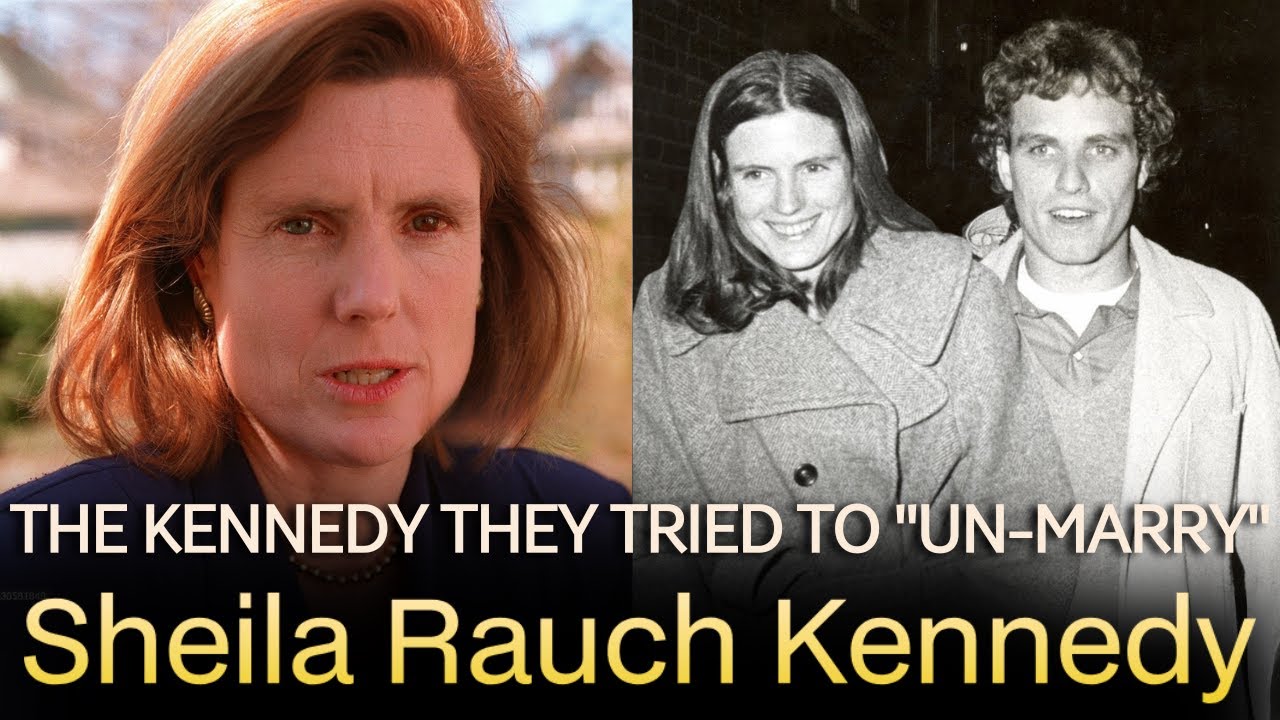
For a time, it seemed like a perfect match, a blend of two worlds that promised a bright and happy future. The early years of their marriage seemed to embody the promise of a new Kennedy generation. Sheila and Joe settled in Boston's Brighton neighborhood, determined to build a life that was both connected to the family legacy and distinctly their own. In 1980, their twin sons, Matthew and Joseph P. Kennedy III, were born.
The arrival of the boys seemed to solidify their family unit and anchor them. Sheila, true to her nature, did not try to become a Kennedy woman in the mold of the boisterous, athletic, and overtly political figures like Ethel or Eunice. She remained herself: thoughtful, intellectual, and deeply committed to her family and her work. She continued her career in urban planning, focusing on affordable housing, a passion that dovetailed with the Kennedy's long-standing commitment to social justice.
She was a dedicated mother, determined to give her sons as normal an upbringing as possible under the extraordinary circumstances of their birth. Friends and family noted her calming influence on Joe. She provided the stable home life that allowed him to channel his considerable energy into a new venture, Citizens Energy Corporation. Founded by Joe in 1979, Citizens Energy was a nonprofit organization designed to provide low-cost heating oil to the poor and elderly.
It was a brilliant and compassionate idea, a way for Joe to use his business acumen and his famous name to fulfill the social justice mission his father had championed. The company was a resounding success, earning him widespread praise and establishing him as a serious public figure in his own right. Sheila was right there with him, a supportive partner and a key adviser in this crucial chapter of his life.
In 1986, the inevitable call of politics came. The legendary Speaker of the House, Tip O'Neill, announced his retirement, leaving his congressional seat in Massachusetts open. It was a seat once held by John F. Kennedy. The pressure for Joe to run was immense. It was seen as his birthright, the next logical step in the restoration of the Kennedy dynasty.
Sheila, despite her innate aversion to the spotlight and the brutal world of politics, stood by his side. She campaigned with him, attended rallies, and played the part of the supportive political spouse. She was an elegant and intelligent presence on the campaign trail, and her quiet dignity was a clear asset. Joe won the election handily, and in January 1987, Sheila and their two young sons watched as he was sworn in as a United States Congressman.
They had made it. They were in Washington, living the life that had been laid out for Joe since birth. From the outside, they were the picture-perfect political family: the handsome, charismatic congressman and his smart, devoted wife, raising the next generation of Kennedys. But behind the closed doors of their suburban Virginia home, the fairy tale was beginning to crumble.
The pressures of public life in Washington are immense for any couple, but for a Kennedy, those pressures are magnified a hundredfold. The constant public scrutiny, the endless travel, and the demanding schedule began to take a toll on their marriage. The differences in their personalities, once a source of balance, now became a source of friction. Joe's world was politics, a world of glad-handing, compromise, and constant public performance. Sheila's world was more private, more intellectual.
She was a woman who valued deep conversation and quiet reflection, things that are in short supply in the frenetic life of a congressman. Little details from that time paint a picture of a relationship under strain. Friends noted that they seemed to be living increasingly separate lives. The partnership that had seemed so strong in Boston was fraying in the harsh glare of the D.C. spotlight. They had built a family and a life together, weathered the storms of a political campaign, and moved to the nation's capital. But the foundation of their marriage was cracking, and soon it would break completely.
In 1991, after 12 years of marriage and two children, Congressman Joseph P. Kennedy II and Sheila Rauch Kennedy separated and then filed for divorce. Divorce is a painful and personal tragedy for any family. But when your last name is Kennedy, a private sorrow quickly becomes a public spectacle. The end of Joe and Sheila's marriage was front-page news, dissected and debated in newspapers and on television. For Sheila, a woman who had always cherished her privacy, this public exposure was excruciating.
They managed to navigate the civil divorce with a degree of grace. They agreed to a joint custody arrangement for their twin sons, and Sheila moved to Cambridge, Massachusetts, to create a new independent life for herself and her boys. She focused on her writing and her academic work, becoming a research fellow at Harvard's Kennedy School of Government. She was determined to move forward, to co-parent effectively with her ex-husband, and to heal from the painful end of her marriage.
A few years after their civil divorce was finalized, Joe Kennedy decided he wanted to remarry. His intended bride, Beth Kelly, was a member of his congressional staff, a devout Catholic, and a public figure from a family whose identity was inextricably linked to the Catholic Church. Joe did not want his second marriage to be seen as invalid in the eyes of the church. For that to happen, he could not simply get married again in a Catholic ceremony. He needed to do something much more drastic. He needed his first marriage, his 12-year union with Sheila, to be annulled.

It is important to understand what a Catholic annulment is and what it is not. It is not simply a Catholic divorce. A divorce is a civil decree that ends a marriage. An annulment is a religious declaration by a church tribunal that a sacramentally valid marriage never existed in the first place. It argues that at the time the vows were exchanged, some essential element for a valid marriage was missing. This could be a lack of freedom, a lack of maturity, or a defect of consent, a psychological inability to understand and commit to the lifelong obligations of a Catholic marriage.
When Sheila first received the legal papers from the Archdiocese of Boston, she was stunned. The petition for annulment filed by her ex-husband was a direct assault on the most significant chapter of her life. It sought to declare that the vows they had exchanged, the life they had built, and the family they had created were, from a religious standpoint, a nullity. For Joe, this was likely a practical step, a religious hoop he needed to jump through to remarry within his faith and maintain his standing as a Catholic politician. But for Sheila, it was something far deeper.
It was a profound and personal violation. She was an Episcopalian, not a Catholic, but she had taken her marriage vows seriously. She had entered the marriage in good faith, loved her husband, and brought two children into the world with him. The idea that this entire reality could be erased by a church to which she did not even belong felt like a betrayal, not just of her, but of her children.
This is where Sheila Rauch Kennedy's quiet strength transformed into a powerful public voice. She could have signed the papers. She could have quietly let the annulment proceed, avoiding a messy and public fight. It would have been the easier path. But she chose not to. She believed that what the church was being asked to do was wrong, and she decided, against all odds, that she would fight it.
Her reasoning was twofold, and it was deeply rooted in her love for her children. First, she felt the annulment would effectively delegitimize her sons in the eyes of the church. While the church maintains that an annulment does not make children illegitimate in a legal or social sense, Sheila feared the spiritual and psychological impact on her boys. How could she explain to her sons that the church their father belonged to had declared his marriage to their mother a sham?
As she would later write, an annulment would say that their children were born of a union that was not a real marriage. It would be a permanent, public, and official declaration that their family was never a family at all. Her second reason was a matter of principle. She believed that her marriage had been real. It had been loving. It had been difficult, and it had ended, but it had existed. To allow a tribunal to declare it a nullity based on a retroactive psychological evaluation felt like a distortion of the truth. It felt like an injustice.
And so began her lonely seven-year battle. She hired a canon lawyer, an expert in the intricate and often arcane laws of the Catholic Church. She found herself immersed in a world of tribunals, Latin terms, and theological arguments. The annulment petition rested on the claim that Joe Kennedy had suffered from a lack of due discretion at the time of their wedding, essentially arguing that he was too psychologically immature to understand the permanent commitment he was making.
For Sheila, this was a deeply offensive and, she felt, inaccurate rewriting of their history. She was being asked to participate in a process that required her to denigrate her ex-husband and their shared past in order to fit the narrow requirements of the annulment process. She refused to do it. She wrote letters. She appealed to church officials. She tried to make them understand her position not as a legal argument but as a human one. She was a mother trying to protect her children's heritage and a woman trying to protect the truth of her own life.
The response from the church hierarchy was by and large one of bureaucratic indifference. She was an outsider, a non-Catholic, challenging a process that was designed to serve the members of its own faith. And she was standing in the way of a powerful Kennedy. The fight took a tremendous emotional toll. It was a constant, draining presence in her life. But she persisted.
When the local tribunal in Boston granted the annulment in 1996, she did something almost unheard of. She appealed the decision to the highest court in the Vatican, the Roman Rota. This move transformed her private struggle into a public cause. Realizing that her personal appeals were being ignored, she decided to take her story to the world.
In 1997, she published a book titled "Shattered Faith: A Woman's Struggle to Stop the Catholic Church from Annulling Her Marriage." The book was a bombshell. It was not a bitter tell-all memoir. It was a thoughtful, eloquent, and deeply personal account of her ordeal. She laid out the timeline of her marriage, the pain of her divorce, and the shock of the annulment petition. She explained the intricacies of canon law in a way that lay people could understand, and she exposed what she saw as the hypocrisy of an annulment process that seemed to favor the wealthy and well-connected.
In one powerful passage, she wrote that she refused to be erased, that she would not have her life, her marriage, and her children's heritage declared a nullity. Her marriage was real, she insisted, and to say otherwise was a lie. The publication of "Shattered Faith" caused a sensation. It sparked a massive public debate about the Catholic Church's practice of annulment. Suddenly, thousands of other Catholics, mostly women, who had been through the same painful and humiliating process, felt seen and heard.
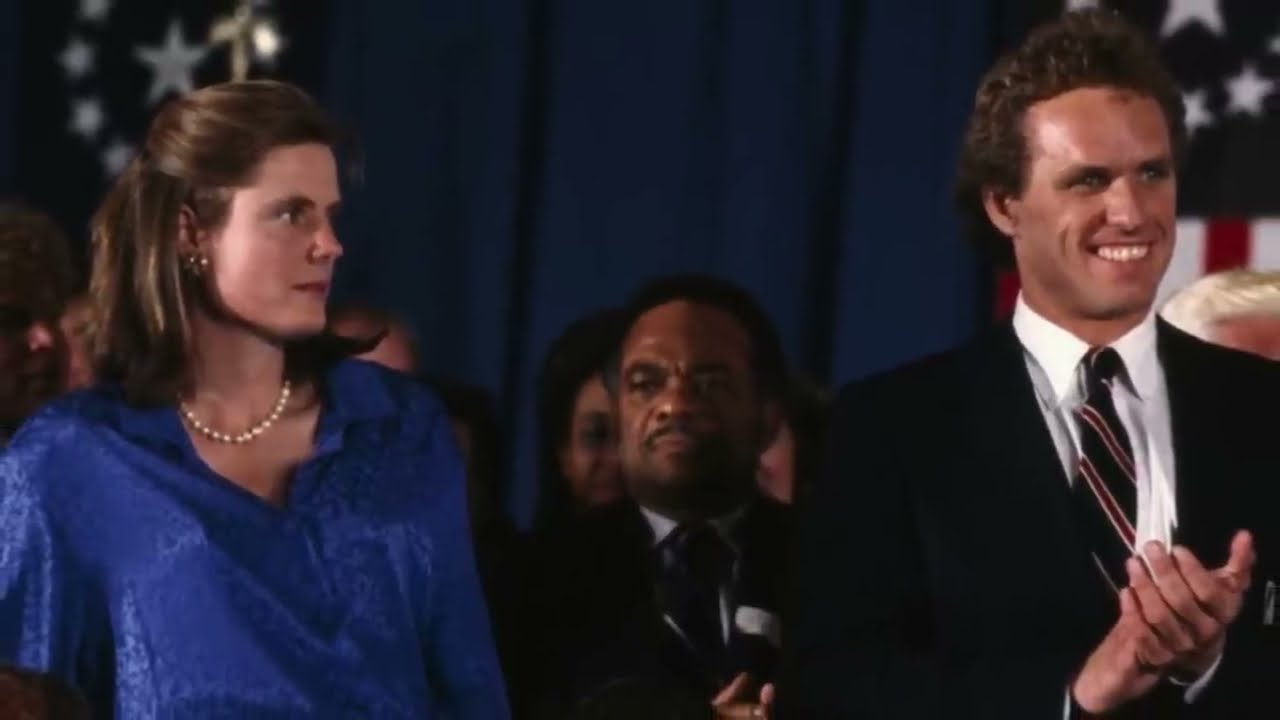
Sheila Rauch Kennedy became the reluctant spokesperson for a silent multitude. She appeared on television shows like "60 Minutes." She gave interviews to major newspapers. In her quiet, dignified, and articulate way, she challenged the church's position. She argued that the modern annulment process, which had grown exponentially in the United States, was devaluing the concept of marriage itself. If a 12-year marriage that produced two children could be declared null, what did that say about the church's commitment to the permanence of the marital bond?
Her public stance put her in direct conflict with her ex-husband and the Kennedy family. Joe Kennedy, who by this time had remarried outside the church and was contemplating a run for governor of Massachusetts, was furious. He released a statement calling the book exaggerated and one-sided and accused her of causing pain to their children for her own purposes. The Kennedy family, famously loyal and protective of their own, closed ranks around Joe.
Sheila was now truly on the outside, a lone voice crying in the wilderness. She was accused of being bitter, vengeful, and of using her children as pawns. But those who read her book and heard her speak saw something else. They saw a woman of principle fighting a lonely battle for what she believed was right. She was not fighting to win back her husband or to destroy his career. She was fighting for a principle: that the truth of her life mattered.
The consequences of Sheila's public stand were immense and far-reaching. Her story resonated deeply, particularly with American Catholics who had long felt uneasy about the annulment process. For decades, annulments had been relatively rare in the Catholic Church. But in the late 20th century, the number of annulments granted in the United States skyrocketed. In 1968, there were fewer than 400 annulments granted in the U.S. By the 1990s, that number was over 50,000 a year, with the vast majority of the world's annulments being granted in America.
Critics argued that the process had become a loophole, a form of divorce Catholic-style that was readily available to those with the resources and connections to navigate the complex canonical bureaucracy. Sheila's story became the ultimate case study for this critique. Here was a powerful, wealthy man from a famous Catholic family, seemingly using the process to wipe the slate clean so he could remarry with the church's blessing.
Her book and her public advocacy forced a conversation that the American Catholic hierarchy was not prepared for. It shed a harsh light on the often painful and psychologically damaging experience of those on the receiving end of an annulment petition. Many women in particular felt that the process put them on trial, forcing them to relive the most painful moments of their failed marriage and often blaming them for the failure through arcane psychological diagnosis.
Sheila gave a voice to these women. Her advocacy led to the formation of support groups like the organization Save Our Sacrament, dedicated to reforming the annulment process and supporting those who chose to defend their marriages against annulment petitions. She did not just tell her own story. She amplified the stories of countless others who had suffered in silence.
The historical significance of her fight cannot be overstated. She, a single non-Catholic woman, successfully challenged the secrecy and insularity of the annulment process. She forced a public reckoning and contributed to a growing movement for reform within the church. While the Vatican ultimately did not overturn Joe Kennedy's annulment, her appeal and the public pressure she generated had a lasting impact. In the years that followed, there were calls for reform from within the church itself, culminating in changes made by Pope Francis decades later to make the process simpler and more pastoral. Though the fundamental issues Sheila raised still remain a subject of debate.
Beyond the religious implications, her story holds a broader cultural significance. It is a powerful example of an individual standing up to an institution in an age where we often feel powerless against large, faceless bureaucracies. Sheila's story is a testament to the power of a single determined voice. She reminded us that integrity is not about winning but about fighting for what is true.
Her actions also had a direct, albeit likely unintended, impact on the Kennedy dynasty. The public controversy surrounding the annulment was a significant factor in Joe Kennedy's decision to drop out of the 1998 race for governor of Massachusetts. The man who was seen as the great hope for his generation of Kennedys saw his political ambitions derailed in part by his ex-wife's refusal to have her history erased. It was a poignant, ironic twist. The quiet, apolitical woman had, through an act of personal conscience, changed the course of a political dynasty.
In the end, Sheila Rauch Kennedy lost her case in the Vatican. The annulment was upheld. But in the court of public opinion and in the quiet measure of her own conscience, she achieved a different kind of victory. She refused to be a silent footnote in someone else's story. She insisted on being the author of her own.
Her story leaves us with profound and lingering questions. What is the true nature of faith? Is it found in the rigid doctrines of an institution or in the personal convictions of a searching heart? What do we owe to our past? And what is the price of speaking truth to power?
Sheila Rauch Kennedy never sought to be a public figure. She was thrust into the spotlight by circumstances she never could have imagined. But when the moment came, she did not shrink from it. She stood her ground with a quiet grace and an unshakable integrity that is far rarer and far more valuable than wealth or a famous name.
She eventually found peace, stepping back from the public eye to live a quiet life of writing and academic pursuits, forever defined not just as the woman who was once married to a Kennedy, but as the woman who fought the Vatican and a dynasty to defend the truth of her own life. Her legacy is a powerful and enduring one. It is a story of a shattered faith, yes, but also of a spirit that could not be broken. It is a reminder that even when institutions fail us, our own integrity can be a sacred ground, a place where our truth remains whole, undeniable, and entirely our own.