When Diana, Princess of Wales, was buried on September 6, 1997, the British monarchy entered Westminster Abbey carrying more than a coffin. It carried a week of anger, suspicion, grief, and questions that millions of people had suddenly decided the royal family had to answer with their faces.
That was why people watched the Queen Mother so carefully. At 97, she represented almost everything Diana had seemed to challenge. She came from an older royal world where emotion existed, but did not wander about in public without permission.
Diana had made emotion part of royal life. She hugged children, touched hospital patients, cried openly, admitted unhappiness, and eventually spoke publicly about a marriage the palace would have preferred to describe with considerably fewer adjectives.
Now Diana was dead at 36, and the Queen Mother was sitting in the abbey while the country studied every movement. Television cameras could not know what anyone was thinking. Neither could the people watching at home.
A glance could be grief, discomfort, exhaustion, distraction, or simply the difficulty of sitting through a long service at 97. But by then the royal family had lost the luxury of having gestures treated as meaningless. Every expression was being interpreted. Every silence had become evidence for somebody.
The Queen Mother had spent most of her long public life mastering precisely the opposite situation. She had been trained to reveal enough warmth to reassure people while keeping private emotion protected. Diana had become famous partly because she did the reverse.
Long before anyone imagined Diana's coffin passing through London, the Queen Mother occupied a unique place in Prince Charles's life. She was not simply his grandmother. She was one of the people with whom he felt most comfortable.
Charles had grown up inside a peculiar arrangement. His mother became Queen Elizabeth II when he was only three. From that moment she belonged not only to him and his sister but to the state.
His father, Prince Philip, loved his son, but the two were very different. Philip admired toughness. Charles was more inward, sensitive, artistic, and easily wounded. The Queen Mother understood another side of him.
At Clarence House in London and Birkhall in Scotland, Charles found a gentler atmosphere. His grandmother encouraged his love of music, painting, gardens, old buildings, and conversation. She could be grand and affectionate at the same time.
The Queen Mother also carried extraordinary authority within the family because she had survived the crisis that had reshaped their dynasty. She had been born Elizabeth Bowes-Lyon in 1900, the daughter of an aristocratic Scottish family.
When she married the Duke of York in 1923, she was marrying the king's second son, not the man expected to inherit the throne. Then Edward VIII fell in love with Wallis Simpson. In 1936, Edward chose abdication rather than abandon his intention to marry her.
His younger brother suddenly became King George VI. Elizabeth became queen. For the Queen Mother, the abdication was not romantic history. It was a family earthquake.
Her husband was shy and struggled with a severe stammer. He had never expected to become king. Yet because his brother placed personal desire above royal duty, George inherited the crown, the responsibility, and the pressure.
Then came war. The royal couple remained in Britain through the Second World War. Buckingham Palace was bombed. They visited damaged neighborhoods and factories. They became symbols of endurance.
George VI carried the strain of kingship through an exhausting period and his health declined. He died in 1952 at only 56. Elizabeth was widowed at 51. Her daughter became Queen Elizabeth II.
From then on, Elizabeth was known as Queen Elizabeth the Queen Mother. The lesson she carried from the abdication years was difficult to miss. Monarchy survived when individuals placed duty above private appetite.
This philosophy helped explain the world into which Diana Spencer would eventually arrive. Royal marriage was not merely about romance. It was about continuity, stability, heirs, reputation, and the appearance that the family at the center of national ceremony was functioning properly.
By the late 1970s, Prince Charles had reached the uncomfortable stage at which his unmarried status was becoming a public question. He was the Prince of Wales and future king. He needed a wife, not simply any wife.
Diana Spencer seemed to fit. She had grown up close to the royal family. Her childhood home, Park House, stood on the Sandringham estate. Her father would become Earl Spencer. Her family had generations of connections to the crown.
She was also very young. When Charles began seriously considering her, Diana had far less life experience than he did. Charles had traveled widely, served in the Royal Navy, and spent years thinking about his future role. Diana had worked with children and as a nursery assistant.
Their courtship was not long. One story became especially important. At a gathering in 1980, Diana reportedly spoke sympathetically to Charles about the death of Lord Mountbatten, his beloved great-uncle, who had been killed the previous year. Charles was touched by her warmth.
The Queen Mother was part of the family landscape around the courtship. Charles trusted her opinion deeply. Her generation understood marriage through a different lens from the one Diana would eventually bring into the family.
A successful royal marriage did not necessarily require constant emotional fulfillment. It required endurance. The essential thing was that the structure survived. Diana did not know how important that assumption would become.
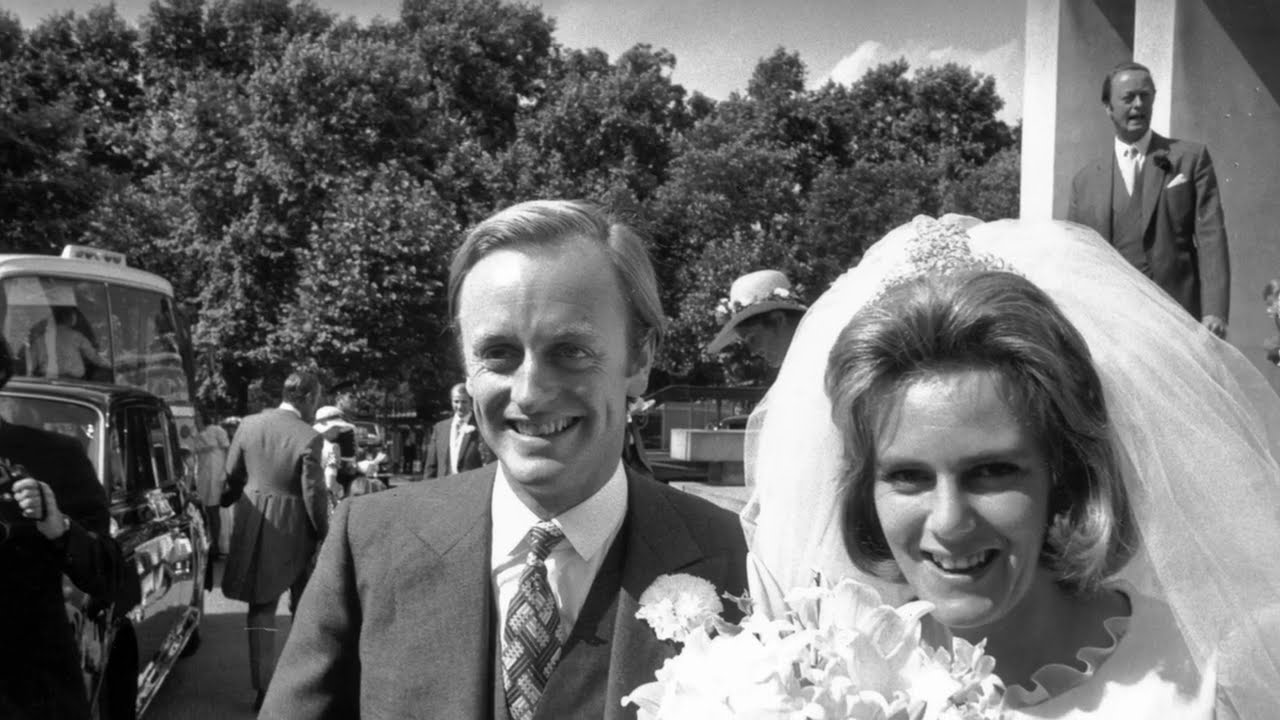
One reason was Camilla Parker Bowles. Camilla had known Charles before Diana entered his life. She was confident, socially experienced, amusing, and emotionally important to him. She had married Andrew Parker Bowles in 1973, but Charles's attachment to her remained significant.
The age difference between Charles and Diana was 12 years. On paper, that might not seem fatal. Emotionally, it could feel much larger.
Their engagement was announced in February 1981. Diana was 19. Charles was 32. The engagement interview contained a moment that would later seem almost prophetic. Asked whether they were in love, Diana answered positively. Charles replied with a remark questioning what being in love actually meant.
Diana moved into royal surroundings before the ceremony, spending time at Clarence House, the Queen Mother's London residence. She was entering a household governed by routines she had not created.
Diana later described feeling increasingly anxious before the wedding. She had concerns about Charles's relationship with Camilla. She was already struggling with bulimia, an illness that developed during the engagement period.
On July 29, 1981, she traveled to St. Paul's Cathedral wearing one of the most famous wedding dresses of the century. Hundreds of millions of people around the world watched. The ceremony presented a perfect picture: a prince, a beautiful young bride, a dynasty continuing.
The Queen Mother had seen royal history go wrong in spectacular fashion. To her generation, this wedding represented reassurance. The heir was married. The future appeared secure.
For Diana, the ceremony solved none of the questions that mattered most. Did Charles truly love her in the way she needed? Could she trust his relationship with Camilla? Would the family understand her emotional needs? Those questions followed her into the marriage.
Diana became Princess of Wales. Almost immediately, she had to perform a job while learning what the job was. The public response surprised nearly everyone. Diana was not merely popular. She was magnetic.
She did not possess the controlled stillness associated with older members of the family. She reacted. She smiled broadly. She looked nervous. She laughed. She seemed emotionally visible. That visibility made people feel close to her.
It also began changing the balance inside her marriage. Charles had spent his life preparing for public duty. Diana could walk into the same room wearing a new dress and dominate the next morning's newspapers.
In June 1982, Diana gave birth to Prince William. The birth transformed her position. She was now the mother of a future king. Motherhood also gave Diana an emotional role she understood more confidently than royal protocol.
When Charles and Diana toured Australia and New Zealand in 1983, arrangements were made that allowed William to travel with them for part of the journey rather than remain in Britain. The decision reflected Diana's priorities.
The tour made her an international star. In Australia, the imbalance became impossible to ignore. Crowds wanted Diana. She was photographed endlessly. Charles sometimes appeared amused. At other moments, the strain was visible.
The Queen Mother understood popularity very well. She had spent decades cultivating public affection herself. But her popularity never threatened the hierarchy. The Queen Mother's public warmth supported the crown. Diana's popularity was beginning to create a separate center of emotional authority.
In September 1984, Diana gave birth to Prince Harry. Now the public picture seemed complete. But the private marriage was becoming more difficult. Diana's bulimia continued. Her insecurity intensified. Charles struggled with Diana's emotional volatility and with the attention surrounding her.
Charles did not simply respect his grandmother because she was old and royal. He trusted her. She represented security. She represented continuity. For Diana, that relationship could become complicated. A powerful grandmother who comforts your husband is harmless when the marriage is happy. When the marriage is failing, the same relationship can feel like an alliance.
The Queen Mother had spent much of her adult life believing that royal people survived by placing duty first. Diana was beginning to believe that constantly suppressing personal pain could destroy a person from the inside.
The Queen Mother looked at endurance and saw strength. Diana increasingly looked at endurance and asked what it was costing. Neither woman had yet become the other's public enemy. They represented two different answers to the same question: What does a royal woman owe the monarchy when the monarchy is making her miserable?
By the middle of the 1980s, the marriage between Charles and Diana had become one of those arrangements that could still look perfectly respectable from 50 feet away. Unfortunately, cameras were getting closer.
Diana was also becoming increasingly aware that Charles's emotional connection with Camilla Parker Bowles had never vanished. Charles and Camilla had known each other before Diana. They shared humor, friends, interests, and the relaxed familiarity that comes from knowing someone without having to explain yourself every five minutes.
Diana could not compete with a memory. She tried anyway. That struggle intensified her insecurity, and insecurity intensified her behavior. Charles, who disliked emotional chaos, withdrew further. Diana, who interpreted withdrawal as rejection, became more desperate for reassurance.
Christmas at Sandringham followed traditions that were not easily altered. Diana found these gatherings increasingly difficult. The older royal world was close-knit in a way that could feel secure if you belonged to it and suffocating if you did not.
The Queen Mother remained one of the central figures in the family circle. At Christmas, at Balmoral, at family gatherings, she represented continuity with astonishing physical presence. She had been a royal wife before almost everyone around her had been born.
Her authority was often informal, which made it stronger. She did not need to issue commands. A look of approval mattered. A preference mattered. A tradition she enjoyed acquired the force of geology. Charles remained devoted to her.
For Diana, the family structure could feel like a wall of existing loyalties. She had married one man, but entered an entire emotional system. When Diana became angry with Charles, she was not simply confronting Charles. She was confronting the way Charles had been formed.
Diana's charitable work began developing a distinctive emotional style. She gravitated toward people who were ill, marginalized, frightened, or socially avoided. In 1987, she opened a hospital unit for patients with HIV and AIDS in London.
At a time when public fear and misinformation surrounding the illness remained widespread, Diana was photographed shaking hands with a patient without gloves. The gesture was simple. That was why it mattered.
Diana lingered. She made eye contact. She crouched beside children. She touched people. She listened. The public responded because the gestures looked natural. The institution benefited enormously. Here was a Princess of Wales making the monarchy seem compassionate and modern.
But the same qualities that strengthened the monarchy in public made Diana harder to manage in private. She was discovering her own power. Not constitutional power, not institutional power, something far more unsettling to the people around her: emotional power.
If she looked unhappy, newspapers asked why. If Charles and Diana stood too far apart, photographers noticed. If she attended an engagement alone, the absence became a story. Their marriage was becoming a public puzzle.
Inside the family, there was still enormous pressure to preserve appearances. That pressure was not unique to Diana. The Queen Mother had lived by it. The abdication crisis had taught her what happened when private life escaped control.
To the Queen Mother, the episode was not evidence that love should conquer everything. It was evidence that one person's private decision could place an unbearable burden on everyone else.
If the marriage between the Prince and Princess of Wales failed publicly, the consequences would travel through the institution. Charles was not simply a husband. He was the heir. William was not simply a child. He was second in line to the throne.
Diana increasingly felt that when she expressed pain, people heard risk. She wanted someone to say the marriage was hurting her. The family often seemed more concerned with whether the hurt could be contained. It is the difference between comforting someone and managing someone.
The Queen Mother's generation had been shaped by war and loss. Stoicism was not simply etiquette. It was survival. Diana belonged to a generation increasingly willing to talk about emotional damage. They were speaking different languages before either woman said a word.
Charles was caught between them. His instinct was closer to his grandmother's. He valued privacy. He distrusted emotional spectacle. The more he retreated into familiar relationships and familiar places, the more Diana felt excluded.
Balmoral could become particularly difficult. The Scottish estate was deeply important to the royal family. Charles loved Scotland. The Queen Mother loved Scotland. Diana did not always find the rhythm comforting. She increasingly felt like an outsider.
By the late 1980s, reports of marital difficulty were spreading. The palace still maintained the image of a functioning marriage. But a strange thing happens when a famous marriage begins collapsing in public. The smallest details become enormous.
In 1989, during a party, Diana confronted Camilla about her relationship with Charles. For Diana, this was an assertion of reality. She was tired of being expected to behave as though the emotional structure around her did not exist. The confrontation did not repair the marriage. It marked a change in Diana.
By the beginning of the 1990s, the couple were living increasingly separate emotional lives. In 1992, Charles and Diana traveled to India. Diana visited the Taj Mahal. She was photographed sitting alone on a bench in front of the monument.
The picture was almost too perfect: a beautiful princess, one of the world's most famous monuments to love, and no husband beside her. Diana had not announced that her marriage was lonely. She did not need to. The image did the work.
It was the queen's 40th year on the throne, a year that should have been celebratory. Instead, royal marriages were collapsing. Princess Anne's marriage had already failed. Prince Andrew separated from Sarah, Duchess of York. Then came further scandal.
Private telephone conversations involving Diana were published. Another intimate recorded conversation involving Charles and Camilla would become notorious. The queen later described 1992 as an "annus horribilis," a horrible year.
Andrew Morton's book about Diana appeared that summer. It presented a devastating picture of Diana's marriage, her bulimia, her unhappiness, her suicide attempts, and her sense of isolation inside the royal family.
The traditional palace story said duty continued. The Morton account said Diana had been suffering terribly while the duty continued. That distinction changed everything. Private pain had entered print. The old rule had been broken.
By the end of 1992, separation could no longer be avoided. Prime Minister John Major announced in the House of Commons that the Prince and Princess of Wales were separating. The future king and the woman chosen to become his queen were now living apart.
For the Queen Mother, this represented more than a family disappointment. It was evidence that the assumptions governing royal marriage were failing. A young woman had entered the institution, been given one of its highest titles, produced the necessary heirs, and then refused to continue pretending that misery was an acceptable private arrangement.
If Diana had become unpopular, the institution could have allowed her to drift outward. Instead, she remained beloved. The traditional hierarchy was being inverted. The institution possessed the titles. Diana possessed sympathy.
Separation did not bring peace. It merely removed the last excuse for pretending Charles and Diana were fighting over ordinary married life. Once they were living apart, the argument changed. The question was no longer whether the marriage could be repaired. It was who would control the story of why it had failed.
The Queen Mother had spent her life in a monarchy that survived scandal by refusing to feed it. The younger Wales household was moving toward something closer to competing documentaries.
In 1993, Diana announced that she intended to reduce her public engagements. The old royal model was based on volume. Diana increasingly preferred depth. She wanted to concentrate on issues where her presence could change public behavior.
For the Queen Mother's generation, duty was often measured in appearances completed, whether one felt like completing them or not. Diana was moving toward a different model. If she was going to spend the limited currency of her fame, she wanted to decide where it would have the greatest emotional effect.
In 1994, Charles agreed to cooperate with a television documentary made by Jonathan Dimbleby. One question overwhelmed much of the rest. Had he been faithful to Diana? Charles said that he had been faithful until the marriage had irretrievably broken down.
The admission changed the public argument instantly. Now Charles himself had acknowledged adultery. The future king had spoken publicly about marital infidelity. The old walls of royal privacy were cracking from both directions.
The documentary aired in June 1994. On the same evening, Diana attended a fundraising event at the Serpentine Gallery in London. She wore a fitted black dress with bare shoulders and a short hemline. The press later called it the revenge dress.
The moment demonstrated the unusual form of power Diana had developed. She did not require a palace. She did not require an official statement. She did not even require words. One photograph could reshape the next day's story.
By 1995, the cold war between the Wales households had entered a dangerous phase. Charles had spoken. Diana was considering whether she should do the same. The opportunity came through Martin Bashir, a journalist working for the BBC program Panorama.
The interview was recorded secretly at Kensington Palace. The palace establishment did not know what was coming. Neither did the Queen Mother. Neither did Charles. Neither did the Queen.
On November 20, 1995, millions watched Diana speak. She discussed bulimia. She discussed depression. She discussed self-harm. She discussed Charles's relationship with Camilla. She discussed her own relationship with James Hewitt.
And then came the sentence that would follow the monarchy for years. She said there had been three people in the marriage, so it had been crowded. The line was simple. That made it devastating.
Diana also questioned whether Charles was suited to the highest role waiting for him. That was the moment the interview moved beyond marital confession. The mother of a future king publicly questioning the suitability of the heir touched the institution itself.
For the Queen Mother, this was a profound breach. Her life's central principle had been that the monarchy came before private grievance. Diana had now taken her grievance to millions of people and connected it directly to the future of the crown.
The reaction inside the royal family was severe. After Panorama, the balance changed. The Queen wrote separately to Charles and Diana, indicating that an early divorce was desirable.
The marriage that had begun under cathedral bells in 1981 was now being formally pushed toward legal conclusion by the sovereign. The monarchy had helped create the marriage. The monarchy was now helping end it.
For Diana, the negotiations were not merely about leaving Charles. They were about identity. What title would she retain? What status would she have? Where would she live? What financial settlement would be made?
Eventually, Diana received a lump sum reported at around £17 million with additional money connected to maintaining her office. The number was enormous to the public. Within Diana's circumstances, it bought something more important than luxury. It bought distance.
Her title became the most emotionally charged part of the divorce. Before the divorce, she was Her Royal Highness, the Princess of Wales. After it, she would be Diana, Princess of Wales. She would lose the style of Royal Highness.
To outsiders, the difference could sound like an argument over three words. Inside the royal system, those three words represented rank. More painfully, her own sons retained their royal styles. William and Harry were princes. Their mother was no longer a royal highness.
Stories circulated that William comforted Diana by telling her that when he became king, he would restore the title. Whether every remembered word survived perfectly is less important than why the story resonated. People could picture the child seeing what adults had done to his mother's status and wanting to repair it.
The divorce became final in August 1996, 15 years after the wedding at St. Paul's. Charles and Diana were legally no longer husband and wife. The most famous royal marriage of its generation ended through paperwork.
Diana was 35. She had entered the family at 20. Nearly her entire adult identity had been shaped by the marriage. Now she had to invent what came after. For the first time since she was 19, Diana possessed the possibility of choosing the shape of her own life.
The Queen Mother, meanwhile, remained exactly what she had been: royal, senior, traditional, close to Charles, devoted to continuity. The contrast between them had never been sharper. One woman had spent decades proving that survival came from remaining inside the system. The other had just survived by leaving it.
In January 1997, Diana traveled to Angola. She was working with the British Red Cross and drawing attention to landmines. She walked through a cleared minefield wearing protective equipment. The photographs traveled around the world.
Critics accused her of interfering in political matters. Some suggested she was being used. Diana kept going. She visited injured people. She met children who had lost limbs. Her presence transformed an issue discussed by specialists into something families could understand immediately.
For years, the monarchy had provided Diana with a platform. Now Diana herself was the platform. The royal family could continue without her. She was proving she could continue without them.
At 96, the Queen Mother had no need to reinvent herself. Her public image was already fixed. She attended engagements. She went to the races. She appeared at ceremonial occasions. Her longevity had become part of her mythology.
Diana's popularity unsettled some people around the institution because it was based on exactly the quality older royal tradition had tried to regulate: personal feeling. Diana was loved partly because she appeared to need love. The Queen Mother had always projected the opposite.
Diana had already experienced relationships after the collapse of her marriage. One important relationship had been with Hasnat Khan, a heart surgeon of Pakistani background whom Diana met at the Royal Brompton Hospital. The relationship was unlike the theatrical world around her.
Hasnat was serious, private, professionally committed. He was not seeking celebrity. Diana was drawn to him. She reportedly considered the possibility of a future together. But privacy was almost impossible for a surgeon accustomed to hospital work. Their relationship eventually ended.
Then another man entered the picture. Dodi Fayed. He was the son of Mohamed Al-Fayed, the wealthy businessman who owned Harrods. During the summer of 1997, Diana accepted invitations connected to the Fayed family and spent time in the Mediterranean.
The photographs appeared almost immediately. Diana on a yacht, Diana swimming, Diana relaxing in the sun, Diana with Dodi. By August, photographs of Diana and Dodi together were appearing widely. Speculation escalated.
At the end of August, Diana and Dodi arrived in Paris. They stayed at the Ritz Hotel, which belonged to Dodi's father. On the evening of August 30, Diana and Dodi ate at the Ritz. Photographers gathered outside.
Later after midnight, Diana and Dodi departed from the rear in a Mercedes. Henri Paul, an acting security official at the Ritz, drove. Trevor Rees-Jones, Dodi's bodyguard, sat in the front passenger seat. Diana and Dodi sat in the back.
Shortly after midnight, the Mercedes entered the Pont de l'Alma tunnel at high speed. It struck a pillar. Dodi Fayed died at the scene. Henri Paul also died. Trevor Rees-Jones was critically injured.
Diana was alive. Emergency workers treated her. She was taken to the Pitié-Salpêtrière Hospital. Doctors worked to save her. At around 4 in the morning in Paris, Diana was pronounced dead. She was 36.
At Balmoral, William and Harry were asleep. Charles was there. The Queen was there. Prince Philip was there. The Queen Mother was nearby at Birkhall. The royal family had gone to Scotland for the summer as it did every year.
Charles was awakened. He wanted Diana's body brought home with dignity. A royal aircraft was eventually used to return her from Paris. Charles traveled to France with Diana's sisters. The institution that had removed Diana's Royal Highness style was now using royal machinery to bring her body back to Britain.

At Balmoral, the immediate priority became William and Harry. William was 15. Harry was 12. Their mother had died while they slept. Charles had to tell them. No palace training prepares a father for that.
The queen and Prince Philip focused on protecting the boys from immediate public pressure. The Queen Mother was part of the family circle facing the shock. For the older generation, the instinct was understandable. Keep the children sheltered. Remain at Balmoral. Allow them privacy.
It was a humane instinct. It would soon become a public relations catastrophe. Because while the royal family stayed in Scotland, London was beginning to transform.
People began traveling toward Kensington Palace. Flowers appeared. A few bouquets became hundreds. Hundreds became thousands. Messages were attached. Candles were placed. People cried beside strangers.
The gates of Diana's home became the center of a national mourning ritual nobody had planned. The palace establishment had spent centuries organizing ceremony. This ceremony organized itself.
And as the flowers spread across the pavement, another question began spreading with them. Where was the royal family? The Queen was at Balmoral. Charles was at Balmoral before traveling to Paris. William and Harry were at Balmoral. The Queen Mother was in Scotland.
The Royal Standard did not fly at half mast above Buckingham Palace because by tradition it was flown only when the sovereign was in residence and was not treated like an ordinary national flag. The explanation was technically correct. It was emotionally useless.
People did not want a lesson in flag protocol. They wanted a sign. Diana had built her public relationship around signs, touch, expression, presence. The institution responded first with procedure. The contrast was devastating.
The Queen Mother had spent almost an entire century believing that calm behavior during crisis reassured the country. Now restraint was being interpreted by some people as indifference.
At Balmoral, Sunday morning arrived only hours after the death. The family attended church at Crathie Kirk. From the family's perspective, church was natural. From the outside, however, people were waiting for something unmistakable. Instead, the public saw the family continuing one of its familiar Balmoral routines.
The Queen Mother was among those now being observed through this strange new lens. She had been a national symbol of endurance for more than 60 years. Her instinct in crisis was almost perfectly consistent: remain composed, appear steady, do not collapse publicly.
In 1940 that had looked brave. In 1997, some people were beginning to interpret the same behavior as coldness. Nothing about the Queen Mother's character had suddenly changed. The audience had.
Charles traveled to Paris to bring Diana's body home. He went with her sisters, Lady Sarah McCorquodale and Lady Jane Fellowes. The coffin was covered with the Royal Standard. That detail alone revealed how rapidly the meaning of Diana's status had changed.
The aircraft landed at RAF Northolt. The coffin was carried down. Charles stood nearby. So did Diana's sisters. Diana's body was taken to a private mortuary and later to the Chapel Royal at St. James's Palace.
The funeral preparations began and almost immediately the question arose: What kind of funeral should this be? Diana was not technically a member of the royal family in the same way she had been before divorce. But treating her death as an ordinary private family matter was clearly impossible.
The planners therefore faced an unusual task. They had to create a funeral for a woman whose public importance exceeded the formal category into which royal protocol placed her. In that sense, the funeral mirrored Diana's life. She never fitted neatly into the box prepared for her.
At Balmoral, the boys remained shielded. The Queen's decision to stay in Scotland with them was based on family concern. But London did not see the private reasoning. London saw closed palace gates.
The flag issue became especially explosive because it combined emotion with a technical rule almost no ordinary person had previously cared about. The public was not really arguing about fabric. It was arguing about recognition.
Newspapers intensified the pressure. Front pages demanded action. Commentators questioned the queen's absence. The palace had a serious problem. If it ignored the public mood, resentment could grow. If it suddenly changed ancient customs, it risked appearing panicked.
The Queen Mother had seen crises before, but this one operated at a speed unimaginable during the abdication of 1936. Television was continuous. Newspapers published special editions. Radio phone-ins allowed ordinary people to express anger instantly.
Within Balmoral, William and Harry were dealing with a reality far removed from newspaper arguments. Their mother was dead. Harry was only 12. William was old enough to understand that millions of people were discussing his parents again, except now one of them could never answer back.
By Tuesday and Wednesday, the atmosphere in London had become extraordinary. People stood in lines to sign books of condolence. More flowers arrived. Taxi drivers reportedly offered free rides to people carrying bouquets. Strangers discussed Diana in supermarkets and offices.
Behind the scenes, the funeral was taking shape. Westminster Abbey was chosen. The date would be Saturday, September 6. The ceremony would not be a state funeral in the strict formal sense. It would be a unique ceremonial funeral shaped around Diana's position and popularity.
One of the most painful discussions concerned the funeral procession. Should the boys walk behind their mother's coffin? William and Harry were children. Harry was barely into adolescence. The route would be lined by enormous crowds.
Philip reportedly played an important role in helping William consider the decision, making clear that if William walked, he would walk beside him. Eventually, William and Harry agreed to participate.
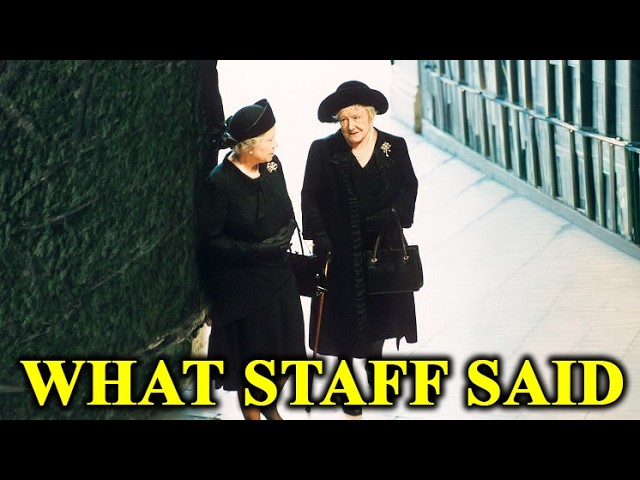
The Queen Mother would not walk in that procession. At 97 that was neither surprising nor controversial. She would attend the service at Westminster Abbey. Her role would be largely still: sit, stand when required, listen, watch. And because she would be still, cameras would have time to study her.
As the week continued, the palace finally adjusted. The Queen would return to London. A Union flag would fly above Buckingham Palace at half mast when the sovereign was away from the building, a break from the previous practice. More importantly, the Queen agreed to address the nation.
On Friday, September 5, the Queen returned from Balmoral. As Diana's coffin was taken from St. James's Palace to Kensington Palace in preparation for the funeral, the Queen stood outside Buckingham Palace with members of the family. When the coffin passed, she bowed her head.
The sovereign bowed to Diana. The meaning was unmistakable. Diana had always understood gestures. At last the institution answered in her language.
Later that day the Queen spoke on television from Buckingham Palace. She described Diana as an exceptional and gifted human being. She spoke not only as queen but as a grandmother. The temperature changed, not completely, but the monarchy had finally made itself emotionally visible.
The Queen Mother did not give a broadcast. She did not offer a competing public statement. She remained what she had always been: the senior matriarch behind the sovereign. Her silence fit her life. It also left others free to interpret it.
By Friday evening, London had become almost unreal. The funeral route was being prepared. People arrived during the night to secure places. Some slept on pavements. Flowers continued to cover the area around Kensington Palace.
Inside Kensington Palace, Diana's coffin rested before the final journey. Her apartment contained the traces of an interrupted life. One week she had been photographed on a yacht. The next week Britain was preparing to bury her.
The Queen Mother faced the same problem as the rest of the family. Her age offered some protection. At 97, nobody reasonably expected dramatic displays. Yet her history with Charles and her association with the old royal establishment made her symbolic.
Diana's admirers saw the funeral not simply as the burial of one woman. Some saw it as a moral reckoning. They believed Diana had exposed emotional failures inside the institution. They believed she had been punished for refusing silence.
The Queen Mother was therefore entering Westminster Abbey carrying decades of symbolism she had never personally chosen for this moment. To one generation, she was the beloved wartime queen. To another, she was Charles's formidable grandmother. To Diana's strongest supporters, she could appear to represent the system Diana had struggled against.
By dawn on Saturday, September 6, 1997, people were already packed along the route. The abbey waited. The coffin waited. Charles was preparing to walk. William and Harry were preparing to do something no child should have to rehearse.
The Queen Mother arrived carrying more than 90 years of royal history with her. At 97, simply attending such a long and emotionally charged public service required effort. She used a walking stick. Her movements were slower than they had once been, but the symbolism of her presence was enormous.
Outside Kensington Palace, the coffin was prepared for the journey. It was covered with the Royal Standard and surrounded by flowers. On top sat a simple white envelope addressed to "Mommy." It came from Harry.
The procession began. The gun carriage moved slowly through London. The crowds were enormous, yet much of the route was remarkably quiet. Then came the image that would define the funeral. Charles walked behind the coffin. Beside him walked William and Harry. Prince Philip walked with them. Diana's brother Earl Spencer joined the line.
Inside Westminster Abbey, the Queen Mother waited with the rest of the congregation. The cameras moved repeatedly across the royal faces. This was unavoidable. The public had spent the week asking whether the family cared. Now every face seemed to offer possible evidence.
To some viewers that composure looked dignified. To others, particularly those already suspicious of the older royal generation, it looked remote. What mattered was not simply what the Queen Mother did. It was what people believed her behavior meant.
The coffin entered the abbey. The congregation rose. The sound of the service filled the building. Westminster Abbey had seen coronations, royal weddings, state ceremonies, and funerals stretching back through centuries. Yet this occasion felt unusually personal.
Among the most famous people attending was Elton John. He and Diana had been friends. Their relationship had experienced difficulties, but they had reconciled before her death. Only weeks earlier, both had attended the funeral of Gianni Versace in Milan. There, Diana had comforted Elton John. Now he was attending hers.
He performed a rewritten version of "Candle in the Wind." The original song had been associated with Marilyn Monroe. For Diana, the lyrics were changed. The performance became one of the emotional peaks of the service.
Then Diana's brother stood to speak. Charles Spencer described Diana as someone who possessed compassion, beauty, style, and vulnerability. Then the speech moved toward the forces he believed had surrounded her life.
He criticized the treatment she had received from the media. But Spencer also spoke about Diana's relationship with the institution and the world of royal expectation. He said her blood family would protect William and Harry so that their souls would not be submerged by duty and tradition.
The sentence landed inside Westminster Abbey like a challenge. Duty. Tradition. Two words that had structured the Queen Mother's entire adult life. Now, Diana's brother was suggesting those same forces could threaten the emotional lives of her sons.
The abbey remained quiet while he spoke. Outside, the crowd reacted differently. When Spencer criticized the media and defended Diana, applause broke out among the people listening beyond the abbey. Then the applause moved. People inside Westminster Abbey began responding too.
The cameras naturally searched the royal faces. They found the Queen. They found Charles. They found Philip. They found the Queen Mother. The senior royals remained composed. That was what they had been trained to do.
To admirers of royal discipline, this was exactly what dignity looked like. To Diana supporters who already believed the older family had failed her, the stillness could seem like proof of emotional distance. The same face could support two completely opposite stories.
The Queen Mother was especially vulnerable to that process because she represented tradition more completely than anyone else present. Earl Spencer's criticism of duty and tradition could therefore feel to viewers almost personally directed toward the world she embodied.
For decades, royal ceremonies told the public how to behave. At Diana's funeral, the public was telling the royal ceremony what it felt. That reversal was historic.
The Queen Mother had known another Britain. A Britain in which royal appearances were greeted with formal cheers. A Britain in which newspapers often protected private royal information. Now she sat in the middle of precisely the opposite moment.
The strange thing was that the Queen Mother herself remained popular with large sections of the country. Millions still admired her. Many remembered the war years. Many saw no contradiction in loving both women. But emotional events encourage simpler narratives.
Charles sat in an even more exposed position. His former brother-in-law was effectively defending Diana's legacy before him. Charles could not respond, nor should he have. A funeral is not a debate, but silence can feel like defeat when only one side is speaking.
William and Harry listened too. For them, the speech could not be reduced to politics. The man speaking was their uncle. The woman being discussed was their mother. The people being criticized included the world into which they had been born.
The Queen Mother understood inheritance differently. For her, inheritance meant obligation. Position was not primarily a personal privilege. It was a responsibility one received and then fulfilled. The idea that William might need protection from duty itself struck at the center of that philosophy.
The service continued. Prayers were offered. Readings were given. Diana had not been a saint. The people closest to her knew that she could be impulsive. She could be demanding. She made mistakes in relationships. But death had begun simplifying her. The complicated woman was becoming an icon.
The Queen Mother had lived too long for that kind of simplification. At 97 she had accumulated contradictions across nearly a century. She could be generous and extravagant, warm and formidable, funny and deeply traditional. A funeral audience did not have time for all of that complexity. Television offered a face for a few seconds. People supplied the rest.
As the service approached its conclusion, the coffin prepared to leave Westminster Abbey. The congregation rose again. The Queen Mother stood with assistance. At 97, every movement required concentration. People watching could still interpret a slow expression as emotional meaning, when it might simply have been physical effort.
The coffin moved out. Outside, the scale of mourning became visible again. Flowers flew toward the hearse. Some landed on the roof. Others struck the windshield. People stretched forward from behind barriers. Hands reached into the air.
The royal family would travel separately toward the burial at Althorp, Diana's family estate in Northamptonshire. That part of the day would be more private. Westminster Abbey had belonged to the country. Althorp would belong more closely to Diana's family and her sons.
The Queen Mother had completed the most public part of her role. She had attended. She had listened. She had remained composed. She had watched Earl Spencer challenge the culture of duty she cherished. She had heard applause echo inside an abbey where royal tradition usually controlled every sound. And she had done what she had been trained to do.
She gave almost nothing away. That discipline had been considered one of her strengths. On September 6, 1997, it became one of the reasons people talked about her. Some viewers saw dignity, some saw age, some saw shock, some saw distance, some saw an old woman refusing to perform grief for television.
The Queen Mother did not explain herself. She rarely had. That silence allowed the interpretations to survive. As Diana's coffin left London, the crowds began thinning. The image of William and Harry walking behind their mother was being fixed permanently in public memory.
At Althorp, the atmosphere became private. Her burial took place on an island in the ornamental lake known as the Oval. The location gave her something she had rarely possessed while alive: protection from strangers. The woman whose face had traveled around the world was buried beyond the reach of the crowds.
The monarchy had survived the week, but it could not survive unchanged. There had been moments during the days after Diana's death when criticism of the royal family became unusually intense. By the evening after the funeral, the immediate crisis was beginning to pass. But none of that erased what people had seen inside Westminster Abbey.
The Queen Mother became a natural focus for that contrast. At 97, she had spent almost her entire adult life practicing a style of public behavior in which composure was not evidence of feeling less. It was evidence of control.
She had endured the abdication crisis. She had become queen unexpectedly. She had experienced the Second World War. She had become a widow at 51. She had watched her daughter take the throne. By the time Diana died, self-control was not a performance the Queen Mother switched on for special occasions. It was part of her identity.
Diana had developed almost the opposite public language. If she was frightened, people often saw it. If she was lonely, they saw that. After Diana, simply appearing dignified would no longer satisfy everyone. People increasingly expected public figures to acknowledge emotional reality directly.
The Queen Mother never publicly offered an emotional explanation of her behavior at the service. She did not sit for a television interview and describe her memories of Diana. She did not publish a personal defense. She carried on. It was almost the most Queen Mother response imaginable.
Yet the royal family around her was already adapting. The Queen had learned something during that extraordinary week. The monarchy could not always rely on people understanding silence in the way previous generations had. Sometimes it had to explain. Sometimes it had to respond faster. Sometimes a gesture mattered more than a rule.
The Queen Mother was not emotionally ignorant. She had been one of the most successful creators of royal warmth in the 20th century. She smiled constantly in public. She cultivated an approachable image. She visited bomb-damaged communities during the war.
What she did not share was Diana's belief that vulnerability itself could be part of the public relationship. The Queen Mother gave people reassurance. Diana invited people into distress. Both methods created affection. Only one fitted comfortably inside the old monarchy.
That was why Diana's funeral was not really a contest between a warm princess and a cold old woman. It was a collision between two methods of creating trust. The Queen Mother said in effect, "Whatever happens, I will remain steady." Diana said, "Whatever happens, I will let you see that it hurts."
Charles was left to live inside the consequences. Diana's death transformed his position. He was now the only surviving parent of William and Harry. The Queen Mother remained one of his closest older relatives. She continued providing the kind of emotional refuge she had given him since childhood.
But even Charles could no longer live entirely according to the world she represented. The future monarchy would belong to William, and William's understanding of monarchy would always contain Diana.
William had inherited royal duty from his father. He had inherited Diana's emotional legacy from his mother. The two traditions could no longer be separated neatly. He had watched his mother lose her Royal Highness style. He had watched crowds adore her. Then he had walked behind her coffin while millions watched him grieve.
In the years after 1997, Diana's public reputation continued evolving. Her charitable work became central to remembrance. Her glamour remained. Her troubled marriage remained. The story of the lonely princess fighting an unfeeling institution became especially powerful because it was emotionally satisfying.
Like many satisfying stories, it was simpler than reality. The royal family had made serious mistakes with Diana. Diana had also been capable of making serious mistakes herself. Charles had hurt her. She had hurt him. The Queen Mother had been loyal to Charles. That did not prove she spent every waking moment plotting against Diana.
Families are usually less organized than conspiracy theories require. Sometimes people hurt each other through loyalty rather than malice. The Queen Mother's loyalty was to her grandson, her daughter, and the institution around which her adult life had been built.
Diana needed something that loyalty could not easily provide. She needed the family to accept that protecting the institution might sometimes require admitting the institution had failed someone. That was a much harder request.
There was no possible facial expression the Queen Mother could have produced that would reconcile those views. A tear would not do it. A smile certainly would not. The conflict was larger than manners.
That is why the fascination with her behavior at the funeral reveals as much about the audience as it does about her. People wanted a verdict. They looked at the Queen Mother and asked whether the old monarchy regretted what had happened to Diana. But one 97-year-old woman's face could not answer for an entire institution.
Public footage can show posture. It can show whether someone speaks. It can show a glance. It cannot prove the private meaning of any of them. The temptation to claim otherwise became especially strong because Diana's story had already been turned into a morality play.
The Queen Mother lived for another four and a half years. Her final years reinforced the qualities that had defined her public identity. She continued appearances despite extreme age. Her 100th birthday in 2000 became a major public celebration.
Diana had died at 36, permanently young in public memory. The Queen Mother continued aging in front of the country until she had lived more than a century. One became associated with interrupted possibility, the other with endurance almost beyond belief.
Princess Margaret, her younger daughter, died in February 2002. She was 71. The Queen Mother, already 101, attended her funeral. Her health was fragile. Yet she appeared. Once again, duty meant showing up.
Weeks later, on March 30, 2002, the Queen Mother died at Royal Lodge, Windsor. She was 101. The Queen was at her bedside. Britain mourned again. This time the atmosphere was different. There was no national argument over whether the royal family understood its own loss.
The Queen Mother had died after an extraordinarily long life surrounded by the structure she had spent decades defending. Her funeral belonged naturally to the institution. Diana's never had. That difference explains much of what happened in 1997.
In the years that followed both women's deaths, the royal family continued changing. Public emotion became more acceptable. Mental health became a subject senior royals discussed openly. William and Harry spoke publicly about grief.
The fact that they eventually described the emotional impact of losing their mother showed how far royal language had moved from the culture in which the Queen Mother had been formed. Silence was no longer automatically considered strength.
But neither did the old idea disappear completely. The monarchy still depended on restraint. The lesson of Diana was not that restraint had become worthless. It was that restraint without visible empathy could be misunderstood.
The Queen understood it more quickly than many expected. Her bow before Diana's coffin became one of the most important images of the week, precisely because it combined old ceremony with new emotional awareness. The Queen Mother, older and more fixed in her habits, did not create an equivalent dramatic gesture inside the abbey.
The fascination survives because Diana's funeral was never only about Diana. It was about what Britain expected from royalty. Should kings and queens absorb grief silently or share it? Should duty outrank personal happiness? Should private emotion remain private when public institutions are involved?
Diana had forced all of those questions into public life. Her funeral forced the people who survived her to sit beside them. The Queen Mother could not answer by speaking. Her generation had taught her that speaking too much was often the problem.
So she answered in the only language she trusted. She attended. She remained upright. She listened while Diana's brother criticized the world she represented. She sat through applause that would once have seemed unimaginable inside a royal funeral. And she maintained control.
That behavior was noticed because Diana had changed what people expected control to look like. Had the same funeral occurred 30 years earlier, the Queen Mother's stillness might have attracted little comment. In 1997, after years of watching Diana make feeling visible, stillness itself looked like a statement.
Perhaps that is the final irony. Diana spent much of her royal life trying to persuade people that appearances could conceal suffering. At her funeral, millions looked at the Queen Mother and assumed an appearance revealed everything. It did not.
A face cannot tell us whether someone loved enough, regretted enough, understood enough, or grieved enough. What it can tell us is what a culture expects grief to look like. And on that September morning, Britain had changed.
The Queen Mother represented a monarchy that had survived by keeping its feelings under control. Diana represented a public that had learned to distrust control when it could not see the feeling underneath. Neither idea disappeared when the funeral ended. They continued together. They still do.
The image of the Queen Mother inside Westminster Abbey remains revealing because she sat at the precise meeting point between two royal ages. Behind her was the world of George VI, wartime discipline, private sacrifice, and the belief that duty was demonstrated by never allowing the public to see the strain.
Before her was the world Diana had helped create, where emotional openness could become a form of authority, and where people expected powerful families to acknowledge pain rather than simply survive it.
Diana's coffin passed between those worlds. William and Harry walked behind it. Charles walked beside them. The Queen bowed. Earl Spencer spoke. The crowd applauded. And the Queen Mother remained composed.
For almost anyone else, it might have been only the natural stillness of a 97-year-old woman attending a difficult funeral. For her, nothing could be only that. She had become a symbol long before Diana was born. And Diana's death changed the meaning of the symbol.
The Queen Mother had spent her life believing the monarchy proved its strength by carrying on. Diana had taught millions of people to ask a different question: At what cost?
That question followed the coffin out of Westminster Abbey. It followed William and Harry into adulthood. It followed Charles through the long years after the divorce and Diana's death. And it followed the monarchy into a century the Queen Mother barely lived to see.
The funeral did not prove that Diana had won some final battle against the royal family. Funerals do not produce winners. Her mother was dead. Two boys had lost her. A former husband carried memories that could never be repaired.
An old family had discovered that the public relationship on which it depended was changing beneath its feet, and a 97-year-old matriarch sat through the ceremony using the same discipline that had carried her through almost every crisis of her life.
People noticed because by then Diana had taught them to notice. They looked for tears. They looked for discomfort. They looked for remorse. What they actually saw was simpler. An old woman refusing to reveal very much.
Once that had been the essence of royal dignity. After Diana, it would never be quite enough again.