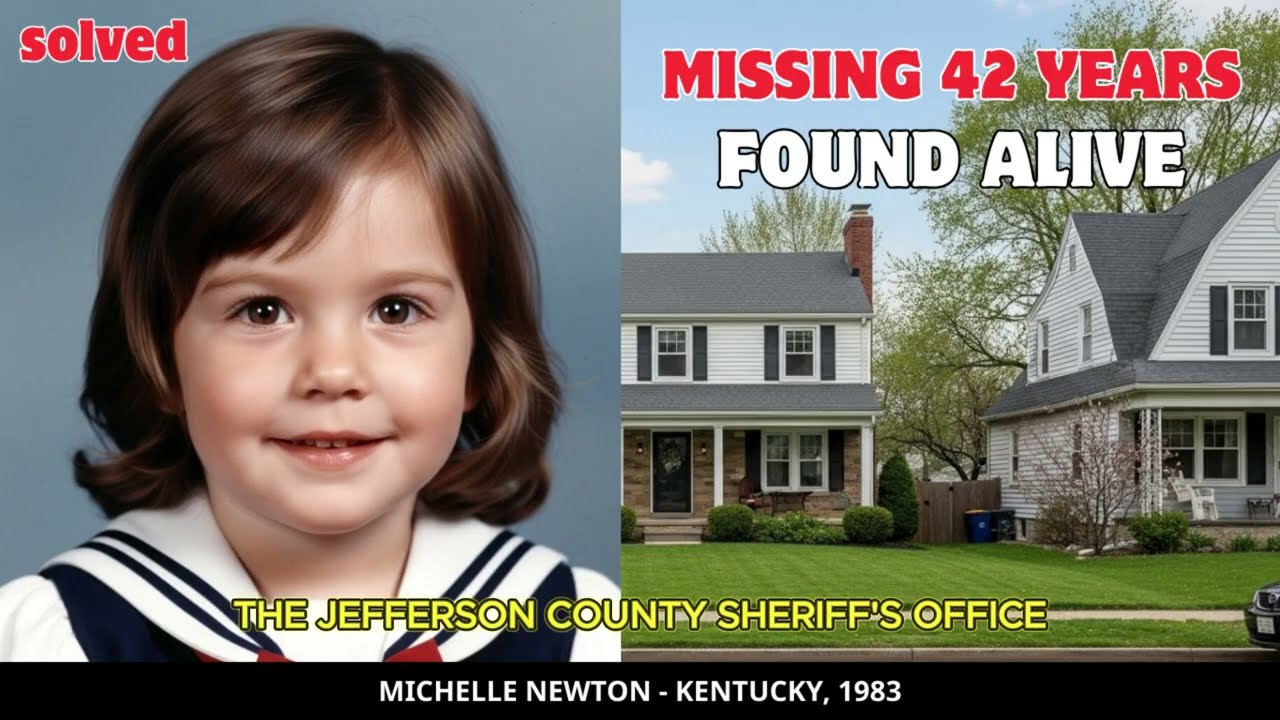
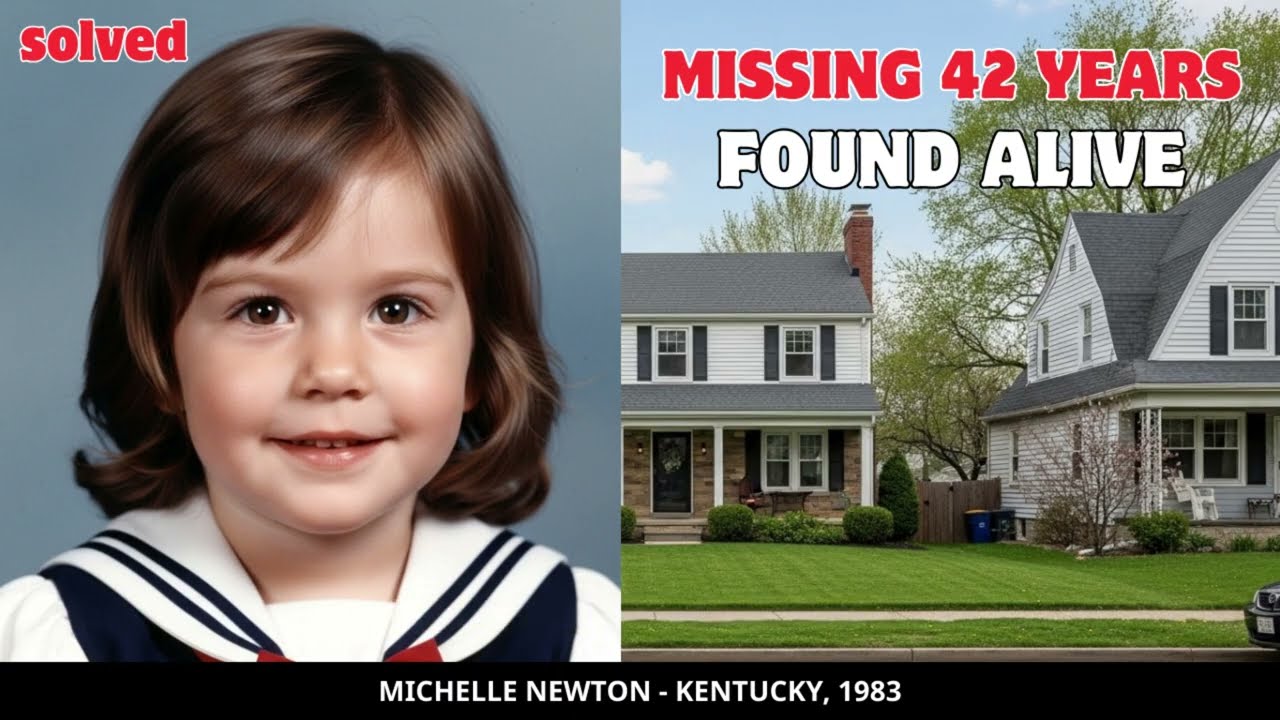
For more than four decades, the face of a three-year-old girl in a crisp white sailor dress stared out from missing-person flyers across Kentucky and Georgia. Dark hair, pigtails, and a smile with a gap between her two front baby teeth. Her name was Michelle Marie Newton. Little Shelly to those who loved her.
On April 6, 1983, she vanished from Louisville, Kentucky, along with her mother, Deborah Lee Newton. This was not a case of strangers in the night or shadowy abductors. It was a parental abduction, one of the most heartbreaking and complicated kinds of missing child cases.
The case stayed cold for 42 years. It was finally resolved through modern forensics, a single anonymous tip, and the quiet persistence of a father who never gave up.
In the spring of 1983, Joseph Newton, known to everyone as Joe, was 33 years old. He was a hardworking man with a steady job and a young family in the blue-collar neighborhoods of Louisville.
He and his wife Deborah had been married several years. Their daughter Michelle was born on October 5, 1979, and she was the center of their world. Friends described Shelly as bright, curious, and always ready with a hug.
She loved her little sailor outfits, her stuffed animals, and riding on her father's shoulders during neighborhood walks. The Newtons were planning a big change that spring. Joe had an opportunity for better work in Georgia.
Deborah told Joe she would head down first to scout apartments, set up the new place, and get everything ready so the transition would be smooth when Joe followed a short while later.
On the morning of April 2, 1983, Deborah packed a suitcase, bundled three-year-old Michelle into the car, kissed Joe goodbye, and promised to call as soon as they were settled. The little girl waved from her car seat, oblivious to how final that wave would become.
Joe stayed behind to wrap up loose ends, give notice at work, and handle the sale of their house in Louisville. He expected a call that evening or the next day. The call never came.
Days turned into a week. Joe tried the number Deborah had left for a potential rental in Clayton County, Georgia. Nothing. He called friends and relatives, asking if anyone had seen Deborah's car, a modest sedan with Kentucky plates. No one had.
Worry turned to dread. Joe contacted the Louisville police. At first, officers treated it as a domestic matter, perhaps a marital disagreement or a temporary separation.
Parental abductions were common enough in the early 1980s, often resolved when emotions cooled. But as weeks became months, the tone shifted.
By late spring, the Jefferson County Sheriff's Office opened a formal missing person's investigation. They issued bulletins for Deborah Lee Newton, aged 24, and her daughter, Michelle Marie Newton, age three.
Flyers went up in truck stops, post offices, and churches across Kentucky and into Georgia. The description was heartbreakingly ordinary: a young mother and her toddler last seen leaving home for what was supposed to be a family relocation.
Joe cooperated fully. He gave detectives every detail he could remember, including the last conversations, the planned route down I-75, and the name of the apartment complex Deborah had mentioned. He even traveled to Georgia himself, knocking on doors in Clayton County and showing photos to strangers. Nothing.
Then came the first real blow. Sometime between late 1984 and early 1985, Deborah made one final phone call to Joe. The conversation was brief and tense. According to police summaries later released, Deborah offered no explanation for the silence and no location, just a few words before the line went dead. After that, nothing.
In the summer of 1985, a Jefferson County grand jury indicted Deborah on charges of custodial interference, a felony in Kentucky with no statute of limitations for parental abductions where the child is taken out of state.
The FBI got involved, issuing an unlawful flight to avoid prosecution warrant. For a brief period, Deborah appeared on the bureau's list of top eight most wanted parental kidnapping fugitives, a rare distinction that put her face on posters in federal buildings nationwide.
But even that spotlight faded. Leads dried up. Tips came in about a woman matching Deborah's description in Atlanta, another in Florida, but each one checked out negative.
Age-progressed sketches of little Michelle, created by the National Center for Missing and Exploited Children, showed a girl who might have grown into a teenager with her mother's eyes and her father's smile. Those images circulated, but the years rolled on without answers.
For Joe Newton, the silence was louder than any scream. Back in Louisville, the Jefferson County Sheriff's Office kept the file active, but active in the way cold cases often are: checked once a year, dusted off when a new tip came in, otherwise left to gather quiet dust in a metal cabinet.
Detectives assigned to the Newton case rotated out. New ones came in, read the thick folder, and shook their heads at how ordinary the disappearance looked on paper. A mother and child, a planned move, a sudden break in communication. No ransom note, no witnesses to a struggle, no blood. Just absence.
The first serious investigative push came in 1985, right after the grand jury indictment. Detectives drove down to Clayton County, Georgia, the area Deborah had mentioned as a possible landing spot.
They canvassed apartment complexes along Tara Boulevard, showed photos to leasing agents, and talked to utility companies. Nothing. No lease in Deborah Lee Newton's name. No electricity turned on under that name. No trace of the Kentucky-plated sedan.
They expanded the search radius to Atlanta, Macon, Savannah, and every major city along the I-75 corridor. State troopers in Georgia were asked to watch for the vehicle. The National Crime Information Center entered Deborah and Michelle as fugitives and missing persons.
For a brief window in the late 1980s, the FBI elevated the case to its parental kidnapping top eight most wanted list. That got national attention, a segment on America's Most Wanted, and a mention in Reader's Digest flyers mailed to every post office in the Southeast.
The age-progressed image of Michelle at age 8, created by forensic artists at the National Center for Missing and Exploited Children, showed a girl with wide eyes and a shy smile, looking remarkably like her mother at the same age.
Thousands of tips poured in. Most were dead ends. A woman in Chattanooga thought she saw Deborah working at a diner. Negative. A child matching Michelle's description was spotted at a county fair in Alabama. Negative. A neighbor in Florida claimed a quiet new family had moved in next door. Negative again.
Each false lead cost time, money, and hope. Joe drove to many of those locations himself. He sat in his car outside addresses and watched women walk past grocery stores, hoping one of them would turn and reveal the face he'd last seen kissing his daughter goodbye.
Joe never stopped searching. In a 1986 interview with local television, his voice cracked as he spoke directly to the camera, asking whether people wouldn't want their child back, at least to see her grow up and know she was safe.
He kept Michelle's room exactly as it was. Toys on the shelf, crib still assembled, waiting for the day she might walk through the door.
Meanwhile, across state lines and under a different name, life continued for the woman once known as Deborah Newton and the child once called Shelly. They built routines, made memories, and lived quietly.
By the early 1990s, the tips slowed to a trickle. The case slipped from the headlines. The FBI quietly removed Deborah from the top eight list. The spotlight had moved on to newer, more violent crimes.
Joe kept searching in his own way. He never remarried. He kept Michelle's room untouched, stuffed animals lined up on the dresser, a small pair of pink sneakers still by the door. In rare interviews, he spoke softly, always the same message: he just wanted to know she was okay.
Then came the procedural blows. In 2000, the Jefferson County Commonwealth's Attorney's Office dismissed the 1985 indictment without prejudice. The stated reason was technical. Prosecutors couldn't locate Joe Newton to testify at a potential trial.
Joe had moved a few times over the years and hadn't kept his current contact information current with the court. The dismissal wasn't an exoneration of Deborah. It was a paperwork casualty of time. The felony charge could be reindicted at any point because parental abduction across state lines had no statute of limitations in Kentucky.
Five years later, in 2005, Michelle's name quietly vanished from the National Center for Missing and Exploited Children's active database. The policy at the time allowed cases to be archived if no credible leads had surfaced in years and there was no evidence of foul play.
Michelle Marie Newton was no longer considered an active missing child. She was presumed either safe under a new identity or no longer alive. The latter was never said aloud, but the implication hung heavy.
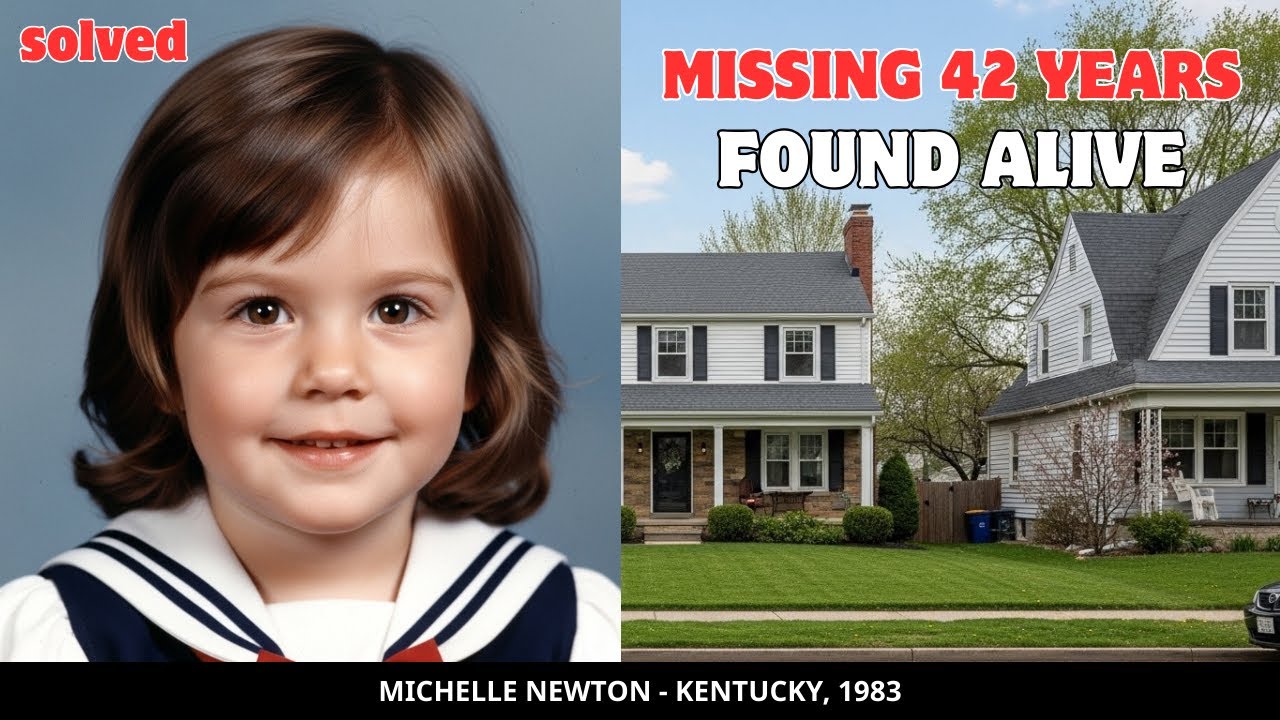
Joe didn't learn about the removal until months later when he called to check on the status of the age-progressed photo. The representative gently explained the change. He was devastated. He told a cousin they had taken her off the list like she never existed, but he never stopped believing she was out there.
The years ground on. In 2010, 2012, and 2014, cold case units in Louisville reviewed the file during annual audits. They ran Deborah's name through new databases, credit reports, driver's license records, and Social Security traces. Nothing.
They sent queries to the Florida Department of Law Enforcement, the Georgia Bureau of Investigation, and even the U.S. Postal Service for change of address records. Every search came back blank.
Then in late 2015, a small crack appeared. A distant relative of Deborah's, someone who had stayed in sporadic contact with the family, reached out to the Jefferson County Sheriff's Office.
She had seen a news segment about a woman arrested in Tennessee for a completely unrelated parental abduction. The story triggered a memory. She remembered Deborah once saying years before the disappearance that if she ever needed to disappear, she'd go somewhere warm, somewhere quiet, somewhere with palm trees. Florida, maybe.
The tip was thin, almost nothing, but it was enough for a detective named Mark Harland to reopen the physical file. Harland was a veteran investigator who had taken over cold cases after retiring from homicide. He didn't expect miracles. He just believed every case deserved a fresh set of eyes every decade or so.
He started with the basics. He reinterviewed Joe Newton, now in his late 60s and still living in the Louisville area. Joe was older, grayer, and quieter, but the story hadn't changed.
Harland pulled the original 1985 indictment, dusted off the grand jury transcripts, and after confirming Joe's current address and willingness to cooperate, had prosecutors reissue the custodial interference warrant in 2016. The case was officially revived.
From there, the investigation entered a new phase: slow, methodical, and digital. Harland ran Deborah's name and Social Security number through every modern database he could access. He cross-referenced old tips against new technology, facial recognition software, and reverse image searches of the old photos.
He reached out to the Florida Department of Law Enforcement again, this time with a more targeted request: any woman in her late 50s living under an alias that might match Deborah's approximate description. Nothing yet. But the file was breathing again.
Meanwhile, the world had changed around the case. Genetic genealogy was emerging. Commercial DNA companies like Ancestry and 23andMe were exploding in popularity. People were finding long-lost cousins, discovering adoptions, and uncovering family secrets.
Law enforcement began experimenting with uploading crime scene DNA to public databases. In 2018, the Golden State Killer was arrested thanks to a distant relative's saliva sample. The technique, called investigative genetic genealogy, was still new, controversial, and expensive. But it was no longer science fiction.
Harland and his team discussed the possibility. They had no crime scene DNA, no blood, no fingerprints, but they did have a living relative: Deborah's sister, still living in the Louisville area. If they ever got a credible suspect, a voluntary DNA sample from the sister could be compared against any woman claiming to be someone else.
It was a long shot, a very long shot. But in the spring of 2025, after nearly a decade of quiet digging, the long shot paid off.
The tip landed on Detective Mark Harland's desk on a humid Tuesday in early May 2025. It came through the Marion County Crime Stoppers anonymous line, call number 4872219, logged at 3:17 p.m. on April 28.
The caller, a woman who refused to give her name, spoke in the calm, practiced tone of someone who had rehearsed what she wanted to say. She said she had been reading about old missing children cases online and mentioned the 1983 Kentucky case of Michelle Newton and her mother Deborah.
She said she had looked at the age-progressed photo made of the mother back then and then looked at a woman who lived in her community named Sharon Neely. She described her as a quiet lady in her mid-60s who kept to herself, but said that when she saw her picture next to the old one of Deborah Newton, it was uncanny.
The dispatcher asked the usual follow-up questions, but the caller kept it brief. She gave an approximate street name in one of The Villages' many neighborhoods, hung up, and disappeared back into anonymity.
Harland listened to the recording three times. He wasn't one to get his hopes up easily. He'd chased too many lookalikes over the years. But something about the tip felt different. It wasn't vague. It wasn't hysterical. It named a real retirement community, a real alias, and it referenced the exact visual comparison that had always been the weakest part of the old case.
No one had ever seen Deborah and Michelle together after 1983, so the only bridge between past and present had been photographs. He pulled up the file and laid out the two images side by side on his monitor.
On the left, the 1983 family snapshot that had been on every flyer: Deborah Lee Newton, 24 years old, dark hair parted in the middle, soft smile, eyes slightly downcast. On the right, the age progression from 2010, estimating what Deborah might look like at 54. Same dark hair, now with imagined gray streaks, same gentle jawline, same quiet expression.
He opened a new browser tab, logged into the Marion County property records portal, and typed Sharon Neely. The name popped immediately. A modest villa in the Fenney section of The Villages, purchased in 2011. No mortgage. Taxes paid on time. Utility bills current.
The owner's date of birth was listed as October 1960, making her 64 in 2025. That fit. Deborah's actual birth date was July 1959. She would have turned 65 that summer.
Harland printed the property record, circled the address, and made a call to the Marion County Sheriff's Office. He spoke to a detective named Carla Ruiz, who had worked cold cases in Central Florida for nearly two decades.
He told her he had a possible match on a parental abduction out of Kentucky, a woman living under the name Sharon Neely in The Villages, and asked if they could discreetly get a recent photograph of her, nothing confrontational.
Ruiz didn't hesitate. She said they could do better than that. The Villages had a pretty active community Facebook group where people posted pictures all the time. Golf tournaments, book clubs, holiday events. She asked for a couple of days.
Forty-eight hours later, Ruiz emailed Harland three photographs. The first was from a 2023 Fourth of July picnic posted by the Fenney Neighborhood Association, showing a woman in a wide-brimmed sun hat standing near a grill, smiling at the camera, holding a plate of potato salad.
The second was a clearer shot from the same event, taken from the side, dark hair pulled back, faint crow's feet, the same gentle slope to the shoulders. The third was a driver's license scan Ruiz had quietly requested from the Florida Highway Safety and Motor Vehicles database. Sharon Neely, date of birth 10/15/1960, issued 2018.
Harland forwarded all three to the forensic imaging specialist at the Kentucky State Police Lab. The specialist ran a basic facial recognition comparison against the 1983 photo and the 2010 age progression. The software returned a 92 percent similarity score between the 2023 picnic photo and the age-progressed image.
Not definitive on its own. Facial recognition technology is still probabilistic. But high enough to justify digging deeper.
Harland flew to Florida the following week. He and Detective Ruiz met in Ocala, drove the short distance to The Villages, and parked across from the quiet cul-de-sac where Sharon Neely's villa sat. They didn't knock on the door. They didn't need to yet. Instead, they waited.
On the third day of surveillance, Friday, May 16, 2025, Sharon emerged to walk her small dog along the sidewalk. Ruiz took photographs from inside the unmarked car using a long lens.
When Harland compared the fresh images to the 1983 original, the resemblance was no longer subtle. The shape of the cheekbones, the slight downward tilt of the mouth when she wasn't smiling, the way she carried her head. He felt the familiar tightening in his chest that comes when a case suddenly stops being theoretical.
Back in Louisville, he made the next call, one he had been preparing for since 2015. Deborah's younger sister, Lisa, still lived in the same modest house on the east side of town where she had grown up with Deborah.
Lisa had been 21 in 1983, the aunt who used to babysit Michelle on weekends. She had never stopped believing her sister was alive somewhere. She had also never stopped feeling guilty that she hadn't seen the signs or asked more questions.
Harland met her at her kitchen table. He laid out the photographs gently. He told her they didn't know anything for certain yet, but they had a woman in Florida living under a different name who looked very much like her sister. They would need a DNA sample from her to compare. It was voluntary.
Lisa didn't hesitate. She opened the kitchen drawer and pulled out a small envelope she had kept for years. Inside were a few strands of Deborah's hair she had saved from a hairbrush after one of their last family dinners in 1982. She said she had been waiting for this day.
The next step was delicate. Florida law allowed investigators to obtain a reference DNA sample from a suspect in a nonviolent felony if there was probable cause. Harland drafted the affidavit citing the photographic similarities, the matching physical description, the property records, and the long history of the case.
A Marion County judge signed the order on June 4, 2025. Two days later, a plainclothes detective knocked on Sharon Neely's door with a warrant for a buccal swab.
She opened the door wearing a light cardigan, looked at the badge, and said simply that she figured this day would come eventually. She didn't resist. She let them take the swab, signed the receipt, then closed the door and returned to her life as though nothing had changed.
The samples, Lisa's reference DNA and Sharon's buccal swab, were rushed to the Kentucky State Police Forensic Lab in Frankfort. The lab prioritized the case because of its age and the media attention it had once received. Analysts ran the standard STR profile comparison.
On July 11, 2025, the report arrived in Harland's inbox. The conclusion was unequivocal. The probability of a maternity match was 99.9997 percent. The DNA profile obtained from the buccal swab of Sharon Neely was consistent with being the biological mother of Michelle Marie Newton, as confirmed by comparison to the known relative sample provided by Lisa.
There was no room for doubt. Harland called Joe Newton that same afternoon. Joe answered on the second ring. His voice was quiet, almost fragile.
Harland told him they had a match. It was her. They had found Deborah, and they believed Michelle was still with her. She was alive.
There was silence on the line for so long that Harland thought the call had dropped. Then Joe spoke, his voice thick. "She's alive." He repeated the words twice more, as though testing them for reality.
The investigation now moved very quickly. Harland coordinated with the Marion County Sheriff's Office to prepare an arrest warrant for Deborah Lee Newton, also known as Sharon Neely, on the original 2016 reindicted charge of custodial interference in the first degree, a Class D felony.
Because the child had been taken across state lines, federal jurisdiction was also available, but Kentucky wanted to handle it at home.
They located Michelle's current identity in the same quiet way they had located her mother. She was living in a different part of Florida, using a name that had been legally changed in the mid-1990s.
Public records showed she had graduated from a local high school, worked as a veterinary technician, and lived an unremarkable life. She had no criminal history and no idea, as far as investigators could tell, that she had been born under another name.
The arrest was scheduled for Monday, November 24, 2025, the day before Thanksgiving. Dawn came cool and clear in The Villages, Florida. The kind of morning where retirees walk their dogs before the sun gets too high, where golf carts hum along cart paths and the air smells faintly of cut grass and coffee brewing in open garages.
In the Fenney neighborhood, on a quiet cul-de-sac lined with identical beige villas and neatly trimmed hedges, Sharon Neely stepped out of her front door at 9:42 a.m. carrying a small canvas tote bag. She wore a light blue cardigan, khaki capris, and white sneakers.
She was headed to the post office to mail holiday cards, then to the grocery store for the ingredients of a modest Thanksgiving dinner she planned to eat alone. She never made it to either.
Two unmarked cars from the Marion County Sheriff's Office had been parked discreetly at the end of the street since 8:30. Inside one sat Detective Carla Ruiz and a uniformed deputy named Travis Cole. In the second car, Detective Mark Harland waited with a Kentucky State Police liaison who had flown down the night before.
They had all seen the same body camera footage from countless arrests before, but this one felt different. No one was expecting violence. No one was expecting resistance. They were expecting shock, denial, and perhaps a long, quiet silence.
As Sharon reached the end of her driveway, Cole stepped out first. He approached with his hands visible, voice calm but firm, and asked if she was Sharon Neely. She stopped walking. The tote bag hung motionless at her side. She looked at him, then past him toward the second car, then back. "Yes," she said. Her voice was steady, almost polite.
Cole told her he had a warrant for her arrest out of Jefferson County, Kentucky, for custodial interference in the first degree. She was being taken into custody on that charge.
For the first time, her composure cracked. Not dramatically, just a small tightening around the eyes, a slight parting of the lips. She didn't run. She didn't argue. She simply looked down at the concrete driveway and said very quietly, "I didn't do anything."
The body camera captured what happened next in crisp, unfiltered detail. A neighbor across the street, Harold Jenkins, 78, a retired Air Force veteran, had come out to water his hibiscus bushes. He recognized the deputy's uniform and the two unmarked cars. He also recognized Sharon, whom he knew as the quiet woman who sometimes waved when he mowed his lawn.
As Cole began reading the Miranda rights, Jenkins called out in a half-joking, half-confused tone, "They're coming for you, Sharon." The phrase was caught clearly on audio. It would later become the soundbite that played on every local news channel in Florida and Kentucky for days.
Sharon didn't respond to the neighbor. She let Cole place her hands behind her back. The cuffs clicked softly. Ruiz stepped forward to assist, guiding her toward the car while reciting the full rights advisement.
Sharon's only words during the pat-down and transport were a single sentence spoken so softly the body camera microphone barely picked it up: "I never meant for it to go on this long."
They transported her to the Marion County Jail for booking. She was fingerprinted, photographed, and placed in a holding cell. Within hours, the extradition paperwork was filed. Kentucky had already arranged transport. A Jefferson County deputy would drive down the next day to take custody.
Because of the holiday, the judge agreed to a quick initial appearance via video from Florida on Tuesday morning. Bail was set at $50,000, high for a nonviolent felony but justified by the 42-year flight.
While Sharon sat in holding, the second and far more delicate part of the operation began. Detective Harland had spent the previous week working with social workers from the Florida Department of Children and Families. Even though Michelle was now 46 years old, the case still fell under protocols for long-term parental abductions.
A civilian liaison trained in trauma-informed notification was chosen to deliver the news. Her name was Elena Morales, a soft-spoken woman in her 50s who had handled family reunifications in other cold cases.
Michelle, now living under the legal name Alexis Marie Carter, had a small apartment in Ocala, about 30 minutes from The Villages. She worked weekdays at an animal clinic, volunteered at a local shelter on weekends, and kept a low profile. Neighbors described her as kind, private, and good with dogs.
She had never married, had no children, and rarely spoke about her childhood beyond saying she and her mother had moved around a lot when she was young.
Elena and a Marion County deputy knocked on her door at 11:15 a.m. on November 24. Michelle answered in scrubs, hair in a loose ponytail, clearly not expecting company.
Elena introduced herself and Deputy Ruiz and asked if they could come in. They needed to speak with her about something very important. Michelle hesitated, then stepped aside.
Inside the small living room, photos of dogs lined the walls. A Christmas tree stood half-decorated in the corner. Elena sat on the edge of the couch and spoke slowly.
She told Michelle there was no easy way to say it. They had reason to believe that the woman she knew as her mother, Sharon Neely, was actually named Deborah Lee Newton, and that Michelle had been born Michelle Marie Newton in Louisville, Kentucky, on October 5, 1979.
She had been reported missing with her mother on April 2, 1983, when she was three years old. Michelle's face went blank. Then her breathing changed, short and shallow. She looked from Elena to the deputy and back.
"That's not possible," she said. Her mother had told her that her father died when she was a baby, and that they moved because of his family.
Elena opened a folder gently. She laid out three photographs: the original 1983 snapshot of little Shelly in the sailor dress, the age-progressed image from 2010, and a recent photo of Michelle herself taken from her driver's license.
She told Michelle to look at them, really look. Michelle stared. Her hand moved slowly toward the pictures. When her fingers touched the image of the toddler in the sailor dress, she flinched as though burned.
Elena continued, her voice steady. They had DNA results. Michelle's mother's sister, her aunt Lisa, had given a sample. It matched. She was Michelle Marie Newton. Her biological father, Joseph Newton, was still alive. He had been looking for her since the day she disappeared.
The room was silent except for the faint hum of the refrigerator. Michelle didn't cry. Not yet. She simply sat, hands folded in her lap, staring at the photographs as though they belonged to someone else's life.
After a long pause, she asked the first real question: "Does he know?" Elena answered yes. He knew she was alive. He had been told.
Michelle closed her eyes. When she opened them again, she asked the second question, the one that would change everything: "Can I meet him?"
The answer was yes. Arrangements were made quietly. Because of the holiday, the reunion would not be immediate. Michelle needed time and space to process what she had just learned: that the story she had been told her entire life was built on a single enormous omission.
Meanwhile, in Louisville, Joe Newton sat in his living room with the same photo of his three-year-old daughter that he had kept on the mantle for 42 years. The house was quiet. The phone rang. It was Detective Harland.
"She wants to meet you," Harland said. Joe's voice when he answered was barely above a whisper. "When?" Harland told him soon, as soon as she was ready.
Thanksgiving was the next day. For the first time in four decades, Joe Newton would set an extra place at the table. Not out of hope, but out of certainty. The reunion was coming.
The day after the arrest, Tuesday, November 25, 2025, Michelle Marie Newton, still legally Alexis Marie Carter on every document she owned, sat alone in her Ocala apartment and stared at the ceiling for hours.
The photographs Elena Morales had left on her coffee table were spread out like pieces of a puzzle she had never known existed. The toddler in the sailor dress. The age-progressed sketch that could have been her high school yearbook photo. The recent driver's license picture of the woman she had called mom her entire life.
She didn't sleep that night. She didn't eat. She simply sat, letting the facts settle into her bones. When morning came, she called the number Elena had given her. "I want to talk to him," she said. "My father."
Arrangements moved quickly, almost gently. Elena and Detective Harland acted as intermediaries. Joe Newton was in Louisville, surrounded by the same four walls he had lived in for decades.
He had spent the previous evening cleaning Michelle's old bedroom, not to erase the years, but to make it feel welcoming. Fresh sheets on the bed, the stuffed animals dusted, a small vase of white daisies on the nightstand, the kind she used to pick in the backyard when she was three.
The first contact was not in person. It was a phone call arranged for Wednesday afternoon, November 26. Elena sat with Michelle in her apartment. Detective Harland sat with Joe in his living room. Two phones on speaker, 2,000 miles apart.
Joe answered first. "Hello." A pause, then a woman's voice, soft and uncertain. "Hi, this is Michelle."
Joe's breath caught audibly. He had practiced what he might say a thousand times over the years, but none of the rehearsals prepared him for the moment. The voice on the other end sounded so much like Deborah's and yet not.
"Michelle," he repeated, tasting the name like something sacred. "I've waited so long to hear your voice."
They talked for 47 minutes, not about the past. Not yet. They talked about small things. Michelle told him she liked dogs, that she worked with animals every day. Joe told her he still lived in the same house, that the neighborhood had changed, but the oak tree in the front yard was still there.
He told her he had kept her room the way she left it. She laughed, a small surprised sound, and said she hoped the stuffed animals weren't too dusty. When the call ended, both of them were crying. Neither had expected to.
Thanksgiving Day, November 27, 2025, was overcast in Louisville. Joe woke early. He cooked the same meal he had cooked alone for 42 years: turkey, stuffing, green bean casserole, sweet potato pie. This time, he set two plates at the table.
Michelle flew in that afternoon. She had asked for privacy. No media, no crowd at the airport. Elena Morales and Detective Harland met her at Louisville Muhammad Ali International and drove her to the quiet street where Joe lived.
They parked a block away so Michelle could walk the last stretch alone. She stood on the sidewalk for almost a full minute looking at the house she had no memory of. Then she walked up the driveway, climbed the three steps to the porch, and knocked.
Joe opened the door. For a long moment, neither spoke. They simply looked at each other. Joe saw the same dark hair, the same gentle eyes he remembered from 1983. Michelle saw a man older than the photographs her mother had never shown her. Gray hair, tired lines around the mouth, but the same soft smile she had somehow always known she was supposed to have.
Joe reached out slowly. Michelle stepped forward. They hugged carefully at first, then tightly, the way people hug when they are afraid the moment might disappear. Joe whispered into her hair, "You're home." Michelle whispered back, "I didn't know I was missing."
They spent the rest of the day in the living room. Joe showed her the photo albums he had kept safe. Michelle told him stories about her life, the schools she had attended, the places she had lived, the quiet routines she had built.
She spoke of her mother without anger, only confusion. "She was good to me," she said. "She was just my mom." Joe nodded. He didn't press. He only listened.
The next day, Friday, November 28, Michelle and Joe attended Deborah's arraignment in Jefferson County Circuit Court. Deborah appeared via video from the Marion County Jail in Florida. She wore jail-issued orange, her hair pulled back, her face expressionless.
The judge read the charges: custodial interference in the first degree, a felony. Deborah entered a plea of not guilty. Bond was continued. The case was set for a preliminary hearing in early January.
Michelle and Joe sat in the gallery side by side. When Deborah looked up and saw them, her eyes widened for the first time. She didn't speak. She only looked at her daughter, really looked, for several long seconds before the video feed cut.
After court, Michelle told reporters outside the courthouse in a short statement she had written herself. "This is a complicated situation," she said. "I love the woman who raised me. I'm also getting to know my father. I hope both of them can find some peace. I'm not choosing sides. I'm just trying to understand."
Deborah's attorney issued a brief statement. "My client is cooperating fully. She looks forward to resolving this matter in court and moving forward."
The Jefferson County Sheriff's Office held a press conference the following week. Sheriff Mike Davis called it a once-in-a-career resolution. He praised Detective Mark Harland's persistence, the power of Crime Stoppers tips, and the breakthrough of DNA technology.
"This case shows that time doesn't always erase truth," he said, "and families don't give up."
In the months that followed, Michelle began the slow work of rebuilding two lives at once. She visited Louisville frequently. She and Joe took small steps: walks in the park, dinners at the same diner Joe used to take her to as a baby, quiet evenings looking through old photographs.
She kept her job in Florida, but she started the process of legally changing her name back to Michelle Marie Newton Carter, a bridge between the two worlds.
She also spoke to Deborah by phone. The conversations were careful and guarded. There were no easy answers, no full explanations, but there was contact. There was the beginning of something that might one day become understanding.
As of January 12, 2026, the criminal case is still pending. Deborah remains in Florida, awaiting extradition proceedings. Michelle and Joe continue to build their relationship one day at a time.
The little girl in the sailor dress is no longer just a face on a flyer. She is a woman in her 40s with a life, a job, a father, and a complicated history she is learning to carry.
And somewhere in Louisville, on a quiet mantle, the 1983 photograph still smiles. Only now the smile belongs to someone who has finally come home.