In the winter of 1923, in the high mountain country along the Kentucky-Virginia border, a coal company surveyor named Burl Winterborn was sent to confirm a coal seam on a mountain the local people called Sabbath Knob. The company planned to open a new mine portal at a spot where an old map marked a narrow vertical cut in the rock that had been sealed with a heavy frame of crossed chestnut timbers and a slab of slate. The company’s geologist believed the coal seam ran right behind the old sealed opening and that it was the cheapest way in. The old surveyor’s notes mentioned the cut and then said nothing more, except for the word “sealed” and the instruction “do not disturb.
”
Burl arrived with the mine superintendent, Howard Crowley, a hard, certain man who answered all objections with the phrase “the company has decided. ” The local guide hired for the operation was Cleopus Renfro, a man over 60 who had been born in Cold Haven hollow and knew the mountain intimately. From the first day, Renfro did not want to go near the cut. He would not say why, but he kept finding reasons to delay.
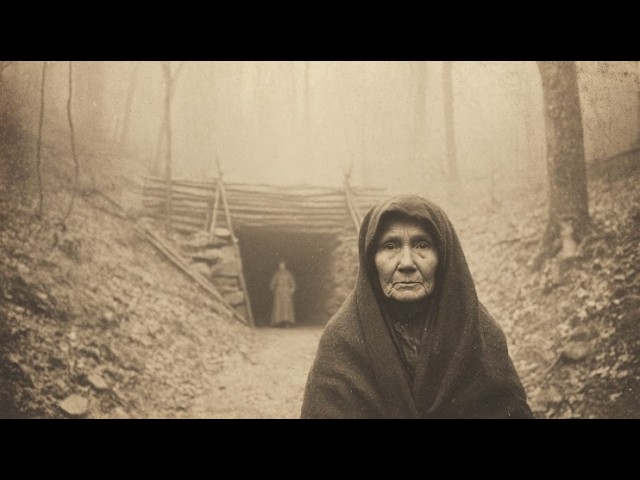
Crowley brushed every objection aside. On their third evening in camp, an old woman named Permelia Coldwell walked up the hollow out of the dusk. Everyone in that country called her Aunt Permelia. She was ancient and tiny, with a black shawl over her head and strange light gray, almost silver eyes.
She found Burl by the fire and told him there was no coal behind the door. She warned that a thing lived down in the cut, something that had been there before the people came, something that slept most of the year in the warm dark but woke in the cold months when it became hungry. When Burl asked what it wanted, she said it did not want to eat a man. She said it was the loneliest thing God ever made and that it could not abide being itself.
It took a man down into the dark and learned every part of him—his face, his walk, his voice, the way he laughed—and then climbed back out wearing him, walking back into the warmth and light and company of men. For a little while, she said, it got to be a person. She explained one thing the creature could not do. It was cold all the way through, cold as the hole it crawled out of.
A living man in the cold breathes smoke, she said, tapping her own lips. The creature breathed nothing. She told Burl that when the men were out in the dark, he should count every man’s breath, and the one that made no smoke was the one who had been lost. She told him to warn the hard man not to open the door, saying that once the thing was out, it would not go back willingly.
Then she walked back down into the dark and was gone. Burl believed her with the back of his mind even as his college-trained reasoning dismissed her words as superstition. He went to Crowley, careful, not repeating the worst of it, only saying the local people held the cut sacred and that opening it might cause trouble with the labor. Crowley looked at him as if he had started speaking a foreign language.
“The company has decided,” he said, and that was the end of it. They opened the door. It took three days. The chestnut frame was hard as stone after all those years and had been set deep into the rock by people who meant it to stay.
They had to use powder, set by the camp’s powder man, a young married man named Dewey Holloway who was the best-liked man in camp and talked constantly about his wife down in the valley. On the third day, the slate slab cracked and fell inward, and the black square of the cut stood open. Burl was there when it opened. He said the smell came out first, not a rotten smell but the smell of a place that had never once had the sun in it, the smell of deep stone and standing water with something underneath he had no word for.
Then came cold, real cold, rolling out of the dark like water poured downhill. Crowley said it was just cave air, but the cold did not stop. Hour after hour the opening breathed cold down into the camp. By nightfall the temperature had dropped hard, and a fog came up out of the cut and laid down in the hollow.
It did not lift. There would be fog every night after. In the morning, one of the local men was gone. A quiet teamster named Marsh Darkwood had slipped out of his blankets in the night with his boots still by his cot.
They searched and found his tracks leading up toward the shelf and the open cut. Crowley said the man had gotten scared and run off home. But Cleopus pulled Burl aside and pointed out that a man does not run off home in December with his boots still sitting by his bed. That evening, in the fog, Marsh Darkwood walked back into camp.
He looked exactly like himself, down to the chipped front tooth, and said he had gotten turned around in the fog. Burl, standing at the edge of the firelight in the bitter cold, watched Marsh talk and saw that the air in front of his mouth stayed clear. Every other man at that fire breathed smoke into the cold. Marsh Darkwood’s mouth produced nothing at all.
Burl understood that he was standing eight feet from a thing wearing a dead man’s face, a thing that did not breathe. He kept his own face still and walked away, then found Cleopus in the dark and whispered one word: breath. The old man went rigid and understood at once. He had grown up on Aunt Permelia’s warnings.
He whispered that there would be more taken, and that as long as the door was open and the cold held, the creature would keep taking men and keep coming back wearing them. Every time, he said, there would be one less of them that was truly them. As they stood in the dark planning to leave, they heard a laugh from the fire—Dewey Holloway’s laugh. Burl walked back and saw Dewey sitting on a powder box, grinning, telling a story, alive and himself in every way a man can be except that in the cold in front of his mouth there was no smoke.
The thing had learned Dewey’s habits, down to the way he patted the picture of his wife in his shirt pocket. It had been sitting at their fire, listening and watching and learning the rest of them. Burl and Cleopus worked through the night, quietly sorting the living from the not. They would get a man alone and watch his mouth in the cold.
By gray dawn they had counted three of the men in camp who no longer made breath: Marsh, Dewey, and the young cook’s helper, taken sometime in the small hours and walked back in without anyone marking him gone. Cleopus refused to simply run. He argued that if they left with the door still open and the cold still on, the creature would keep climbing out and down into the valleys and towns, wearing their faces, and nobody would ever know. They had to shut the door behind them.
To seal the cut, somebody had to set powder at the mouth of the hole, in the cold, in the fog, with the creatures in camp who would understand what was happening the instant they saw it. The only man who knew powder well enough was Dewey Holloway, and Dewey was gone. So Burl Winterborn, a surveyor with two fingers missing from one hand and no business doing any such thing, learned from the living men how to set the charges, enough to bring the rock down on the hole on the first and only try. Their plan was for the living men to slip down the hollow a few at a time and gather at the foot of Cold Haven by the creek.
Cleopus swore that the creature could not cross running water, that it was bound to the dry dark. Burl was not about to bet against the old woman on anything. It nearly worked clean. The living men got down one at a time into the fog while the three cold things sat at the fire wearing their borrowed faces, content to be people a little while longer.
Burl and Cleopus got up to the mouth of the cut and worked the powder into the seams of the rock. That was when the three things came up the shelf. They came slow and easy and smiling. The thing wearing Dewey Holloway’s face called out in Dewey’s bright, friendly voice, asking what the two men were doing up in the cold, with no breath coming from its mouth.
Cleopus told Burl to run. The old man was past 60, and he knew one of them had to hold the things off long enough for the fuse to burn. He pushed Burl toward the path, took up a mattock in both hands, and set himself between the creatures and the powder. He told Burl to light it and go, and not look back.
Burl never described what happened on that shelf, not to anyone, not once in all the years after. He wrote only that he lit the fuse and ran, and that the last thing he heard was Cleopus Renfro shouting, and underneath it three voices that were not the voices of men, all of them gone wrong at once, making a sound he could not write down and could not forget. He said the sound followed him down the whole length of Cold Haven. He said he did not think it was rage.
He thought it was grief, because the thing in the dark was about to be alone again, and to a thing like that, that was the only real death there was. The mountain came down behind him. The charge brought the whole shelf of Sabbath Knob down into the cut, sealing it under more rock than ten companies could ever move. Within the hour the fog began to lift off Cold Haven for the first time in days.
Burl crossed the creek at the foot of the hollow and counted the living men in the cold dawn. He watched every mouth, and every one of them breathed smoke, white and visible in the rising light. They were all real. But there were two missing from that count: Cleopus Renfro, who never came down off the shelf, and Howard Crowley, the superintendent, the hard man who would not listen.
Crowley was never found. In all the noise and fog of that last night, he had simply stopped being where men could find him. Whether he went up into the dark or the dark came down for him, no one ever knew. The company shut the whole operation down.
Officially, it was reported as a roof fall and the loss of two men, a known hazard of the work. The paperwork said nothing true. The Sabbath Knob portal was abandoned, the mountain let go, and the records of that December—the survey notes, the labor rolls, Burl’s own reports—were sealed in a company vault back in Pennsylvania and, as far as anyone can find, never opened again. Burl Winterborn never surveyed another mountain.
He went down to the flatlands and never came back up into the high country as long as he lived. He never once stood in the cold and watched another man talk without checking, helpless, out of old habit, for the smoke of his breath. He set the whole account down when he was an old man in the winter of 1958, the way men do when they feel the cold of their own ending and can no longer carry a thing alone. He gave it to a nephew, and it was passed careful hand to careful hand.
The narrator of the account says he went up to where Cold Haven had been, where the mines were long gone and the camps had rotted into the leaves after a hundred years. The shelf where the cut had been is now just a great raw slide of broken rock the laurels never quite covered. The locals still do not go up there, though they can no longer say why, only that the old folks passed along a feeling: don’t go up on the knob in the cold months. The one detail the narrator says he cannot put down is that Howard Crowley was never found.
The rock came down and sealed the door, but it sealed it with whatever was on this side still on this side. In the spring of 1924, down in a valley town a long way from Sabbath Knob, a man matching Howard Crowley’s description took a room in a boarding house and kept to himself, working quietly at a desk job. People said he seemed decent enough, a little cold, didn’t go out much, and kept the stove banked high even in summer, like a man who could never quite get warm. The woman who ran that boarding house told a story years later that she could never explain and did not like to tell.
One winter morning she brought the quiet boarder his coffee and stood talking to him a minute in the cold of the front hall with the door open behind her. She said that the whole time he talked to her, pleasant as you please, his breath never once showed in the cold.