For decades, the public image of the Queen Mother was one of unwavering warmth. She was the smiling grandmother in pearls who stayed in London during the Blitz and steadied a fragile king. History largely remembers her as the woman who saved the monarchy through sheer devotion and backbone.
But a closer look at private letters, palace ledgers, and the accounts of those who worked for her suggests a more complex story. Some historians argue that her real talent was not just warmth, but the ability to make power look like kindness. The question that lingers is why that carefully maintained version of her story was so rarely examined.
Elizabeth Bowes-Lyon was born in 1900 into a world of Scottish castles and domestic staff. As the ninth of ten children, she learned early how to command attention in a crowded room. Those who knew her as a young woman did not describe a great beauty or a scholar. They described presence.
She possessed a charm that could make anyone feel like the most interesting person in the world. It was a social weapon she wielded with precision. The official story says this charm led her naturally to the Duke of York and eventually to the throne.
However, the romance version glosses over a key detail. She reportedly refused his proposal more than once. The shy, stammering second son of King George V was persistent, and by the time she said yes in 1923, he was already deeply dependent on her approval.
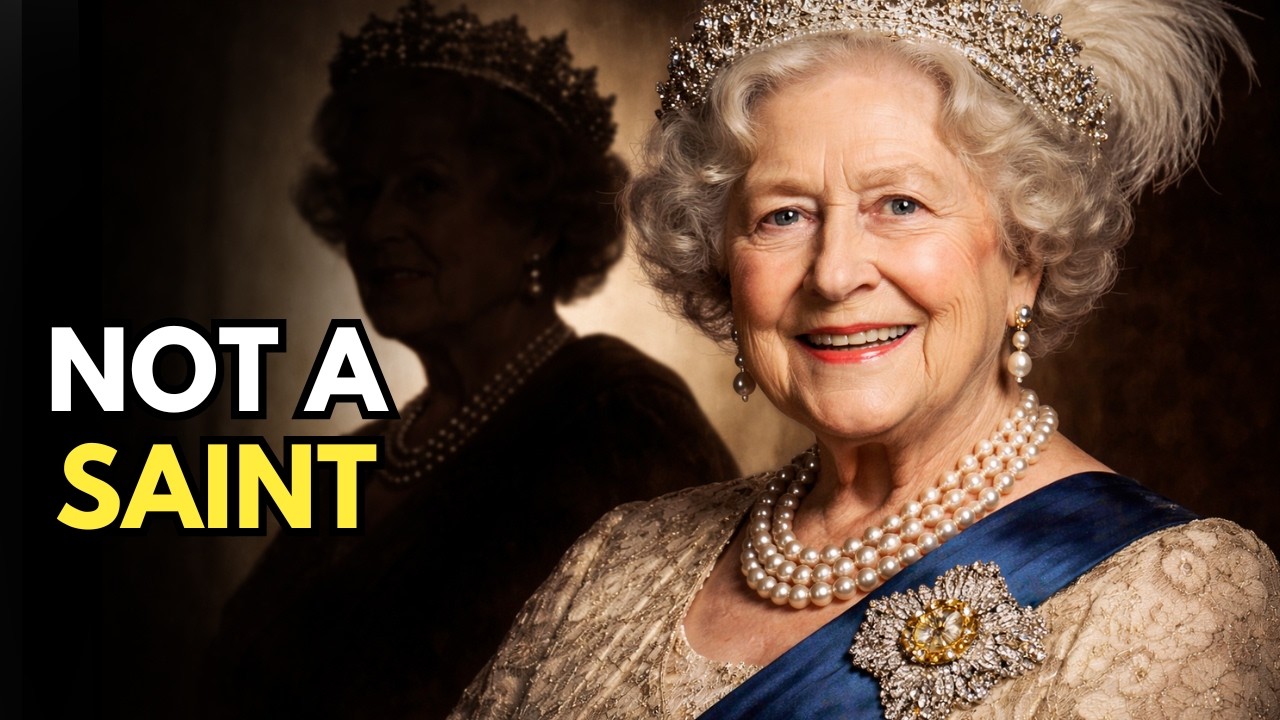
After their marriage, the public loved her immediately. Her softness was a relief inside the stiff, formal world of royal life. Meanwhile, her husband struggled privately with a stammer and intense anxiety. He needed someone to stand between him and the weight of his duties, and she filled that role completely.
The more he needed her, the more central she became. She managed his confidence and smoothed his relationships. She became the social engine of the household, and that position gave her a quiet but undeniable form of power.
When Edward VIII abdicated in 1936, the crown was handed to his unprepared brother. Elizabeth became queen. The official narrative says she was devastated and never wanted the role. She reportedly never forgave Edward or Wallis Simpson for the crisis they caused.
The war cemented her legend. When Buckingham Palace was bombed in 1940, her reported comment about finally being able to look the East End in the face became famous. The courage was real, but she also understood exactly what those symbols were worth to a frightened nation.
By the end of the war, she was beyond criticism. Stories survive not just because they are true, but because they are useful. This one gave the monarchy a human face at a moment when it desperately needed one.

Accounts from staff and aides describe a woman with exacting standards. She was warm to those she wanted to charm and cold to those who had stopped being useful. Her spending was reportedly vast, covering clothes, art, racehorses, and entertaining on a scale that leaned heavily on public money.
When she died, reported debts ran into the millions. That gap between her image of understanding ordinary people and her actual lifestyle was never fully explained. It was simply absorbed into the legend.
Her treatment of Wallis Simpson went beyond dignified disapproval. Wallis was denied the title Her Royal Highness, and the coldness was maintained for decades through quiet institutional machinery. Even after Edward died in 1972, the hostility toward Wallis never softened until her own death in 1986.
The pattern extended to her own family. Her daughter Margaret was forced to give up Peter Townsend because he was divorced. Margaret was told she would lose her royal status and income if she married him. The Queen Mother had watched Edward VIII go through a similar situation, yet she enforced the same institutional rules on her own daughter.
Control runs through all of it. George VI’s dependence on her was total, and she spent 50 years of widowhood holding real influence without any formal title. Everyone deferred to her because no one could remember a time when they hadn’t.

There was no single cover-up. Instead, there was a collective, unspoken decision that some things were not worth the cost of saying out loud. The press operated under royal deference, and those who knew details mostly stayed silent.
The monarchy needed her to be a certain kind of figure. As the empire ended and the aristocratic world dissolved, Britain kept its monarchy by shifting from power to feeling. She was central to that shift, and the institution could not afford a more complicated version of her.
For a country grieving the loss of its empire, she was a constant. She had survived everything and remained steady, waving from balconies. Real questions about her felt like vandalism.
Her power was hidden through warmth because that was the only category available to women of her era. Women were supposed to support and comfort, not hold power directly. She made her own power look like service, and history took the packaging at face value.
The warmth was likely genuine. But genuine warmth and strategic warmth are not opposites. The most effective social control is the kind where the person doing it has stopped noticing they are doing it.
Her darkest secret was not a single act. It was that she perfected the monarchy’s oldest trick. She hid discipline inside devotion, power inside charm, and control inside the smile Britain learned to trust.