In February 1943, Field Marshal Erwin Rommel sat in his command tent near the Tunisian-Algerian border. His fingers were inkstained, and his face showed the deep exhaustion of a man who had fought across two continents for three years. Outside, German and Italian soldiers were celebrating their greatest victory against American forces. Inside, Rommel was writing a military assessment that would prove to be spectacularly wrong.
The letter was addressed to his wife, Lucy. It was intimate, detailed, and brutally honest. Rommel described the Americans as fundamentally unprepared for modern warfare. He wrote that their soldiers were soft, products of a comfortable society that had never known real hardship. Their officers made elementary mistakes. Their equipment sat abandoned across miles of desert battlefield.
This was not just a husband venting to his wife. This was one of history's greatest military minds making a calculated strategic assessment that would be shared with Berlin, with the German high command, and with every senior officer in the Afrika Korps. The assessment concluded with a chilling prediction. If Germany struck again within weeks, they could destroy American military credibility before it ever developed.
Within three weeks, every single assumption would be shattered by a transformation so rapid, so complete, that German generals would spend the rest of their lives trying to understand what happened. This is the story of the fastest military turnaround in modern history. This is the story of how 21 days changed the course of the Second World War.
To understand the magnitude of what happened at Kasserine Pass, you need to understand what America brought to North Africa in late 1942. Operation Torch, the Allied invasion of French North Africa on November 8th, 1942, was America's first major offensive action in the European theater. It was an ambitious amphibious operation involving over 100,000 troops landing simultaneously at multiple points across Morocco and Algeria.
But there is a massive difference between conducting an unopposed amphibious landing against confused Vichy French forces and fighting the battle-hardened veterans of the Afrika Korps. The men of the American II Corps who landed in North Africa were volunteers and draftees from every corner of the United States. They had enthusiasm. They had confidence. They had excellent equipment. What they didn't have was experience fighting an enemy that had perfected mobile warfare across three years of continuous combat.
The German forces they were about to face had annihilated French armies in 1940, conquered Yugoslavia in 11 days, and driven across a thousand miles of Soviet territory in 1941. The Afrika Korps specifically had fought across Libya and Egypt for two years, adapting to desert warfare, perfecting combined arms tactics, and developing an almost supernatural ability to concentrate overwhelming force at unexpected points. It was like sending a high school football team to play in the Super Bowl.
On February 14th, 1943, the Kasserine Pass, a narrow gap through the Atlas Mountains in western Tunisia, became the site of a brutal lesson. American forces held defensive positions blocking German access to Allied supply bases in Algeria. The positions looked strong on maps. Artillery was positioned on high ground. Infantry occupied the ridgelines. Tank destroyers covered the approaches.
But Major General Lloyd Fredendall, commanding II Corps, had made catastrophic decisions. Fredendall had established his headquarters in a deep canyon 70 miles behind the front lines. While his men dug foxholes under enemy fire, engineers were blasting Fredendall's command post into solid rock, creating an elaborate bunker system complete with multiple chambers. The general commanded by telephone and radio, issuing orders without understanding the actual battlefield terrain or situation.
Worse, Fredendall had dispersed his forces across a wide front instead of concentrating them. When you spread a thin line across miles of desert, mobile armored forces can choose any point to attack with overwhelming local superiority. This is exactly what German doctrine was designed to exploit.
When Rommel attacked on February 14th, the German assault was a masterclass in Blitzkrieg warfare. First came the reconnaissance units, probing American positions to identify weak points. Then came the concentrated artillery fire, hammering specific American positions to create gaps. Then came the armor, Panzer IIIs and IVs with veteran crews who had fought from Poland to Egypt, exploiting those gaps before American commanders could react.
American units fought bravely at the tactical level. Individual soldiers and squads held positions under devastating fire, but tactical bravery couldn't compensate for strategic incompetence. Communications broke down within hours. Officers lost contact with adjacent units. Orders to counterattack arrived after positions had already been overrun. By February 15th, American positions were collapsing.
The numbers tell the story of catastrophe. Over 6,000 American casualties in six days, killed, wounded, captured. The 168th Infantry Regiment of the 34th Infantry Division was nearly destroyed. Over 200 tanks, artillery pieces, and vehicles were captured or abandoned. German forces advanced 40 miles, capturing two major passes and threatening Allied supply lines.
For the young Americans who survived Kasserine, the defeat was more than tactical. It was existential. These were men who had grown up hearing stories about American victory in World War I. They had been told they were joining the greatest military force ever assembled. Kasserine shattered that faith like a hammer through glass. Soldiers who had never questioned their own courage found themselves asking fundamental questions. Were they cowards? Were Americans simply not as tough as Europeans?
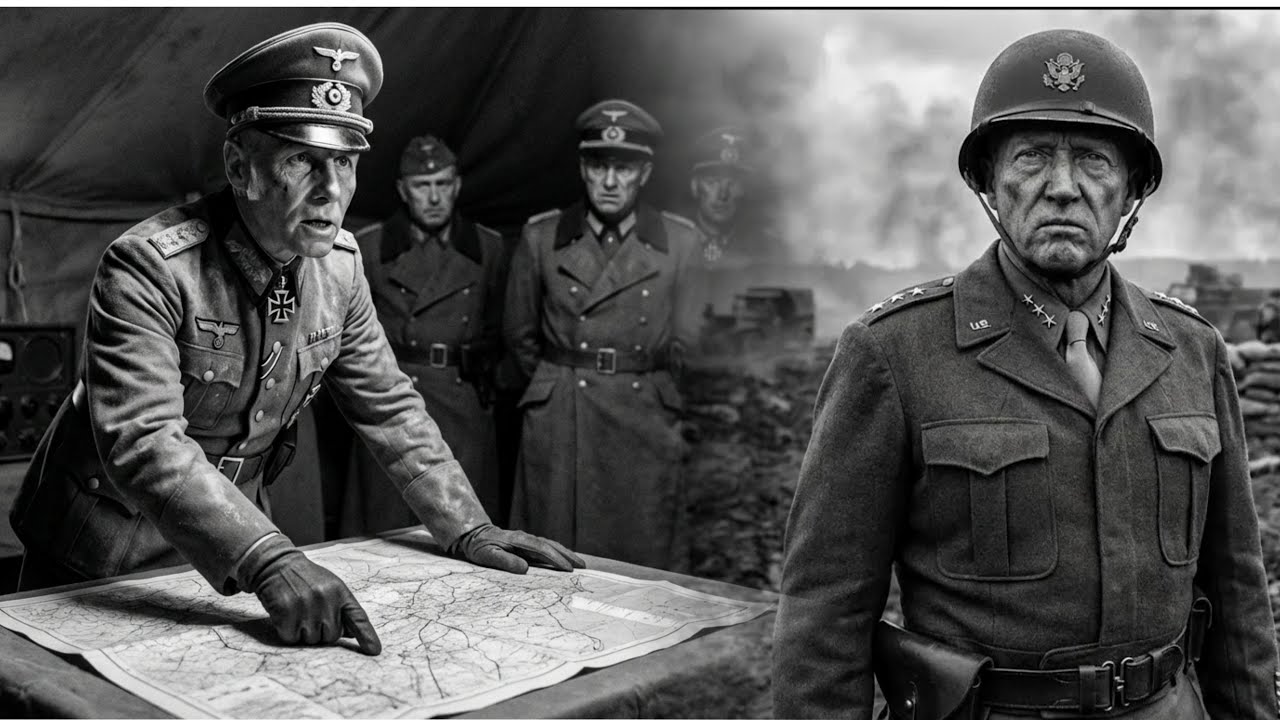
This was the context in which Rommel wrote his letter. His assessment of American forces after Kasserine was methodical and detailed. First, command structure. American officers demonstrated poor understanding of mobile warfare. They positioned forces defensively rather than preparing for aggressive counterattacks. Second, tactical performance. American infantry fought well when cornered, but retreated quickly when flanked. Tank crews showed bravery, but lacked the coordination to fight as cohesive units.
Third, psychological resilience. When German forces penetrated American lines, the collapse accelerated as panic spread. Fourth, adaptation time. Based on German experience against every other opponent, it took armies at least six months to identify systemic problems and implement solutions. Rommel calculated that if Germany launched another offensive within weeks, the results would be similar to Kasserine.
Rommel sent his assessment to the Oberkommando der Wehrmacht, the German high command in Berlin. The recommendation was clear and urgent. Exploit American weakness immediately. Launch a follow-up offensive in March 1943 targeting the same American forces while they're still demoralized and disorganized. Berlin agreed. Planning began for Operation Frühlingswind targeting American positions near El Guettar in central Tunisia.
Every assumption was reasonable. Every timeline was logical. Every prediction was based on how every other army in history had responded to similar defeats. But history was about to encounter an American general who specialized in doing the impossible.
George Smith Patton Jr. arrived at II Corps headquarters in Algeria like a force of nature wrapped in a tailored uniform. The motorcade announced him before he was visible. Sirens blaring, armored cars flanking his personal vehicle, motorcycle outriders clearing the road. Patton emerged wearing his trademark uniform, perfectly tailored jacket, riding breeches, cavalry boots polished to mirror shine, and the famous ivory-handled revolvers on his hips.
At 57 years old, Patton looked like he had stepped out of a different era. He was exactly what he appeared to be, a warrior who had spent 40 years preparing for this moment. Patton graduated from West Point in 1909. He competed in the 1912 Stockholm Olympics in the modern pentathlon. He served under General John J. Pershing in the Mexican punitive expedition of 1916. He commanded tanks in World War I, earning the Distinguished Service Cross.
Between the wars, while other officers focused on garrison duty and promotion, Patton studied military history obsessively. He read everything. Ancient Greek phalanx tactics, Napoleonic campaigns, Civil War battles, and German blitzkrieg doctrine. He developed a personal philosophy of warfare that was radical in its simplicity. Speed and aggression overwhelm careful defense. The attacking force chooses when and where to strike. Therefore, always attack. Never defend if you can avoid it. Never stop moving forward.
Patton's transformation of II Corps began before he issued a single tactical order. First priority, restore military bearing. Soldiers who had retreated from Kasserine had adopted relaxed standards. Uniforms were incomplete. Helmets were optional in rear areas. Saluting was inconsistent. Patton issued immediate orders. Every soldier would wear complete uniform, including helmet, at all times, even in rear areas miles from the front. Failure to wear proper uniform would result in immediate fines.
The enforcement was immediate and personal. Patton drove through the rear areas in his command vehicle, stopping soldiers personally to check uniforms. He fined officers on the spot for uniform violations. This seems petty. It seems like vanity from a general obsessed with appearance. But Patton understood something profound about human psychology. External discipline creates internal discipline. When soldiers maintain professional standards in small things, they maintain professional standards under fire.
But Patton knew that spit shine and regulations wouldn't win battles. American forces needed new tactical doctrine, and they needed it implemented across the entire corps in less than three weeks. The doctrine he imposed was radical in its aggression. First principle, always counterattack. When enemy forces attack American positions, the immediate response is not to defend more stubbornly. The immediate response is to identify the enemy's flanks and counterattack them.
Second principle. Artillery concentrates, never disperses. American artillery superiority was overwhelming. More guns, more ammunition, better fire control. New doctrine required every artillery battery within range to fire on the same target simultaneously. Time on target strikes that dropped hundreds of shells on a single point in seconds. Third principle, speed matters more than perfection. An adequate plan executed today succeeds more often than a perfect plan executed tomorrow.
Fourth principle, leaders lead from the front. Officers who command from safe rear areas issue bad orders based on outdated information. Officers at the front understand the actual situation and make better decisions. Therefore, every officer from lieutenant to general should position himself where he can see the battlefield and be seen by his troops.
Patton's most controversial action was the systematic relief of officers who didn't meet his standards. Within the first week, he relieved multiple battalion and regimental commanders. Their crimes weren't cowardice or disobedience. Their crime was hesitation. Officers who waited for orders instead of seizing initiative were replaced by more aggressive subordinates. One colonel who had commanded competently but cautiously was called to Patton's headquarters. Patton didn't criticize his performance. He simply said, "You're a good officer, but you're not the officer this corps needs right now. You're relieved."
The message to every officer in II Corps was clear. Aggression is rewarded. Caution is punished. Succeed by attacking or fail by hesitating. By March 22nd, 16 days after Patton arrived, the II Corps had been transformed at every level. But transformation in garrison is different from transformation in combat. The real test was coming.

German operational planning for the attack near El Guettar was thorough and logical. The attacking force consisted of the 10th Panzer Division, one of the most experienced armored formations in the Wehrmacht, supported by the Italian Centauro Division. Total strength was approximately 120 tanks, including Panzer III and IV models with veteran crews. The terrain favored mobile operations, open desert with few obstacles. Long sight lines perfect for German tank guns that outranged American Shermans.
The plan assumed American forces would deploy defensively, holding positions and waiting to be attacked. German armor would identify weak points, concentrate superior force, and break through American lines. This was the same formula that worked at Kasserine, the same formula that worked in France in 1940, the same formula that had destroyed Soviet armies in 1941. General Hans-Jürgen von Arnim, commanding Axis forces in Tunisia after Rommel's departure, approved the plan with confidence. Three weeks wasn't enough time to fundamentally change an army's capabilities.
The attack would launch on March 23rd, 1943, at 0600 hours. First light breaks over the Tunisian desert. Lead elements of the 10th Panzer Division advance toward American positions held by the 1st Infantry Division, the Big Red One, and elements of the 1st Armored Division. German tank commanders scan the horizon through their optics, looking for American positions. Then the world explodes.
American artillery opens fire with a precision and violence that shocks German crews. This isn't scattered defensive fire. This is time on target fire. Multiple artillery battalions launching shells simultaneously so they all impact the same area at the same instant. The effect is devastating. Shells blanket German assembly areas before tanks are even in attack formation. The advance staggers before it properly begins.
But the 10th Panzer Division is experienced. Commanders order tanks to disperse and continue advancing. American tank destroyers open fire. M10 Wolverines are positioned in concealed hull-down positions, creating interlocking fields of fire. German tanks advancing toward one American position take flank shots from destroyers positioned hundreds of yards to the side. The Americans aren't defending from obvious positions. They've created a kill zone where German armor is vulnerable from multiple directions.
By 0900 hours, the 10th Panzer Division has advanced approximately 2,000 yards into American positions. This is normal progress for an offensive, but something is fundamentally different from Kasserine. The Americans aren't retreating in panic. They're conducting fighting withdrawals to prepared secondary positions. Infantry holds positions until German tanks close to dangerous range, then withdraws in good order to new fighting positions several hundred yards behind the first line. Each withdrawal is covered by artillery and armor.
German radio intercepts pick up American communications. The tone is calm and professional. Officers give clear tactical orders. Artillery forward observers request fire missions with precise coordinates. This isn't the disorganized chaos of Kasserine Pass. This is a professional military force conducting coordinated defensive operations.
By noon, German forces have advanced 3,000 yards total, barely a mile. Casualties are mounting. Tank losses are significant. The Italian Centauro Division on the right flank reports being pinned down by accurate American artillery fire. Von Arnim receives reports at his headquarters with growing concern. This isn't matching intelligence predictions.
For the soldiers of the 1st Infantry Division holding positions at El Guettar, this battle was personal. These were the same units that had fought at Kasserine. These were men who had retreated in disorder, who had questioned their own courage, who had wondered if Americans could match German veterans. Now they had their answer.
Private First Class John Downing, a machine gunner from Ohio, later described the difference. "At Kasserine, we didn't know what we were supposed to do. Officers gave orders, but they contradicted each other. Nobody knew if we were supposed to hold or fall back. At El Guettar, everyone knew exactly what to do. Hold until you get the order to withdraw. Withdraw to the marked positions. Resume firing."
The transformation wasn't about courage. American soldiers had been brave at Kasserine. The transformation was about competence. Officers knew what orders to give. Soldiers knew what actions to take. Artillery knew where to fire. Tank destroyers knew where to position. The entire corps functioned as a coordinated mechanism instead of a collection of confused individuals.
When German tanks penetrated the first defensive line, American forces didn't panic. They executed planned counterattacks. Sherman tanks that couldn't match German armor in direct duels used superior maneuverability to attack German flanks. Infantry with bazookas infiltrated close to German positions to target tank weak points. The battle devolved into a close-range slugging match that negated German technical advantages.
By the morning of March 24th, von Arnim made the decision that Rommel would have understood immediately. The attack was failing. German casualties were unsustainable. American positions were too strong. Von Arnim ordered withdrawal. German forces pulled back to starting positions under American artillery fire that followed them every yard of the retreat.
Final casualty figures told the story. German forces suffered approximately 1,400 casualties, killed, wounded, captured, and over 30 tanks destroyed or abandoned. The 10th Panzer Division, one of the Wehrmacht's elite formations, had been stopped cold by American forces that were supposedly demoralized and incompetent just three weeks earlier. American casualties were significant, approximately 900. But the Americans held their positions. More importantly, they had proven something fundamental. American forces could fight German veterans on equal terms and win.

After El Guettar, German intelligence worked systematically to understand what had changed. The conclusion was uncomfortable. The Americans had identified their weaknesses and corrected them in less than three weeks. The transformation had three components. First, leadership. American forces had replaced hesitant officers with aggressive commanders who understood modern mobile warfare. Second, doctrine. American forces had adopted tactics specifically designed to counter German advantages. Artillery concentration negated German tactical mobility. Immediate counterattacks disrupted German operational momentum. Third, psychology. American soldiers at El Guettar believed they could win.
Rommel, recovering in Germany from illness and exhaustion, received reports from Tunisia. He wrote updated assessments that were radically different from his February letter to Lucy. The Americans had learned faster than any opponent Germany faced. They had identified systemic problems and implemented solutions at a speed that German military professionals considered impossible. Rommel's warning was clear. Do not underestimate American forces based on early performance. They improve with extraordinary speed.
The warning came too late for the Afrika Korps. On May 13th, 1943, less than three months after Kasserine Pass, German forces in Tunisia surrendered. Over 250,000 Axis soldiers entered prisoner of war camps. The North African campaign was over. The Americans who broke at Kasserine Pass had helped destroy an entire Axis army in 90 days.
When Allied forces invaded Sicily on July 10th, 1943, German commanders discovered that American improvement wasn't limited to North Africa. Patton's 7th Army landed on Sicily's southern coast and immediately began an aggressive advance northward. While British forces under Montgomery fought methodical battles in eastern Sicily, Patton's Americans raced up the western coast with speed that shocked German defenders. Patton's forces reached Messina on August 17th, 1943, beating Montgomery's British Eighth Army in a race that demonstrated American operational capability had reached world-class standards.
By June 1944, Rommel commanded German forces defending France against Allied invasion. His defensive preparation specifically addressed American tactics he had first encountered in Tunisia. Rommel positioned mobile armored reserves close to probable invasion beaches. He knew Americans would push inland aggressively after landing. Rommel's assessment of American capabilities had evolved completely from his dismissive February 1943 letter. He now wrote that Americans had demonstrated themselves to be significantly more advanced in tactical thinking than British forces.
When D-Day came on June 6th, 1944, Rommel's tactical predictions proved accurate. American forces at Utah and Omaha beaches pushed inland aggressively despite horrific casualties. The same spirit that emerged at El Guettar 15 months earlier drove American forces across France toward Germany.
After Germany's surrender, Allied interrogators systematically interviewed German generals about their wartime experiences. The testimony regarding American forces was remarkably consistent. General Hasso von Manteuffel, who commanded Panzer forces against American armies from 1944 to 1945, stated, "The Americans learned faster than any army we faced. They identified weaknesses and corrected them within weeks rather than months or years."
Field Marshal Albert Kesselring testified, "American artillery coordination was the most effective I encountered in six years of warfare. The speed and precision with which Americans concentrated fire on tactical targets made traditional German mobile tactics obsolete." General Siegfried Westphal, Rommel's chief of staff in North Africa, wrote in his memoirs, "We made the mistake of assuming American improvement would follow the pattern of other armies we had fought. The French needed years to develop effective doctrine after 1940. The Soviets needed two years to match German tactical proficiency. The Americans needed three weeks."
Let's look at the cold mathematics of transformation. February 14th, 1943, Kasserine Pass: 6,000 American casualties, complete defensive collapse, 40-mile retreat. March 23rd to 24th, 1943, El Guettar: 900 American casualties, successful defense, German forces withdrawn. That's a 37-day timeline from humiliation to victory against the same enemy using similar tactics on similar terrain.
The real story is about human potential under pressure. The soldiers who fled at Kasserine Pass weren't cowards who became heroes. They were ordinary men who received competent leadership, effective doctrine, and the tools to succeed. Once they understood what to do and how to do it, they performed as well as any soldiers in history.
The officers who failed at Kasserine weren't incompetents who became geniuses. They were professionals learning the most complex skill in human civilization, command in combat, who received clear standards, immediate feedback, and ruthless accountability. Once they understood what success looked like, they delivered results.
Rommel's mistake wasn't underestimating American courage. He correctly observed that American soldiers fought bravely when cornered. His mistake was underestimating American adaptability. Armies built on rigid doctrine and traditional hierarchy struggle to change quickly. Armies built on professional competence and clear accountability can transform with extraordinary speed when properly led.
The 21 days between Patton's arrival on March 6th and the Battle of El Guettar on March 23rd proved that leadership matters more than experience. Doctrine matters more than equipment. An aggressive mindset matters more than technical superiority. The 90 days between Kasserine Pass and the surrender of Tunisia proved that American military potential once properly directed was unstoppable.
Rommel warned his fellow German generals about American improvement. He told them the Americans they would face in 1944 would be radically different from the Americans they defeated in early 1943. He emphasized that underestimating American adaptive capacity was Germany's most dangerous strategic mistake. Most German commanders ignored the warning until American armies were driving into Germany itself.
Today, the North African campaign is often overshadowed by Normandy, the Battle of the Bulge, and the final drive into Germany. But military historians understand that Tunisia was where American forces learned the lessons that made victory in Europe possible. Without Kasserine Pass, there's no understanding of American weaknesses. Without Patton's 21-day transformation, there's no systematic fixing of those weaknesses. Without El Guettar, there's no proof that American forces could match German veterans.
So when you think about turning points in the Second World War, don't just think about D-Day or Stalingrad. Think about a desert battlefield in Tunisia where American soldiers proved to themselves and to the world that they could fight and win against the best army in the world. Think about three weeks in March 1943 when everything changed. Think about the moment when the Arsenal of Democracy found its sword.