One of the most famous singers in the world stood in a Nashville concert crowd in November 1962, not performing but watching. Before the night was over, she had written a note to a stranger she spotted across the room. Six months later, she was standing at an altar with her family absent and her manager furious. Brenda Lee, born Brenda Mae Tarpley on December 11, 1944, in Atlanta, Georgia, came into the world weighing only 4 pounds and 11 ounces.
She was delivered in the charity ward of Grady Memorial Hospital, and doctors were not certain she would survive her first days. Her father, Reuben Lindsey Tarpley, worked as a carpenter, while her mother, Annie Grace Tarpley, put in 12-to-14-hour days at a cotton mill. The family had no car and often went without basic medical care or enough food. At Christmas, fruit was a luxury.
What Brenda had from an impossibly young age was a voice too large and complete for a child her size. She was singing publicly by age four and won first prize at a local talent festival at five or six with a confident rendition of “Take Me Out to the Ball Game. ” She could hold a melody after hearing it only twice. When Brenda was eight, her father died in a construction accident after falling from a scaffold.
Her mother was left alone with four children and no safety net. The family bounced between relatives, staying wherever there was a spare room. Grace recognized that her daughter’s singing was not just a talent but a lifeline and began actively seeking out performance opportunities. A local disc jockey named Peanuts Faircloth suggested shortening her name from Brenda Mae Tarpley to simply Brenda Lee, saying it would be easier to remember.
Grace later remarried a man named Jay Rainwater, who opened a record shop where Brenda sometimes sang on weekends. The turning point came in 1955 when Brenda was 10. She auditioned for country music star Red Foley and made such an impression that he invited her to appear on his nationally televised show “Ozark Jubilee. ” When she performed the song “Dynamite,” the audience response was overwhelming.
That performance earned her the nickname that would follow her for the rest of her career: Little Miss Dynamite. She began appearing on programs hosted by Steve Allen, Red Skelton, and Ed Sullivan. By 1956, record companies were competing for her signature. She signed with Decca Records and was placed under legendary producer Owen Bradley, who ran a Nashville studio operation that would shape the sound of country music for a generation.
Dub Allbritton, who had been managing Red Foley, stepped in as Brenda’s manager. He was forceful, opinionated, relentlessly ambitious, and deeply strategic. He had come up through the carnival circuit and was an old friend of Colonel Tom Parker, who later managed Elvis Presley. Allbritton knew how to create excitement and push an act into markets other managers had not considered.
He was also protective of Brenda in ways beyond the professional, serving as a kind of father figure after the loss of her own father. Allbritton pushed Brenda’s career into international markets aggressively. By the time she was 15, she was a major star in England and France. A French tour drew comparisons in the local press to Judy Garland.
Because her voice was so powerful and mature, foreign press had a hard time believing she was actually a child. A rumor circulated in France that she was a fully grown adult, and her team had to produce photographs and documentation to prove otherwise. Back home, the hits arrived regularly. “Rockin’ Around the Christmas Tree,” recorded when Brenda was 12 in 1958, took two years to gain real traction but never truly left.
“Sweet Nothings” went to number one on the rock and roll charts in 1959. “I’m Sorry” topped the pop charts in 1960, followed by “I Want to Be Wanted,” which did the same. By the time Brenda was 16, she had multiple number one records in multiple countries and was one of the most recognizable voices in the world. But the money she earned was largely untouchable under the Jackie Coogan Law, which held a child performer’s earnings in trust until age 21.
She was performing at a global level and carrying the weight of her family’s financial survival, yet the earnings were locked away for years. In 1959, her stepfather deserted the family. For a while, her mother and siblings were living in a trailer park on $75 a month while Brenda toured the world singing to thousands every night. By 1962, at age 18, Brenda Lee was one of the biggest pop stars on the planet.
She had toured with Patsy Cline, George Jones, and Mel Tillis. She had performed at the Grand Ole Opry and played Las Vegas. She had spent more of her childhood in dressing rooms, tour buses, and recording studios than in classrooms. She had never really had the chance to just be a girl.
On a November night in 1962, she walked into the Fairgrounds Coliseum in Nashville to watch a Bo Diddley and Jackie Wilson concert. She went with her friend Rita Coolidge, who would go on to have her own successful recording career. It was a rare night off. At some point during the evening, Brenda looked across the crowd and noticed a young man.
She has described in interviews the immediate impact of that first glance, someone she instantly felt she had to meet. His name was Charles Ronald Shacklett, though everyone called him Ronnie. He was 6 feet 4 inches, quite a contrast with Brenda’s 4 feet 9 inches, and he was from Nashville. His father, Earl C.
Shacklett, was a prominent figure in local government and would later become one of the founding members of the Metropolitan Council. Brenda did not simply walk over and introduce herself. Instead, she wrote him a note. She explained that she was about to leave for a three-month tour of England, included her phone number, and told him to call her when she got back.
She handed him the note and left. For those three months, she did not hear from him. Not a call, not a letter. When she returned to Nashville, the two connected, set up a date, and began spending time together.
What followed was a quiet courtship that Brenda kept largely to herself. She did not announce the relationship publicly. She did not tell her family right away. By early 1963, it was clear to both of them where things were headed.
They were going to get married. That was the moment when the private became unavoidably public. The disapproval came from two directions at once. Dub Allbritton was strongly against the marriage.
His reasoning was rooted in the music industry logic of the era, which held that a married pop star, especially a young female one at the height of commercial appeal, lost a certain quality of fantasy for her audience. Allbritton had larger plans for Brenda. He had arranged for her to appear at the Copacabana in New York on May 2, 1963, one of the most prestigious venues in the country. The plan was that if the wedding was going to happen at all, it should happen after that appearance.
Brenda’s family was also not on board. Her mother and siblings had depended on Brenda’s earnings for years. The idea of her making a major life decision this quickly, this young, with someone they did not know well, was too much, too fast. No one from Brenda’s family planned to attend any wedding.
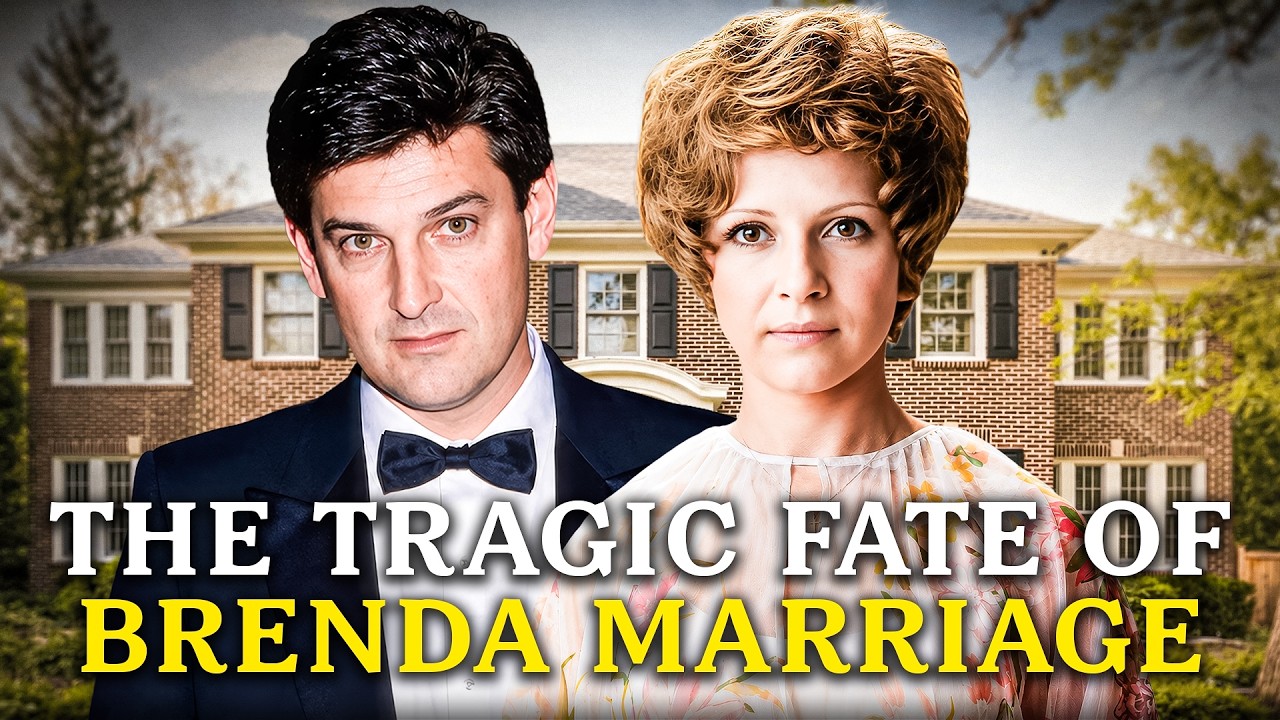
Brenda and Ronnie did not wait. On April 24, 1963, without announcement or fanfare, they were married at the Radnor Church of Christ in Nashville. They did not wait until after the Copacabana appearance. Brenda wore a white two-piece suit.
The witnesses were members of Ronnie’s family. Not a single person from Brenda’s own family was present. The next day, the story broke in the Nashville press. Journalist Gerald Henry wrote the story for The Tennessean, which ran on April 25, 1963, describing the quiet, unannounced ceremony.
The headline spread the news through Nashville’s music community like a brushfire. The world’s most famous teenage pop star had eloped. When it was over, the newlyweds left for Gatlinburg, Tennessee, for their honeymoon, a small mountain resort town tucked into the Smoky Mountains, quiet and removed from the noise of Nashville. For a decade, Brenda Lee had been managed, guided, scheduled, monitored, and shaped by the people around her.
For once, she had done something entirely on her own terms. The career concerns, the timing, the Copacabana appearance, she had looked at all of it and chosen Ronnie Shacklett. The first years of the marriage came with complications built into their daily reality. Brenda was still one of the biggest stars in pop music.
In 1963, the single “Losing You” was released and charted well. In 1964, “Is It True? ” followed. The career was still very much alive.
But in February 1964, less than a year after their wedding, the Beatles arrived in the United States. Their appearance on the Ed Sullivan Show drew an audience of 73 million people. Almost overnight, the musical landscape transformed. The British Invasion reshaped what radio programmers wanted and what young audiences were responding to.
Artists who had dominated the charts just a year or two before found themselves pushed aside. Brenda was among those affected. The hits became less frequent, and the commercial momentum began to slow. For a young woman who had known no other life but performing, this was deeply unsettling.
Then, in the mid-1960s, came a loss that hit her differently. Dub Allbritton had been dealing with significant health problems for several years before his death in 1970. Near the end, he called Brenda to his apartment, knowing his time was short. That visit stayed with her for decades.
She has acknowledged that this period brought on a real depression, a sense of not knowing where she fit anymore in an industry that had changed drastically around her. Ronnie Shacklett was the constant. He did not come from the music world. He understood it well enough to navigate it on her behalf, but he was not of it.
In the early years of their marriage, Ronnie became actively involved in protecting Brenda’s financial interests, pushing back on situations where people who had seen her earning capacity since childhood treated her financial arrangements as opportunities. His involvement helped ensure that the wealth Brenda had spent her childhood generating actually remained in her control. Ronnie was a private man by nature. He built his own business renovating fire-damaged homes, ran it for years, then handed things over to his brothers.
He never sought the spotlight and kept a low profile throughout decades in which his wife was one of the most recognized voices in the world. In the years following the wedding, Brenda and Ronnie had two daughters, Jolie and Julie. Julie’s birth was one of the most frightening moments the family would face. She was born with hyaline membrane disease, a serious lung condition affecting newborns that makes breathing extremely difficult and was, at the time, frequently fatal in infants.
The doctors who worked to save Julie’s life included Dr. Mildred Stahlman, a pioneer in neonatal care who had also attended to the births of the Kennedy children. Julie survived. Julie’s name carried its own quiet significance.
Brenda named her after the daughter of Patsy Cline, a tribute to her fellow country artist who had died in a plane crash in 1963, the same year Brenda and Ronnie got married. The challenges of the late 1960s and early 1970s were real, but they were being faced by two people who had chosen each other and were building something together that did not depend on chart positions to stay standing. In 1974, the toll of a lifetime on the road became impossible to ignore. Brenda was rushed to the hospital with life-threatening blood clots.
The condition required emergency surgery, and the outcome was genuinely uncertain. The surgery was performed and saved her life. The experience had a clarifying effect. Later that same year, Brenda returned to recording.
She went back to her country music roots. She recorded “Nobody Wins,” written by Kris Kristofferson, and the song climbed into the top 10 on the country charts. A string of country hits followed in the mid and late 1970s, including “Big Four-Poster Bed,” “Wrong Ideas,” and “Sunday Sunrise. ” A new generation of country music fans discovered her voice.
Throughout this entire period, the health scare, the surgery, the recovery, the return, Ronnie was there. He had been there through the lean years following the British invasion. He had been there when Julie was born fighting for her life. He had been there when the career felt adrift after the loss of Allbritton.
And he was there now, in the hospital and in the long recovery. The career continued steadily. In 1989, Brenda appeared on a k. d.
lang album called “Shadowland,” which earned a Grammy nomination. She continued performing into the 1990s and beyond, accumulating honors and recognitions, including Hall of Fame acknowledgements. In 1998, Owen Bradley died. He had been the other great constant in Brenda’s professional life, the producer who had guided her recordings at Decca.
Their relationship had grown into something far beyond the professional. He was, alongside Dub Allbritton, one of the father figures she had leaned on since childhood. She mustered herself to sing “There Will Be Peace in the Valley” at his funeral. It was one of the most personally difficult performances of her life.
The following year, 1999, brought a different kind of threat. She was diagnosed with cysts on her vocal cords. Surgery could remove them, but there was a meaningful risk of permanent damage to her voice. She chose to take time off instead of proceeding with surgery.
She rested and waited. The cysts did not disappear entirely, but the vocal cord damage stabilized. She did not lose her voice. Eventually, carefully, she returned to performing.
By the time the 2020s arrived, Brenda Lee had been married to Ronnie Shacklett for more than 60 years. The milestone is significant as a genuine outlier in an industry where marriages routinely fracture under pressure. Their marriage had held through the British invasion, through the blood clots, through the losses, through the career highs and quiet stretches. They had raised two daughters, who became mothers themselves.
They had three grandchildren: Taylor, Jordan, and Charlie. They had built a life in Nashville, the same city where they had met at a concert on a November night in 1962. Brenda’s retirement came with directness. She stepped back, not because she had stopped loving music, but because she recognized there was no longer a natural place for what she was doing in the industry.
She had won every award available to her. The one surprise that kept finding her after she had largely retired was “Rockin’ Around the Christmas Tree. ” In 2023, the song she had recorded in 1958 at 12 years old reached number one on the Billboard Hot 100, more than 60 years after it had been recorded. Brenda Lee became one of the oldest artists to ever top the chart in the song’s modern streaming era.
She spoke about it with the warmth and lightness of someone who had been around long enough to find unexpected things genuinely funny and genuinely moving at the same time. Ronnie, as always, was not the one in the spotlight. What is known about him is drawn largely from a single newspaper article from 1963, a few biographical details, and the shape of the life he and Brenda built together. He ran his business.
He raised his family. He protected his wife from exploitation at moments when she needed protecting. And he stayed through 60 years of a world that gave him every opportunity to be pulled away from the quiet life he had chosen. They still live in Nashville, in the city where it all began.
Brenda has talked about the life she chose, about stepping away from performing, about what music meant to her. The portrait that emerges is of someone who is genuinely at peace, someone who looks back at a life full of early mornings and late nights and hard decisions and says, plainly, that she got it right. She also has a dog. Her husband found it in 2012, four weeks old, abandoned in the middle of an interstate highway, malnourished and barely alive, and brought it home.
Brenda had recently lost a beloved pet and was not looking for another one. She took the puppy in, nursed it back to health, and kept it. They call her Little Girl. She weighs 86 pounds and has apparently never been given back to anyone.
Looking at the whole of this story from Atlanta in 1944 to Nashville in the 2020s, the marriage sits at the center of it. The career is the more visible thing, the chart positions, the television appearances, the tours, the records, the Hall of Fame inductions, the Christmas song that never dies. But the life behind all of that was built around the choice she made on April 24, 1963, at the Radnor Church of Christ in Nashville, in a white two-piece suit, with Ronnie Shacklett’s family watching and no one from her own family present. She made that choice at 18 years old, six months into knowing the man, against the counsel of her manager, against the wishes of her mother, in defiance of industry convention, and weeks ahead of the schedule that the people managing her career had laid out.
There was nothing calculated about it. It was just the decision of a young woman who had spent her entire childhood being managed and shaped and guided, choosing, for once, to do what she wanted. The people who tried to steer her away were not wrong to be concerned. The risks were real.
But it did not fall apart. What Ronnie Shacklett turned out to be, across the arc of decades, was exactly what the people warning Brenda against him had not calculated for. He became the financial protector who pushed back against exploitation. He became the steady, private presence that absorbed the turbulence of a public life without adding to it.
He became the father of her children, the person beside her through surgeries and losses and industry upheavals, the one who found a four-week-old dog on a highway and brought it home because he knew she would want it. There is a version of Brenda Lee’s story that goes differently, where the management pressure wins out and she waits, where the industry convention about married pop stars proves correct, where the financial exploitation does its damage first. That version does not have the same ending. It does not have 60 years and three grandchildren and a quiet house in Nashville and a big dog named Little Girl.
The dramatic part of this story, the elopement and the empty pews and the family who did not come and the manager who objected, turns out not to be the story of something that went wrong. It turns out to be the story of something that went exactly right in exactly the way that no one around her could see at the time.