Tony Bennett was beloved as the gentleman of American music, a singer who charmed presidents, earned the respect of Frank Sinatra, and performed alongside Lady Gaga well into his nineties. His warm smile and timeless voice suggested a life untouched by bitterness. Yet behind closed doors, he carried a grudge so personal it haunted him for half a century, one that even his closest friends did not fully understand until his final years. Anthony Dominic Benadetto was born on August 3, 1926, at St.
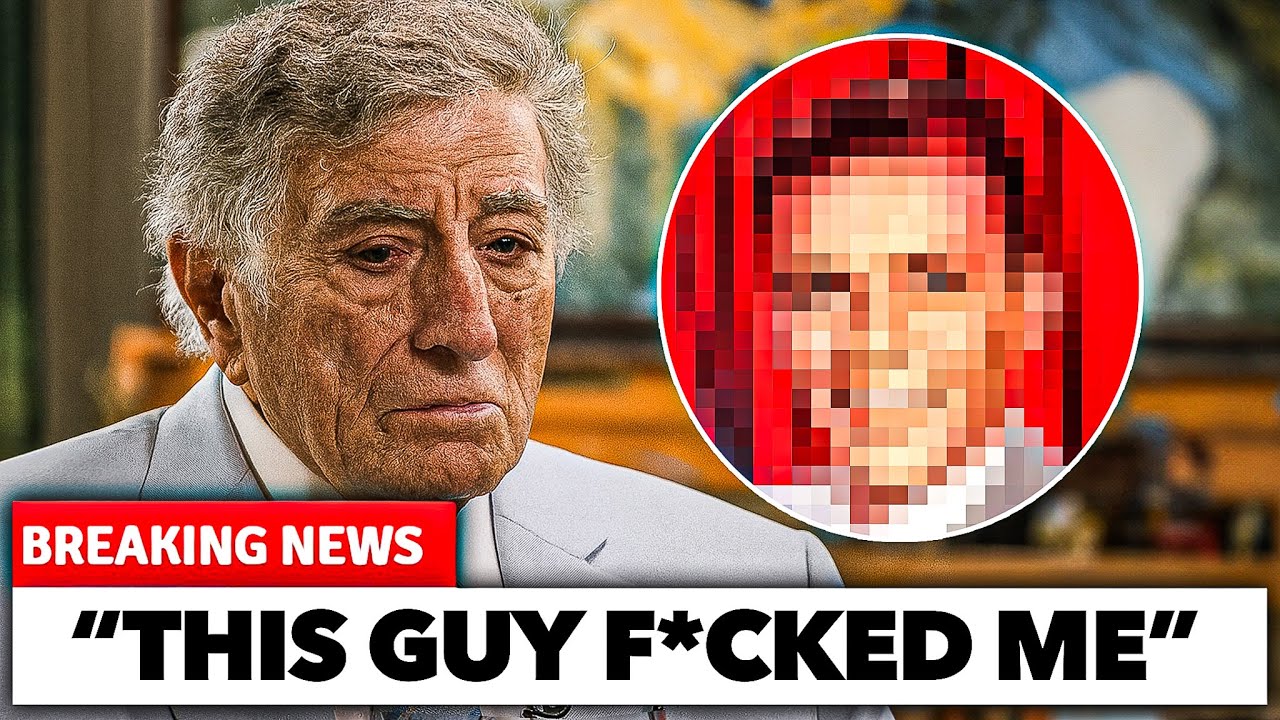
John’s Hospital in Long Island City, Queens. He was the first in his family born in a hospital, a modest but hopeful step for an immigrant family enduring the Great Depression. His parents, John and Anna, had come from Italy seeking opportunity but instead found hardship. Their cramped apartment in Astoria was heated only by coal stoves that barely worked through brutal winters, and meals were never guaranteed.
His father, frail from years of labor, worked as a grocer while carrying a serious heart condition. In 1936, when Tony was just 10, his father collapsed and died at the age of 50. The death plunged the family into despair. Anna, now a widow with three children, worked as a seamstress in sweatshops, sewing long hours for pennies.
Rent was often overdue, and there were days when the landlord threatened eviction. Soup kitchens became part of Tony’s childhood, their lines filled with hungry families just like his. At the same age of 10, Tony was chosen to sing at the opening of the Triborough Bridge, one of New York’s great engineering marvels. Standing before a crowd that included Mayor Fiorello LaGuardia, he sang with a voice so pure that the mayor patted his head in admiration.
That moment was etched into Tony’s memory forever, proof that even a poor boy from Queens could move hearts with his voice. As he grew, he took on work to help his family survive. At 13, he became a singing waiter, balancing trays of pasta and wine before stepping onto small stages in Italian restaurants. Every note he sang was another meal on the table for his family.
He carried his father’s death, his mother’s exhaustion, and the weight of poverty into every performance. Art was his other passion, and he dreamed of becoming a painter. That dream carried him to the School of Industrial Art in Manhattan, where he sharpened his skills in both painting and design. But dreams collided with reality when he turned 16.
Dropping out of school, he worked as a copy boy for the Associated Press, a grocery clerk, and even an elevator operator. Even in these jobs, he kept his dream alive by performing at amateur nights in local clubs. The war changed everything. In 1944, at just 18, Tony was drafted into the United States Army and shipped to Europe with the 63rd Infantry Division during the final stages of World War II.
The Battle of the Bulge was brutal, and Tony saw death up close. He spent nights freezing in foxholes, terrified of being surrounded by German troops. Entire villages were destroyed, friends were killed, and Tony carried the trauma with him for the rest of his life. Yet even in war, he turned to music.
Whenever possible, he sang with military bands, giving soldiers a few moments of relief from the terror. These performances forged a conviction in him: music was not just entertainment, it was a lifeline. When the war ended, the GI Bill gave Tony a chance to pursue music seriously. At the American Theater Wing School, his vocal coach, Mimi Spear, told him something that would define his career: “Don’t imitate singers, listen to instruments.
” Inspired by jazz icons like Art Tatum and Billie Holiday, he developed a style that was conversational, emotional, and utterly unique. After the war, he began performing under the stage name Joe Bari in the smoky clubs of Greenwich Village. That moment came when Pearl Bailey, already a respected star, happened to hear him sing. She was struck not by his polish but by his sincerity, the way every lyric seemed to come from lived experience.
She offered him a chance most singers could only dream of: she invited him to open her show. Soon after, Bob Hope slipped into a club where Tony was performing. After the set ended, Hope came backstage and told him he wanted him to appear at the Paramount Theater, a stage that had hosted giants like Sinatra and Crosby. But there was one more problem: his name.
Joe Bari was forgettable, and his birth name, Anthony Benadetto, was too long for a marquee. On the spot, Hope came up with something short, sharp, and memorable. From that moment forward, Anthony Benadetto became Tony Bennett. The Paramount debut in 1949 was electric.
Thousands of fans packed the theater, and Tony had to learn quickly how to control a crowd that had once rioted for Sinatra. Columbia Records soon came calling, and in 1950 he signed with them, beginning a partnership that would last decades. In 1951, his breakthrough came with “Because of You,” a ballad that climbed to number one and stayed there for 10 weeks. A year later, he shocked the industry by recording Hank Williams’ country hit “Cold, Cold Heart.
” A New York crooner singing a country ballad was unheard of, but Tony’s version became a hit, crossing boundaries that divided American music. By 1953, with “Rags to Riches,” he had cemented himself as a star. By the mid-1950s, Tony Bennett had become more than a pop singer. He stepped away from safe ballads and dared to enter jazz, collaborating with legends like Count Basie and Stan Getz.
Many believed his silky style couldn’t possibly fit alongside hard-swinging bands. Yet Tony proved them wrong. On stage at Birdland, he stunned Basie’s orchestra with a fiery version of “Pennies from Heaven,” rewriting melodies on the spot and earning the jazz world’s respect. Even Frank Sinatra, notoriously critical of singers, praised Tony, calling him the best in the business.
But while Tony gained friends in high places, he quietly harbored resentment toward another singer. Unlike Sinatra, this figure didn’t inspire admiration. Their paths had crossed decades earlier, long before the public ever suspected there was animosity. It wasn’t about who had the better voice or who sold more records.
Tony had always said music wasn’t a competition. This was different. It was personal. Friends noticed that whenever this singer’s name was mentioned, Tony’s expression tightened, his usual warmth disappearing for a moment.
Yet he never spoke of it publicly. He built his career on positivity and kindness, never fueling tabloid feuds, never slinging insults. To the outside world, Tony was the man who loved everyone. Behind closed doors, though, he carried a bitterness that burned quietly for more than 50 years.
The 1960s had been golden years for Tony Bennett. But the arrival of rock and roll in the 1970s shook his world. The Beatles dominated the charts, and Columbia Records pressured Tony to adapt. Against his instincts, he recorded an album of contemporary hits with a psychedelic cover, a project that humiliated him.
He later admitted he felt physically sick during the sessions, as if he were betraying himself with every note. Audiences hated it, and Tony was left stranded between two worlds. His once unshakable career began to unravel. His personal life mirrored the chaos.
His marriage to Patricia Beech ended in scandal when his affair with actress Sandra Grant went public. The divorce dragged on, exposing Tony to harsh tabloid scrutiny, and by the time he married Sandra in 1971, his clean-cut image was in tatters. Soon after, he parted ways with Columbia Records in a bitter dispute over creative control. In 1975, he attempted to save his career by launching his own label, Improv Records, pouring everything he had into the venture.
He recorded ambitious projects with pianist Bill Evans, music that critics hailed as genius but the public overlooked. Distribution problems and financial mismanagement doomed the label, and by 1977, it had collapsed. For the first time, Tony Bennett found himself without a recording contract, drowning in debt, and chased by the IRS for millions in unpaid taxes. Behind the scenes, drugs became his escape.
Cocaine blurred his nights, numbing the pain of failure, divorce, and mounting bills. The charming gentleman of music had become a ghost of himself, performing small shows in Las Vegas just to survive. His bitterness toward that one singer grew even darker during these years, resentment feeding on desperation. Then came the breaking point in 1979.
Overwhelmed by grief after his mother’s death and facing total ruin, Tony collapsed in his Los Angeles home. He had overdosed on cocaine while soaking in the bath. His wife Sandra found him unconscious, the water overflowing, his lips turning blue. She pulled him from the tub and performed chest compressions, reviving him just in time.
Tony later described what he saw in those moments: golden light, peace, a sense that his life had nearly slipped away. For him, it was divine intervention, a second chance. After nearly losing his life, Tony Bennett knew something had to change. At 53 years old, he was broke, addicted, and on the verge of being forgotten.
In desperation, he called his sons Danny and Dae. Danny stepped in as manager and immediately slashed expenses, moving Tony back to New York and reintroducing him to audiences in a bold way. Instead of chasing trends, Danny booked Tony in colleges and small theaters. Suddenly, young audiences who had never heard the Great American Songbook were sitting in packed auditoriums, hearing standards sung with raw emotion by a man who had lived them.
The strategy worked. By the mid-1980s, Tony had repaid his IRS debt and rebuilt his reputation. Columbia Records welcomed him back, but this time he had full creative control. His 1986 album, The Art of Excellence, marked his first charting record in years.
Then came the true turning point: MTV Unplugged in 1994. At 68 years old, Tony stood on a stage dominated by grunge and alternative rock, and he sang without gimmicks. His stripped-down performance stunned the audience, and the broadcast became one of MTV’s highest-rated shows. The live album went platinum and won Album of the Year at the Grammys.
As the years went on, collaborations with younger artists from k. d. lang to the Red Hot Chili Peppers showed he could cross generations without losing authenticity. By the time he teamed with Lady Gaga in the 2010s, he had cemented a reputation as timeless.
To the public, Tony’s comeback was a miracle, a story of perseverance and optimism. But inside, he was still human. His charm, his compassion, his gentlemanly grace were all real. But so was the old bitterness.
Even at the height of his second career, when the world celebrated him as the nicest man in music, Tony never forgave the singer who had once cut him deeply. As Tony Bennett entered his final decades, he became something larger than a singer. In 2006, at the age of 80, he released Duets: An American Classic, featuring Paul McCartney, Elton John, and Stevie Wonder. Five years later, Duets II debuted at number one, making him the oldest artist ever to top the Billboard 200.
He sang with Lady Gaga, Amy Winehouse, Aretha Franklin, John Mayer, and countless others, proving that even at 85, he was still at the very top of his craft. Yet, as he collected Grammys and toured sold-out halls, something darker weighed on him. In private conversations, especially as Alzheimer’s began to erode his memory, Tony let slip details about the one singer he had truly despised. When asked about certain artists, his smile would fade, his voice would harden, and he would simply change the subject.
The truth, revealed to only a few close friends, was that this wasn’t about professional rivalry. It wasn’t about record sales, chart positions, or artistic differences. It was personal. Decades earlier, when Tony was still climbing, this singer had crossed a line that could never be uncrossed.
They had insulted his family, mocking his Italian heritage and belittling the struggles of his immigrant roots. To Tony, whose entire identity was built on honoring his parents’ sacrifices, it was unforgivable. He carried that pain quietly, hiding it from interviews and biographies, choosing not to tarnish his reputation with public grudges. On July 21, 2023, Tony Bennett passed away peacefully in his Manhattan home just two weeks shy of his 97th birthday.
The world mourned the loss of a man who had sung for presidents, performed on every major stage, and whose voice had been the soundtrack to countless lives for over seven decades. Headlines praised his warmth, his kindness, his unwavering devotion to the Great American Songbook. He left behind more than 70 albums, over 50 million records sold, and 20 Grammy awards, including his final one at age 95. His longevity defied the industry’s expectations.
Most artists fade with age; Tony only grew stronger, more respected, more beloved. His voice, cracked slightly by age yet rich with experience, became a symbol of living history. His legacy was also cemented in his philanthropy. With his wife Susan, he founded the Frank Sinatra School of the Arts in his old neighborhood of Astoria, giving back to young people who dreamed of music and art just as he once had.
The school became a testament to his belief that creativity could change lives. But as much as Tony Bennett represented joy and generosity, the truth about his private grudge revealed something more human. Even a man who preached love and peace, who sang ballads that melted hearts, was not immune to bitterness. The singer he had despised was never named publicly.
But those close to him knew the reason: decades earlier, long before Tony became a legend, this singer had mocked his immigrant background, sneering at his family’s poverty and belittling the sacrifices of his parents. For Tony, who had lived through soup kitchens, eviction threats, and the heartbreak of losing his father at age 10, it was more than an insult. It was a wound to his very identity. He could forgive business betrayals.
He could forgive record label disputes. He could even forgive those who had written him off during his darkest years. But he could not forgive that insult. It stayed with him, buried behind his charming smile, carried like a stone in his heart for more than 50 years.
Even as he sang duets with icons, even as Lady Gaga wept beside him in the studio during his final recordings, that bitterness never faded. And yet, in a strange way, the secret only deepened the humanity of Tony Bennett. He was not a saint. He was not flawless.
He was a man who had known hardship, who had carried grief, who had climbed out of poverty and addiction, and still managed to become one of the most admired figures in music. His grudge did not define him, but it reminded the world that even the kindest souls can carry scars that never heal.