In the winter of 1920, a seven-year-old girl died in a small Quebec village after enduring months of horrific abuse that her own father and stepmother inflicted upon her. The case of Aurore Gagnon, whose battered body was found to bear more than fifty wounds, would become one of the most infamous child abuse cases in Canadian history. Marie-Anne Aurore Lucie Gagnon was born on May 31, 1909, in Saint-Philomène-de-Fortierville, a small farming village about 90 kilometers from Quebec City. She was the second of five children born to Télesphore and Marie-Anne Gagnon.
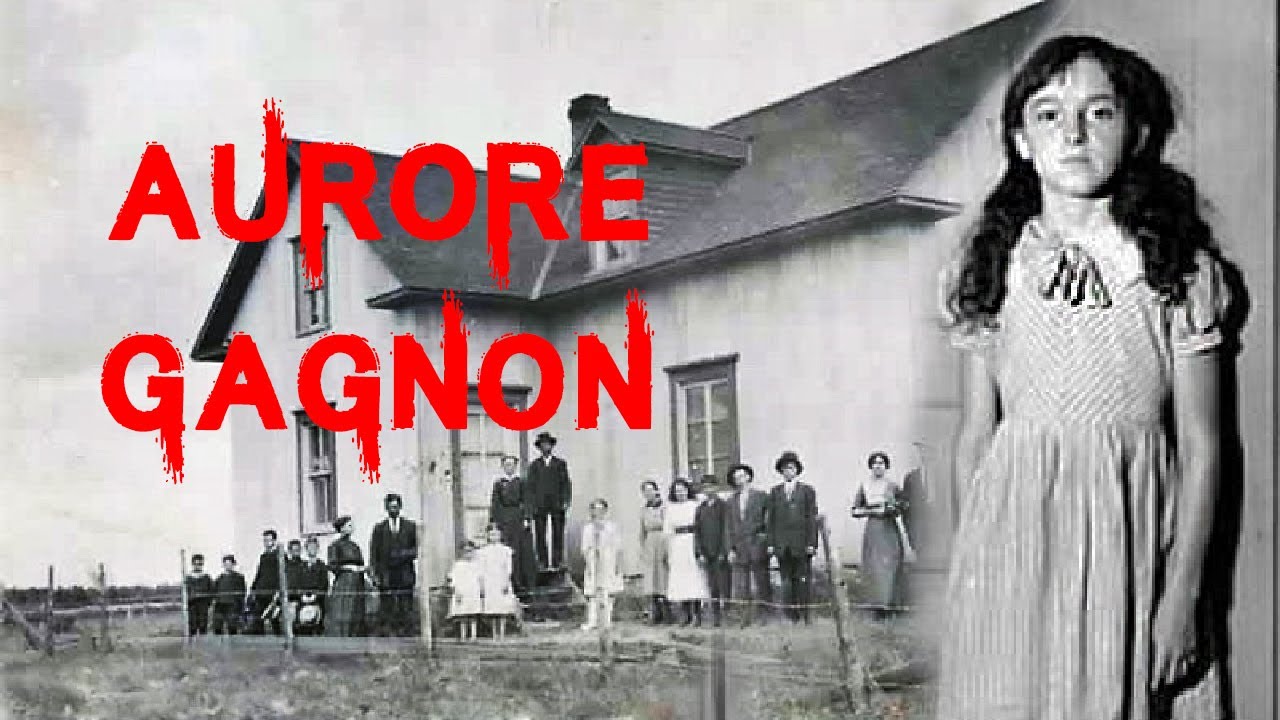
The family lived a modest life in a small house, with the father working long hours while the mother cared for the children. In 1916, tragedy struck when Aurore’s mother was diagnosed with tuberculosis. She was sent to a hospital in Quebec City for treatment, leaving her husband to care for their five children alone. For a time, the children stayed with their grandparents some 10 kilometers away in Sainte-Sophie-de-Laval.
They eventually returned home after their father brought a new woman into the household. That woman was Marie-Anne Houde, the widow of Télesphore’s cousin. She moved in with two young sons of her own, announcing that she was eager to care for the family home and children. Some villagers looked upon her with suspicion, noting that her two daughters had already died.
The deaths did not stop there. On December 6, 1917, two-year-old Joseph Gagnon died, apparently suffocated. The coroner found nothing suspicious despite the child having shown no signs of illness. Just over a month later, on January 23, 1918, Aurore’s mother died in the hospital.
Nine days after her death, Télesphore Gagnon married Marie-Anne Houde, a decision that surprised many locals. Shortly after the wedding, six-year-old Lucina Gagnon suddenly died. The cause of death was unclear, and again the coroner suspected nothing untoward. The surviving children were sent again to their grandparents, but returned in the summer of 1919.
After that return, life for Aurore changed dramatically. Her stepmother kept her home from school on a regular basis. Teachers who knew the girl described her as bright and intelligent, but her attendance was sporadic at best. The reason was that Aurore was being beaten regularly, and her stepmother did not want the child going out where neighbors might see her injuries and talk.
Marie-Anne Houde told her husband that the beatings were necessary discipline for misbehavior. But Aurore’s injuries could not be hidden. She was brought before Odilon Mailhot, a local justice of the peace, who immediately noticed that the girl looked as though she had been treated roughly. Her feet were cut and swollen.
Her father and stepmother claimed local boys had thrown rocks at her while she played outside. When questioned, Marie-Anne Houde did not deny beating Aurore, but insisted it was only discipline. Mailhot spoke with Aurore alone, but the frightened girl said nothing that incriminated her parents. Mailhot instructed the father to have her wounds treated and notified the local priest, Father Ferdinand Masse, hoping that guidance from the church would put an end to the mistreatment.
He also contacted police, but the officers said they could do nothing unless a specific complaint was filed. Mailhot declined to do so. Aurore’s father took her to Dr. Lafond for treatment of her feet.
In September 1919, a new injury appeared on her leg, this time a severe burn that looked as if it had been inflicted with an object such as a poker. Dr. Lafond arranged for her to be admitted to the hospital in Quebec City, where she remained for two months. Numerous witnesses had seen the abuse.
Aurore’s cousin, fifteen-year-old Marguerite LeBoeuf, watched the stepmother beat the girl in August 1919. Aurore’s maternal aunt, Octavia Hamel, visited in January 1920 and found her niece covered in bruises. When she questioned the couple, they said Aurore constantly misbehaved and needed discipline. Hamel urged Télesphore to take Aurore to a doctor.
Marie-Anne responded that it was not necessary. On February 9, 1920, a neighbor named Exilda Auger went to see Marie-Anne. When she saw Aurore, she noticed cuts, bruises, and sores all over the child’s body. The girl wore a dirty dress and appeared to have been sleeping on straw in the corner of a room.
Auger told Marie-Anne to take the child to a doctor, but the stepmother replied that she would get ointments instead. Three days later, on February 12, 1920, Marie-Anne could not wake her stepdaughter. She called for help from Exilda Auger, Dr. Lafond, Father Massé, and Odilon Mailhot.
Dr. Lafond found the child in a deep coma and knew there was nothing he could do. A message was sent to Télesphore Gagnon, who was working in the woods. He returned in the late afternoon, and by 7:00 p.
m. , his daughter was dead. The postmortem was conducted the following day in the local church by Dr. Albert Marois, Dr.
Lafond, and the coroner, Dr. William Joli-Coeur. They found approximately 54 wounds on her body that had been inflicted with blunt instruments over a period of time. There was blood on her scalp and pus from infections.
Her left thigh was badly swollen, and the skin on her hands and wrists had been stripped down to the bone. A toxicology examination by Dr. Wilfrid Derome found poison in the child’s body caused by sepsis. The funeral took place on Saturday, February 14, 1920, and was well attended.
After the service, police arrested Marie-Anne Houde and Télesphore Gagnon. An investigation followed, including interviews with friends, neighbors, and the surviving Gagnon children. Both were charged with murder and tried separately. They pleaded not guilty at a preliminary hearing on February 16, but the judge ordered them held in prison while the investigation continued.
On March 18, the judge ordered that trials begin in April. Marie-Anne Houde’s trial began on April 13, 1920, before Judge Louis Philippe Pelletier. Prosecution witnesses testified that they had seen the defendant strike the deceased child, many of them on multiple occasions. The evidence was damning, but the defense did not deny the accusations.
Instead, they argued that Marie-Anne Houde had acted out of insanity brought on by pregnancy. Doctors agreed that her pregnancies had affected her behavior. On April 21, 1920, she was found guilty of murder and sentenced to death. Her hanging was scheduled for October 1 of the same year.
Télesphore Gagnon’s trial began two days later, on April 23. Witnesses again testified that the defendant had beaten his daughter many times. His defense argued that he had been manipulated by his wife, who had been solely responsible for Aurore’s death. They portrayed Gagnon as a hard worker who spent most of his days away from home, returning only to hear false stories about Aurore that led him to beat her.
The trial ended on April 29, and Télesphore Gagnon was found guilty of manslaughter. On May 4, he was sentenced to life imprisonment. Three months later, on July 8, 1920, Marie-Anne Houde gave birth to twins while in prison. The case unfolded amid growing public debate in Canada over capital punishment.
In 1914, parliamentary representative Robert Bickerdike had presented a private member’s bill calling for the abolition of the death penalty. Although the law remained unchanged, reformers campaigned for Marie-Anne Houde’s sentence to be overturned. A few days before her scheduled execution, her sentence was commuted to life imprisonment. Télesphore Gagnon was released from prison in 1925 after five years for good behavior.
He returned to his village and resumed work on his farm. He corresponded regularly with his wife while she remained incarcerated. By 1935, Marie-Anne Houde had become seriously ill. She was released in July of that year after authorities confirmed she had cancer.
She went to live with her sister in Montreal and died on May 12, 1936. Two years after her death, Télesphore Gagnon remarried. He died in 1961 at the age of 78. Aurore’s older sister, Marie-Jeanne, died in 1986 at age 79.
The case drew intense media coverage across Quebec. In 1921, a play titled Aurore, the Martyr Child opened at the Alcazar Theatre in Montreal and remained in performance there for thirty years. The play’s success led to a film adaptation in 1952. In 2005, a second film, simply titled Aurore, was released.
The tragic story of Aurore Gagnon has remained part of Canadian cultural memory for more than a century, a case whose brutality and systemic failures continue to be studied and recounted.