The scar that ran from William Joyce’s earlobe to the corner of his mouth—a permanent souvenir of a razor attack during a political brawl—had burst open as the trapdoor swung beneath him. At precisely 9:08 on the morning of January 3, 1946, the man known to millions as Lord Haw-Haw was pronounced dead, his spinal cord snapped by the hangman’s noose in the execution chamber of Wandsworth Prison. The blood from that old wound dripped onto the stone floor, a final, grotesque punctuation mark on a life that had ended in the ultimate act of national betrayal.
The crowd that had gathered outside the prison walls in the bitter cold was a study in contradictions. Some had come to jeer, their faces twisted in hatred for the man who had spent the war trying to break the British spirit. Others stood in somber silence, protesting the execution of a man who, whatever his crimes, had never fired a shot in anger.
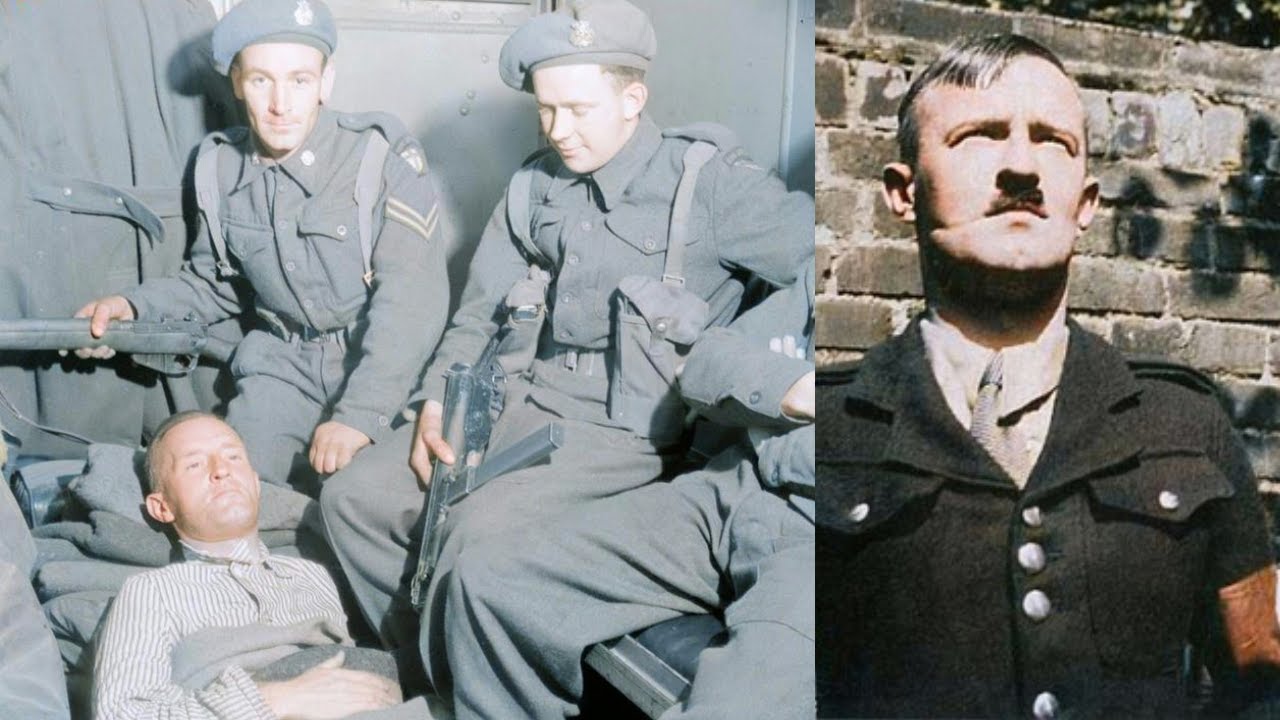 As the official announcement was pinned to the prison gates, a small group of men in heavy coats raised their right arms in a stiff-armed salute, a final, defiant gesture of allegiance to the ideology that had consumed Joyce’s life.
The execution had been delayed by an hour, a bureaucratic wrinkle that had kept the condemned man waiting in his cell longer than expected. Joyce had woken early, refused breakfast, and sipped a single cup of tea as the minutes ticked down. When the governor of the prison arrived at one minute to nine, Joyce rose without protest.
His knees were trembling as he walked the short distance to the gallows, a journey of only a few yards that marked the end of a path stretching from a childhood in New York to the heart of Nazi Germany’s propaganda machine.
Albert Pierrepoint, the executioner, later recalled the scene with clinical detachment. Joyce’s final words were not a declaration of innocence or a plea for mercy, but a mundane observation: “I think we’d better have this on, you know.” Pierrepoint placed the black hood over Joyce’s head, adjusted the noose, and pulled the lever.
The trapdoor opened, the rope snapped taut, and William Joyce was gone. The scar, that infamous mark of violence that had shaped his life, had split open under the force of the drop, spilling blood onto the floor of the chamber.
The story of how William Joyce arrived at that grim moment is one of obsession, violence, and a fanatical devotion to a cause that would ultimately consume him. Born in New York on April 26, 1906, to a British mother and an American father of Irish descent, Joyce spent his early years in America before his family relocated to Ireland. He was just a teenager when he was recruited into the British army as a courier during the Irish War of Independence, a role that nearly cost him his life when he was allegedly ambushed by the IRA on his way home from school.
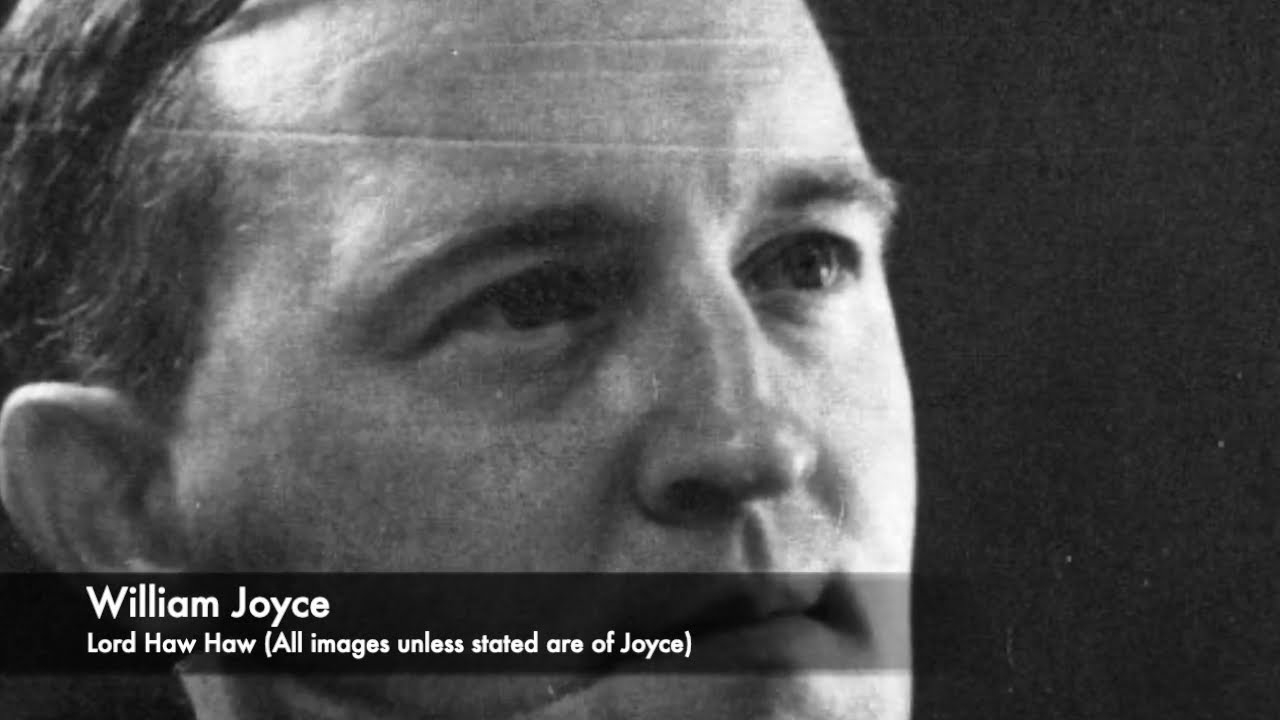 The danger forced his family to send him to England, where he would begin a descent into the political extremism that would define his life.
At university, Joyce became consumed by fascism, finding in its authoritarian doctrines a clarity and purpose that resonated with his volatile temperament. His commitment to the cause was sealed in blood during a general election meeting in Lambeth, where he was set upon by a group of Communists. In the ensuing brawl, a razor slashed across his face, leaving the permanent scar that would become his most recognizable feature.
Far from deterring him, the attack hardened his resolve. He rose rapidly through the ranks of Britain’s fascist movements, joining Oswald Mosley’s British Union of Fascists in 1932, where his commanding presence and electrifying speaking style made him a star of the movement.
But Joyce’s extremism was too much even for Mosley. He was sacked from the BUF in 1937, a rejection that embittered him and drove him to found his own splinter group, the National Socialist League. The NSL was dedicated to bringing Nazism to Britain, but when war broke out, its leadership sided with Hitler over Joyce, leaving him isolated and spiraling into alcoholism.
In a final break with his homeland, Joyce fled to Germany in 1939, arriving in Berlin just before the invasion of Poland. It was there that he found his true purpose, recruited by Joseph Goebbels’ propaganda ministry to become the voice of Nazi Germany to the English-speaking world.
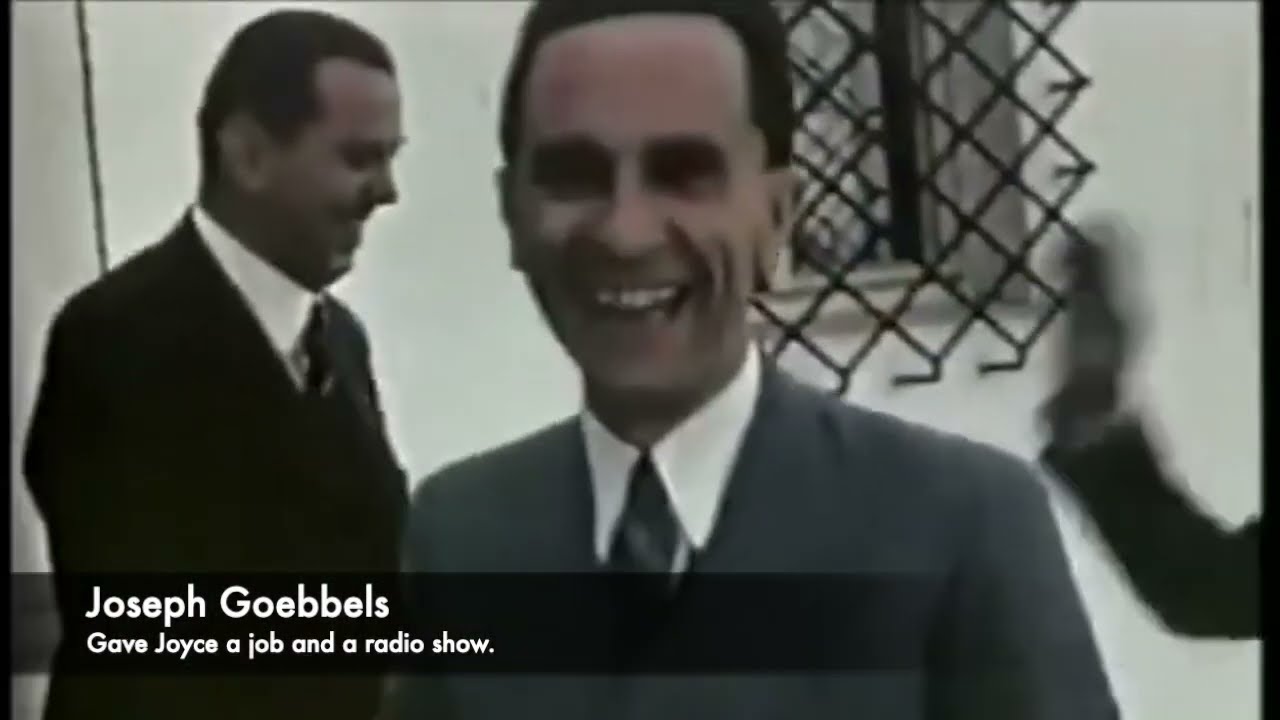 His radio show, “Germany Calling,” was broadcast to millions across Britain and the United States. Joyce, with his upper-class English accent, became a figure of both ridicule and fascination. The nickname “Lord Haw-Haw” was originally coined for a previous broadcaster, but it stuck to Joyce, who used his platform to warn Britons that their working class was being oppressed by a conspiracy of Jewish businessmen and the upper classes.
He urged surrender, threatened invasion, and taunted the Allies with the might of the German war machine. For many Britons, listening to his broadcasts was a form of dark entertainment, a way to glean information that was otherwise censored. But as the war turned against Germany, Joyce’s tone grew more desperate, his broadcasts more erratic and drunken.
His final broadcast came on April 30, 1945, during the Battle of Berlin. In a rambling, intoxicated monologue, he warned against trusting the Soviet Red Army and ended with a final “Heil Hitler.” The next day, the Hamburg radio station he used was captured.
Joyce and his wife fled to Flensburg, near the Danish border, where they lived in a small village under assumed identities. But the hunt for him was relentless. MI5 and a specialist army unit known as T-Force were scouring the region for war criminals.
On May 28, 1945, Joyce was spotted by British intelligence officers in a wooded area near the village of Kufamila. When he reached into his pocket—possibly for forged papers—Lieutenant Jeffrey Perry, a German Jew fighting for the British army, fired his pistol. Joyce was wounded and arrested.
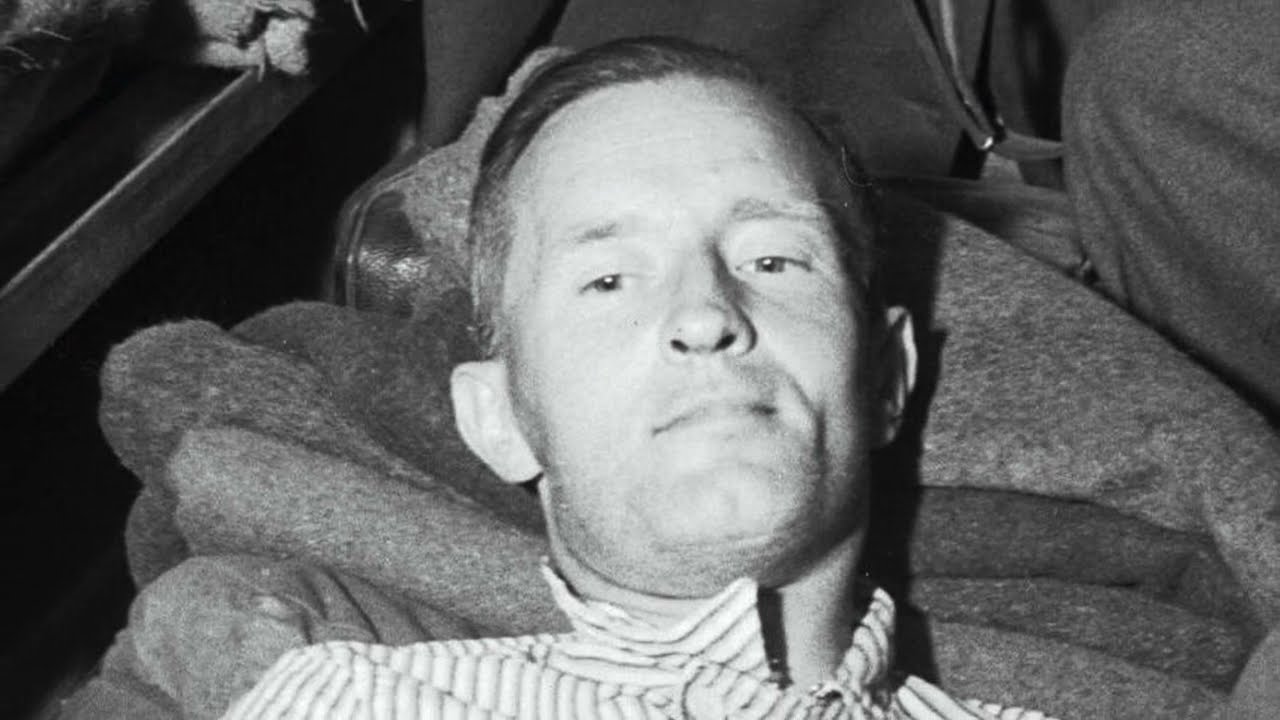 The trial that followed was a legal minefield. Joyce had obtained a British passport by lying about his country of origin, but he was not a true British subject. The prosecution argued that by holding that passport, he owed allegiance to the Crown, and that his broadcasts constituted high treason.
Despite being acquitted on two charges, he was convicted on the third: adhering to the King’s enemies in Germany by broadcasting propaganda. His appeal was rejected, and the sentence of death was confirmed. In his final writings, Joyce remained defiant, warning Britain against the Soviet Union and declaring that he defied the Jews who had caused his downfall.
The execution of William Joyce remains a controversial chapter in British history. He was a traitor who had used his voice to aid the Nazi war effort, but he had not taken a single life. His punishment was the harshest the state could impose, reserved for those who had committed the ultimate betrayal.
In the decades since, historians have debated whether his fate was just or excessive. But on that cold January morning, as the blood dripped from his scar onto the floor of the execution chamber, the debate was moot. William Joyce, the man who had sought to destroy Britain from within, was dead, his body buried in an unmarked grave within the prison walls, his legacy forever tied to the strange, haunting voice that had once promised Britain’s doom.