Theresa Harris shared the screen with Barbara Stanwyck and Bette Davis, sang in early Hollywood musicals, and appeared in more than 60 films — yet for decades, her name remained unknown to most audiences. Born in Houston on New Year’s Eve, 1906, Harris moved with her family to Los Angeles as a child. She studied classical music and drama before breaking into film in 1929 with a singing debut in Josef von Sternberg’s Thunderbolt. Her talent was undeniable, but the studio system of the 1930s limited Black actresses to narrow roles.
Harris was consistently cast as maids, nightclub singers, or background figures, often uncredited, even when sharing scenes with the era’s biggest white stars. She appeared in Hold Your Man with Jean Harlow and Jezebel with Bette Davis without receiving meaningful recognition. Harris developed a personal code of resistance behind the scenes. She refused to play exaggerated dialect or the submissive “mammy” caricature, and she often pushed back against the maid’s cap costumers tried to make her wear.
She insisted on speaking in her own cultured voice and brought dignity to even the smallest parts. Her most famous role came in 1933, in the pre-Code drama Baby Face. Harris played Chico, a maid who becomes the trusted friend and co-conspirator of Barbara Stanwyck’s social-climbing protagonist Lily Powers. The film treated the two women as near-equals, with Stanwyck’s character calling Chico her only friend.
Modern critics, including playwright Lynn Nottage, later saw the character as an early example of the “best Black friend” trope — a Black female role who supported the white heroine while keeping her own dignity. The studio gave Harris little credit. Her name appeared low on the cast list and she was absent from promotional materials. Still, the role raised her profile within the industry and led to her first on-screen credit that same year.
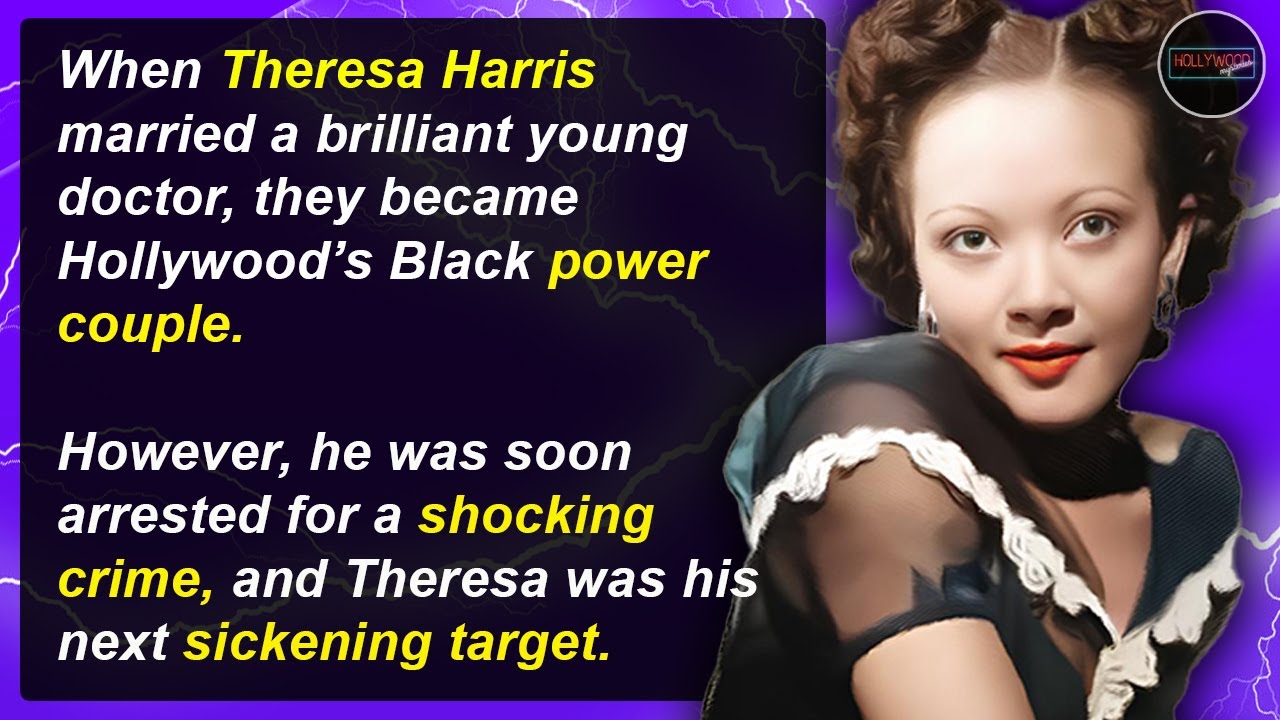
Just as her career began to gain momentum, Harris’s personal life collapsed into scandal. In 1933, she married Dr. John Marshall Robinson Jr. , a prominent young Los Angeles physician.
Months after the wedding, he was arrested for receiving stolen goods connected to a morphine supply. The case drew headlines in the Black press, and Harris initially stood by her husband. But as details of his dealings emerged, reports also surfaced of domestic violence. In 1936, Harris filed for divorce.
She kept working throughout the ordeal, and her determination to fight for better roles grew stronger. In 1937, Harris starred in a race film called Bargain with Bullets, an independent production with a Black cast made for Black audiences. It gave her a taste of leading-lady status, but the film was low-budget, distributed only to segregated theaters, and no surviving print is known to exist today. Around the same time, Harris spoke publicly about Hollywood’s racism.
In an August 1937 interview with journalist Fay M. Jackson of the Afro-American, she bluntly said she had never had the chance to rise above the role of maid. She stated that her color was against her “any way you looked at it” and that Hollywood had no parts for her. She also urged Black audiences to support independent Black filmmakers, arguing that competition would push Hollywood to offer better roles.
Her comments were widely noted in the Black press, but major studios did not respond by improving her opportunities. Harris continued to work steadily, taking what parts she could find. In 1940, she appeared in Buck Benny Rides Again, performing a show-stopping musical duet with Eddie “Rochester” Anderson. The film earned her a two-year contract with Paramount Pictures.
Under that contract, she reprised her chemistry with Anderson in several films, playing his saucy girlfriend and singing duets. Producer Val Lewton also cast her in slightly less stereotypical roles during this period, including the horror classics Cat People in 1942 and I Walked with a Zombie the following year. In those films, Harris again played a domestic worker, but her characters had agency and insight rather than being mere comic relief. She also took small parts in major productions, including Orson Welles’s The Lady from Shanghai and the film noir Out of the Past.
In Out of the Past, she played Eunice Leonard, a tough, glamorous nightclub owner who once worked as a maid. Critics have singled out the brief scene as memorable and as proof of what Harris could do when given richer material. As the 1940s ended, her film roles became more sporadic. Hollywood’s treatment of Black performers had barely advanced, and television’s emergence slowed progress further.
Harris did become one of the first Black actresses to join the Screen Actors Guild, advocating from within for better treatment of Black talent. In the early 1950s, she guest-starred on television anthology shows and made small appearances in series like Alfred Hitchcock Presents and The Loretta Young Show. In 1953, she had a quietly notable role in Angel Face, playing a character named Nurse Teresa. In 1958, she made her final film appearance and retired from acting.
Unlike many of her contemporaries, Harris did not end her career in poverty. She had invested wisely and was able to live comfortably. She remained in Los Angeles, stayed active in her church, and supported political causes, including Adlai Stevenson’s 1952 presidential campaign. In September 1952, Jet magazine featured her on its cover, noting that she still had faith in Hollywood after 20 years of maid roles.
Harris told the magazine she had been typecast largely because studios never promoted her the way they promoted white actresses. Still, she said she remained optimistic. Harris died on October 8, 1985, at the age of 78. Her death drew little attention from the Hollywood press.
In 1974, she had been inducted into the Black Filmmakers Hall of Fame, standing alongside contemporaries such as Hattie McDaniel and Lena Horne. Years later, playwright Lynn Nottage discovered Harris’s performance in Baby Face and used her life as the inspiration for the play By the Way, Meet Vera Stark. The play tells the story of a fictional Black maid turned actress in old Hollywood, exploring the struggles of Black performers in the studio era. Harris never received the star treatment she earned.
But her story has gradually been rediscovered, and her quiet persistence is now recognized as an important chapter in Hollywood history.