In July 1941, hundreds of Jewish men were marched to a secluded spot in the woods near Vilnius, Lithuania. Blindfolded and walking in single file, they reached a specially prepared pit where they were lined up and shot. This was just the beginning. Throughout the war, 100,000 people would be killed at Paneriai.
Dozens of people who tried to escape were killed by bullets overhit in their heads. Mothers held children, and couples embraced each other. The most shocking thing about it was that many of these Jews were shot not by Germans but by their fellow Lithuanian countrymen.
One of the dirtiest secrets of World War II is that right across the Baltic states, thousands of people actively supported the Nazis. They formed the Schutzmannschaft, so-called protection teams, death squads used to hunt down and kill hundreds of thousands of Jews. The Germans had created almost a criminal clique, a blood pact, throughout Eastern Europe. There were tens of thousands of people who had covered their hands with the blood of Jews and Communists.
What drove these men to hunt down and execute their neighbors? Were they forced into it by the Nazis? Did they do it for the money? Or were they simply vicious sadists with a thirst for killing Jews? This is the story of some of Hitler’s most brutal collaborators, the collaborators of Lithuania and the Ukraine.
In June 1941, Operation Barbarossa began. Hitler’s armies invaded Russia on a huge 2,000-mile front. Panzers drove deep into Russian territory, and from the air, the Luftwaffe pummeled any resistance. Infantry units followed the Panzer spearhead. Taken completely by surprise, the Red Army didn’t stand a chance. Nine hundred thousand Soviet soldiers fell into German hands almost immediately. By the end of August, this figure reached 1.2 million. Many more mutinied and deserted.
But as the Germans pushed onward, in some countries they were welcomed as liberators. Cheering crowds turned out to greet them in their thousands. The reception was especially warm in the north, in the Baltic states of Lithuania, Latvia, and Estonia.
The reason the people were particularly glad to see the Germans was that they hated the Russians. A year before the Germans arrived, the Russians had captured Lithuania as part of a secret deal struck between Hitler and Stalin in August 1939. The Red Army had invaded and occupied the Baltic states. What made this so terrible was that these countries had previously been ruled by Russia for 120 years. They had only broken free after World War I. After just 20 years of independence, the Russians had come back.
Stalin then wreaked havoc on his Baltic subjects. They were a different race from the Russians. They had Western traditions and always looked to the West. They were on the Baltic and looked to nations like Sweden, Germany, and Denmark, their near neighbors, and not to Russia. Stalin regarded them as a fifth column and intrinsically enemies of Russians and of Soviet communism.
The Russians deported or executed thousands of families viewed as anti-Soviet elements. Many more would die in prison camps in Siberia. Desperate to rid themselves of the Russians, Lithuanian nationalists formed into guerrilla groups and prepared to rise against the Soviets. Little wonder that Hitler was seen as a better prospect than Stalin.
For the Nazis, this was the perfect climate for recruiting collaborators. In the south, in the Ukraine, it was a similar picture. The Ukraine had once been one of the wealthiest parts of Russia based on its fertile farmland. But all that had changed under Stalin. In the 1930s, he imposed a harsh new policy upon the Ukrainian peasants. They were forced to give up the land they had owned for generations and move to large collective farms. If farmers refused, they were made to hand over huge quotas of food to the state. Their homes were searched and destroyed by the Soviets. Their food and equipment were confiscated. The rural population was left isolated and starving.
The result was a famine of biblical proportions. As many as 5 million Ukrainians died. The Ukrainians called it murder by hunger, a genocide perpetrated by Stalin with the sole aim of wiping out their culture and killing as many Ukrainians as possible. No wonder they saw the Germans as a more attractive proposition.
All this ensured that when the Germans arrived, they were greeted as liberators. But for Hitler, these adoring people presented a problem. He now had vast new territories to run and some 40 million more people to control. What was worse was that he despised every one of them. He regarded them as a vast mass of slaves who were going to be used by the German settlers he planned to plant on farms all over Poland, Russia, the Ukraine, and the Eastern marches generally. They were going to be the slaves, the helots, mainly used as agricultural laborers. They weren’t to be educated, but they weren’t to be physically exterminated in a deliberate way as he planned to do with the Jews. They were going to be used as an expendable population of slaves.
On top of this, these newly captured territories contained millions of undesirables: Jews, Gypsies, and Russian prisoners. Controlling all of this would take a huge effort. The trouble was Hitler just didn’t have enough men. He couldn’t spare any soldiers for police work because they were committed to the front. So the Germans had no choice but to turn to their despised new subjects for help.
And they came flooding in. Many men were recruited from the ranks of anti-Soviet guerrilla movements in Estonia and Lithuania or from Red Army deserters in the Ukraine. This call to arms happened within days of occupation. Their first official task was to deal with local communist organizations. Those who had experienced Stalinist oppression were eager to help. But this anti-communism masked another much more sinister Nazi plan: the total annihilation of the Jews of Eastern Europe.
Hitler had made no secret of his loathing for the Jews. He regarded them as parasitic vermin who polluted the blood of the German people and deserved to be eradicated. But crucially, in his eyes, all Jews were Communists. Eliminate one and you got rid of the other. He saw Judaism and Bolshevism as part and parcel of the same force. It was his view that there was going to be a world struggle between the two rival ideologies of National Socialism and Judeo-Bolshevism. So Barbarossa was always on the cards. It was just a question of when.
It wasn’t hard to convince the Lithuanians to turn on the Jews. They had a long history of anti-Semitism and blamed them for the recent Soviet oppression. This was the land of the pogrom, dating right back to Tsarist rule. Before the Communists ever took over, there was a very lively tradition of vicious anti-Semitism all over Eastern Europe. It was by no means unknown for Jews to be massed and killed.
Lithuanian nationalists had been preparing anti-Jewish propaganda for months. On the outbreak of war, they declared that the crucial day of reckoning for the Jews had come at last. Lithuania must be liberated not only from Asiatic Bolshevik slavery but also from the Jewish yoke of longstanding.
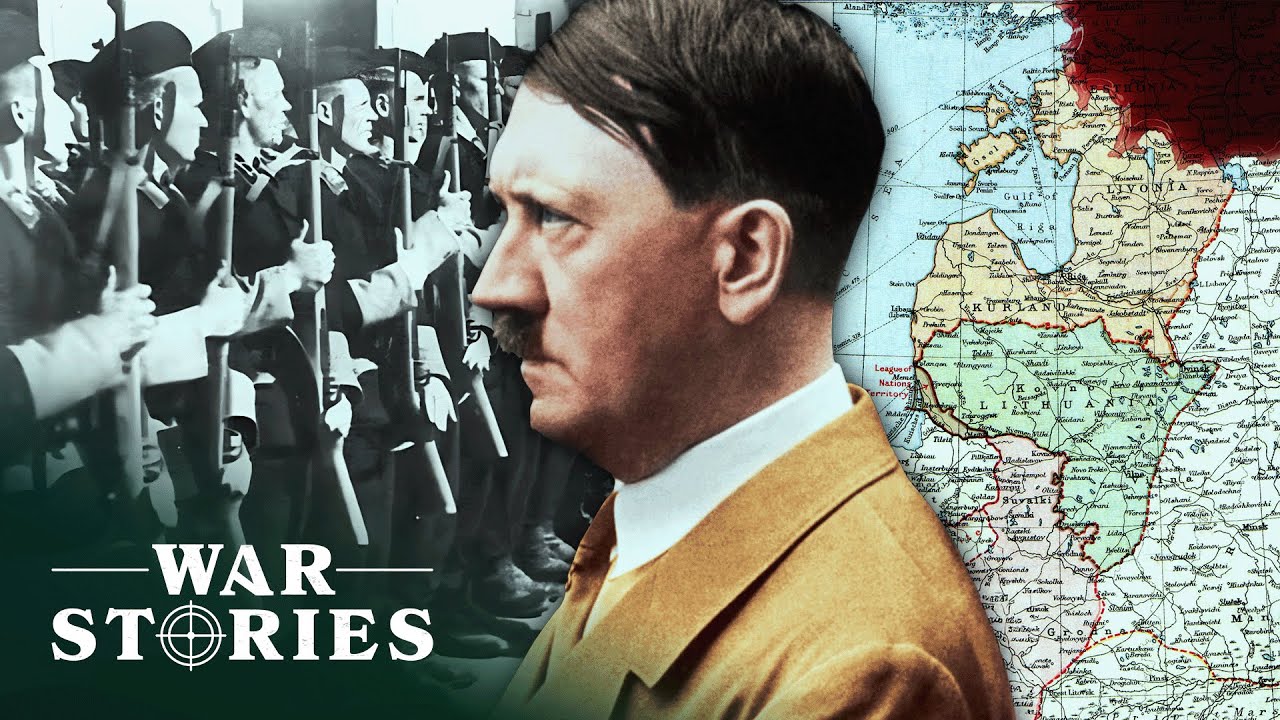
In fact, the Lithuanians were so enthusiastic that their own armed groups turned on the Jewish Bolshevik menace within hours of the invasion. So-called partisans rose up as soon as the fighting started along the border to join with the Germans. They often rose up in cities before the Germans arrived, started firing on Soviet units, and part of their activity was inciting people to join them in an anti-Soviet uprising. That anti-Soviet feeling was almost indistinguishable from anti-Semitic feeling.
One of these groups was called the Lithuanian National Labor Defense Battalion, or TDA. Its men were identified by the white armbands they wore on their sleeves. These groups began murdering Jews in vicious pogroms on the streets. Most notorious were those carried out across the city of Kaunas. There, in June 1941, Jews were hunted down, humiliated, and murdered by their Lithuanian neighbors. Crowds gathered around to watch members of the local militia beat Jewish men to death. In the background, they played the national anthem.
So who were these men prepared to carry out such atrocities? One member of the TDA was a young man named Antanas Gecevičius, later known as Antanas Gecas. Gecas was a Lithuanian nationalist. He was born in Lithuania in able circumstances. His parents were landowners. He had gone to the military academy in Lithuania and become a lieutenant in the Lithuanian Air Force. He was very patriotic and had military training experience, but he was also an opportunist of the worst kind.
In June and July of 1941, Kaunas’s unit was largely responsible for rounding up and executing hundreds of Jews at a site known as Fort VII on the outskirts of the city. This violence was encouraged and incited by the Nazis, who reported how easy it was to convince the Lithuanian circles of the need for self-purging actions to achieve a complete elimination of the Jews from public life. It was just a taste of things to come.
Watching all this unfold was Heinrich Himmler, head of the German secret police and the SS. He was the man to drive through Hitler’s racial policies in the Soviet territories. Right from the start, Himmler realized the Lithuanians were people he could do business with. He ordered that no steps would be taken to interfere with any purges that might be initiated by anti-communist or anti-Jewish elements in the newly occupied territories. On the contrary, these were to be secretly encouraged.
As the word secret shows, Himmler was careful to disassociate himself from the work of these Lithuanian thugs. At the same time, every precaution must be taken to ensure that those who engage in self-defense actions were not subsequently able to plead that they were acting under orders or had been promised political protection. Himmler found there was no shortage of willing and competent executioners.
What happened to the Jews in the Ukraine was even worse. In the first days of the invasion of the Soviet Union, the Germans had swept into the Ukraine, hammering the cities of Odessa, Kiev, and Lviv. They captured huge swathes of Ukrainian territory and pushed back the Soviet Army. In Lviv, the Germans made a gruesome discovery. Hundreds of people had been slaughtered in the city jail. They were Ukrainian nationalists murdered by the retreating Russians.
The nationalist groups blamed the Jews. Under the approving eye of the Nazis, they rounded up the city’s Jews and forced them to remove the dead bodies. Then they wreaked their revenge. Jews were driven into the streets from their homes and their businesses. They were hacked to pieces in the street, beaten to death, and shot. Women were raped. The violence and destruction were extraordinary. The Germans had encouraged it, stood by and watched it, and enjoyed it. The Germans were so entertained by what they saw that they filmed it.
When the pogrom was over, 5,000 Jews were dead. The violence was so extreme that the Nazi leadership became concerned. This angry rabble was one step away from turning into an uncontrollable mob. It was time to channel this anti-Semitism and apply some rigorous German discipline.
Himmler announced that the anti-Soviet militias were to be disarmed and reformed into the Schutzmannschaft, or Schuma for short. It means protection team. These were auxiliary police battalions under the direct control of the Nazis. Many young men eagerly grabbed their chance.
So what motivated them to join the ranks of the Germans? Some, like Antanas Gecas, transferred from armed Lithuanian units like the TDA. He wrote a letter to the local German commander dedicating himself to the military success of the Reich and the greater glory of Adolf Hitler. But despite this, he clearly wasn’t a committed Nazi. During the Soviet occupation, Gecas had actually worked for the Russians. In his mind, the obvious thing to do was to immediately offer his services to the Germans in the most obsequious way possible.
Gecas wasn’t really very ideological. He was probably a patriotic Lithuanian. He certainly didn’t like Jews, but he wasn’t a follower of Adolf Hitler. He hadn’t read Mein Kampf. He was above all an opportunist who wanted to save his own skin, and he used any kind of excuse for self-promotion.
There were many other reasons why collaborators signed up to the new battalions. For some, it was job security, food, and money for their families. Many would claim to be fighting for their country against Russia. A lot of them believed that this was a patriotic job, working for the Germans in the security apparatus, which of course meant hunting down and suppressing communists and Jews, who they regarded as their enemy. This was respectable work for someone who was a nationalist and a patriot.
But the Germans weren’t too picky about the people they enrolled. The auxiliary units also attracted criminal elements and opportunists. Membership of these units was quite fluid, and the paying conditions were not exactly highly regulated. A lot of Lithuanians joined the Schutzmannschaft in the early period because they knew it would give them an opportunity to rob and to plunder, particularly the property and homes of Jews.
Across the occupied countries, volunteers and conscripts flooded in. Estonia would eventually provide some 9,000 men. Five thousand Lithuanians would sign up. The Nazis had a specific role in mind for their new recruits. The Schuma would be used alongside the most brutal of Nazi units, the Einsatzgruppen.
These Einsatzgruppen were special operations SS units. They took their orders from Himmler’s deputy, Reinhard Heydrich. Their job was to follow the German Army into occupied countries and murder communists, undesirables, and especially Jews. They would go to a village or a town, make contact with sympathetic anti-Soviet nationalists, and ask them where the communists were living, where the people who used to work for the Soviets were, whether there were any stay-behind Red Army soldiers, and where the Jews were. They would then target these groups, round them up, march them out of town or to the edge of a city, to places where there were anti-tank ditches or ravines, and murder them.
The Einsatzgruppen had already done this grizzly work in Poland, where they murdered an estimated 50,000 people. But it became apparent that the Germans didn’t have the stomach for the slaughter. Morale began to sag. So in the Soviet territories, Himmler needed someone else to do his dirty work, and the Schutzmannschaft seemed ideal.

The Lithuanian Schuma, including Gecas’s battalion, joined the death squads of Einsatzgruppe A, led by the fiercely ambitious Brigadeführer Dr. Walther Stahlecker. His squad operated in the Baltic states of Estonia, Latvia, and Lithuania. Of the four Einsatzgruppen units, his were the most murderous. Throughout the rest of the war, they would round up and execute Jews. For a short time, they stuck to men, but their policy of murder soon spread to women and children. Entire communities would be wiped out, herded into pits and shot.
Extraordinarily, local people far outnumbered Germans in these death squads. Once the Nazi leadership had decided that it was going to cleanse the occupied territories of all Jews except those who were useful to their war effort, they absolutely had to have local collaboration. They needed local collaborators to show them where the Jews were, to guard ghettos, to march Jews out to the killing sites, to guard the killing sites, and to shoot the Jews. They needed tens of thousands of local volunteers to carry out what was becoming a genocide on a vast and unimaginable scale.
The Schuma’s first mass execution sites in the Soviet territories were in Kaunas, Lithuania. Between June and October 1941, in a series of forts around the city, they perfected their deadly skills. They were led by Major Antanas Impulevičius, a former member of the Lithuanian militia and a notorious sadist from Kaunas.
The death squads fanned out across Einsatzgruppe A’s territory, dividing into smaller units. One group was led by SS Standartenführer Karl Jäger. He kept a chilling, meticulous account of the Jews and undesirables murdered by his men. It became known as the Jäger Report. Across Lithuania, the numbers racked up until, in December 1941, his unit had killed over 137,000 Jews. In cold, efficient detail, men, women, and children were recorded separately. At the end of the report, Jäger summarized, I can now state that the aim of solving the Jewish problem for Lithuania has been achieved. There are no more Jews in Lithuania apart from the work Jews and their families.
What the report also detailed was the integral part played by the Lithuanian auxiliaries in this liquidation process. One of the most notorious massacres carried out by Jäger’s men was the liquidation of the Jews of the Vilnius ghetto in Lithuania. Jews were routinely rounded up and marched to the nearby woods of Paneriai by armed Lithuanian guards. In these woods, the Soviets had built huge pits for the storage of tank fuel. They had never been used for this purpose, but they were just right for what the death squads had in mind. Between July and December 1941, at least 48,000 Jews were lined up by the edge of these pits and shot.
One teenager escaped from the Vilnius ghetto and witnessed what happened. They took them to collect bodies of dozens and dozens of people who tried to escape and were killed by dum-dum bullets. They collected elderly people, hitting them over their heads. They saw children, mothers holding children, and young couples embracing each other. They took all these people and threw them into the pit. These were things you can’t forget.
Day after day, the Lithuanian shooters executed their countrymen. How could they have done it? One motivation was money. These murder expeditions were also a chance to rob the homes and steal the property of the Jews.
One Schuma unit was employed further afield in the neighboring territory of Belarus, and it was developing quite a reputation. This was the death squad that Antanas Gecas had joined, the 12th Lithuanian Battalion. In September 1941, they were sent on a special operation in and around Minsk. Their task was the complete eradication of Jews from the ghetto and surrounding towns.
The Germans were very clever in the way that they deployed the Schutzmannschaft. They sent Ukrainians to Poland and Lithuanians to Belarus. They used them in areas where they would feel no kind of local ties or local allegiances. Very often there were linguistic barriers, so they were virtually mercenaries. They could be sent to an area detailed to carry out a killing operation without any sense of affiliation or affinity to the local people.
The 12th Battalion’s crowning achievement came in a town called Koydanovo. As part of a German police battalion, they swept through the streets rounding up Jews. They tore screaming children from their mothers and shot all who tried to evade capture. They then herded the Jews to pits outside the city. One of Gecas’s officers described the massacres that followed. We were driving the Jews to the pits. They went in rows of four persons in long columns. One part of the guards were driving them, and the others were waiting to shoot. The victims were lying in pits and then were shot. We were killing with Russian rifles. We shot first their parents and then their children. It was terrible to kill. We did it automatically without thinking.
As a platoon commander, Antanas Gecas took a prominent role in these operations. He knew German and was able to liaise between the officers and the Lithuanian rank and file. Gecas was involved in the entire process, deploying the Lithuanians as guards and shooters, communicating with the German senior officers, and personally taking part in the killing of Jewish men, women, and children at the death pits in Minsk. Gecas and his battalion also took part in a macabre public spectacle, the hanging of 17-year-old Masha Bruskina and her fellow resistance fighters in Belarus.
Gecas’s battalion would participate in the murder of 300,000 people. Walther Stahlecker neatly summarized the killings in a special document known as the coffin map. The map details the total number of people killed by Stahlecker’s men and their auxiliaries and declares Estonia to have been completely cleared of Jews. After this initial wave of killing, he reports 128,000 Jews remaining, presumably Jews who could be used for the German war effort.
Meanwhile, in the Ukraine, Nazi collaborators were carrying out an equally ruthless extermination of the Jews. They operated within the Einsatzgruppe of Friedrich Jeckeln, police commander in eastern Russia. Jeckeln’s murder squads swept through the countryside, and the death toll mounted. Two thousand five hundred Jews at Kamianets-Podilskyi, 23,600 at Kamenets-Podolsk. And in September 1941, they helped to carry out the largest single mass killing by Nazis and their collaborators throughout the entire Soviet campaign.
A convenient pretext for this extermination fell into the Nazis’ lap. The German headquarters in Kiev, the capital of the Ukraine, were blown up by the retreating Soviets. The Germans pinned the sabotage on the Jews. They were rounded up by Ukrainian police and marched to a huge ravine called Babi Yar. It was the ideal place to try out one of Friedrich Jeckeln’s most notorious techniques, known as sardine packing.
Victims were forced to climb into the ravine by Ukrainian militiamen and shot from above. Another batch of Jews were ordered to climb down and position themselves head to foot with the dead. Then they too would be shot. Jeckeln believed this was a more efficient way of killing Jews. It was also a more efficient way of filling the pits. You used the space more efficiently, so you didn’t have to dig longer and bigger pits. In his eyes, this was a terrific achievement, a great step forward in efficiency. To us, of course, it is simply the most extraordinary barbarity. One wonders how an intelligent and educated man could have thought this through and patted himself on the back for having come up with this solution to a difficult problem.
Sardine packing proved very effective. After just two days, nearly 34,000 were dead.
How could these people execute entire families? How could they justify killing women, children, and babies? The hardcore Nazis of course viewed the Jews as a racial enemy that had to be exterminated. The next generation, children above all, had to be wiped out. But what about the Nazis’ Ukrainian collaborators? How could they do it?

Many of these people had a primitive way of thinking. They believed in blood feuds and grudges. They had long memories within their own communities. They worried that if anyone in a Jewish community survived, they would come back looking for revenge. They didn’t want witnesses. They didn’t want anyone who could say he killed my mother or father. So even the children had to be killed because they could be witnesses.
Having shown themselves willing to assist in the wholesale slaughter of Jews, Hitler’s collaborators would soon be implicated in the very worst of his crimes, the world’s first industrialized genocide. Death camps were set up to receive trainloads of Jews from across the occupied countries. The Nazis needed staff to run these death factories efficiently, so they turned to their Ukrainian puppets.
One of the most notorious was a man thought to be called Ivan Marchenko. He was recruited and trained by the SS at a prison camp called Trawniki. From there, he was sent to the notorious extermination camp Treblinka to work the gas chambers, where 3,000 Jews could be killed at one time. He was a vicious sadist and became known as Ivan the Terrible. Marchenko was almost certainly a former Soviet prisoner of war.
The recruitment of these guards was officially voluntary, but many would claim that their only real alternative was deportation or death in a prisoner of war camp. But once employed, they excelled in tormenting their victims. Especially Ivan Marchenko. He liked to use a sword to drive Jewish women to their deaths in the gas chambers. In these camps, Marchenko and his Ukrainian colleagues could unload and kill an entire trainload of people in just four hours.
A spirit of corruption began to fill the guard units at these killing sites. They had a lot of money, they were buying booze, and they were drunk a lot of the time. Some of them took Jewish women from the trains, kept them from the gas chambers for a few days, and used them as sex slaves. These death camps were the most horrendous environments in which men became corrupt, depraved, and violent, with all moral inhibition eroded.
In Treblinka alone, Marchenko and his men helped to murder over three-quarters of a million people. He was exceptionally evil. In 1983, the Israeli courts thought they had got him. A Ukrainian named John Demjanjuk was arrested and accused of his crimes. But it turned out that Demjanjuk was not Ivan Marchenko of Treblinka, and he was released. But he was not off the hook yet. Today in Munich, Demjanjuk stands accused of being a guard at another killing center in Poland, Sobibor.
Millions of Jews continued to be processed by Ukrainian collaborators right up to the end of the war, even as the German Army faced its destruction.
In 1943, the tide finally turned, and the war began to go badly for the Germans. The Russian army was striking back. Victory followed victory. Stalingrad was a resounding success for the Russian army. At least 275,000 Germans were wiped out, many of them freezing to death over the bitter Russian winter. The Battle of Kursk, the biggest tank battle of World War II, saw 500,000 German soldiers killed, wounded, or lost.
The German Army was running out of men. For Hitler, there was now no option. The Nazis, who considered Slavs and Eastern Europeans as barely human, would now have to rely on them. They were able to take advantage of the very successful Soviet counterattack to say to the peoples of Eastern Europe, unless you rally to our cause, the Bolsheviks are going to come back. And after this period of collaboration with us, after you’ve profited from looting the Jews and killing the Jews, they’re not going to look very kindly on you. So if you want to defend your ill-gotten gains, if you want to defend any chance of Ukrainian independence or Lithuanian autonomy, join the German military forces.
The collaborationist police battalions were phased out. Their men were transformed into frontline soldiers fighting for the Germans all over the Eastern Front. Even the elite SS was forced to recruit from the Soviet states. Thirteen thousand men formed an Estonian Legion. Himmler even agreed to the recruitment of a Ukrainian SS division, but he obliterated any claims they could make to be patriots fighting for their own country. They were not allowed to use the word Ukraine in the name of their unit. So in April 1943, they were formed into the SS Galicia division. Fifteen thousand Ukrainian volunteers were signed up and sent to the Eastern Front.
When the Lithuanian police battalions were disbanded, Antanas Gecas joined a Luftwaffe labor unit and served on the Italian front. These collaborators were now a vital part of Germany’s armed forces and fought by their side to the bitter end.
The Germans had created almost a criminal clique, a blood pact, throughout Eastern Europe. There were tens of thousands of people who had covered their hands with the blood of Jews and communists, who had profited from the German occupation. The Germans knew that they could rely on these people for a last-ditch defense of the occupation. These collaborators, brutalized by years of killing and lawlessness, were now fighting for their lives against a Russian army hellbent on revenge.
But it was all too little, too late. The Russians were coming, and there was nothing the German Army or its collaborators could do to stop it.
As the war ended, many former Schuma volunteers surrendered to American and British troops and escaped to the west. There was good reason to run. Many who stayed behind after the war were hunted down by partisans seeking revenge. One of these partisans was Masha, the Jewish teenager who had escaped the Vilnius ghetto. He was part of a group who tried to track down the perpetrators of the massacres at Paneriai.
But a great many more escaped justice. Among these was the commander of the 12th Battalion, Antanas Impulevičius. He lived in America until his death and was never tried or punished for his crimes.
And what of his one-time platoon commander, Antanas Gecas? Incredibly, he had changed sides right at the end of the war and fought for the Allies. He took part in the fighting for Bologna in the last months of the Second World War and actually got a medal from the British. He was able to settle in Britain after the war with the men of the Polish divisions who, because they had fought under the British flag, were given the right to settle in Britain. He moved to Scotland and led an apparently blameless life until information was provided by the Soviets that revealed he had taken part in some of the worst atrocities of the Second World War.
In 2001, Scotland agreed to extradite Gecas to Lithuania, but he died before he could be brought to trial.
After the Second World War, these Lithuanian and Ukrainian collaborators proved frustratingly hard to bring to justice. As a result, it’s difficult for us to understand their motives. It’s clear that some were anti-communists and were haunted by the atrocities committed on their friends and families by Stalin. Others had no choice. The Germans offered their best hope of surviving, food and money for their families. But this cannot justify participating in the mass slaughter of millions of people.
Many of these collaborators weren’t just following orders. They killed for personal gain, and sometimes they enjoyed it. And their help ensured that Hitler could carry out his genocide against the Jews.