George Gordon Meade took command of the Union Army of the Potomac just three days before the Battle of Gettysburg began, a move he did not seek and reportedly greeted with grim resignation. On June 28, 1863, a messenger arrived at his headquarters near Frederick, Maryland, with a telegram from Washington. After reading it, Meade told his adjutant, “Well, I’ve been tried and condemned without a hearing. ” He had been selected to replace Joseph Hooker, who had resigned after a dispute with Washington.
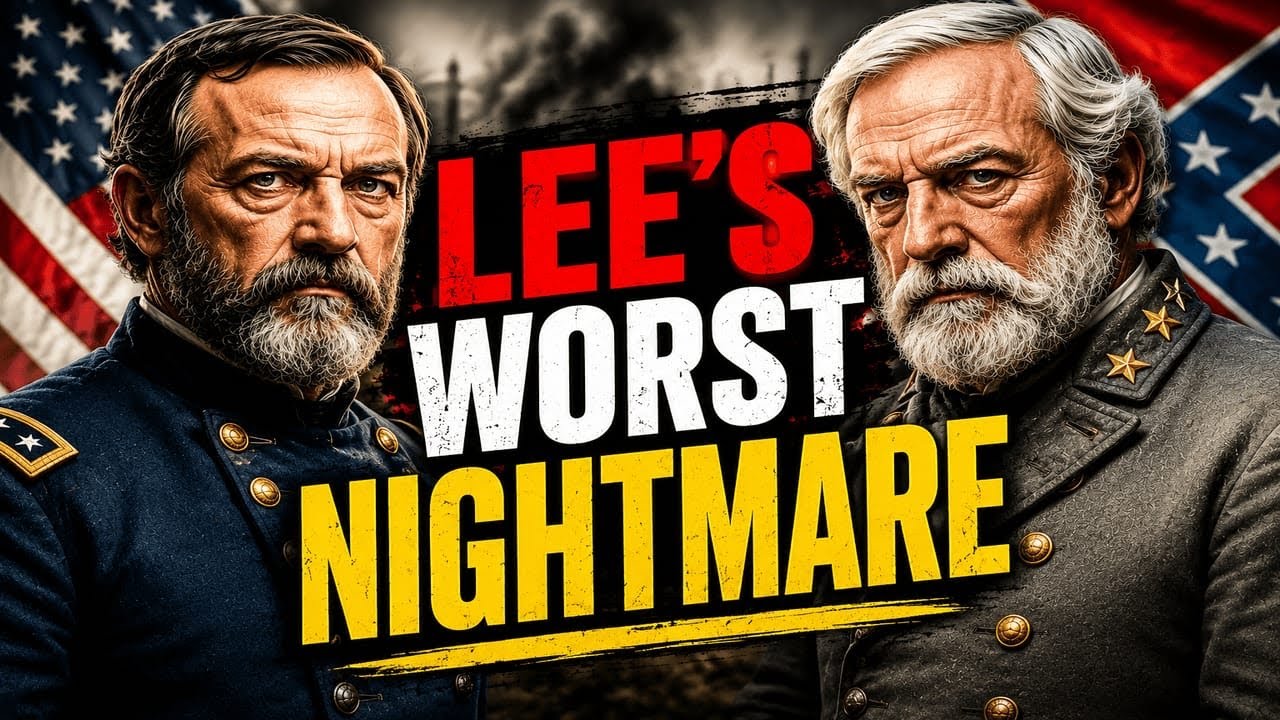
President Abraham Lincoln chose Meade not for his charisma but because he was considered reliable and steady under pressure. As Lincoln later described it, Meade would fight well but would fight with the brakes on. Meade was a 57-year-old Pennsylvanian known among his own officers by the unflattering nickname “that damned old goggle-eyed snapping turtle. ” He was an engineer and a student of maps and mathematics rather than a romantic figure of glory.
His appointment came at a critical moment, as Confederate General Robert E. Lee had invaded Pennsylvania with the Army of Northern Virginia, which had won nearly every major engagement in the Eastern theater. The collision occurred at Gettysburg, a small crossroads town of about 2,400 residents, on July 1, 1863. The battle began almost by accident when a Confederate infantry division under General Henry Heth moved toward the town in search of supplies, including shoes.
Union cavalry under General John Buford had arrived the night before. Buford recognized the tactical importance of the low hills west of Gettysburg and dismounted his roughly 3,000 troopers, spreading them thin to delay the Confederate advance until Union infantry could arrive. His men opened fire early in the morning, and despite being heavily outnumbered, they held their ground for hours. By mid-morning, the First Corps under General John Reynolds reached the field.
Reynolds, considered one of the Union Army’s best commanders, was killed by a sniper’s bullet within the hour. Throughout the day, Confederate attacks pushed Union forces back through the streets of Gettysburg. By late afternoon, the Union line had collapsed, and many soldiers retreated through the town itself. However, they fell back to a defensive position on a fishhook-shaped line of high ground that included Cemetery Hill, Culp’s Hill, and a rocky prominence called Little Round Top.
As evening fell, the rest of the Union army poured onto that ridge. General Winfield Scott Hancock arrived around 3:00 p. m. and worked to rally the retreating troops, riding along the lines and shouting that the army was coming.
His presence helped steady the broken regiments. By nightfall, the Union army held the high ground in a strong defensive arc. Despite not having intended to fight a major battle at Gettysburg, Lee decided to attack the Union position. Meade reached the field after midnight.
He set up headquarters in a small stone house on the Taneytown Road and spent hours studying maps and asking detailed questions about troop positions, ammunition, water supply, and possible escape routes to Washington. He calculated his forces at about 85,000 men against Lee’s roughly 75,000. He then issued precise, unglamorous orders for corps to move to specific coordinates, align flanks on stone walls, and dig trenches. His style was methodical preparation rather than bold maneuver.
On the Confederate side, Lee’s senior lieutenant, James Longstreet, strongly advised against attacking the Union position. Longstreet wanted to move around the Union left flank, place the Confederate army between Meade and Washington, and force the Union to attack on favorable ground. Lee refused, saying, “The enemy is there, and I’m going to attack him there. ” Longstreet later wrote that he believed the battle was lost on the night of July 1.
On the morning of July 2, the Union army spent hours digging entrenchments, moving stone walls, and positioning artillery. Meade walked the line inspecting the ground and fields of fire. He noticed that Little Round Top, on the extreme left, was virtually undefended and instructed his chief engineer, Gouverneur Warren, to see to it. Warren arrived on the hill just as Confederate forces were forming for an assault.
He sent an urgent message requesting every available man. The troops who responded included the 20th Maine, commanded by Colonel Joshua Lawrence Chamberlain, a former college professor. His regiment took position behind boulders and tree trunks on the rocky slope. Over the next hours, Confederate units from Alabama launched repeated assaults.
The 20th Maine held the extreme left of the entire Union line, and the position stood as the key to the flank. After running low on ammunition, Chamberlain ordered a downhill bayonet charge. The maneuver broke the Confederate attack and saved Little Round Top. Elsewhere on the field, fighting at Culp’s Hill continued until around 3:00 a.
m. on July 3, with combat sometimes reduced to hand-to-hand fighting. The Union line bent but did not break. By midnight on July 2, Meade still held the field, although both armies had suffered heavy casualties.
On July 3, Lee again decided to attack the Union center. Longstreet once more advised a flanking movement but was overruled. The plan called for a massive artillery bombardment followed by an infantry assault of roughly 12,000 men across an open mile of ground. The attack, led by General George Pickett’s Virginian division, has become known as Pickett’s Charge.
Around 1:00 p. m. , approximately 150 Confederate cannon opened fire in what was then the largest artillery bombardment ever assembled in North America. On the Union side, Meade had anticipated the barrage and pulled his front-line infantry back behind the crest of the ridge, where most of the shells passed overhead.
Artillery chief Henry Hunt ordered his gunners to fire sparingly to conserve ammunition. When the bombardment lifted, the Confederate infantry emerged from the woods and advanced in a mile-wide line across open ground. Union artillery, including guns on Little Round Top and Cemetery Hill, opened fire with canister rounds that caused devastating casualties. The infantry held their fire until the attackers were close, then unleashed volleys that tore apart the front ranks.
Some Confederates reached the stone wall at a position known as the Angle, where brief hand-to-hand fighting occurred, but flanking attacks by Union regiments broke the assault. The surviving Confederate troops retreated across the field. Pickett, who lost most of his division, rode back to Seminary Ridge, where Lee met him and told him his men had done all that men could do. Pickett reportedly replied, “General Lee, I have no division left.
” Lee ordered a retreat and told his commanders, “It is all my fault. ”
As evening fell on July 3, Meade stood on Cemetery Ridge and surveyed the broken Confederate army across the valley. Some of his staff urged him to launch a counterattack, arguing he could destroy Lee’s forces and possibly end the war that night. Meade declined.
He considered his exhausted troops, the darkness, and the uncertainty of the roads, and chose to hold his position instead of pursuing. Lee retreated in the rain on July 4. The Potomac River was too high for his army to cross for several days, but Meade did not pursue aggressively. Lincoln was frustrated by the missed opportunity to destroy Lee’s army, and the war continued for nearly two more years.
Historians have debated for generations whether Meade should have attacked after the Confederate repulse. His decision has been criticized by many later observers. However, the outcome of the battle marked a turning point. Lee’s army had suffered a severe defeat, and its survivors returned to Virginia with a new understanding of their opponent.
According to the source narrative, Lee himself reportedly remarked that Meade would not make a mistake and would not give him an opening, saying he had never faced an equal. The account emphasizes that Meade’s greatest contribution at Gettysburg was his refusal to be provoked into reckless action. He fought as a calculator rather than as a romantic, waiting for the enemy to exhaust itself against prepared defenses.
The source concludes that the battle was not solely about Pickett’s Charge, but about a Union commander who understood that sometimes the most dangerous thing a general can do is hold his ground.