On the night of December 2, 1992, in Canarsie, Brooklyn, a 35-year-old man was working at his own auto repair shop, a routine evening he had lived through countless times. He was the owner, his name on the lease, and he had built a new life for himself in that garage while nearly everyone he had once worked with was dead. He had every reason to believe he had escaped the danger. Someone walked in and shot him nine times in the back of the head.
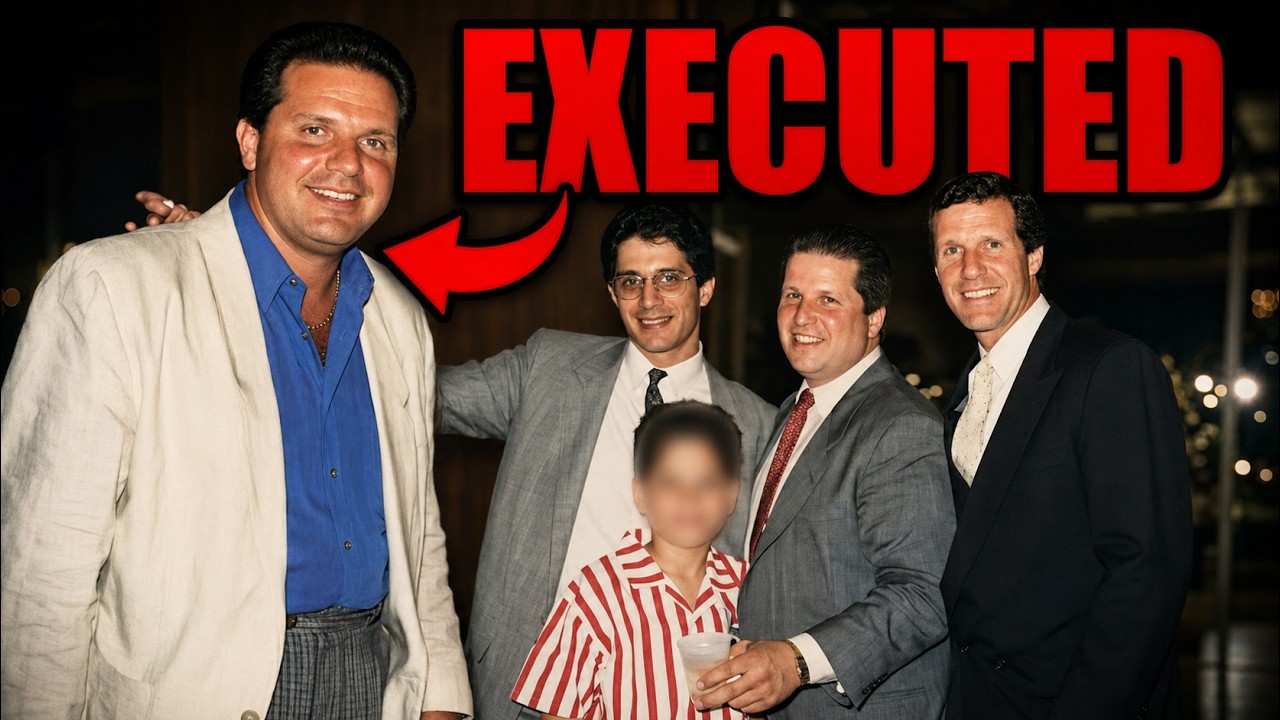
His name was Patrick Testa, known to Brooklyn as Patty. The shooting itself was not what made this killing worth examining for more than half an hour. The real issue was where he was standing when it happened. Patty Testa was not killed by the crew that raised him.
That crew had already been wiped out. Nine years earlier, its leader had been murdered in that same room, and according to multiple accounts, Patty may have had a hand in it. By the time Patty died, the most dangerous members of that crew were serving life sentences. He had done what almost no one around him could do.
He had gotten out, switched sides, and rebuilt himself in a safer place. Still, he was killed in the same garage where his mentor died, by the family that had taken him in. To understand why this is one of the most brutal ironies in American Mafia history, you need to know exactly what Patty Testa had survived. What he survived was one of the most violent operations in the history of organized crime in this country.
Patrick Testa was the younger brother of a man named Joseph Testa. As teenagers, the Testa brothers ran with a close friend named Anthony Senter, doing work that quickly got fast, reliable kids noticed by the wrong people, such as stealing cars, moving stolen goods, and learning who to talk to and who not to talk to. Through that work, the three of them became close to a man named Roy DeMeo. Roy DeMeo was born in September 1940 in Brooklyn and grew up in the middle-class environment of East Flatbush, which was not the typical path into organized crime.
In his final year of high school, he was carrying cash in paper bags and driving Cadillacs. He was a kid who understood very early that he had a talent for this work and no interest in doing anything else. He caught the attention of Anthony Gaggi, a senior associate in the Gambino family, who understood DeMeo’s real nature: a man willing to do the things others in the organization could only order. By the early 1970s, DeMeo had his own crew, operating from a bar called the Gemini Lounge on Flatlands Avenue in Brooklyn.
On paper, their main business was car theft. Expensive stolen cars were dismantled, refitted with new tags, and shipped through a pipeline that, at its peak, reached as far as Puerto Rico and Kuwait, worth millions of dollars a year. Patty Testa was one of the main reasons that part of the operation ran so well. His mechanical skill was exceptional, unlike the other men around him who just took a share while others did the real work.
One member of DeMeo’s crew was the main supplier of cocaine at Studio 54 during its peak popularity, which shows how far beyond Brooklyn the ring’s reach extended. Beneath all of this, something far more horrifying was hidden. By the FBI’s own estimate, the crew was responsible for at least 200 murders before it was dismantled, making it the longest-running murder investigation in the history of American federal law enforcement. Many of those bodies were never found.
According to court testimony from a man named Freddy DeNome, this is how the people who were there did it. A target would be invited to the back room of the Gemini Lounge, a quiet place that felt social. DeMeo would pull out a gun and shoot him in the head from close range. While the body was still warm, someone would quickly wrap towels around the wounds to stop the bleeding, because a bathtub in the back was already prepared for dismemberment before rigor mortis set in.
The body parts were sent out in garbage bags. This was not a spur-of-the-moment decision. It was a disciplined method, perfected through repetition, carried out by men in their twenties and thirties who discussed it as casually as any other profession. Joseph Testa and Anthony Senter became two of the most trusted members of that system.
History remembers them as the Gemini Twins. Patty grew up watching his brother do this work and eventually became part of it himself. What is known about the inner workings of this crew comes mainly from two sources: court testimony from people like DeNome, and a 1992 book called “Murder Machine. ” Journalists Gene Mustain and Jerry Capeci wrote the book, reconstructing nearly a decade of what happened inside that lounge based directly on court transcripts and interviews with informants.
It remains the most detailed account, yet even it cannot answer all the questions this story raises. Here is a fact worth considering before going further. This crew did not wait for outsiders or the FBI to kill their own people. They did it from within while the operation was still running.
And the first time it happened was the beginning of DeMeo’s own downfall. In 1979, a member named Chris Rosenberg, who respected DeMeo so much that he had taken DeMeo’s own surname, robbed a drug deal from Colombian traffickers and killed one of their associates in the process. The Colombians wanted revenge and demanded it directly from the Gambino family. To avoid a war that neither DeMeo nor his superiors could handle, Anthony Gaggi gave the order.
Rosenberg had to be eliminated. On May 11, 1979, DeMeo lured Rosenberg to a supposed routine meeting with a hit, but by all accounts, DeMeo hesitated to finish him. Anthony Senter, Patty’s future crewmate, stepped forward and shot him dead. Then the crew drove around with Rosenberg’s body in a car and riddled the vehicle with automatic gunfire, so word would reach the Colombians that the debt had been paid.
This was the organization Patty Testa grew up inside. A group that killed strangers for money and would dispose of their own whenever they became a liability. Even DeMeo’s hesitation shows that giving that order had cost him something real. If you are noticing a pattern in who survives and who does not in this kind of operation, keep that thought.
It will become important again before the end. By then, Patrick Testa owned a legitimate business, a body shop in Canarsie called Patrick Testa Motors. It served two purposes. To the outside world, it was a garage.
To the crew, it was a place to talk, strip cars, and hold meetings that were too dangerous to discuss on the phone because the lines might be tapped. On January 10, 1983, Roy DeMeo went to that garage to meet with his own people. He never came home. Ten days later, his body was found partially frozen in the trunk of his own Cadillac, parked at a boat club not far away.
Be careful here, because this is one of the most misrepresented facts in the entire DeMeo story. Who actually pulled the trigger was never formally confirmed. According to later accounts from Anthony Casso, Paul Castellano wanted DeMeo dead because he had become too visible and too violent, putting federal pressure on the Gambino administration that could no longer control the crimes committed in their name. Casso claimed he helped arrange the hit by turning DeMeo’s own closest men against him.
In Casso’s account, DeMeo sat down in the garage expecting a routine meeting, and Anthony Senter and Joseph Testa opened fire. Other accounts name a completely different killer, Richard Kuklinski, a freelance contract killer who claimed involvement before his own death. And in multiple accounts of that day, Patrick Testa, whose name was on the garage, was also listed among those suspected of being in the room. No one was ever charged with DeMeo’s murder.
What is certain, and what no one disputes, is this. Roy DeMeo was last seen alive at the garage bearing Patty Testa’s name, and Patty kept running that business afterward. As if that address had not become the site of one of the most significant crimes in Gambino family history, a place where he may have had his own hand in it. After DeMeo’s death, his crew did not last long, and they did not go quietly.
The FBI, the NYPD, and federal task forces had been building a case against the Gemini crew for years when they finally got their opening. On June 4, 1982, months before DeMeo died, an NYPD sergeant on duty spotted Vito Arena, a member of DeMeo’s crew, walking into a Chinese restaurant in Brooklyn while he was having lunch. When Arena came out, officers were waiting. Within days, he was in federal custody and started talking.
That single arrest, made during an ordinary dinner, turned the case around. Arena’s cooperation directly led Freddy DeNome to switch sides as well. With testimony from both of them, plus a third former member named Dominic Montiglio, investigators finally understood the full picture. The towels, the bathtub, the entire method, were revealed by the men who had lived inside it.
In March 1984, federal prosecutors under U. S. Attorney Rudolph Giuliani indicted Paul Castellano and 23 other people connected to DeMeo’s stolen car business on 78 counts. Racketeering, loan sharking, and a theft ring that moved hundreds of cars a year.
Patrick Testa was also on that indictment list. He pleaded guilty without going to trial and served about two years in federal prison. When he came out in 1986 or 1987, depending on the account, the world he had grown up in no longer existed. DeMeo was dead.
Gotti himself had faced trial and died of heart failure in federal prison in 1988, before the government could finish the work it had started against him. The Gambino family had every reason to keep the last remnants of that crew as far from their business as possible. So Patty did what his brother and Anthony Senter were doing at the same time. He joined the Lucchese crime family and by 1987 had reached the rank of soldier there.
Pay attention to the timing, because it tells you how these men thought. They were not stupid. Arena had already flipped. DeNome had already flipped.
Gotti was facing serious charges. And at that moment, their decision was to step forward, to become made men under a completely different family, a different boss, and different protection, leaving behind the convicted crew of the Gambino operation that federal prosecutors had just dismantled. For men who had spent their entire adult lives inside the most reckless and self-destructive crew in the Gambino organization, being made somewhere else was exactly what it should have been. A future.
An insurance policy. A way to survive without leaving the life. It did not give any of them what they had hoped. Joseph Testa and Anthony Senter did not escape the federal prosecutors either.
In a separate investigation focused specifically on the murders committed by the Gemini crew, not just the stolen cars, both men were caught. In June 1989, a jury convicted them on racketeering and ten counts of murder. Both received sentences that effectively locked them up for the rest of their working lives. Joseph Testa was not released until 2024, after 35 years.
He died of cancer in January 2026, having been a free man for less than two years. Anthony Senter served a similar sentence and was released on parole in 2023. Patty was not caught up in that second case. His own conviction and imprisonment were already in the past.
While his brother was serving what was effectively a life sentence, Patty was still outside, a trusted soldier in his new family, running his garage in Canarsie, and to all appearances, one of those who had finally survived. Now you need to understand exactly what kind of family he had joined, because this is where the story turns from the crew that raised him to the crew that killed him. Victor Amuso and Anthony Casso, known on the street as Gaspipe, did not just rise to the top of the Lucchese family. They had grown up together in Brooklyn in the same gang, known as the 19th Hole crew, during the seventies and eighties.
For nearly 20 years, they ran scams, rackets, gambling, and drugs side by side before they gained real power. In January 1987, when boss Anthony Corallo and the rest of the family leadership were given life sentences as part of the Mafia Commission trial that brought down the heads of New York’s other families, Corallo chose Amuso from prison to take over. Amuso’s first act as boss was to appoint Casso, the man he had trusted for two decades, as his underboss. Patty Testa’s fate ultimately depended on that partnership.
Both men suffered from the same obsession that defined the entire American Mafia at that time: the fear of informants. The eighties had proven again and again that when pressure increased, even made members flipped. Patty’s own crew was living proof of that. Amuso and Casso’s response to that fear was not caution.
It was bloodshed, faster and freer than any other leadership in the family’s history. In May 1990, federal prosecutors indicted Amuso, Casso, and a dozen others in what became known as the Windows Case. It was a scheme that used bid rigging and extortion to drain an estimated $150 million from New York City’s window replacement industry. Instead of facing it, Amuso and Casso went into hiding and ran the family from there.
And a family run by fugitives who could no longer see the streets themselves began killing on rumor alone, without proof. Even before Casso became underboss, he had been personally killing or ordering the deaths of suspected informants across Harlem, the Bronx, and New Jersey. At least 17 people in 1991 alone. That same year, on Casso’s orders, a Lucchese member named Bruno Fasciola was killed.
A dead canary was stuffed into his mouth as a message about traitors and rats. He had been killed on suspicion of informing, which was never actually confirmed. On May 8, 1991, Peter Chiodo, a Lucchese captain weighing over 400 pounds and one of the key figures in the Windows racket, went to a garage on Staten Island to look at a Cadillac. Two gunmen opened fire.
Chiodo survived 12 gunshot wounds, largely because his massive body stopped the bullets from reaching any vital organs. Shortly afterward, he became a government witness. In September, the family’s acting boss, Alphonse D’Arco, learned that a hitman had come to meet him with a hidden gun on the orders of Amuso and Casso. When the killer stepped into another room, D’Arco fled and within days had taken federal protection.
Patty Testa was a member of this family. This was not a stable or disciplined organization that could offer him the protection he had expected. Its leadership was at war with its own members. They killed on the slightest suspicion, and they operated in paranoia and fear that more than half of their remaining members might be working for the police.
On December 2, 1992, Patty Testa was shot nine times in the back of the head in his own garage, the same garage where his mentor had been killed nine years earlier. The order for the murder came from Anthony Casso. That was confirmed by later testimony from Frank Gioia Jr. , a Lucchese associate who told investigators that Casso had assigned the hit to a captain named Frank Lastorino.
According to that same testimony, Casso’s real purpose extended far beyond Patty Testa. He wanted the killing to look like the work of the Gambino family, in order to start a war between John Gotti’s Gambino organization and the Luccheses. If that information is accurate, Patty Testa was not killed for anything he had done. He died as a pawn in someone else’s war.
Understand what this means. This is the account of a cooperating witness describing the planning of a leadership that was documented at the time to have ordered numerous killings based on false suspicion, unfounded rumors, and fabricated excuses. This is the most specific explanation on record. It is not the only account in circulation, and no court has ever tried this specific case.
Treat it as the best available source based on the evidence, not as the final truth. A little over a month after Patty was killed, in January 1993, Anthony Casso himself was captured, ending his nearly three-year run as a fugitive. In 1994, facing all the evidence the government had against him, he became a cooperating witness and admitted involvement in more than 30 murders as part of the deal. The cooperation agreement was revoked when prosecutors caught him lying and continuing to direct violence from jail.
He was sentenced to 13 consecutive life terms and died in federal prison in 2020. The murder of Patrick Testa was never a crime for which Casso’s confession or anyone else’s account resulted in a conviction. So now look at what actually happened to every person in this story, arranged in sequence, because that pattern is the whole point. First, Roy DeMeo, shot in January 1983 in Patty’s own garage by people whose identities were never formally confirmed.
The two names that come up most often are the men Patty had grown up with his entire life. Before that, in 1979, Chris Rosenberg was killed by his own crew to settle a debt with people DeMeo could not fight. His own mentor hesitated before giving that order. It did not save him.
DeMeo’s captain, Anthony Gaggi, did appear in federal court, but he did not survive his own trial. He died of heart disease in prison in 1988. Joseph Testa gave the government 35 years of his life on the murder case, on top of the time he served for the stolen car case. He was released from federal prison in 2024 as an old man and died of cancer within two years.
Anthony Senter received a nearly identical sentence and was released in 2023. He is one of the very few people in this entire story still alive. Peter Chiodo survived the 12 bullets meant to silence him and spent the rest of his life in witness protection, testifying against the men who ordered his death. Anthony Casso received 13 consecutive life sentences and was regarded even by the federal prosecutors who dealt with him as an exceptionally violent man.
He died in prison in 2020, outliving most of the people whose deaths he had ordered. And then there is Patty Testa. He was indicted once and survived it. He may have helped kill the man who built the organization that raised him, and he survived that too.
He watched his own brother receive a life sentence, and when it happened, he was still outside the prison walls. By every legal measure, he was the one who got out safely. He is also the one who was shot nine times in the same room where it all began, by the family he had joined mainly to escape the reason the first man had died. And if the testimony is accurate, he was killed not for anything he had done, but to carry out someone else’s plan against a family that had nothing to do with him in 1992.
That is the real shape of this story, and it needs to be stated clearly because every part of it points in the same direction. Getting a place somewhere new does not erase what you came from. The people around you do not forget what they know about your past, or what they choose to believe about your loyalty when suspicion reaches its peak. And there is no guarantee that even your death will be about you.
Patty succeeded at everything survival demands. He kept himself useful. He pleaded guilty when fighting would have cost more. He served his sentence quietly.
He switched sides when the opportunity came. It changed nothing, because the family he took shelter with killed just as easily on suspicion or convenience as the old one killed for profit. Consider what it actually took for him to reach that garage on December 2, 1992. A childhood in an environment where dismembering strangers was a profession.
A crew that shot its own members in their meeting room the moment they became a liability. A federal indictment and two years in prison. A mentor murdered near his own daily parking spot, in a killing he may have been part of. A brother who gave the FBI 35 years of opportunity the moment he was convicted.
Patty cleared every one of those obstacles. He switched sides while he still could, joined an organization that seemed safer, kept working, followed the rules, and based on everything that had happened up to that point, had every reasonable reason to believe he was free. He was not free. The new family was no safer than the old one.
It just killed for different reasons, on thinner evidence, sometimes for reasons that had nothing to do with the man in front of the gun. Today he lies buried beside questions that no one has ever answered under oath. There was no trial for his own murder. No confession that clearly named him.
There is no official record of why a man who survived the most feared crew in Gambino family history, an indictment, imprisonment, and the wreckage of everyone he grew up with, could not last another four years as a good soldier somewhere else.