Jim Brown had just finished filming in London when he opened a newspaper and read his owner’s ultimatum. Art Modell, who owned the Cleveland Browns, told reporters that Brown would be suspended without pay if he failed to report to training camp by July 17, 1966. Brown, the greatest running back in NFL history, had not missed a single game in nine seasons, never missing a practice due to injury, and had just led the league in rushing a record eighth time in nine years. The public threat came at a particularly complicated moment.
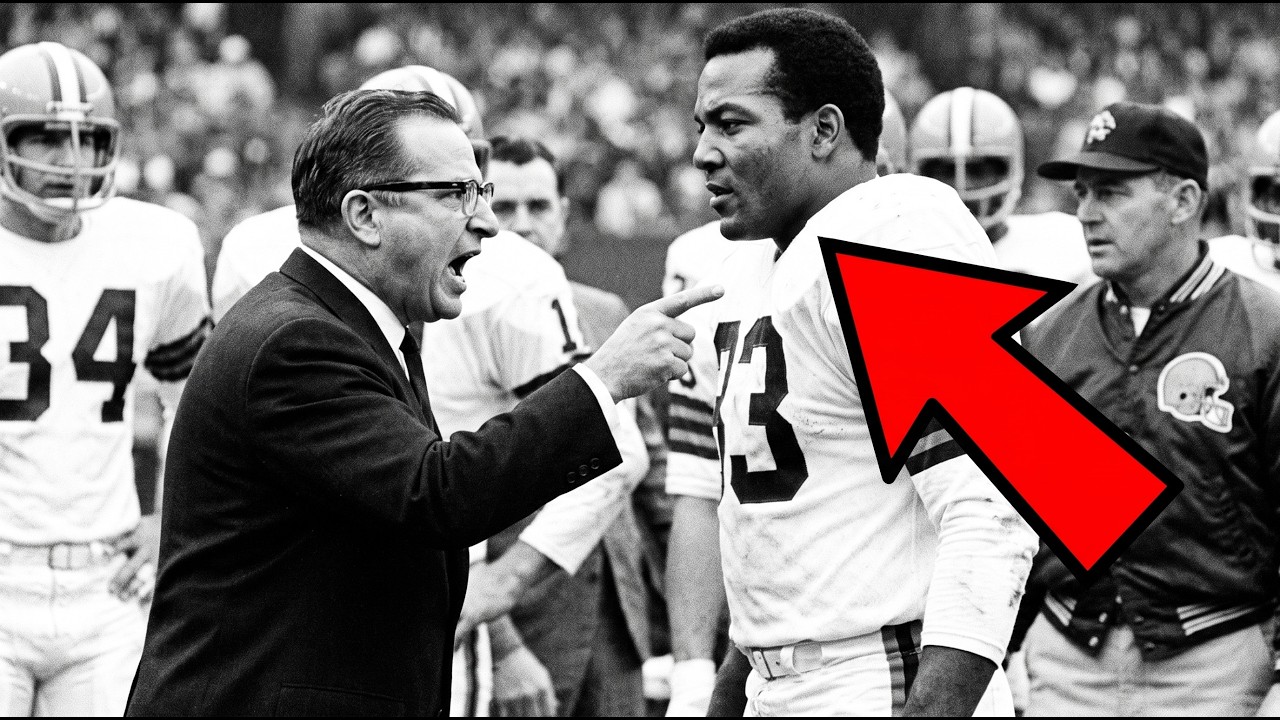
Brown was in London filming “The Dirty Dozen,” a major studio commitment that had already pushed past its production schedule. He had not yet signed his contract for the 1966 season, and under NFL rules, players had little leverage. But Brown believed he had an understanding with Modell: he would leave for London and return early if the team truly needed him. That understanding, as it turned out, existed only in Brown’s mind.
Modell made it clear in the press that no veteran player, specifically naming Brown, would be allowed to arrive late. He set his deadline and warned of consequences. Brown read about it from thousands of miles away, and no one from the Browns organization called him directly. Brown’s response was not a press conference or a lawsuit.
He sat down and wrote Modell a personal letter by hand. In it, he explained that his decision was final, tied to the future he wanted for himself, his family, and as he wrote, his race. He told Modell he was sorry it had come to this, because the public statements had only served the reporters covering the fight. He also noted that he had trusted Modell more than Modell had appeared to trust him.
He signed it simply, “Your friend, Jim. ”
There was a second letter as well, one rarely discussed but perhaps more revealing. Brown wrote separately to head coach Blanton Collier, a man he deeply respected, and advised him not to worry about the running game. He suggested giving the ball to a young back named Leroy Kelly, who Brown believed was about to become special.
Kelly would go on to have a Hall of Fame career. It was not the act of a man leaving in anger, but of someone still invested in the team he was leaving behind. On July 14, 1966, Brown sat at a press conference on the “Dirty Dozen” set, wearing a military costume in front of a mock tank. He read a statement calmly, saying his original intention was to play in 1966, but circumstances made it impossible.
He ended his career at age 30, at its absolute peak, on his own terms, three thousand miles from the stadium where he built his legend. Modell had assumed Brown needed the Browns more than the Browns needed him. He was wrong. Brown was walking away with film commitments, a rising platform in civil rights activism, and a level of dominance that made leaving on his own terms the point itself.
A day after the press conference, he told Sports Illustrated what he planned to do with the rest of his life: advocacy, business, film. He was not running from football to Hollywood, but toward a better version of himself, and the ultimatum simply told him the time had come. Brown retired holding nearly every major rushing record. Despite playing only nine seasons, far fewer than most players atop the all-time lists, he remains one of the greatest running backs ever to play the game.
Football historians have spent six decades wondering what his numbers might have been had he played five more years. Brown never seemed to consider it. Once it became about his dignity, the decision was made, the letter was sent, and he never looked back. He did not need his final word printed in the papers.
He only wanted it to be his own word.