William Oliver Taylor was only 23 years old in 1876, a private in Company A of the Seventh Cavalry, when he rode into a fight that would define the rest of his life. Taylor survived the Battle of the Little Bighorn, and his eyewitness account, written later that same year, has become one of the most important primary documents of Custer’s final engagement. On the evening of June 24, the regiment made camp along the Rosebud River after a long march. Taylor remembered the location as one of the most scenic he had seen in his cavalry service, a grassy tableland with wild rose bushes and scattered trees.
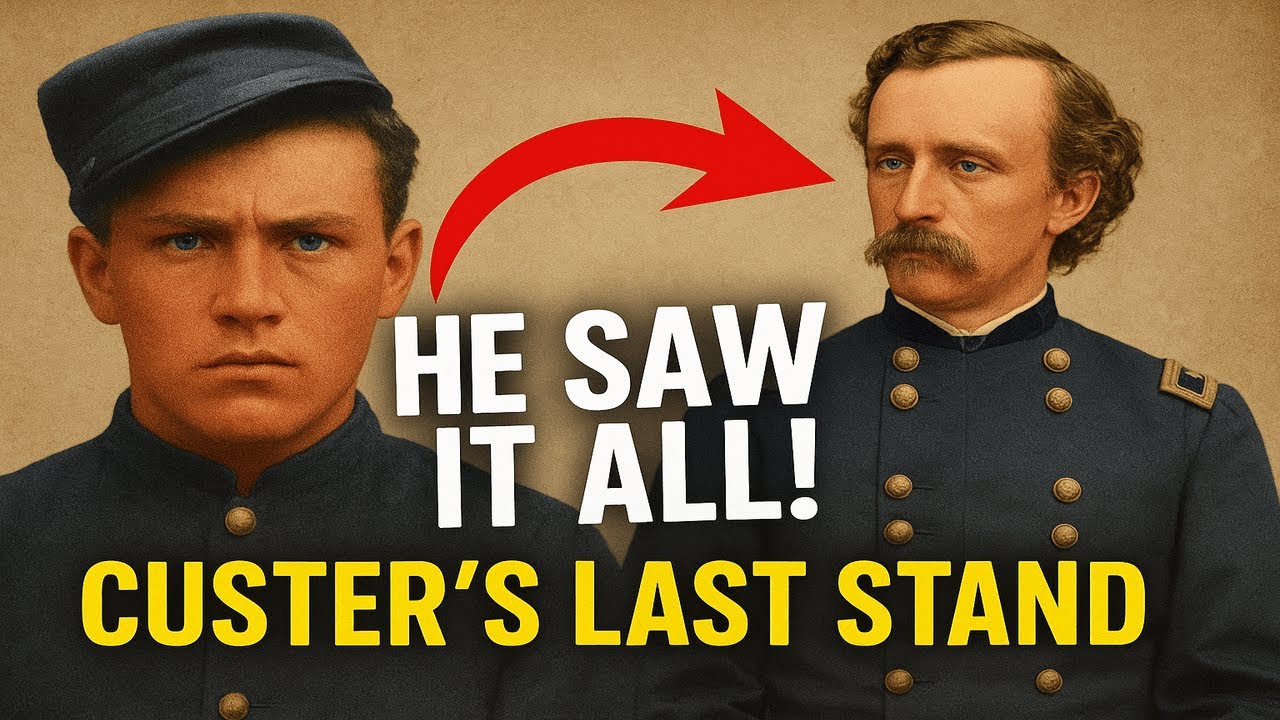
He noted the contrast: it seemed entirely unsuited as a place where men would soon meet their end in combat. Custer sat alone in his tent that evening, and Taylor observed him from nearby. He recalled that the general’s face bore an expression of sorrow he had not noticed before. Taylor wondered if Custer was thinking of his wife, Libby, back at Fort Lincoln, or whether he sensed what lay ahead.
The camp quiet was broken when a group of younger officers gathered and began to sing “Annie Laurie. ” The slow, grave melody struck Taylor as odd, particularly on the trail of a hostile force. They followed it with the Doxology, a hymn, before finishing with a loud rendition of “For He’s a Jolly Good Fellow. ” Taylor found the shift in tone jarring, though he admitted that solemn gravity had never been the dominant trait of fighting men.
The brief rest was interrupted around ten that night when the regiment was ordered to saddle up and move under cover of darkness. They followed the Rosebud River, crossed the divide, and rode until about two in the morning before stopping to wait for the scouts. When dawn came, Custer returned from a high point on the divide with word that the scouts had seen smoke from a village and ponies grazing in the valley, twelve to fifteen miles away. Just before eight, he rode from company to company without a saddle or hat, telling the officers the Indians had been found and they would move at once.
Around mid-morning, the regiment halted in a gully and was ordered to stay hidden and silent. Taylor heard Captain Godfrey say it had been Custer’s original plan to wait until the next day to attack, but once their position was discovered, they had no choice but to move immediately. Shortly after noon, the regiment was split into battalions. Major Reno led the forward battalion of about 150 men, including three troops and thirty Indian scouts under Lieutenants Varnum and Hare, with interpreters Isaiah Dorman and Frank Gerard.
Captain Benteen commanded roughly 125 men to the left front. Custer took five troops to the right, while Captain McDougall guarded the pack train in the rear. Reno’s battalion followed a dry creek toward the Little Bighorn during its advance. Along the way, the scouts came across a funeral tepee containing a dead warrior and, following custom, set it on fire.
Taylor later learned the body belonged to Old She Bear, a brother of Circling Bear, who had been killed eight days earlier in the fight with General Crook on the Rosebud. Reaching the Little Bighorn, a stream fifty to seventy feet across, the men let the horses drink. Taylor bent the rim of his hat into a cup and took what would be his final taste of water for the next full day. After crossing, they pushed through the thicket and moved out onto the open plain toward the village.
Watching the valley ahead, Taylor noticed herds of ponies and riders moving in every direction, gathering the animals and signaling to one another. The order came to trot. Then smoke rose in the distance, and the first distinct crack of bullets sounded. The command to charge was shouted.
During the advance, Reno pulled a bottle half filled with a brown liquid to his mouth, then handed it to Lieutenant Hodgson, who rode behind him. Taylor remembered the image vividly, though he did not dwell on its meaning. The bottle was not an unusual sight in an army on campaign. Taylor’s own situation was awkward.
As the fourth man in his company’s numbering, he was tasked with holding the horses and had failed in his earlier attempt to swap places with a man named Cornelius Crowley. Crowley was already showing signs of mental strain, and Taylor later concluded that his failure to trade positions was fortunate. Crowley was placed under the direct supervision of the stable guard as the battle worsened. Taylor understood the scale of what they were attempting.
The village they were charging held at least 2,500 Sioux fighters and more than 1,800 lodges. He called it pure insanity. Roughly 150 cavalrymen were rushing on foot, as they had dismounted to fight, directly toward a camp of overwhelming numbers. The skirmish line held only briefly, perhaps fifteen minutes, though it felt far longer.
Taylor heard rifle fire and sporadic cries but noted that Reno’s voice calling out orders was noticeably absent. Then the line began to fall apart. Men retreated through heavy brush, desperately trying to find their horses. Taylor spotted Crowley nearby, frantically searching for his mount, and shouted to break his confusion before throwing him the reins.
As Taylor mounted, he saw a party of mounted Indians storming through the woods to cut off the retreat. One warrior stood out: an imposing man in a magnificent war bonnet with feathers streaming behind him as he galloped. Taylor felt the urge to shoot but knew his marksmanship was poor, so he focused on getting away. Even with a hooked stirrup and thickening brush, Taylor broke out of the timber onto the open plain.
What he saw stopped him cold. Two hundred yards away, a massive line of Indian warriors was charging at full speed, yelling and shooting from behind their ponies’ necks. Taylor called them the most impressive warriors he had ever encountered. They had moved around the flank and were now blocking the route back to the river.
The troopers made a frantic run for the bluffs half a mile away, with the river running below them and its steep banks and dense thickets making escape even more desperate. Taylor fired his pistol alongside the others, though many men had never before discharged a weapon from the saddle. The confusion was complete. Taylor’s right stirrup remained unfastened, complicating his aim, but he managed to fire at a warrior who appeared to be targeting him directly.
In that instant, the full weight of his situation became clear. The likelihood of injury or capture felt immense, and he was acutely aware of what would happen if the warriors took him alive. He resolved to keep a single round in his revolver in case he needed it for himself, determined not to be captured. As events turned out, fate had other plans.
The retreat carried them through a prairie dog town, where holes and earth mounds made the ground treacherous at that desperate speed. Taylor was terrified his horse might trip and throw him to the ground, where he would certainly be killed. Eventually he reached an old river channel with banks several feet below the level of the plain. His horse, mustering a final surge of energy, jumped down the embankment.
Reaching for the saddle pommel while still holding his revolver, Taylor’s grip failed. The weapon slid from his fingers and vanished into the deep grass. There was no time to search for it. He pressed on toward the river, where chaos was waiting.
The river’s edge was filled with struggling soldiers and horses, the water discolored with blood. Taylor watched Lieutenant Hodgson go down among the wounded, his shout of agony still ringing in Taylor’s memory years later. Taylor directed his horse to the right, avoided the worst of the fighting, forded the river, and climbed the sharp incline on the opposite shore. His horse, Steamboat, was spent.
The animal had a respiratory ailment and was marked for disposal but had been issued to Taylor because of a shortage of cavalry horses. His labored whistling exhalations had earned him his name. Now totally exhausted, he would not move another step while rounds continued to snap past. Taylor knew that being on foot meant certain death.
In desperation, he spurred the horse a final time, took his carbine from his shoulder, and began climbing the bluff on foot, completely exposed. He counted it a kind of providence that he found the one narrow trail where the ascent could be made both quickly and with relative safety. About a third of the way up, his friend Meyers, known as Tinker Bill, came up beside him. They climbed together briefly before Meyers gave a faint sigh and collapsed forward, dead.
A bullet had struck him between the left ear and eye. Witnessing it sent a coldness through Taylor. He moved in a weaving pattern for the rest of the climb, determined not to be next. Near the summit, Frank Neely, a longtime friend from M Troop, passed on horseback and offered him a lift.
Taylor climbed up behind him, grateful to be mounted once again, although the new horse was no improvement over Steamboat. They reached Reno’s position on the bluff’s crest, where a handful of other men who had narrowly escaped had already gathered. Just after they reached the top, the Indian fire stopped abruptly. No one could explain why the warriors had broken off their attack.
Taylor could only be relieved. Reno was visibly distressed, pacing back and forth without his hat, a red bandana tied around his head in a decidedly unmilitary appearance. The men sprawled on the ground, exhausted, while officers compared stories of the fight. The pause was brief.
Captain Benteen arrived with his column at around 2:30 p. m. , followed by Captain McDougall with Troop B and the pack train. The reinforcement was desperately needed, but one question pressed on everyone’s mind: where was Custer?
For more than two hours, the men on the bluffs could hear the distant sound of gunfire from the direction Custer had taken. Yet no one seemed inclined to act. The three troops that had fought in the valley were disorganized, but that did not fully explain the command’s continued inaction. The abrupt withdrawal of such a large native force pointed to one conclusion: the warriors had been called away by an attack on their village from another quarter, a threat real or merely threatened.
At around 4:30 p. m. , a party of twelve soldiers came up the bluffs. They had lost their horses during the retreat and hidden in the timber until the warriors seemed to depart.
Two others had remained in hiding, unwilling to move in daylight. They were later found and killed by the Indians. The brief respite did not last. Around six in the evening, the Indians launched another vigorous assault on the defensive perimeter.
The men positioned the pack train, wounded, and horses in a depression between two rises while the rest took positions on the ridges, lying prone to avoid enemy fire. The Sioux attacked with great determination, clearly intending to finish the business they had begun. Captain Benteen’s troop was stationed on a rise several hundred yards to the right, and the soldiers there had not dug rifle pits or built any kind of protection. They suffered severely for the oversight, with at least ten men hit and likely more.
Benteen walked calmly over to Captain Moylan, who commanded the defensive line, and asked for a share of the materials used for the barricade. A section was allotted to his troops. Taylor watched with admiration as Benteen paced back and forth fully exposed, with rounds kicking up dirt near his feet, seemingly indifferent to his own safety. Taylor was detailed with a party carrying materials to strengthen Benteen’s defenses.
A bullet struck the case of hardtack he was carrying, nearly knocking it from his shoulder, but he was not injured. When he returned to his station, he saw Frank Mann, a civilian packer, lift his head to take aim. Before Taylor could shout a warning, a round hit Mann directly in the forehead. He collapsed instantly, killed without a sound.
Taylor helped pull the body a few paces away, unwilling to leave the sight among the men. His own sidearm had been lost in the fighting, so Taylor took Mann’s standard-issue pistol. It would prove extremely useful in the combat still ahead. As night fell, the men remained anxious.
They knew the huge native force that had crushed Custer’s battalion and forced their retreat had not pressed its full advantage, and they wondered why. Captain Benteen rode over to Reno’s post near dawn, asking for more men, concerned that the Indians would soon storm his part of the line. With only Troop H defending the southern flank, they were in danger of being overwhelmed. Around the same time, scouts who had been dispatched earlier in the night returned with disturbing news: they had seen no sign of Custer’s battalion, and the territory was swarming with native fighters.
A bugler played a series of calls from a neighboring rise, hoping Custer’s men would hear and join them. The final call he sounded was “Taps,” the mournful tune usually played at evening roll call or military funerals. Whether by chance or fate, the sound carried across the terrain with a feeling of finality. That night, Taylor was assigned to picket duty with six other privates and a corporal, positioned three hundred yards ahead of the defensive line.
The landscape was unnerving in the moonlight, with gentle slopes and high sagebrush casting shapes that could easily be mistaken for advancing enemies. He tried to memorize the terrain before his period of rest, aware that a mistaken motion could mean disaster. Below them, the Indian village was alive with the sounds of triumph: drums, celebratory shouts, and wails of mourning. They had ample cause.
More than two hundred soldiers were dead on the field, and the spoils were considerable. The Indians had captured horses, saddles, blankets, firearms, and even currency from the fallen troopers. As the night wore on, a bugle sounded from the enemy camp. Some men believed it was Custer’s command signaling them.
But as the notes grew clearer, they realized the melody was not an army call, not one of the standard signals. The bugle had been taken from a fallen cavalryman, and the Indians were using it to taunt them. Some theorized that a captured bugler was being compelled to play. In any case, the unfamiliar sound, merging with drums and cries from below, deepened the dread that had settled over the men.
Just after three in the morning, as first light began to show, two gunshots cracked from the distance. It was the sign for the Indian assault to begin. A storm of lead followed, and the men fell back to the barricades built the previous night. The Indians renewed their offensive, firing from every direction.
Exposing any part of the body above the barricade, even for a second, was fatal, as the enemy was skilled at long-distance marksmanship. Captain Benteen’s soldiers, still lacking adequate protection, endured the worst punishment. Despite the danger, Benteen remained composed, moving among his men with bullets whipping around him, and his courage steadied the troops. The improvised defenses turned out to be their salvation.
The Indians tried to rush the lines multiple times, but each attempt was met with determined resistance. Taylor was certain that without the barricades, they would have been overwhelmed exactly as Custer’s men had been the day before. The fighting continued through the afternoon with no sign of rescue. By then, the men understood that Custer’s battalion had been wiped out, though the full scope of the disaster was still unknown.
They knew they were surrounded by a superior force and that unless rescue columns arrived soon, their own position would become untenable. On the afternoon of June 26, salvation appeared. General Terry’s command came into view on the horizon with fresh soldiers and provisions. As Terry’s men forded the river and climbed the bluffs, the Indian forces began to pull back.
They had accomplished their goal, and with fresh troops arriving, they recognized they could not maintain the siege. For Taylor and the others, the sight of Terry’s column was profoundly welcome. Worn out, disheartened, and shaken by the death of so many friends, they were finally out of danger. Coming down from the bluffs to examine the battlefield presented a dreadful spectacle.
The corpses of their fallen companions lay in every direction, many stripped of clothing and possessions. More than 250 troopers had been killed, including General Custer and his brothers, Thomas and Boston, their bodies found near one another. Taylor described the remains as robbed and disfigured, strewn across the field. The Indians had not merely protected their territory; they had inflicted one of the most devastating losses in the history of the U.
S. military. Historians have argued over the events of the Battle of the Little Bighorn for generations, and Taylor’s account has been regarded as one of the principal firsthand documents that illuminate what happened that day. While some other records were lost or altered over time, his direct testimony has persisted and has been cited in numerous historical works, documentaries, and reenactments of the fight.
Through his perspective, later generations were able to gain a clearer picture of the courage, errors, and catastrophe that marked Custer’s final engagement. Taylor said the dread and despair he experienced on the field were feelings he never entirely escaped. Enduring such a savage fight left him with a mixture of remorse and gratitude. He questioned why his life had been spared when so many others had died.
He often wondered whether Custer had sensed his own approaching fate in those final hours. The cost of the battle stayed with him every day. More than two hundred of his fellow soldiers were dead, and the magnitude of the loss was beyond grasp. The Battle of the Little Bighorn remained a sobering monument to the human price of war, and Taylor’s own record endured as a witness to the courage, miscalculation, and sorrow that played out across that field.
Taylor closed his account with a reflection on the men who fell near him. Their lives ended abruptly in service of a purpose they held to be just. And although he survived, the memory of that time stayed with him always.