In 2003, Princess Margarita of Bourbon Parma and her husband, Edwin de Roy van Zuidewijn, publicly accused the Dutch royal family of humiliation, obstruction, and surveillance. Their claims transformed what had seemed like a tense royal marriage into a national scandal that forced the Dutch government to admit it had gathered information about Edwin before the wedding. The couple married in France in September 2001, but their relationship was already surrounded by visible discomfort. Neither Queen Beatrix nor Margarita’s father attended the ceremony, an absence widely interpreted as disapproval.
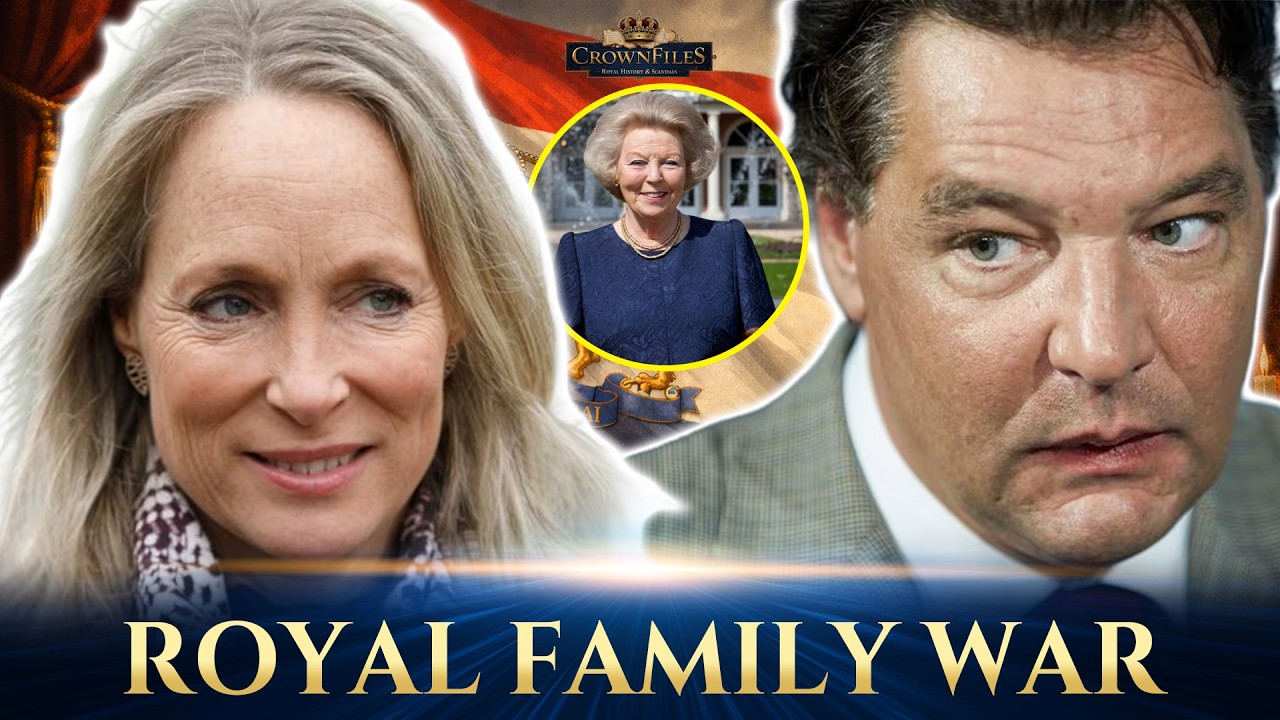
Margarita, the daughter of Princess Irene and the niece of Queen Beatrix, was part of a dynasty where private relationships carried constitutional weight and symbolic meaning. Edwin arrived as an outsider with no court background, and the royal world regarded him with suspicion. Just months after the wedding, Margarita appealed to then Prime Minister Wim Kok, hoping the queen might be persuaded to accept her husband. Newlyweds should have been building a life together; instead, they were negotiating for legitimacy from within the family.
The tension escalated when the couple spoke openly to Harpers Bazaar de Tijd in 2003. They described a campaign of surveillance, damaged business interests, and a family culture of snobbery and hypocrisy. Margarita took her accusations to national television, and the effect on a monarchy unaccustomed to public scandal was immediate. Once the Queen’s niece began speaking from the inside, the carefully managed image began to crumble.
The official response changed the story from family drama into constitutional embarrassment. Prime Minister Jan Peter Balkenende acknowledged that information had indeed been gathered about Edwin around the time of the intended marriage. An AIVD letter confirmed that the former BVD and the Royal and Diplomatic Protection Service had collected information on him, and admitted this had not been properly reflected in earlier replies to the couple. The Queen’s cabinet, without the government’s knowledge, had asked the intelligence service to look into Edwin’s past.
Balkenende denied wrongdoing beyond procedural failures and later said he found no evidence that the couple had been bugged as they alleged. An ombudsman investigation concluded that Edwin’s broader claim that the government had interfered with his private life and damaged his opportunities was not supported by documents or sworn testimony. The ambiguity kept the scandal alive. The couple had not invented the entire conflict, but neither did the public receive a single clean revelation that made every accusation true.
The affair lived in the uneasy space between justified suspicion and claims that could not be fully proven. The damage, however, was already done. The royal family attempted restraint, saying it did not recognize the picture being painted, but silence no longer looked dignified. It looked defensive.
The marriage had ceased to be a private bond under pressure and had become the vessel for an entire national drama. The personal cost was severe. Margarita became estranged from her family and was no longer welcome at major royal occasions, including the wedding of Willem-Alexander and Máxima and the funeral of Prince Claus. The marriage ended in a turbulent divorce in 2006, marked by missing personal papers, changing lawyers, and renewed press attention.
The scandal had not simply wounded the marriage from the outside; it had entered it and become part of its collapse. After the divorce, Margarita gradually repaired her ties with the royal family. Edwin remained locked in the affair’s aftermath, continuing to bring cases, facing financial struggles for years, and describing the ordeal as something that had cost him the strongest years of his life. In 2023, NOS reported that Margarita and her second husband, Jalling ten Cate, had separated after 16 years, describing the split as one made in friendship and centered on remaining loving parents to their two daughters.
The contrast between the two marriages is striking. One ended in accusation, noise, and national fallout. The other was presented in the language of privacy, calm, and mutual respect. It is difficult not to see that difference as part of the legacy of the first scandal.
In the end, the affair revealed something larger than one marriage. It exposed how monarchy, media, and private pain can feed each other until no one is truly looking for truth anymore, only the next contradiction or the next piece of proof that a perfect image was never perfect at all. What lingers is not a clean ending, but the permanent sense that something important happened behind closed doors that was never fully resolved.