Dodge City, Kansas, holds a unique place in the American imagination. For many, it is the definitive image of the Wild West—a place of saloons, gunfights, and cattle drives. Its very name became shorthand for disorder and violence, a legacy cemented in the phrase “get the hell out of Dodge.”
However, the reality of the town’s history is more complex than the legend. Dodge City’s rise, its period of infamy, and its transformation into a tourist attraction were driven by a specific sequence of events that turned a remote buffalo camp into the "Queen of the Cowtowns" and then back again.
### The Santa Fe Trail and an Early Settlement
Long before the city was founded, the land it occupies was a crossroads. The Santa Fe Trail, opened in 1821, ran from Missouri to New Mexico, and for decades, wagon trains passed through the area. The region had been home to various peoples for centuries, including the Wichita, Plains Apaches, Kiowas, and Comanches.
The first white settlement in the area was Fort Mann, built in 1847 to protect travelers on the trail. It was abandoned within a year. The army established Fort Atkinson in 1850, but that post was also abandoned by 1853, partly because it was built from sod, leading soldiers to call it "Fort Sodom."
In 1865, the army built Fort Dodge, about two miles east of the old fort. The name likely came from General Grenville Dodge, who had sent the first command there in harsh winter conditions)Skip. The fort remained in operation until 1882.
### The Arrival of Whiskey and the Railroad
For years, the area was mostly home to soldiers, wagon trains, and massive buffalo herds. The first real settler, a rancher named Henry Sitler, arrived in 1871)Skip. Things changed decisively in June 1872 when Colonel Richard Irving Dodge took command of the fort and, according to legend, banned the sale of alcohol to his soldiers. The ban’s authority ended at the fort’s boundary line, which was about five miles out.
George Hoover, a 24-year-old Canadian, seized the opportunity. On June 17, 1872, he set up a tent just outside the boundary and began selling whiskey at a quarter a glass. This tent is considered the first business in what would become Dodge City. Hoover later became the town’s first elected mayor.
That August, a town company was organized, and the settlement was briefly named Buffalo City. Since Kansas already had a town by that name, it was renamed Dodge City after the fort.
The most crucial development came in September 1872, when the Atchison, Topeka & Santa Fe Railroad arrived. With the railroad came a massive demand for buffalo hides, and Dodge City suddenly became the hide capital of the world. Over 850,000 hides were shipped out in the first three years alone. When the buffalo were gone, hunters and farmers turned to shipping their bones for fertilizer and other products.
### A Violent First Year
For its first year, Dodge City was largely lawless. There were no sheriffs, judges, or official marshals. Local business owners handled problems themselves, sometimes hiring private muscle with the title of "marshal" but with no official authority. The first jail was a hole in the ground where drunks were lowered until they sobered up.
The town’s bloody reputation was earned during this time. The first known killing occurred on September 5, 1872, when a track layer shot a man named Jack Reynolds. A few weeks later, a gambler known as Denver killed a man in the streets for no apparent reason. Violence continued through the year, with gamblers and hunters dying in gunfights.
The exact number of homicides in that first year is disputed. Early residents claimed between 15 and 25 killings, while modern historians estimate about 18 verified homicides between July 1872 and July 1873. Given the town’s permanent population of just a few hundred, this rate was astronomical. By modern metrics, it would equate to a homicide rate of thousands per 100,000 people, making it one of the deadliest places in American history.
### Establishing Law and Order

The violence led the town’s leading citizens to form a vigilance committee in February 1873. While initially effective, the vigilantes soon began abusing their power. The breaking point came in June 1873, when a mob murdered William Taylor, a personal servant of Colonel Dodge. In retaliation, Dodge sent soldiers to arrest the vigilantes.
Soon after, on June 5, 1873, Ford County held its first election. Charlie Bassett was elected sheriff, and the county also gained a probate judge and prosecutor. For the first time, there was an official legal process for arrests, charges, and trials. This helped reduce the uncontrolled mayhem, and the violence dropped significantly.
### The Cattle Drive Era
As the buffalo herds were hunted to extinction, Dodge City’s economy needed a new engine. It came from Texas. The state of Kansas had established a quarantine line to prevent Texas longhorns from spreading "Texas fever," a tick-borne disease that killed local cattle. As farmers settled further west, the quarantine line moved with them. By 1876, this had effectively closed off all other Kansas cowtowns, leaving Dodge City as the only major railhead open to Texas cattle.
Millions of longhorns were driven north up the Great Western Trail to the Dodge City stockyards. With the herds came cowboys, often young men who had spent months on the trail and were looking for a bath, a drink, and entertainment. The town reached a compromise: north of the railroad tracks, guns were banned and order was maintained. South of the tracks, where most saloons and brothels were located, more was tolerated as long as no one was killed.
### Famous Lawmen and Gunfighters
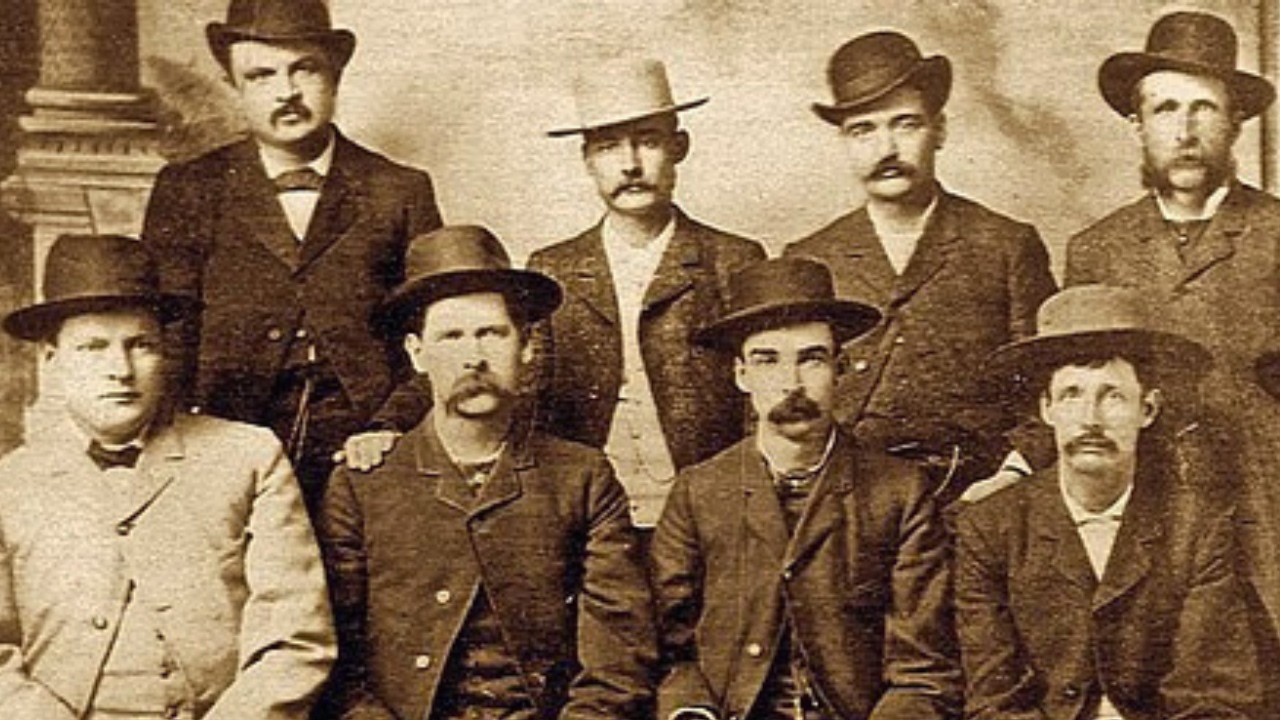
During this period, Dodge City employed a roster of legendary lawmen including Wyatt Earp, Bat Masterson, and Bill Tilghman. They often traded jobs and worked alongside each other. As legendary as they are, their jobs mostly involved breaking up fistfights and dealing with drunk cowboys, which they often did by striking them with their pistols.
Violence still occurred. In April 1878, Bat Masterson’s brother Ed, who was city marshal, was killed trying to disarm a drunk. Later that year, a young Texan named Spike Kennedy, angry after a beating from Mayor James Kelly, fired shots into the mayor’s home. His bullets instead killed Dora Hand, a popular entertainer. A posse including Wyatt Earp, Bat Masterson, and Charlie Bassett caught Kennedy near Meade City.

In April 1879, a gunfight occurred in the Long Branch Saloon between gamblers Levi Richardson and "Cock-Eyed" Frank Loving. Richardson was killed, while Loving escaped with a graze wound. The town also saw visits from other infamous figures like Doc Holliday and had run-ins with gunmen like Mysterious Dave Mather, who killed Tom Nixon in 1884.
### The Dodge City War
In 1883, a conflict known as the Dodge City War arose. Luke Short, a co-owner of the Long Branch Saloon, found himself targeted by a new city council that passed ordinances against prostitution. The law was enforced against Short’s establishment but not against his competitors, who were allies of former mayor A.B. Webster.
Rather than accept the closure, Short called in his friends, including Wyatt Earp and Bat Masterson, as well as Doc Holliday. The show of force by these well-known gunmen was enough to make the city officials back down. The conflict was resolved without a single shot being fired.
### The End of an Era
The town’s prosperity soon came to an end. In 1885, the Kansas legislature extended the quarantine line across the entire state, effectively ending the Texas cattle drives. The following winter brought severe weather that devastated the cattle industry.
All the elements that had built Dodge City’s economy—the buffalo, the soldiers, and finally the cowboys—had dried up. The Santa Fe Trail was obsolete, and Fort Dodge was no longer needed. The era of the frontier cowtown was over.
But the legend was just beginning. Books, movies, and television shows like *Gunsmoke* and *The Life and Legend of Wyatt Earp* cemented the town’s wild reputation. Today, Dodge City embraces its history. It has built a replica of Front Street and holds mock shootouts for tourists during the summer, keeping the spirit of the old West alive for a new generation.