In the late summer of 1944, somewhere in the rolling countryside of northern France, a command vehicle sat idle on the edge of a dirt road. Inside, a three-star general, two ivory-handled pistols hanging on his hips, leaned over a map spread across a folding table. His eyes moved fast, faster than his staff could keep up.
General George S. Patton Jr. was not thinking about what had already been captured. He was thinking about what had not yet fallen.
In a matter of weeks, his Third Army had swept across France with a ferocity that left even his own commanders breathless. Cities that German planners assumed would hold for days fell in hours. Supply lines stretched and strained, struggling to keep pace with the advance. The question haunting Allied high command was no longer whether Patton could advance. It was whether anyone could stop him.
That question would soon reach the very top of Allied leadership. And the answer Patton gave, in his usual undiplomatic style, would become one of the most memorable interventions of the entire war.
To understand why it mattered, you first have to understand what kind of man George Patton was, and what kind of situation Europe found itself in during those strange, violent, charged months after the Normandy landings in June 1944. This is not just a story about a famous general's temper or his gift for blunt language. It is a story about a fundamental tension at the heart of the Allied war effort.
The tension between caution and momentum. Between strategy and opportunity. Between the instincts of a soldier and the calculations of a statesman.
By August 1944, the German position in France had gone from desperate to catastrophic. The Wehrmacht, drained by years of fighting on the Eastern Front, hammered by Allied air power and outmaneuvered in Normandy, was in full retreat. But retreating armies, as any military historian will tell you, are not yet defeated armies. If given time to regroup, dig in, and establish new defensive lines, they can reshape themselves into formidable fighting forces.
Time was the commodity the Germans needed more than anything. And Patton was absolutely determined not to give it to them.
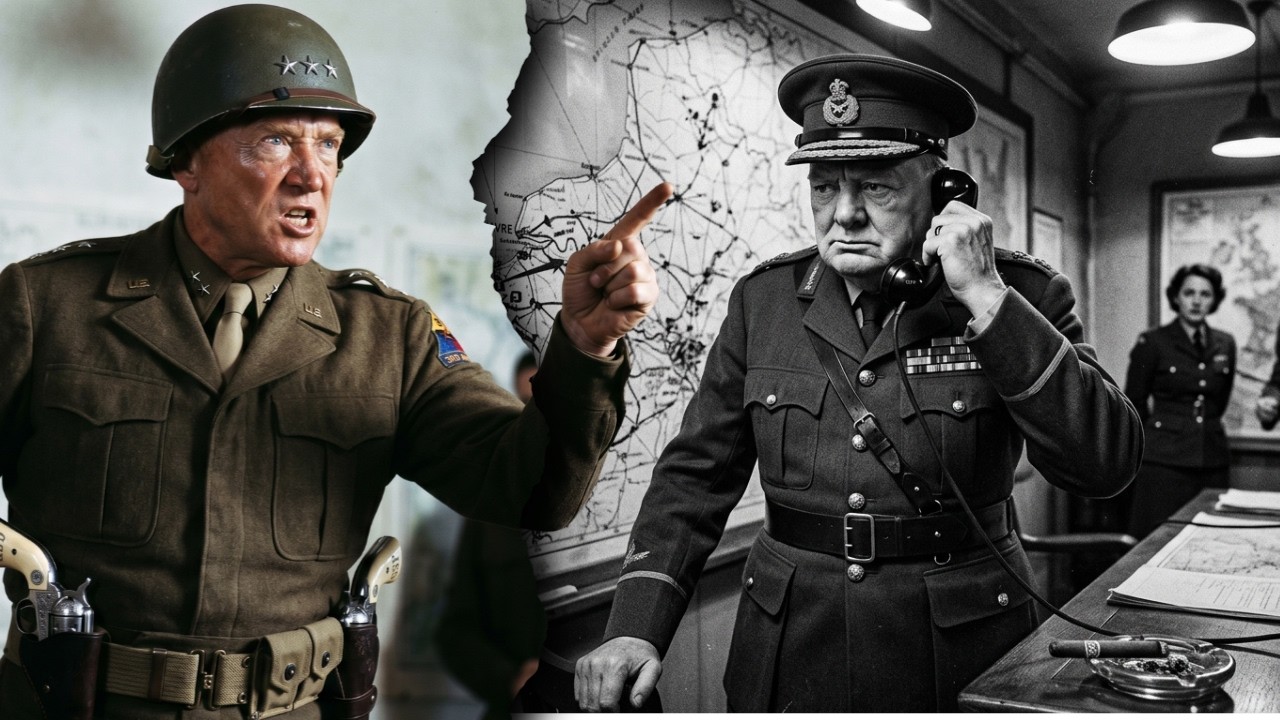
His Third Army, activated on August 1, 1944, was released like a spring that had been compressed for far too long. Patton had been waiting for this order with barely concealed rage. After being sidelined following the famous slapping incident in Sicily the previous year, he had been kept in England as bait to mislead German intelligence about Allied invasion plans. Now, he finally had his army. And he intended to use it.
The advance was stunning by any historical measure. The Third Army liberated the city of Rennes on August 4. It turned south, then east, with incredible speed, setting the conditions for the encirclement of tens of thousands of German troops in the Falaise Pocket. By late August, Patton's forces had crossed the Seine River. His forward units were racing toward the German border itself at a pace that made other Allied commanders blink in disbelief.
Here, in this extraordinary moment of possibility, Patton received word to slow down. And the order carried the weight of Winston Churchill himself.
The exact circumstances of this discussion vary depending on which account you read, and historians have debated the details for decades. What is undisputed is the essential shape of the confrontation. Churchill, always the strategist, a man who had lived through one catastrophic world war and was determined not to repeat its mistakes, was worried. The Allied supply situation was genuinely precarious. The famous Red Ball Express, the truck convoys running day and night across France, was struggling to keep up with the speed of the advance. Patton's army was consuming fuel at a rate that panicked logistics officers.
Field Marshal Bernard Montgomery, commanding forces to the north, had his own ambitious plans for a concentrated push into Germany and was lobbying for supplies to be diverted to him. Churchill, in conversations with Eisenhower and other senior officials, expressed the view that it might be wise for Patton to halt, regroup, and allow supplies to catch up before the rush toward the Rhine.
The message reached Patton, in one form or another. His response, delivered with the absolute certainty of a man who simply could not believe what he was hearing, was this: "Tell him Patton will stop for no one. If he wants to slow me down, let him come and try to slow me down himself."
Depending on which version you read, the language was considerably more colorful than that. Patton's vocabulary, when he was at full anger, was something that would make a dockworker blush. The published, sanitized accounts give you the essence of his reply. The accounts passed down by his staff give you the real details. But strip away the profanity, and you find something more interesting than mere insubordination.
You find a military philosophy, honed by Patton throughout his entire career, that he believed with passionate intensity was the only approach that could actually win wars.

Patton's vision of war was built on one essential insight: a retreating enemy, if not given a chance to catch its breath, will inevitably collapse. Momentum, once achieved, becomes the most precious thing on the battlefield, more valuable than numbers, more valuable than firepower, more valuable even than supplies. He had studied cavalry tactics, read Napoleon obsessively, and absorbed Rommel's writings on mobile warfare with the attention of a serious scholar.
He understood instinctively that the Germans he was chasing were no longer an organized force. They were men who had lost their cohesion, trying to find their units, moving at night to avoid Allied aircraft, terrified. The moment you give them 48 hours of relative calm, they start to regain their soldierly qualities.
He was not wrong. The history of World War II is full of examples of Allied hesitation that allowed German forces to reform and fight again. Monte Cassino, the approaches to Rome, the operations around Caen. Every pause that made sense on logistics spreadsheets had a price in blood, paid later by different men in different places.
German commanders on the other side knew this too. Field Marshal Walter Model, tasked with stabilizing the German retreat in the west, later acknowledged that Patton's speed of advance came closer to causing a complete collapse of the Western Front than any other Allied action in 1944. The Germans were terrified of where the Third Army would appear next. That terror itself was a weapon. It paralyzed decision-making, disrupted communications, and caused units to abandon positions they could otherwise have defended.
The supply situation, the one that made Churchill and Eisenhower hesitate, was of course real. Patton's army was indeed operating on the edge of logistical collapse. There were days when forward units operated with almost no fuel. Patton reportedly had his men "acquire" fuel from other Allied formations in ways that were, let's say, not entirely authorized by high command. His supply officers worked miracles. His soldiers sometimes went hungry. The machine was running at maximum capacity.
But Patton's argument, one he pressed with every tool at his disposal, including his considerable talent for self-promotion and his carefully cultivated relationships with journalists, was that the cost of slowing down was greater than the cost of the supply crisis. If the Third Army could reach the German border before the German army had time to man the Siegfried Line in strength, the war could be shortened by months. Every week of delay was paid for in lives.
History has not delivered a definitive verdict on this argument. The Allied logistics crisis in the fall of 1944 was real. The debate continues to this day over whether Patton's advance or Montgomery's proposed concentrated thrust offered the better road to victory. What actually happened, of course, is that Eisenhower chose neither. He pursued a broad-front strategy that kept everyone moving but gave no one the resources for a decisive breakthrough.
Patton was furious. Montgomery was furious. By November, the momentum of the offensive had stalled. The Germans had indeed managed to reorganize, thanks to weeks of relative quiet. The Battle of the Bulge in December 1944, the massive German counteroffensive through the Ardennes, was in part a result of that reorganization.
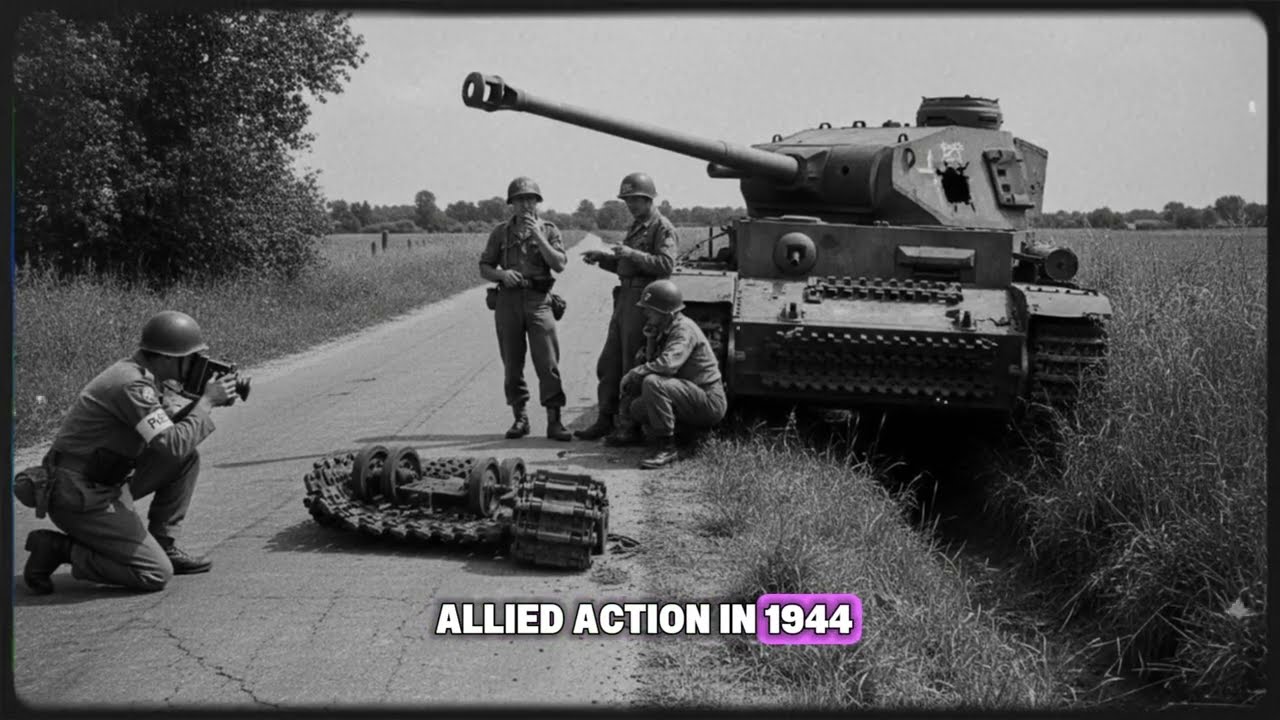
Patton's reaction to the Bulge itself was one of the most remarkable military achievements of the entire war. He turned his entire army 90 degrees and drove north toward the German flank in 72 hours, a logistical and leadership feat that military academies still study. When told it was impossible, he reportedly replied that he had already done it.
The exchange with Churchill, whether you view it as pure defiance, principled military debate, or characteristic bluster from a man who simply could not restrain himself, fits into a larger picture of a general who was simultaneously one of the Allies' most effective field commanders and one of the most difficult subordinates imaginable. Eisenhower spent enormous effort managing Patton's relationship with the press, with other commanders, with political figures, and with his own emotions. The slapping incident, the hasty statements about postwar policy, the accumulated frictions of a man who simply could not moderate his behavior, all required constant management.
Yet when Eisenhower needed someone to move fast, strike hard, and show audacity on a scale that made German commanders question their own sanity, there was only one call to make.
Patton died in December 1945, 12 years before Churchill, in a car accident in occupied Germany, robbing him of the retirement he had planned and the memoirs he had hoped to write. He left behind a military reputation that remains contested to this day, celebrated by some, qualified by others, impossible for anyone to ignore.
Churchill went on to record his own account of the war in his six volumes of memoirs, published from the late 1940s through the 1950s. Patton appears in them, but not prominently. Churchill was a man who understood the mechanics of glory, and he was careful about how much of it he distributed.
What remains when you dig through the documents, testimonies, and various accounts of the summer of 1944 is something truly worth contemplating. Two of the most powerful figures of the twentieth century, on the same side of a conflict that changed the face of the world, pulling in different directions over the essential question of war. When do you push, and when do you stop?
Patton's answer, whatever language he actually used in that moment, was always the same. You push. You push until the enemy breaks or until you have nothing left to push with. Because the alternative, stopping, reinforcing, advancing cautiously and deliberately, has its own price. It collects its cost later.
The man who said you can't push a rope also understood something else. That you can, under the right conditions, pull an entire army through a gap in history before it closes. Patton found that gap in the summer of 1944. Whether anyone should have tried to stop him is a question that, more than seventy years later, still has no definitive answer.
But we know what he said when they tried.