During World War II, three German prisoners of war were murdered inside American POW camps. In each case, the killers were fellow German soldiers, and in each case, the motive was the same: the victim was suspected of collaborating with the Americans.
The first case involved Werner Drechsler, a 22-year-old U-boat sailor. He was captured after his submarine was sunk and was later recruited by the U.S. Navy as an undercover spy. He gathered intelligence on U-boat tactics and personnel while held at Fort Meade, Maryland.
Despite an explicit warning from the Navy, Drechsler was transferred to Papago Park, Arizona, a camp filled with U-boat men he had previously interrogated. He arrived on March 12, 1944. Six hours later, seven men forced their way into his barracks. His body was found in the shower room, hanging from the ceiling beams. He had been beaten after he was already dead.
The second case took place four weeks later at Camp Aiken, South Carolina. Horst Günther, a 20-year-old Africa Corps soldier, was suspected of collaborating with American authorities. The records do not say what he actually did. In these camps, suspicion alone was enough.
Two fellow prisoners strangled Günther in the night and hung his body from a telephone pole to make it look like suicide. At trial, one of the killers said he acted for the honor of his fatherland. The other said he was following orders and feared punishment if he returned to Germany. Both were hanged on July 14, 1945, at Fort Leavenworth, Kansas.
The third case was different. Hugo Krauss knew America. He had grown up there. And that is exactly what cost him his life.
Krauss was born in Germany but came to New York at age nine. He grew up on American streets and spoke English like a New Yorker. In 1939, he returned to Germany. He was drafted and served in Russia, North Africa, and Tunisia. When the Africa Corps surrendered in May 1943, he became a prisoner of war and was shipped to Texas.
He arrived at Camp Hearne, which held about 3,000 German prisoners, most of them from the Africa Corps. Officially, the Americans ran the camp. Unofficially, other men decided who was allowed to speak and who was not.
Camp Hearne also served as the central post office for all German POWs in America. When Nazi loyalists realized this, 800 of them volunteered for postal duty. They studied postmarks, obtained rosters of camps across the country, and opened letters. They inserted their own messages after censorship clearance.
Names circulated between camps. Families in Germany received letters not from officials, but from other prisoners. Whoever appeared on their list disappeared socially first. Nobody spoke to him. Nobody sat next to him. Before a man was physically attacked, he was already alone.
Inside the camp, a hard, fanatical inner circle operated secret shortwave radios, held internal tribunals, and ran an illegal underground newspaper. Anyone too friendly with Americans was marked. Anyone who doubted was marked. Anyone who talked was marked.
One of the men watching Hugo Krauss was Gunther Meisel. Krauss stood out from the first day. His English was so flawless that the camp commander made him an interpreter. To the other prisoners, he sounded wrong. He used American slang. He told American jokes. He said “Sure” instead of “Ja.”
For Krauss, the war was already decided. At some point, he said it out loud, casually, as if it were a fact. “America is going to win this war.”
From that moment on, Krauss was their enemy. His name was written down. He was summoned by his own fellow prisoners to an internal tribunal. Prosecutor, judge, verdict. All in German. All invisible to the guards.
The charge was treason. The verdict was guilty. In that barracks, a death sentence had just been handed down. The American guards, 20 feet away, had no idea.
Krauss knew what it meant. The next morning, he went back to work anyway. Weeks passed. He translated, reported, and talked. Maybe he believed they would leave him alone.

Meisel was only waiting for the right moment. Krauss noticed it first in the looks. Men who used to nod at him now looked straight through him. In the mess hall, the seat next to him stayed empty. When he walked into a barracks, conversations went quiet. Slowly. Like a door falling shut.
Once, someone walking past murmured two words: “Watch yourself.” Krauss turned around. The man looked away. Krauss kept going anyway.
The American guards saw quiet barracks and orderly rows. They did not understand what was being discussed in German at night. They did not understand the tribunals or the lists. To them, the conflicts looked like personal disputes. That some men were handing down death sentences against fellow prisoners, almost no one grasped.
For the Americans, Camp Hearne was a prisoner of war camp. For some of the Germans, it had long been something else.
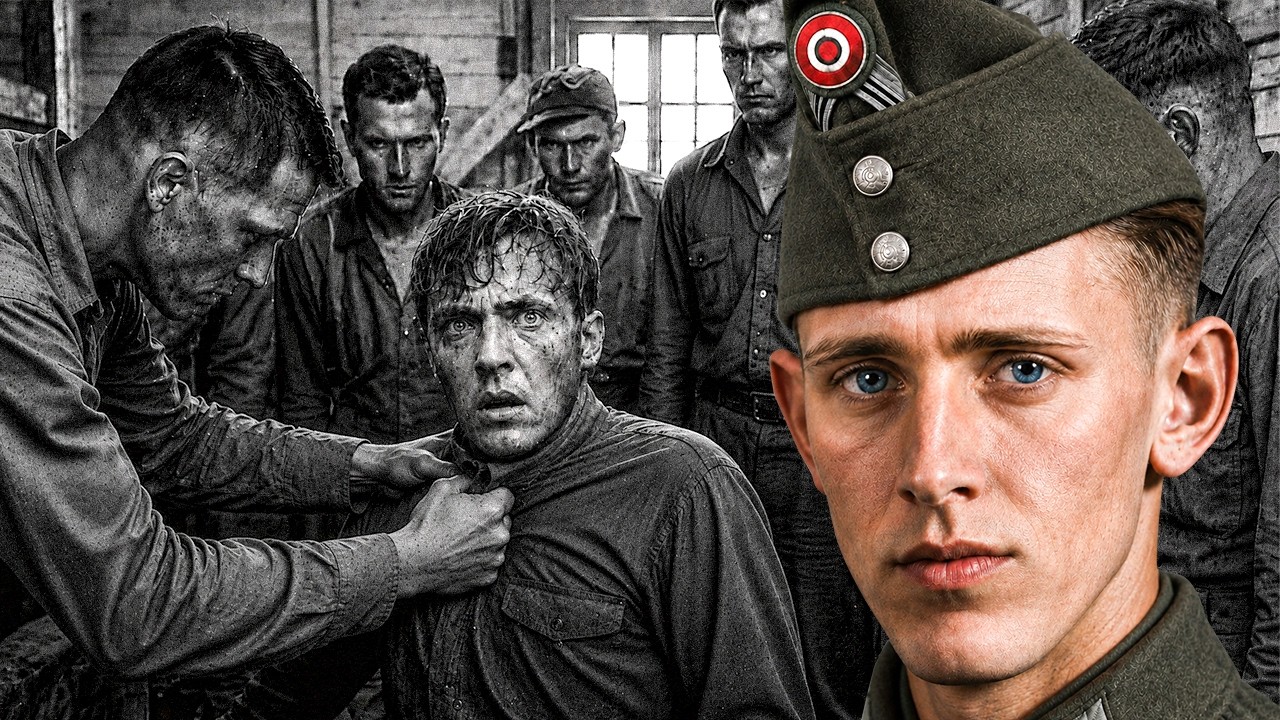
December 17, 1943. Seven days before Christmas. Just after midnight, seven men stood up. Hugo Krauss was asleep.
What happened next was called a holy ghost beating. The victim lies in the dark. The blows come from all sides at once. He sees no one. He can name no one. The attackers remain ghosts.
It took only a few minutes. The Texas death certificate listed a single cause of death: cerebral skull fracture. The weapons told a different story. Nail-studded boards. A lead pipe. The body was covered in wounds and fractures of every kind.
22 men heard it all and pretended to be asleep. Whoever helped was next on the list.

The guards found Krauss the next morning. He was still alive for six more days. On December 23, 1943, Hugo Krauss died at McCloskey General Hospital in Temple, Texas. He was 24 years old.
The investigation began. Military police searched the barracks, found the radios, found the punishment lists, and separated the ringleaders from the rest. The killers stayed silent. Everyone stayed silent.
A man who slept in the bunk next to Krauss said decades later, just one sentence: “You learned. Don't tell anyone how you feel unless you are absolutely certain they feel the same way.”
For the murder of Werner Drechsler, seven men were sentenced to death and hanged on August 25, 1945. For the murder of Horst Günther, two men were convicted. For the murder of Hugo Krauss, Gunther Meisel and six others received life in prison.
In 1949, President Harry Truman pardoned the convicted men in the Krauss case. Meisel returned to Germany, free.
Hugo Krauss’s remains were transferred from the camp cemetery to the Fort Sam Houston National Cemetery in San Antonio. He is still there today.
Only after the murder of Hugo Krauss did the Americans begin transferring radical prisoners to segregated camps. Only then did they understand how far Nazi influence inside the camps had reached.
Between 1943 and 1945, at least seven German soldiers were murdered by their own comrades on American soil. Another 72 took their own lives out of fear of what would otherwise happen to them.
Three men. Three camps. Three times the same verdict for the same offense: telling the truth. The Americans built the prison camps. The Nazis built their own courts inside them. Always for the same reason.