In the spring of 1968, Robert F. Kennedy was on the cusp of securing the Democratic presidential nomination. He had survived the assassination of his brother, navigated political conflict with Lyndon Johnson, and emerged as a unifying figure in a fractured nation. Yet, a private conversation with his sister-in-law, Jacqueline Kennedy, threatened to upend everything. She wanted to marry Aristotle Onassis, and he had asked her to wait.
According to biographical accounts and later recollections, Robert Kennedy strongly opposed the relationship. He argued that a marriage to the Greek shipping magnate would be politically devastating while he was campaigning for the presidency. The logic was simple: if the widow of President Kennedy married a controversial figure like Onassis before the election, it would dominate the news cycle and derail his campaign.
Jacqueline Kennedy’s connection to Onassis predated her husband’s assassination by years. In October 1963, she had taken a cruise on his yacht, the *Christina*, at a time when President Kennedy was concerned about the public perception of such a trip. The president had insisted that Franklin D. Roosevelt Jr. accompany her as a chaperone. Six weeks later, John F. Kennedy was dead.
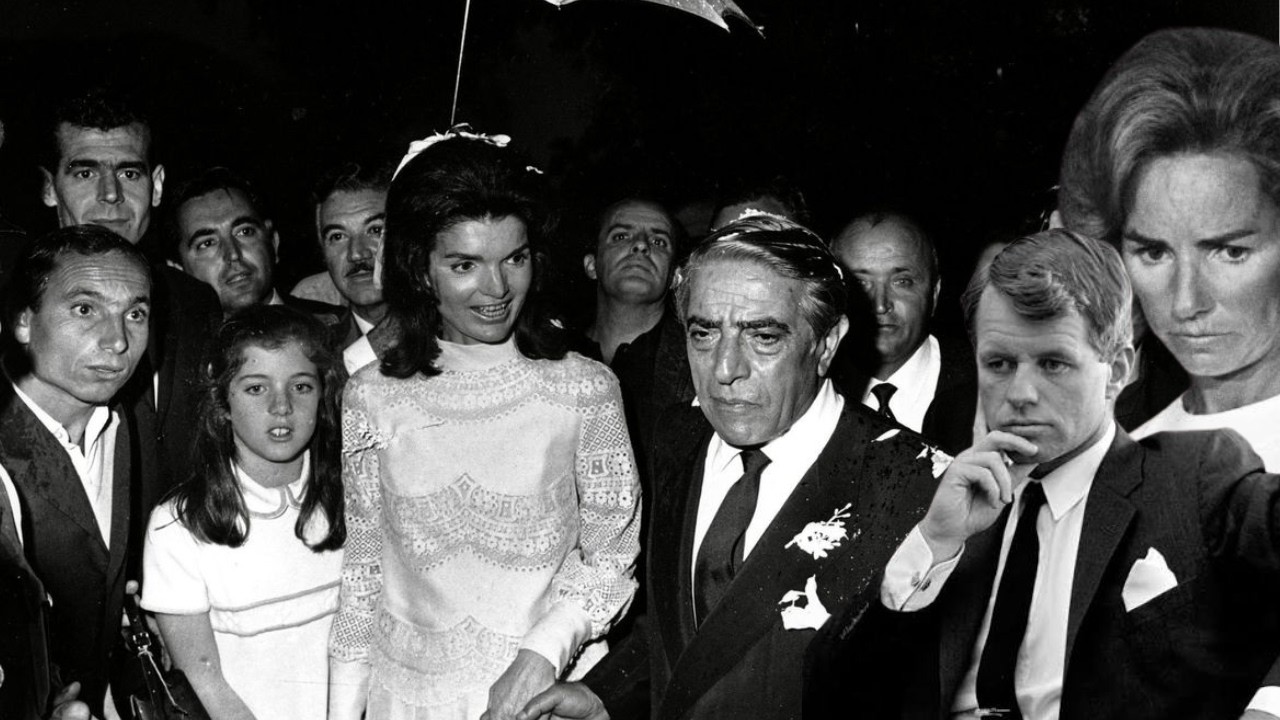
In the years that followed, Robert Kennedy became a central figure in Jackie’s life. He managed the practical and emotional aftermath of the assassination, including the oral history project she conducted with Arthur Schlesinger Jr. Their relationship was described by biographers as one of the most significant personal connections in his later years. He was her protector, her advisor, and the link between her and the Kennedy family.
The most critical conversation between them reportedly occurred in 1968, during his active campaign for the nomination. Robert Kennedy urged Jackie to delay any decision about marrying Onassis until after the November election. She agreed. She told him she would not proceed with wedding plans until after the voting was done. It was a private understanding, born of political necessity and personal loyalty.
That agreement became irrelevant on June 5, 1968. Moments after winning the California primary, Robert Kennedy was shot at the Ambassador Hotel in Los Angeles. He died the following day. Jackie was at his side in the hospital. According to several accounts, it was she who made the decision to turn off the life support systems, a choice attributed to her by witnesses like Richard Goodwin.

In the immediate aftermath, Jackie was devastated. She told Pierre Salinger, the former White House press secretary, that if people were killing Kennedys, her children would be targets next. She said she had to leave the country. The reason she had agreed to wait—to respect Bobby’s wishes and protect his campaign—no longer existed. He was gone.
Four months later, on October 20, 1968, Jackie married Aristotle Onassis in a small ceremony on his private island of Skorpios. She was 39. He was 62. The reaction in the United States ranged from disapproval to shock. European papers were more blunt, with one headline declaring that John Kennedy had died a second time. The Catholic Church raised the question of excommunication, as Onassis was divorced.
Harold Evans, a journalist and author, later noted that not a single friend thought Jackie should marry Onassis. He added that with Bobby gone, there was no one left to stop her. That observation captured a truth about the situation, even if it came from a book built largely on memory rather than contemporary records.

Robert Kennedy was the only person in Jackie’s life with the standing to challenge her on the Onassis question. He had done so, and she had listened, at least to the point of agreeing to wait. His death voided that agreement. The election he had asked her to wait for became an election he would never contest.
The marriage to Onassis lasted six years legally, ending with his death in March 1975. Jackie lived on for nearly two more decades, dying in May 1994 at the age of 64. She was buried at Arlington National Cemetery, next to her first husband, President John F. Kennedy. Robert Kennedy was buried separately, in a simpler spot chosen to reflect his wish not to be near the official memorial to his brother.
The story of what Robert Kennedy said about Jackie’s relationship with Onassis is pieced together from biographies, oral histories, and later memories. No contemporaneous recordings or documents exist. The private conversation in 1968 was never written down at the time. What remains is a narrative of loyalty, political calculation, and a promise that became meaningless in an instant.
The agreement Jackie made with Bobby—to wait until after the election—was a choice she made freely. It was not an order she had to obey. She chose to honor his request because he was the last link to a life that had been shattered twice by bullets. When he was gone, the reason for waiting disappeared with him. The wedding on Skorpios followed within months.
This story matters not just for its drama, but for what it reveals about the private structure of the Kennedy family after Dallas. Robert Kennedy was more than a brother-in-law. He was the guardian of a legacy, the manager of a widow’s grief, and the one person who could ask her to put politics first. She agreed to do so. His death made that sacrifice meaningless, and she acted accordingly.