The wedding photographs, now preserved in the Andy Warhol Photography Archive at Stanford, show a perfect tableau of American power, but the marriage they captured was a transaction from the very first toast, a deal that would cost Maria Shriver her career, her privacy, and nearly her identity.
On April 26, 1986, inside St. Francis Xavier Church in Hyannis, Massachusetts, the Kennedy family gathered to hand over their only daughter in a ceremony that was less a romantic milestone than a corporate acquisition. Caroline Kennedy stood as maid of honor, Andy Warhol documented the proceedings, and roughly 500 guests watched as the groom, Arnold Schwarzenegger, raised a glass to Kurt Waldheim, the Austrian president then accused of hiding his Nazi-era past.
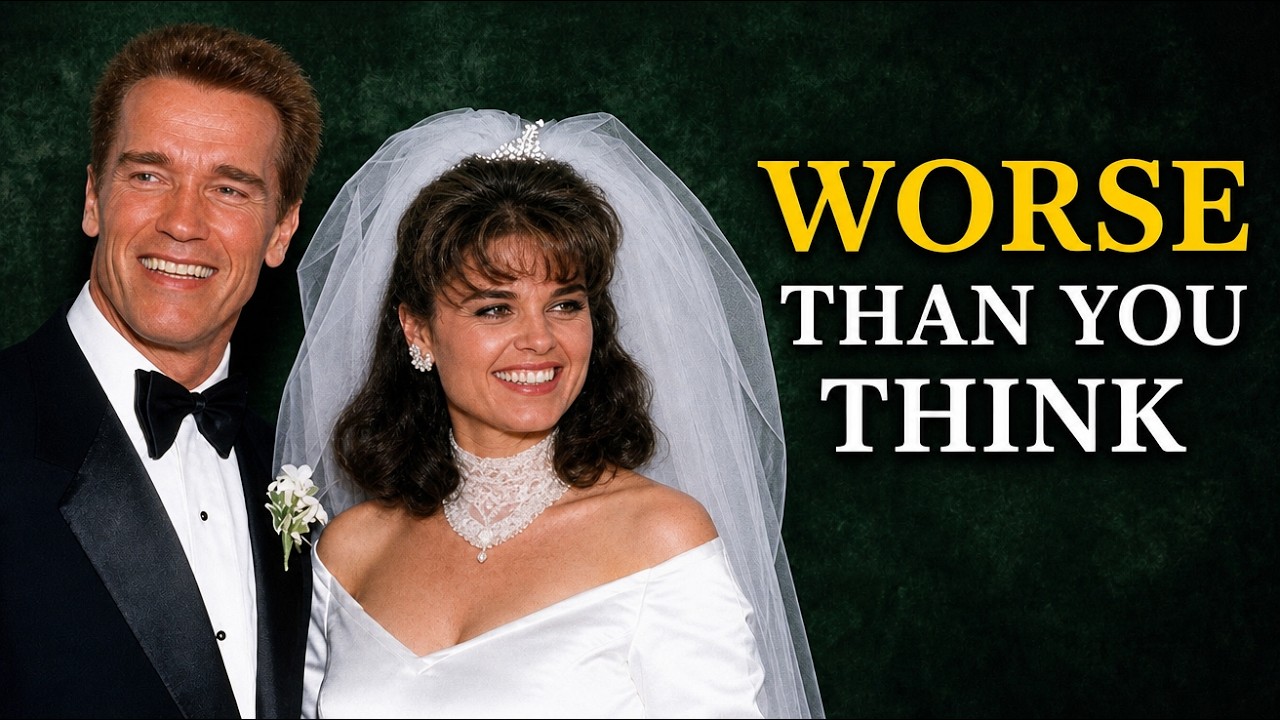 The United States would eventually bar Waldheim from entering the country, and the toast remains one of the most telling details of the day, a signal that the groom understood the room belonged to whoever was willing to speak.
Schwarzenegger later called the toast a mistake, a rare admission of error from a man who has spent decades carefully managing his own narrative. But the mistake revealed something essential about the arrangement. The Kennedys supplied the sacrament, the setting, the cousins, and the meaning, while the groom supplied the spectacle and used the microphone for his own purposes.
Nobody stopped him, and that dynamic would define the next 25 years of the marriage.
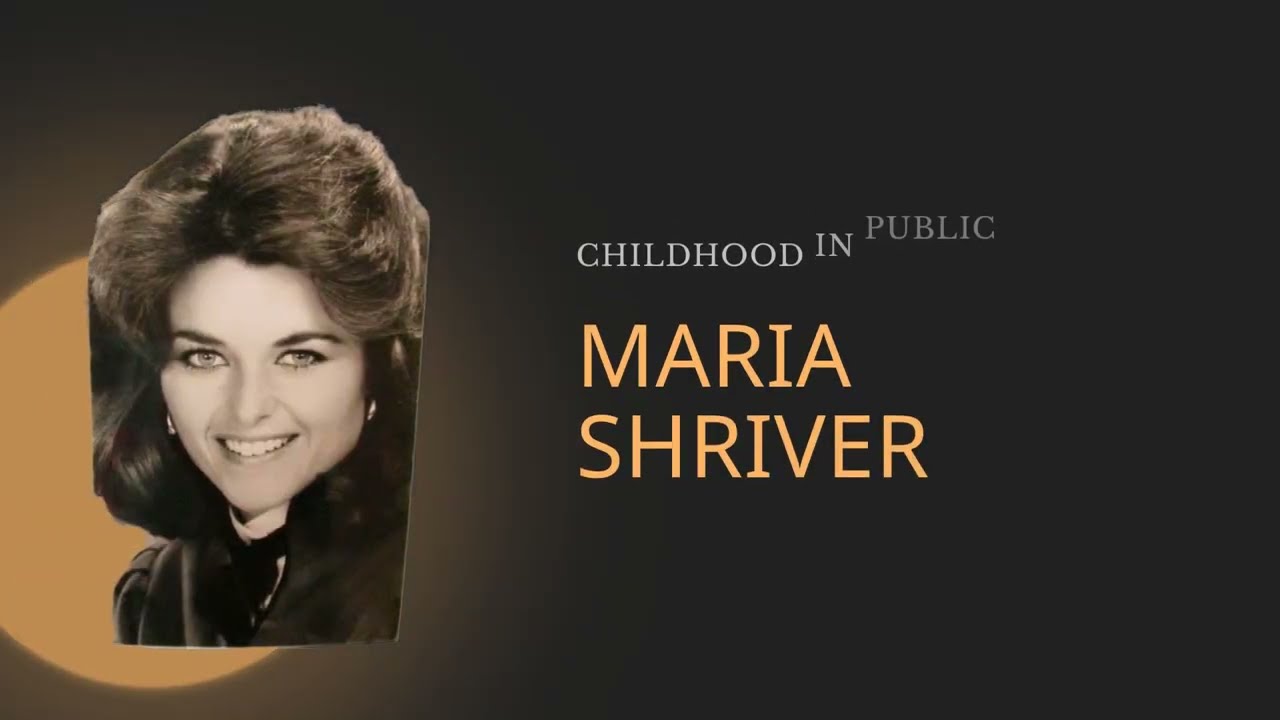
Maria Shriver was not a naive bride. Born in Chicago in November 1955, she was the second child and only daughter in a house with four brothers, raised inside two forces that shaped her entire life, enormous public reverence and repeated public defeat. Her mother, Eunice Kennedy Shriver, was the sister of a president and founded what became the Special Olympics.
Her father, Sargent Shriver, ran the Peace Corps, then the War on Poverty, then served as George McGovern’s running mate in 1972, a campaign that lost 49 states.
By her teens, Maria was working her father’s campaigns, learning the actual mechanics of advance work, press lists, and how a family decides in advance what it will say about itself. Then she did something the Kennedy women of the previous generation did not do. She got a job on the other side of the camera, earning a degree from Georgetown in American Studies, then working as a newswriter and producer at KYW in Philadelphia, then producing Evening Magazine in Baltimore.
By 1983, she was a national correspondent for CBS and shortly after that, a co-anchor of the CBS Morning News.
She was not the niece being covered. She was the person doing the covering, and in a family whose entire power rested on controlling its own story, she went and learned the trade. That skill would sit quietly for about 40 years before it became the most important fact in her story.
The couple met in August 1977 at the Robert F. Kennedy Pro Celebrity Tennis Tournament, a charity event run by her mother’s family. She was 21 and just out of college.
He was 30, a bodybuilder from Austria who had come to America in 1968 with almost nothing, won Mr. Olympia repeatedly, and was turning himself into a movie personality with the documentary Pumping Iron. Accounts generally credit Tom Brokaw with the introduction, though the detail comes from later recollection rather than any contemporary record.
What did each of them actually see? She saw the one man in that tent who was not related to her, not running for anything, not carrying the family’s grief, and not remotely intimidated by any of it. He was funny, relentless, and completely uninterested in the deference everyone else showed the Shrivers.
He saw a door. Schwarzenegger had wanted American public life since he was young enough to be laughed at for saying so, and there was exactly one family in the United States that could hand an Austrian weightlifter with a thick accent and no political resume an instant claim on American legitimacy.
Both things can be true. The record supports genuine attraction, an eight-year relationship, and a groom who was still, in his own telling, doing whatever he wanted. That is the part the wedding coverage skipped.
While they were together during the filming of Red Sonja in the mid-1980s, he had an 𝒶𝒻𝒻𝒶𝒾𝓇 with his co-star Brigitte Nielsen. This is not tabloid inference. He wrote it himself in his 2012 memoir, Total Recall, his own admission, which is the strongest kind of evidence you can get for something like this because nobody confesses to more than they have to.
The relationship survived the 𝒶𝒻𝒻𝒶𝒾𝓇. He proposed in Austria in the summer of 1985, by his own account, near the lake he had swum in as a boy. She said yes, and understanding why requires acknowledging that her decision was not irrational.
She was 30, at the top of network news, and inside a family where marriage was not a private decision. The Shrivers were devout Catholics. Her father went to mass daily.
Divorce was not the escape hatch it might have been elsewhere, and the family’s women had a long, well-documented practice of public composure regardless of what was happening at home.
Her parents liked him. He was rich, self-made, in no way dependent on the Kennedy name for money, and he made her mother laugh. He was also crucially a Republican, which in the Shriver household was less an obstacle than a novelty.
She married him with her eyes open, and that matters because it means every later decision she made was made by someone who understood exactly what she had signed.
The wedding itself was not a romantic milestone. It was an acquisition conducted publicly and photographed thoroughly. Roughly 500 guests attended, and the photographs Warhol took that day are now a permanent, searchable record of a family posing.
Warhol also gave them a portrait as a wedding gift. Consider what it means that the most famous manufacturer of images in 20th-century America was the guy in the pews shooting the reception at the Kennedy compound in Hyannisport.
Helicopters hovered over the water, reporters were penned outside, and in the middle of it all, the toast to Waldheim. Read the whole event again and you can see the trade being executed in real time. The Kennedys supplied the sacrament, the setting, the cousins, and the meaning.
The groom supplied the spectacle and then used the microphone for a piece of Austrian domestic politics that would have horrified most of the people in the room if they had been following the story.
The couple honeymooned briefly. She was already leaving CBS for NBC that same year, and then the marriage moved west permanently, which is the detail that did more damage than any single 𝒶𝒻𝒻𝒶𝒾𝓇. Everything in Maria Shriver’s life that had protected her, the compound, the brothers, the parents, the priests, the cousins, the whole dense Massachusetts and Maryland apparatus that watched what Kennedy men did and applied pressure when it needed applying, was 3,000 miles away.
In California, she was in his industry, in his climate, among his friends, with his money paying for the house. Four children arrived between 1989 and 1997, Katherine, Christina, Patrick, and Christopher. She kept working the whole time, on Sunday Today, then Dateline NBC, winning a Peabody in 1998 and co-anchoring NBC’s Olympics coverage.
From the outside, she was the woman who had it all, and the press said so constantly.
The household staffed up the way households like that do. One employee hired in the early 1990s would stay with the family for roughly 20 years and become close enough to be treated as part of it. In September 1997, Maria Shriver gave birth to her fourth child, Christopher.
Five days later, on October 2nd, the family’s longtime housekeeper gave birth to a son. Nobody outside a very small circle knew what that meant for another 13 and a half years.
 The two women had been pregnant at the same time in the same house. The boys grew up around each other. Household staff came and went.
Birthdays happened, holidays happened, and the Schwarzenegger family photographed beautifully throughout. The fitness magnate, the Kennedy journalist, four kids, a life that read on the page as the successful merger of two American religions.
Precision is what makes this land. Schwarzenegger has said he did not know at first. Mildred Baena, the woman in question, has said she was not certain herself early on, and that the resemblance became apparent as the boy grew.
Both accounts come from after the story broke, from two people with obvious reasons to shape it. What is not in dispute is the birth certificate, the dates, the employment, and the fact that the arrangement held for well over a decade with the child’s mother still working in the home.
When people talk about this marriage, they usually reach for the word 𝒶𝒻𝒻𝒶𝒾𝓇. That word is too small. What was actually happening was a household, a payroll, a schedule, a set of rooms organized around a fact the wife did not have.
She would find out, but not for years, and not before she had spent the most valuable capital she owned defending him.
On August 6th, 2003, California was in the middle of a recall campaign against Governor Gray Davis, and the political class had spent weeks assuming Schwarzenegger would pass. He announced his candidacy with Jay Leno instead. It was the single most effective piece of political theater of that decade.
According to Schwarzenegger’s own account, given to the Hollywood Foreign Press Association the following year and reported by the Los Angeles Times, he told Maria at home before the announcement and she started shaking and crying.
He said the person who talked her around was her mother. Eunice Kennedy Shriver was in favor of him running. That is his version, and he had every reason to tell a story in which his wife came around.
But it fits everything else we know about that family. Eunice had spent her life arguing that public service was the only justification for the Kennedy name, and she was not sentimental about what it cost the people carrying it.
Whatever passed between mother and daughter, the outcome is documented. Maria Shriver took an unpaid leave from NBC News and went to work on the campaign. She was extraordinary at it.
She knew the trade, she knew what reporters needed and when, and she was the proof, walking around in daylight, that this Austrian bodybuilder with the Republican registration was safe, moderate, family-adjacent, and vouched for by Camelot itself.
Then, five days before the election, the Los Angeles Times published the story the campaign had been bracing for. October 2nd, 2003. The headline was, “Women say Schwarzenegger groped, humiliated them.”
Six women on movie sets and in studio offices described being touched without consent over three decades. Two days later, the paper ran a second piece with three more. One woman describing an incident from 1980 told the Times, “Did he rape me?
No. Did he humiliate me? You bet he did.”
Schwarzenegger went out the same day and gave the apology that saved him. He said he had been rowdy on sets, that he had done things he thought were playful and now understood were not, and that he was deeply sorry to the people he offended. He also, over the following days, insisted through his campaign that some of the accounts were false.
His wife went out the next day and did the rest. Newport Beach, October 3rd, a lunch for the California Women’s Leadership Association. She stood up and said she would not be standing there if this man were not an A+ human being.
She called him courageous for facing it head on. On camera, she told reporters that, as she said to her own children, “It takes great courage to stand up in front of everyone and apologize.” He won by roughly a million votes.
Hold that scene because in April 2024, a man sat in a New York courtroom under oath and described what had been happening in the same weeks. David Pecker, then the publisher of the National Enquirer, testified in Donald Trump’s hush money trial. Prosecutors asked him why he had been nervous about paying to bury a story for a candidate, and he explained that he had been through it before with Arnold Schwarzenegger in 2002 and 2003.
By Pecker’s account, Schwarzenegger came to him, told him he intended to run for governor, and asked him not to publish negative stories about him then or in the future. Pecker said he agreed to alert him to stories about women and to acquire them. He testified that 30 to 40 women approached his company after the candidacy was announced and that he spent, in his words, hundreds of thousands of dollars.
None of this required guesswork even at the time. In August 2005, the Los Angeles Times reported the paperwork. American Media had signed a contract dated August 8th, 2003, two days after the Leno announcement, with a Malibu woman named Gigi Goyette, promising $20,000 for the exclusive rights to her account of her interactions with Schwarzenegger.
Her friend signed a similar agreement for $1,000 in cash. The Inquirer had already run a story two years earlier describing a long relationship between Goyette and Schwarzenegger during his marriage.
Schwarzenegger denied the 𝒶𝒻𝒻𝒶𝒾𝓇. His communications director said he believed the governor did not know about the contracts. The same reporting revealed the other half of it.
Schwarzenegger had signed on as an executive editor of American Media’s muscle magazines, an arrangement reported to be worth as much as $8 million while sitting as governor of a state that regulated the supplement industry advertising in those pages. When the deal became public, he ended it.
Set the two images side by side. A woman with a Peabody award standing in a hotel ballroom in Newport Beach vouching for her husband’s character, and a tabloid company under a standing arrangement to find and buy the stories of women who might contradict her. She did not know.
There is no evidence she knew. That is exactly the problem. Her credibility was the most valuable asset in that campaign, and it was being spent on a proposition that other people were being paid to protect.
Then she paid for it again. She went back to Dateline briefly after the November inauguration. On February 3rd, 2004, she issued a statement asking to be relieved of her duties at NBC News.
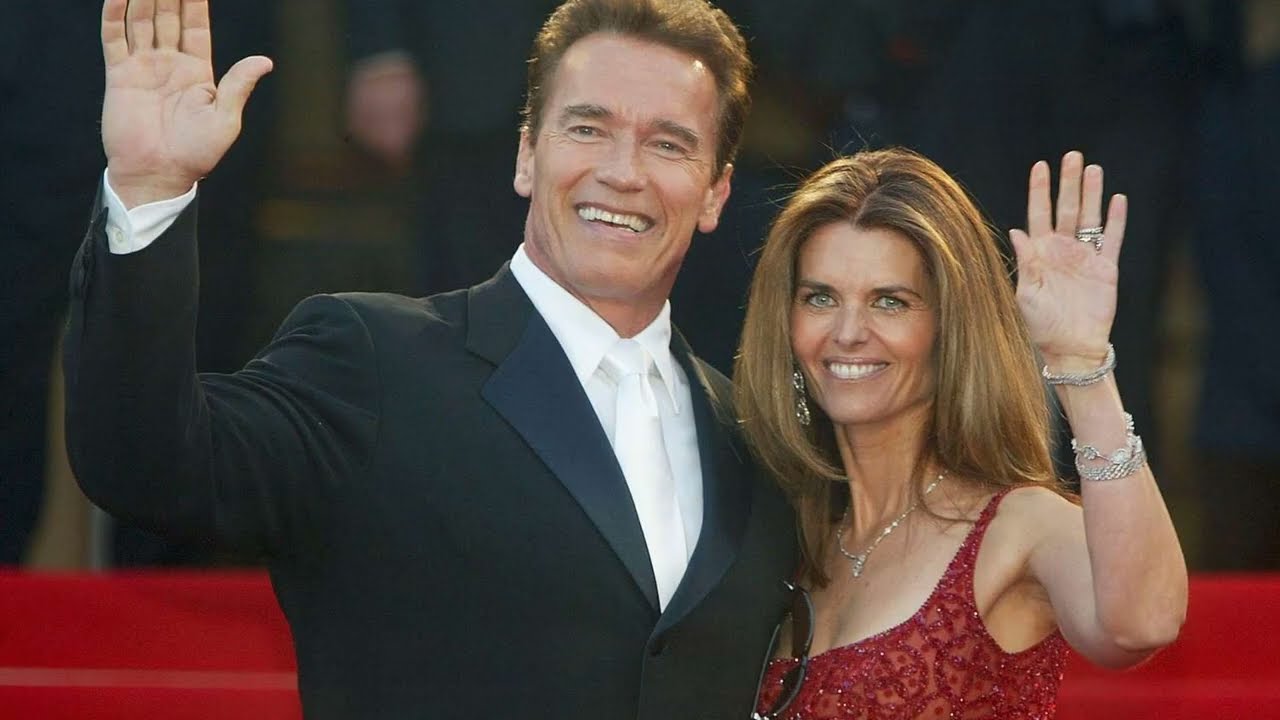 NBC’s president had not asked her to resign. Her decision came after conversations with him and with other journalists about whether the first lady of California could credibly report the news. She was 48 years old and 25 years into a career she had built without her family’s help.
She ended it because her husband had taken a job. He kept his career. She gave up hers.
That is not an interpretation. It is a ledger.
What she built instead was, on its own terms, a genuine success. She took a modest state event and turned the California Governor and First Ladies Conference on Women into something enormous. By 2010, it drew more than 30,000 attendees with speakers ranging from Oprah Winfrey to the Dalai Lama.
In 2004, she created the Minerva Awards, named for the goddess who sits on the California state seal with her shield and spear. She commissioned the Shriver Report in 2009, which documented that American women had become half the workforce. She executive produced HBO’s The Alzheimer’s Project and won two Emmys for it, work driven by her father’s decline.
They also functioned at times as a real political partnership. He governed as a Republican who broke with his party on climate, stem cells, and immigration, and the people around him were never shy about saying whose influence they saw in that. She was the Democrat at his dinner table.
He made that into a joke in public, which tells you something about how the marriage was performed.
October 2004, on stage with Leon Peta in front of a thousand people, asked how his wife had reacted to his speech at the Republican National Convention. “There was no 𝒔𝒆𝒙 for 14 days,” he said. “Everything comes with side effects.”
The room laughed. He riffed on it. “When you’re married to my wife, you’re never your own boss.”
He said he did not need to watch the presidential debates because he could get a smart liberal Democrat arguing with a Republican just by going out to dinner.
It is charming. It is also a man converting his wife’s private objections into applause lines while she is at home not doing the job she trained for. That is the pattern worth naming because it repeats in every phase of this marriage.
Her interior life becomes his material. Her name becomes his credential. Her career becomes the thing that gets adjusted.
Then, between the summer of 2009 and the winter of 2011, every structure holding her in place came apart at once. Eunice Kennedy Shriver died in August of 2009. Sargent Shriver, who had been living with Alzheimer’s for years, died in January of 2011.
The same month, Schwarzenegger’s second term expired and the office ended. The staff dispersed. The conference was over.
Her mother was gone. Her father was gone. The job was gone.
After seven years of being first lady of California, she was, for the first time since she was 21, a private person with no title and no assignment.
The housekeeper who had been with the family for two decades retired that same January. Maria Shriver had been a working journalist. She had spent her life around people who knew how to notice a discrepancy and follow it.
She started asking questions first, according to multiple accounts, including the employee herself. She got an answer. The confirmation from her husband came in a therapist’s office in a joint session in the early months of 2011.
He has described it repeatedly since, in Total Recall, on 60 Minutes with Lesley Stahl, and in the Netflix documentary Arnold in 2023. His framing has stayed consistent. He waited until he was out of office to tell her.
Sit with that sentence for a second. The disclosure was scheduled around a term of public office. He has never really disputed the reading.
In 2012, he told CBS that it was the stupidest thing he did in his relationship with her. In the Netflix series, talking about the 2003 allegations, he dropped the qualifications entirely. “It was wrong,” he said.
“Forget the excuses.” He has said plainly that he failed her, and he has not tried to distribute the blame. Whatever else is true of the man, he has not spent 15 years pretending.
But the apology arrived after the presidency of a state, two elections, a career surrendered, and 13 years of a boy growing up on the periphery of a family that included his half-siblings. On May 9th, 2011, they announced a separation in a joint statement to the Los Angeles Times. A week later, the same paper had the reason.
Schwarzenegger put out a statement of his own. No excuses, full responsibility. He had apologized to Maria, his children, and his family, and he was truly sorry.
Reporters went to Maria Shriver’s spokesperson. No comment.
That is the exact moment this story turns, and almost nobody clocked it at the time because silence reads as absence. It was not. Consider who she was.
A woman who had spent her professional life inside television news, who had covered other people’s scandals, who had grown up in the family that invented the modern American practice of managing a legend, and who had watched from childhood the women of that family absorb humiliations without ever handing a journalist a usable quote.
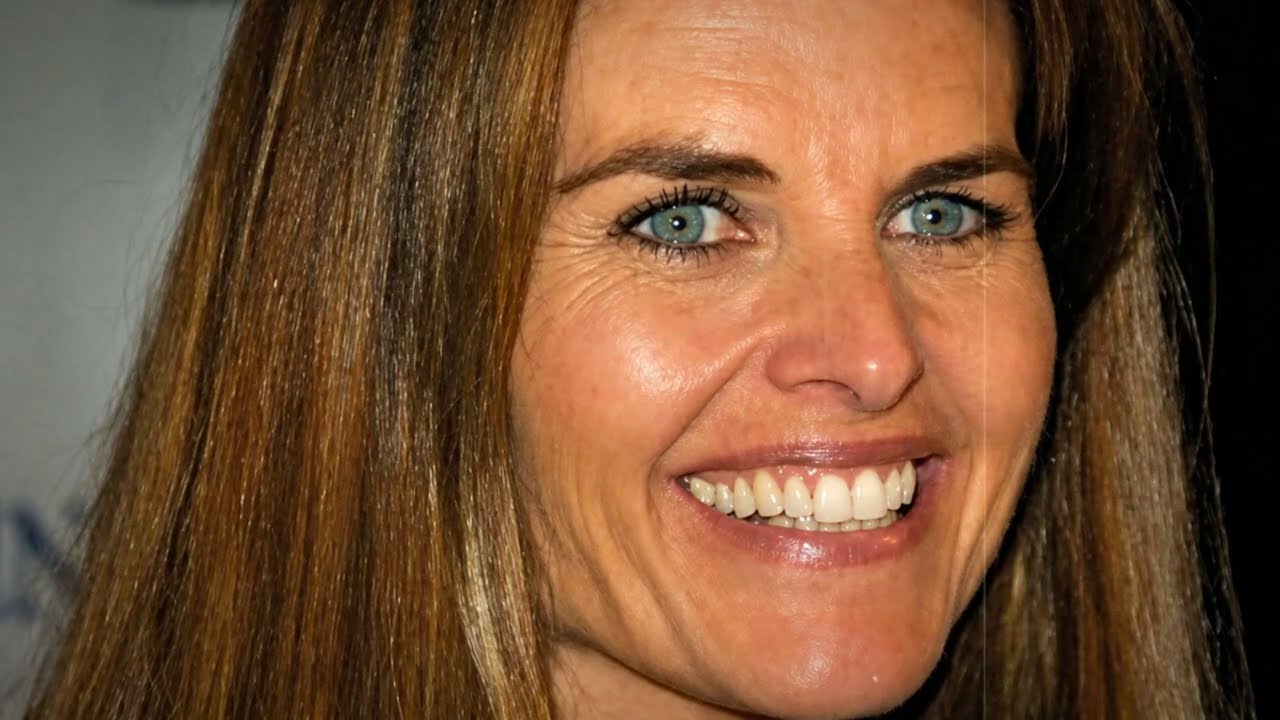 She knew precisely what the machinery would do with anything she said. She knew a single bitter sentence would become the caption on every photograph of her for the rest of her life. She filed for divorce on July 1st, 2011, citing irreconcilable differences.
She did not list a separation date. She did not attach a declaration. There were no allegations in the paperwork, no leaks to friendly columnists, no exclusive sit-down, no book.
And then nothing happened for 10 years. The docket essentially went dead after the initial 2011 filings and did not move again until the summer of 2021. The couple had no prenuptial agreement.
California is a community property state, and by the time it ended, there was an estimated $400 million in film money, real estate, and business interests to divide. A private judge was brought in and appointed in November 2021. A sitting judge signed the final paperwork on December 28th.
The terms were sealed. Neither party sought spousal support. Neither side ever filed a hostile document.
Ten years is an extraordinarily long time for a divorce between two people who agreed on the outcome. The public explanation has always been the complexity of the assets, and that is plausible. It is also true that a decade of sealed negotiation is a decade in which nothing about the marriage enters the public record through a courthouse.
Whatever was being decided, it was decided quietly, and quiet was the one thing she had that he wanted.
Look at what she did with the years. While everyone assumed she was recovering, she went back on the air. NBC brought her in as a special anchor in 2013 on her own terms, covering the subjects she had chosen.
She built the Women’s Alzheimer’s Movement out of the work she had started for her father and eventually moved it under the Cleveland Clinic. She launched a Sunday newsletter and then a media company around it. She wrote books that sold, including a 2018 bestseller.
She became, in the flattest possible business terms, an independent operation with her own audience, her own platform, her own revenue, and no husband attached to any of it.
She has also said more than once that she went looking for something other than strategy. She spent time at a cloistered convent where, in her telling, a nun named Mother Dolores told her that what she was really looking for was permission to leave her marriage and be Maria. She started writing poems.
That book came out on April 1st, 2025, under the title I Am Maria. It is the closest thing to a memoir she has published, and it contains the most revealing sentence of this entire story. She writes that much has been written about the end of her marriage, and that she does not feel she needs or wants to discuss it there or anywhere.
There it is. Forty years after the wedding, the woman who learned press management at her father’s campaign offices published a book about her own life and formally declined to narrate the thing everyone bought it for. She described the aftermath instead.
The marriage blew up, she wrote. It broke her heart, broke her spirit, broke what was left of her. Without the marriage, her parents, or the job, the dam of a lifelong denial gave way.
She described sitting on a hotel room floor in the dark, terrified, and telling herself it did not have to be the end of her.
She wrote that one of her mistakes had been tying her self-worth to her achievements, and another had been believing that someone outside herself could guarantee her safety. She gave the public her grief and withheld the evidence. That is not passivity.
That is editorial control exercised by someone who spent her entire adult life around people who understand that the story belongs to whoever decides what goes in.
So what was this marriage actually? It was not a fraud. They were together 25 years, raised four children who by every available sign are close to both of them, and were photographed together at his birthday as recently as 2020.
He is publicly involved in the life of his fifth child, who has built a career of his own and speaks warmly of his mother. There is no version of this in which Maria Shriver was a hostage.
It was a merger that worked spectacularly for one party. He got the Kennedy name, the Democratic wife, the credibility that led an Austrian bodybuilder with a groping 𝒔𝒄𝒂𝓃𝒹𝒶𝓁 five days before an election to win California by a million votes. She got a husband she chose with her eyes open, four children, seven years of real influence, and the loss of a career she had built by herself before she ever met him.
The machine that protected him, the tabloid arrangement, the buyout contracts, the household that kept a secret for 13 years, never once protected her. It was pointed the other way. It existed so that the thing she vouched for in that ballroom in Newport Beach would stay vouchable.
Now go back to the church steps in Hyannis. April 26th, 1986. Caroline Kennedy in the wedding party.
Warhol working the crowd with his camera. Five hundred people watching two American dynasties shake hands. The photographs of that day sit in an archive at Stanford, now cataloged and permanent, which is a fitting end for a wedding that was always partly a press event.
What the picture actually shows is a family handing over its most valuable asset, a daughter who had gone out and learned the news business, to a man who would use her credibility better than they ever had, and a groom who would stand up at the reception and toast Kurt Waldheim in front of all of them because he already understood that the room belonged to whoever was willing to speak.
The Kennedys taught their women to keep the family’s version intact and never to cry where a camera could see it. Maria Shriver learned that lesson better than anyone in her generation. She just eventually decided the version she was protecting would be her own.
He wrote the memoir. He sat for the interview. He made the documentary.
He said the words out loud. And he has been saying them for 15 years. She published the poems, sealed the file, and never told anyone what he said in that room.