The Man Who Ran Chicago's Underworld for 40 Years and Never Spent a Night in Prison
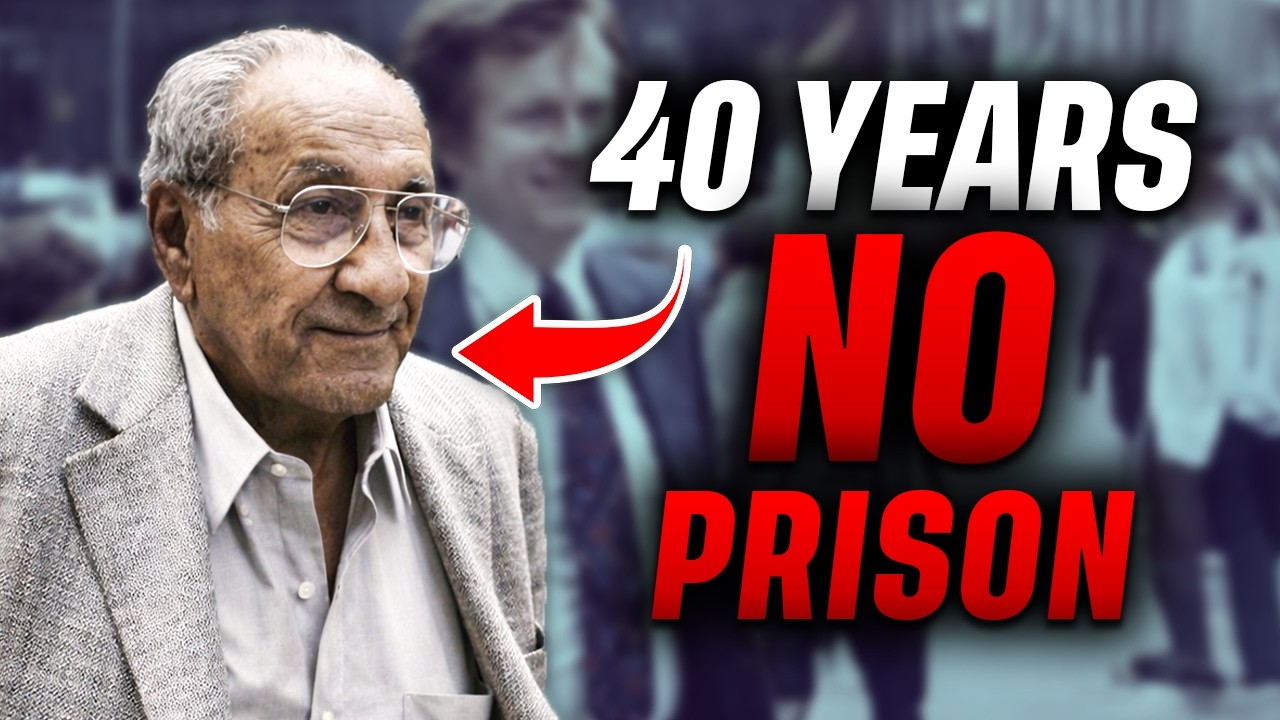
For four decades, one man presided over the most powerful criminal organization in America, operating with a level of discipline and invisibility that frustrated federal authorities at every turn. His name was Tony Accardo, and while most people have never heard of him, his influence shaped the Chicago Outfit for nearly half a century. He was investigated, indicted, surveilled, wiretapped, and subpoenaed countless times. Yet he died in his own bed at the age of 86, having never spent a single night in prison.
To understand Tony Accardo, you have to understand where he came from. He grew up in the tough neighborhoods of Chicago's West Side, an area that was not merely poor but also invisible to the wider world—except to the men who sought to exploit it. For a smart and tough kid, the streets offered a brutal education. By 1922, at just 16 years old, Accardo had already been arrested twice. It was then that he caught the attention of a man whose name you certainly recognize: Al Capone.
To Capone, Accardo was not just another street kid. He saw potential. By the mid-1920s, Accardo had become part of Capone's inner circle. It was during this time, around 1926, that he earned the nickname that would stick with him for life: "Joe Batters." The name reflected his reputation for handling situations that required extreme force. But what truly set Accardo apart was not his capacity for violence—it was the mind behind it. He was never in a hurry, never reckless, and never one to act on impulse.
As the years passed and the leadership of the Chicago Outfit shifted—through Capone, then Frank Nitti, then Paul Ricca—Accardo quietly and methodically positioned himself. By the mid-1940s, he had become the most powerful man in the Chicago Outfit, though he did so without press conferences or public statements. He simply assumed control.
What made Accardo's reign so remarkable was his approach to the organization itself. Unlike the flamboyant mobsters of New York, Accardo built a structure of isolation. He ensured that no criminal act could be traced directly to him. By the time any illegal activity could be followed up the chain of command, it had passed through so many hands that linking it to Accardo was nearly impossible from a legal standpoint. He had seen what happened to mob figures who were caught selling heroin; he was determined never to make the same mistakes.

The FBI watched him constantly. Agents drove past his home in River Forest every morning, and every morning Accardo would wave at them warmly before going inside to run his empire over breakfast. He treated every conversation as if it would one day be played in a federal courtroom—because he assumed it would be. He was disciplined, patient, and relentlessly unremarkable in his daily routine.
One of the most telling episodes of his career came in January 1978, when Accardo was 72 and technically retired. While he was wintering in California, a group of burglars broke into his River Forest home. They were low-level associates who apparently believed the old man was too elderly to matter anymore. What followed over the next several months was one of the most systematic and organized responses to a crime that Chicago had ever seen. The retaliation was swift, precise, and demonstrated beyond any doubt that Tony Accardo had not retired—he had simply become quieter.
The FBI had long suspected that Accardo was untouchable, but they could never prove it. He was prosecuted seven times on federal charges over the years, and each time he walked free. The IRS tried to get him the way they had gotten Capone—through tax evasion—but Accardo was too careful. He left no paper trail, no unexplained income, no vulnerabilities to exploit.

Part of his survival was structural. The isolation protocol he had built meant that even when the government had informants, wiretaps, and surveillance, they could never connect him to a crime. Part of it was also the simple fact that some corners of law enforcement in Chicago were not entirely free from the Outfit's influence. But most of it was Accardo himself. He was the most rational and consistent man in Chicago. In a world full of flashy, violent characters, he was the one who went home at night with everything intact.
By the 1980s, Accardo was in his late seventies. The world around him was changing in ways even he could not fully control. The Outfit remained powerful, but it was under siege like never before. Federal prosecutors were using RICO statutes to dismantle organized crime families across the country, and Chicago was no exception. Accardo remained the elder statesman, the man whose opinion was sought on major decisions, even if he no longer made those decisions himself.
Tony Accardo died on May 22, 1992, at the age of 86. He passed away in his home, quietly, surrounded by family, in a suburban Chicago house that looked like it belonged to anyone and no one at the same time. He was buried in Mount Carmel Cemetery in Hillside, Illinois. The FBI reportedly breathed a quiet sigh of relief. With Accardo's death died the era he represented—the era of the professional, disciplined, strategically invisible mob boss who ran his criminal empire like a corporation.
The reason stories like Tony Accardo's matter is not because we should admire him. He was directly or indirectly responsible for the deaths of people who had families, children, and lives. But his longevity, his discipline, and his ability to evade justice for 40 years without spending a single night in prison are remarkable. He survived Al Capone, Frank Nitti, Paul Ricca, the IRS, the FBI, RICO, and decades of surveillance. He waved at the FBI agents parked outside his home every morning, then went inside to run the most powerful criminal organization in America over breakfast.
What surprises you most about Tony Accardo? Was it the murders he ordered? The 40 years he spent without a night in jail? Or was it the image of him waving at the FBI agents every morning? For my part, I cannot stop thinking about that last detail. He was a man who chose to be invisible, to be boring, to be the gray-haired grandfather in River Forest who gave the feds nothing to use against him. And in the end, that is why he won.