On June 27, 1982, Frank Fiala stood outside the Plaza Suite disco in the Gravesend neighborhood of Brooklyn, surrounded by nightlife and the glow of a club he believed was about to become his. He had arrived in a Rolls-Royce. The closing on the real estate deal was scheduled for the next day. Hundreds of thousands of dollars were already tied to the transaction, and Fiala thought he had bought a nightclub.
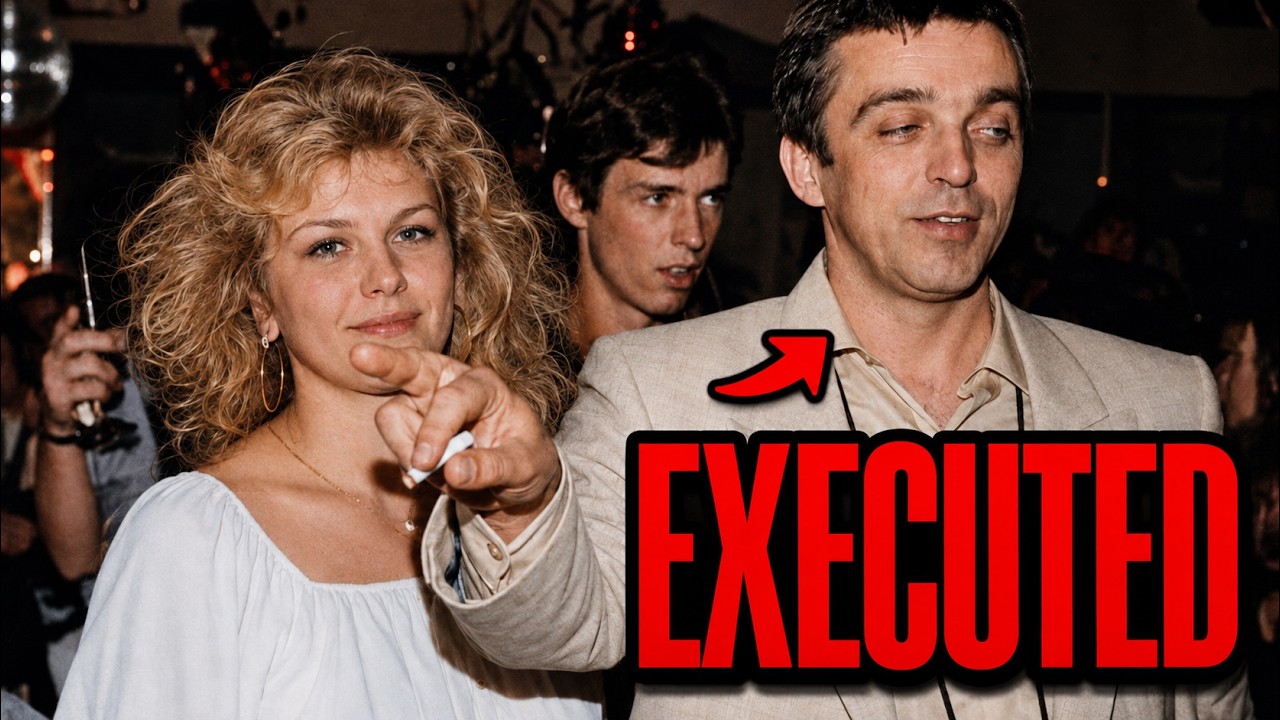
Instead, he had put himself in the path of Sammy Gravano. Before the night ended, the pavement outside his new investment became the scene of his murder. New York’s first reports told a dramatic crime story: a millionaire buying a nightclub was attacked in public by masked gunmen. Police described a deliberate, close-range killing carried out in front of terrified witnesses.
But that was only the visible ending. Beneath it lay a million-dollar deal built on official payments, hidden money, and conflicting accounts of who controlled the club. The real story was not simply that a drug dealer angered a mobster. Fiala challenged Gravano inside the one place that represented Gravano’s money, reputation, and power.
Then Gravano assembled members of his crew, set up an ambush outside the club, and carried out the killing without first obtaining permission from Gambino family boss Paul Castellano. That decision nearly turned the killers themselves into targets. It exposed the nightclub’s hidden financial arrangement to tax authorities and dragged a future mafia boss into court. Fiala had risen from immigrant machinist to millionaire.
He was born in Czechoslovakia and came to the United States with little money, according to police accounts of the time. He started as an apprentice at a Brooklyn machine parts company and eventually became its owner. By the time of his death, police described him as a millionaire who owned two small planes, a Rolls-Royce, and a Cadillac limousine. He had a separated wife and two children living in Virginia Beach.
In the early 1980s, the Plaza Suite at 2937 86th Street in Gravesend was not just a neighborhood bar. It was a busy disco and late-night destination where customers waited an hour to get in. Reports linked its stage with well-known acts, including Chubby Checker and The Four Tops. Music, liquor, money, and social status all passed through the same doors.
The surrounding neighborhoods of Gravesend and Bensonhurst were built on tight-knit housing blocks, family businesses, social clubs, restaurants, and relationships that lasted for decades. A nightclub there could be a legitimate entertainment venue on the surface and something more complicated behind the office door. Mob figures did not need to announce their control. Employees knew who made the decisions, and regular customers knew which arguments mattered.
The Plaza Suite had raised questions before Fiala arrived. Contemporary reports said the state liquor authority investigated the possibility of hidden ownership. The location had been identified during a police raid as a site of illegal gambling, and fires added to its troubled history. By the time Gravano and his associates controlled the club, it was more than a place to party.
It was a money-generating base and a visible display of influence. In 1982, Gravano was not yet the nationally known witness who would help convict John Gotti. He was a soldier in the Gambino family, part of a Brooklyn faction, ambitious, violent, and increasingly skilled at merging illegal power with seemingly legitimate business. The club gave him income, a meeting place, and a platform where respect could be measured every night.
Fiala first paid a reported $40,000 to rent the entire club for his birthday celebration. That amount alone made the event exceptional. He did not want a table and a bottle. He wanted the whole venue.
The night displayed his money, his entourage, and his appetite for attention. It also brought Fiala into direct contact with the club’s operators. According to Gravano’s later account, Fiala was carrying cocaine, openly sharing it, and treating staff as if they already worked for him. He was not entering cautiously.
He was testing how far his wealth would let him go. Shortly afterward, he proposed buying the Plaza Suite. The numbers became important, and the historical record required careful handling. Contemporary reports described a lower documented sale price plus a large payment kept off the books.
Gravano later testified and told writers that the full value of the deal was $1 million. His account described a mix of advance payments, hundreds of thousands hidden from the official closing, and a final payment tied to the transfer of ownership. The exact breakdown varies among accounts. In Gravano’s 1992 testimony, lawyers referenced $650,000 placed in escrow as part of a $1 million purchase.
Other accounts mention gold bars or cash as part of the hidden amount. What is not seriously disputed is that the public contract did not tell the full financial story, and that the amount was far higher than Gravano believed the club was worth. That should have made Fiala the ideal buyer. Gravano could have taken a huge profit and walked away.
But underworld business was never only about the final number. Money determined who had the right to buy an asset. Behavior determined who controlled the place until ownership legally changed hands. Fiala began to act as if the closing had already happened.
He moved into Gravano’s office, issued instructions, and interfered with staff matters. Gravano later claimed that Fiala appeared with a Uzi and pointed it at him or pressed it against him during a confrontation. At the 1992 John Gotti trial, defense lawyer Albert Krieger challenged Gravano about the killing. Gravano answered that Fiala had put a machine gun against his chest.
That testimony matters because it is an admission from the man who ordered the killing, not an independent record of the confrontation. Gravano had reasons to portray Fiala as dangerous. Still, his account explains the psychology behind what followed. He believed Fiala had barged into his headquarters, taken over his office, displayed a weapon, and humiliated him in front of people whose respect supported his authority.
For an ordinary seller, the solution would have been to cancel the deal, call a lawyer, or involve the police. Gravano could not do that without admitting weakness or exposing the hidden structure of the sale. He interpreted the confrontation through mafia logic. If Fiala could threaten him in his own office and then walk away, every employee and partner who heard about it would reassess Gravano’s reputation.
The goal was no longer the club. The goal was obedience. Gravano left the Plaza Suite and began calling his men. The group he assembled included figures later identified as Louis Milito, Joseph Siami, Angelo and Eddie Garofalo, Nicholas “Nicky Cowboy” Mormando, Michael DeBatt, Thomas “Hawk” Carbonaro, and others named in Gravano’s accounts.
These were not hired strangers. They belonged to the network surrounding his operations and enforcing his status. Each man had a purpose. Some waited in vehicles or nearby locations.
Some watched Fiala’s entourage. DeBatt, working at the door, could remain visible without raising suspicion. Mormando was reportedly positioned to respond if Fiala’s associates drew weapons. That arrangement turned an ordinary nightclub entrance into a controlled zone.
Just before 2 a. m. , Fiala appeared outside the Plaza Suite among patrons waiting to get in. Police reports at the time said masked gunmen attacked him.
Gravano’s later account placed crew members and his own presence more directly. In that version, Gravano called out to Fiala to get his attention, and Milito approached from behind. The attack was immediate and deliberately public. The exact criminal details reported at the time were shocking and need not be repeated.
What mattered was what dozens of people understood: a millionaire who thought he had taken control of the club was killed directly outside it. The violence was not hidden in a remote field. It occurred under the social pressure of witnesses, lights, cars, and people scrambling for safety. Fiala was taken to Coney Island Hospital, where he was pronounced dead.
He was 37 years old. His Rolls-Royce, the scheduled closing date, and the wealth attached to his name suddenly became pieces in a criminal investigation. The public saw masked attackers. The crew saw something else: Gravano responding to an insult with coordinated force.
The killing strengthened Gravano’s immediate reputation, but it also created risks that were not resolved. First came the police. The number of witnesses should have made the case easier, but fear and confusion protected the participants. People saw movements and violence, but identifying each man and proving who ordered the attack required cooperation that was not readily available.
Club employees and associated partners understood the price of helping. Later accounts claimed that corrupt NYPD detective Louis Eppolito received money to suppress or undermine the investigation. Eppolito was eventually exposed as a detective who provided information and services to organized crime. But the claims about the exact amount in the Fiala case rely heavily on later underworld accounts and should be treated as allegations, not as proven explanations for every gap in the investigation.
The second risk came from inside the Gambino family. Gravano had ordered the killing of a significant figure without first obtaining permission from boss Paul Castellano. The permission system in the mob protected the hierarchy. A soldier who could carry out a public killing independently might attract law enforcement, disrupt another member’s interests, or start acting like a boss.
Castellano was reportedly furious. Gravano and Milito were summoned to explain themselves. For days, the men involved did not know whether the family would accept Gravano’s justifications or decide he had crossed a line. The crew that had surrounded Fiala now had to consider the possibility that Gambino members would surround them.
Gravano defended his decision by emphasizing the weapon, the threat, and the need to move quickly. He also argued that keeping Castellano uninformed had protected the boss from any direct connection to the crime. It was a clever manipulation of the situation. The lack of permission became, in Gravano’s account, an act of loyalty.
Castellano allowed Gravano to survive. The third risk was financial. The murder drew attention to the proposed sale, and the sale contained money that would not fit a public contract. Investigators and tax authorities began to ask what Gravano had received, how the deal was structured, and whether the income had been reported.
The nightclub’s price had become evidence. The hidden payment that made the deal attractive also made it vulnerable. Fiala could no longer give his version of events. Gravano faced a tax evasion case tied to the transaction and was represented by lawyer Gerald Shargel.
He was ultimately acquitted, but the case proved the flaw built into the arrangement. The murder did not erase the money. It put a spotlight on it. At the Gotti trial a decade later, defense lawyers used the Fiala killing to attack Gravano’s credibility and motives.
Krieger suggested that greed, not fear alone, drove the murder and asked what had happened to the $650,000. Gravano insisted that Fiala’s wife eventually received most of the money and denied the claim that he killed only to keep the purchase funds. The exchange revealed two competing versions that still shape the story. Gravano’s version says an armed, unstable trafficker barged into his office and posed a direct threat.
The opposing version says Gravano had a financial motive to eliminate the buyer after receiving a large amount of money. Both motives could have existed at the same time. Money and humiliation were not separate forces in the underworld. Together, they made the conflict more dangerous.
Not all the men who helped Gravano had long careers. Joseph D’Angelo was killed later in 1982. Nicholas Mormando was killed in 1986 after Gravano considered him unstable and disloyal. Michael DeBatt was killed inside his bar in 1987 after drugs and paranoia made him seem dangerous to the gang.
Louis Milito, one of Gravano’s closest associates, was killed in 1988. These were the men who answered Gravano’s call on the night Fiala was killed. They positioned themselves outside the Plaza Suite and shared the knowledge of an unauthorized murder. Within six years, many of them were dead, some on Gravano’s orders.
In 1991, while facing a federal racketeering case alongside John Gotti, Gravano became a government witness. He admitted involvement in 19 murders and described crimes that had stayed hidden in the streets for years. The killings he had justified as protecting his reputation became part of the testimony he used to save himself from spending the rest of his life in prison.
The loyalty that held the crew together proved temporary.