For four centuries, Chastelton House stood frozen in time in the Oxfordshire countryside, its owners refusing to modernize, sell, or abandon it, even as their wealth vanished and the building crumbled around them. The house remained without electricity or running water, preserved not in spite of its decay, but because of it. The story of how one family’s promise to the past became a prison is written into every cracked wall and faded tapestry. The estate was born in the early 17th century when Walter Jones, a wealthy lawyer, began constructing a grand Jacobean mansion on land once owned by Robert Catesby, a Catholic conspirator linked to the Gunpowder Plot.
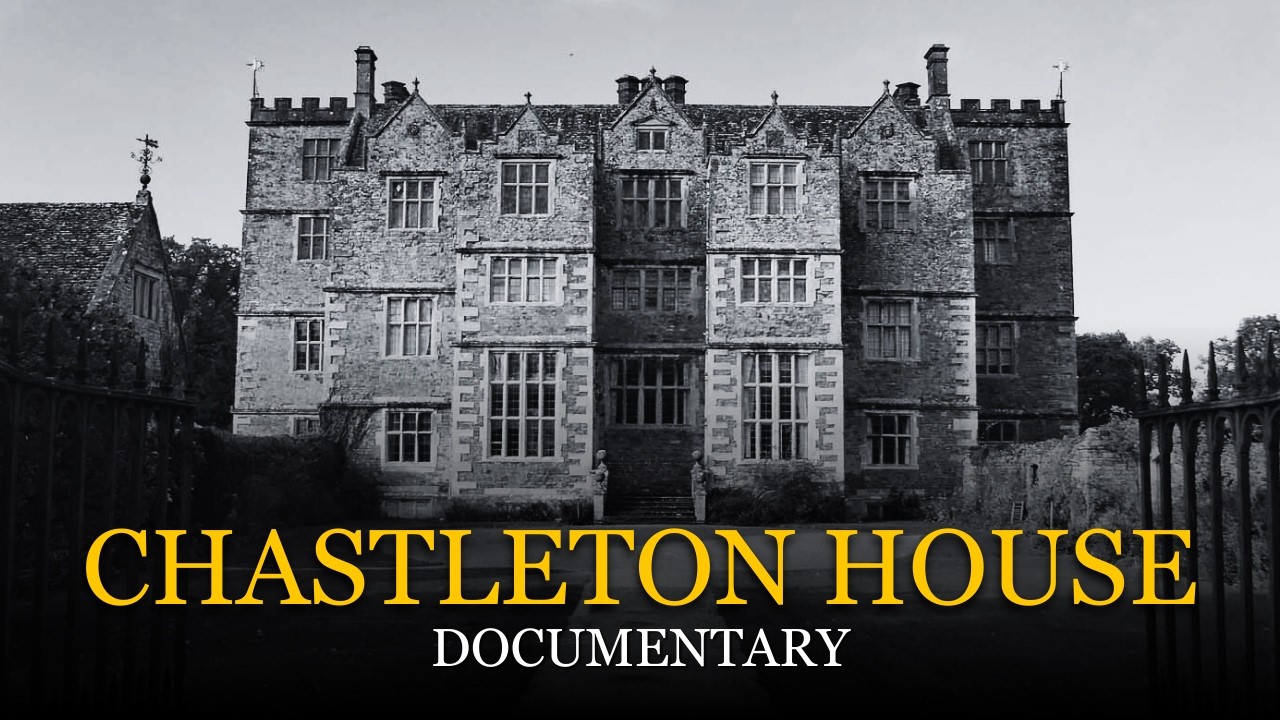
Construction began in 1607, with limestone quarried from the Cotswolds forming the skeleton of the house. The cost was staggering for the era, roughly £20,000, a sum equivalent to a thousand years of a skilled craftsman’s wages. When the house was completed in 1612, it stood as a golden monument to ambition, complete with four corner towers, a great hall, and a 120-foot long gallery. The family’s troubles began with their political loyalties.
Henry Jones, Walter’s son, sided with the royalists during the English Civil War, raising troops and spending thousands of pounds on the king’s cause. When Parliament prevailed, he was fined over £4,000, a devastating penalty that forced him to sell land and dismiss servants. Rather than surrender the house, he borrowed money and mortgaged properties, setting a pattern that every future generation would repeat. Arthur Jones inherited the precarious situation in 1678 and made a defining choice.
Unable to maintain the house in perfect condition, he decided the family would preserve it exactly as it had been built. Authenticity would replace grandeur. This decision created an inescapable trap. As fashion changed and other estates modernized, Chastelton remained stubbornly rooted in 1612, and the family became known as the people who lived in the past.
By the 19th century, the consequences were severe. In 1843, Henry Jones III inherited a house that generated no income and demanded constant repair. He made a sacred promise to preserve Chastelton exactly as it existed, with nothing sold and nothing altered. The vow bound every generation that followed, even as families lived with cold water, mended clothing, and meals cooked in a kitchen unchanged since the 17th century.
The house’s decline accelerated through the 20th century. George Jones, who died in 1931 at 87, extracted a final promise from his son Alfred: do not sell, do not change, preserve. Alfred inherited a crumbling mansion with no children and no hope of repairing it. His annual income of roughly £150 made the estimated £11,000 of necessary repairs mathematically impossible.
He lived alone in two rooms, burning minimal coal, hauling water from the well, and documenting every sign of decay in a journal that grew increasingly melancholic. The war years deepened Alfred’s isolation. Rationing reduced his food. The two elderly servants who had assisted him stopped coming.
He began talking to the rooms and conversing with portraits of his ancestors. In 1950, he refused offers of help from preservationists, arguing that intervention violated the promise. He died in bed in the winter of 1954, his body discovered by a villager in March 1955. His journal’s final words read, “The house endures.
”
Alfred’s death placed the estate in the hands of a distant cousin, Barbara Clutton-Harris, who had never seen Chastelton. When she first visited, she found an abandoned mansion filled with authentic 17th-century furniture, rotting tapestries, and darkened paintings. Her first instinct was to sell the contents, but reading Alfred’s journal and discovering the family’s 300-year promise changed her mind. She decided to honor it, but with a revolutionary difference: she would stabilize the house without restoring it, preserving the decay itself as historical evidence.
Barbara moved into the house in 1956, enduring the same cold rooms and well water as her predecessors. For years, she sought help from heritage organizations, describing Chastelton as a uniquely preserved Jacobean house frozen at the moment of the family’s collapse. When a major section of the roof failed in 1960, she went into debt to save the long gallery, realizing she could not continue alone. In 1961, she made the decision to give Chastelton to the National Trust, on the condition that the house be preserved exactly as it existed, with no restoration and no reconstruction.
The transfer took decades. Barbara remained at Chastelton until her death in 1991, having spent 36 years as its guardian. The National Trust assumed full control in 1997, ending four centuries of Jones family ownership. Conservators then undertook a radical approach to preservation.
There would be no gleaming restoration. Instead, every stain was treated as a story and every crack as documented history. Specialists repaired the roof using period materials and traditional techniques, costing roughly £1. 2 million and taking three years to complete.
Handmade replacement tiles matched the originals, and new oak beams were shaped with traditional tools rather than modern steel supports. Walls were repointed with lime mortar matching the original composition. The fallen plaster in the great chamber was left damaged, supported only enough to prevent further collapse, so visitors could see both the original artistry and the consequences of neglect. The house’s contents received equally careful treatment.
Tapestries, some dating to the early 17th century, required six months of conservation each, with cleaning done thread by thread, costing over £300,000. Furniture was stabilized but never refinished, preserving the patina of centuries of use. Paintings darkened by coal smoke and candle soot were cleaned microscopically, revealing original colors, but stopped before reaching pristine condition. Books were treated to prevent deterioration, but their wear was left visible, evidence of generations of reading.
The National Trust installed hidden environmental sensors, discreet lighting, and invisible security systems, all designed to preserve the house’s atmosphere without intruding on it. Accessibility modifications were subtle, with discrete handrails and carefully placed seating. The house was deliberately not made profitable. Visitor numbers were kept low to protect the structure, and Chastelton operated at a loss, subsidized by the trust’s commitment to heritage preservation.
By 2015, the major conservation work was largely complete. The house was stable, its contents treated, its infrastructure adequate. But it was not restored to former glory. It remained damaged, faded, and worn, showing every year of its four-century history.
The philosophy was deliberate: heritage includes loss, and history is not just what survived but what was destroyed. The house stood saved but not salvaged, protected but not perfected. Chastelton’s power, however, lies in its intimacy rather than its grandeur. Rooms are sized for actual living, and the contents belong to the house originally.
The beds are the beds the Jones family slept in, the chairs the chairs they sat in. Books contain margin notes written by family members, creating an eerie intimacy across centuries. The kitchen tells vivid stories of labor, with its massive fireplace, brick ovens, and the daily struggle of hauling water. Servant quarters reveal the less glamorous reality of country house life, with small, cold, minimally furnished rooms that expose the class structure made physical.
As the family grew poorer, their lives increasingly resembled those of their servants, living in cold rooms and performing manual labor. The house equalized the family, erasing privilege through shared hardship. Climate change has brought new challenges. Unusual weather patterns stress the ancient structure, and sensors now track temperature and humidity in every room, guiding minimal intervention.
After a severe storm in 2015 tore sections of the roof, conservators replaced tiles that looked slightly brighter than the weathered surroundings, marking the house like fresh scars. Specialists acknowledge that all heritage is temporary. The question is not whether things will decay, but how that decay is managed. Chastelton embodies the philosophy that authenticity, including damage, has greater value than imagined perfection.
The house has become a pilgrimage site for preservation specialists, a classroom for students of architecture and history, and a place of profound emotional response for ordinary visitors. Guides present the Jones family’s story frankly, describing the cold, the poverty, and the stubborn refusal to surrender, a cautionary tale about the costs of clinging to the past. The family’s absence has become more pronounced with time, but their portraits still hang on walls, their furniture fills rooms, and their presence saturates every space. Looking ahead, Chastelton’s future remains uncertain in detail but secure in essence.
The National Trust will continue conservation, and the house will continue aging. The house survives not despite its poverty, but in some ways because of it. By refusing to modernize, the family accidentally created a perfect time capsule. By clinging to the past, they preserved it for the future.
The family is gone, but the house remembers, and in remembering, it ensures they will never be forgotten.